The Olympus Trip 35 is a legendary point‑and‑shoot that delivers sharp, vibrant 35 mm photos with almost no learning curve. Its built‑in light meter, zone‑focusing system, and reliable Zuiko lens make it ideal for beginners and seasoned shooters alike. Lightweight, durable, and surprisingly affordable, the Trip 35 remains a favorite for film lovers on the go.
Key Takeaways
- Simple operation: No batteries, no batteries‑required light meter, and zone focusing keep shooting effortless.
- Compact design: Weighs under 500 g and fits easily in a pocket or small camera bag.
- Excellent lens: The 40 mm f/2.8 Zuiko lens delivers sharp, contrast‑rich images.
- Versatile exposure: Built‑in selenium meter covers ISO 25‑400, perfect for most daylight situations.
- Durable build: Metal body and robust shutter survive years of travel and adventure.
- Affordable entry: Prices are modest, making it an ideal starter for anyone curious about film.
- Great for travel: Its pocket‑size and quiet operation make it a discreet travel companion.
📑 Table of Contents
- Introduction: Why the Olympus Trip 35 Still Matters
- 1. A Brief History of the Olympus Trip 35
- 2. How the Olympus Trip 35 Works: Mechanics Made Easy
- 3. The Lens: Why the 40 mm f/2.8 Zuiko Shines
- 4. Choosing the Right Film for Your Trip 35
- 5. Practical Tips for Shooting with the Olympus Trip 35
- 6. Maintaining and Servicing Your Trip 35
- Conclusion: The Olympus Trip 35 – A Timeless Companion
Introduction: Why the Olympus Trip 35 Still Matters
When you think of classic film cameras, the name Olympus Trip 35 almost always pops up. First released in 1967, this tiny point‑and‑shoot has survived three decades of digital domination because it does one thing exceptionally well – capture a moment with a natural, effortless feel. Whether you’re a complete beginner who can’t remember how to set aperture and shutter speed, or a seasoned photographer looking for a compact backup, the Trip 35 offers a blend of simplicity and image quality that feels almost magical.
In this guide we’ll walk through everything you need to know about the Olympus Trip 35 film camera: its history, how it works, what makes its lens special, and practical tips for getting the best shots. By the end, you’ll understand why this little camera remains a beloved tool for film enthusiasts and how it can fit into your modern shooting routine.
1. A Brief History of the Olympus Trip 35
Origins and Design Philosophy
Olympus introduced the Trip 35 as a “travel” camera – hence the name – aimed at tourists who wanted high‑quality photos without lugging around a heavy SLR. The design was heavily influenced by the German-made Braun Kamera 35, but Olympus added its own Zuiko optics and a clever selenium light meter that required no batteries.
Visual guide about Olympus Trip 35 Film Camera
Image source: k.sinaimg.cn
Production Timeline
The original model ran from 1967 to 1972, followed by the Trip 35 II (1972‑1977) and the Trip 35 III (1977‑1980). While the exterior styling changed slightly, the core mechanics stayed the same: a 40 mm f/2.8 lens, zone‑focusing, and a selenium meter. Collectors often seek the earlier versions for their vintage appeal, but any iteration will give you the same shooting experience.
2. How the Olympus Trip 35 Works: Mechanics Made Easy
Zone Focusing Explained
The Trip 35 uses a “zone‑focus” system instead of a distance‑measuring focus ring. The focusing ring is marked with four zones – 0.8 m, 2 m, 5 m, and ∞. You simply choose the zone that matches your subject’s distance and let the camera handle the rest. This eliminates the need to count meters or use a separate rangefinder.

Visual guide about Olympus Trip 35 Film Camera
Image source: bestlifeonline.com
Selenium Light Meter
One of the camera’s standout features is its built‑in selenium meter. The meter reads ambient light and automatically sets the shutter speed (from 1/40 s to 1/200 s) while you keep the aperture at f/2.8. Because selenium cells generate voltage from light, the meter never needs a battery – a huge plus for travelers.
Shutter Speeds and ISO Range
The shutter speeds are limited to a narrow range, but they cover most daylight conditions. The meter is calibrated for ISO 25‑400, which means you can use a wide variety of 35 mm films, from slow‑speed black‑and‑white to fast‑speed color slide films. If you load film outside this range, you can manually override the meter by using the “M” (manual) setting and selecting a speed that matches your film’s rating.
3. The Lens: Why the 40 mm f/2.8 Zuiko Shines
Optical Quality
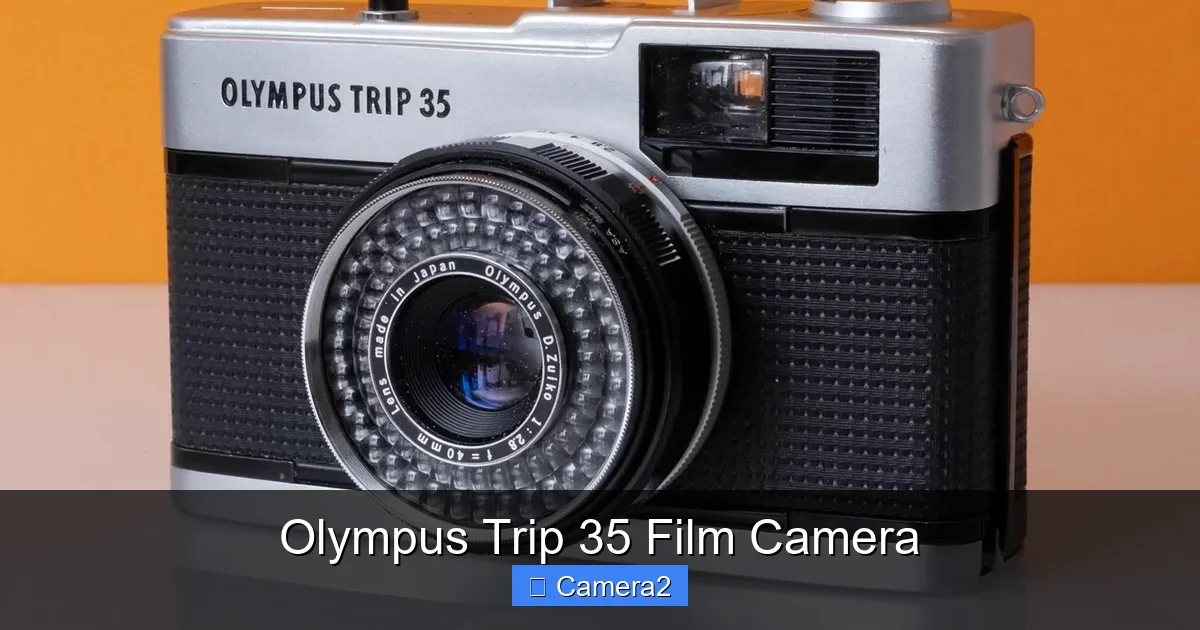
Olympus’s Zuiko brand is known for sharpness and minimal chromatic aberration. The 40 mm focal length on a 35 mm frame gives a field of view similar to the human eye, making the camera feel natural to use. The f/2.8 maximum aperture allows decent low‑light performance, especially when paired with a fast film.
Visual guide about Olympus Trip 35 Film Camera
Image source: i.etsystatic.com
Depth of Field Control
Even though you can’t adjust the aperture, the zone‑focus system still lets you play with depth of field. Shooting at the closest zone (0.8 m) with a fast film will give you a nicely blurred background, while focusing at infinity keeps everything sharp – perfect for landscapes or street scenes.
4. Choosing the Right Film for Your Trip 35
Film Speed and Grain
Because the meter works best between ISO 25‑400, most photographers choose ISO 100 or ISO 200 color negative film for everyday shooting. If you love grainy, high‑contrast looks, try ISO 400 or even ISO 800 – just be aware the meter may over‑expose a little, so you might need to dial back the speed manually.
Color vs. Black‑and‑White
Black‑and‑white film can give you a timeless feel, especially for street photography. Fuji Neopan 400 or Ilford HP5+ are popular choices. For vivid color travel shots, Kodak Portra 160 or Fujifilm Pro 400H provide excellent skin tones and subtle saturation.
How Long Does Film Last?
If you’re storing unused rolls, keep them in a cool, dry place. For more details on film longevity, check our guide on how long film lasts in a film camera. Proper storage ensures your shots stay fresh even years later.
5. Practical Tips for Shooting with the Olympus Trip 35
1. Master the Zone‑Focus
- Practice estimating distance. A good rule of thumb: a person standing across a street is about 5 m away.
- When in doubt, use the 5 m zone – it works well for most street and travel scenes.
2. Use the “M” Setting for Creative Control
If you load a film outside the ISO 25‑400 range, switch to manual mode. Choose a shutter speed that matches your lighting conditions, then hold the camera steady for a clean exposure.
3. Keep the Camera Clean
Dust on the lens can cause flares, especially when shooting into the sun. Use a soft microfiber cloth and a blower brush to keep the front element spotless.
4. Pack Light, Pack Smart
The Trip 35 is tiny enough to slip into a pocket, but a dedicated camera pouch protects it from bumps. If you’re hiking, consider a good camera backpack for hiking that has a padded compartment for your film rolls and accessories.
5. Mind the Film Counter
The frame counter can be a bit finicky after many uses. If it stops advancing, gently tap the rewind knob while the film is still loaded – this often resets the mechanism.
6. Maintaining and Servicing Your Trip 35
Cleaning the Shutter and Lens
Because the camera is fully mechanical, regular cleaning keeps it running smoothly. Use a lens cleaning solution on a lint‑free cloth for the optics, and a small brush for the shutter housing.
Battery‑Free Advantage
Since the selenium meter never needs a battery, the only thing that can wear out is the shutter springs. If you notice the shutter lagging, a professional service can replace the springs for a modest fee.
Finding a Repair Technician
Many vintage camera shops specialize in Olympus repairs. Look for a technician familiar with the Trip 35’s unique selenium meter – it requires careful calibration.
Conclusion: The Olympus Trip 35 – A Timeless Companion
The Olympus Trip 35 film camera proves that great photography doesn’t require a stack of buttons or a digital screen. Its effortless zone‑focus system, reliable selenium meter, and sharp Zuiko lens let you capture life’s moments with a natural, unfiltered look. Whether you’re traveling across continents, strolling through your hometown, or simply experimenting with film for the first time, the Trip 35 offers a low‑maintenance, high‑reward experience.
So dust off that vintage box, load a fresh roll of film, and let the Olympus Trip 35 take you on a creative journey. You’ll quickly discover why generations of photographers keep reaching for this compact classic – and why it’s still one of the most accessible ways to fall in love with film photography.
Frequently Asked Questions
What type of film should I use with the Olympus Trip 35?
The camera’s built‑in meter works best with ISO 25‑400. Popular choices are ISO 100 or 200 color negative film for everyday use, and ISO 400 for low‑light situations. Black‑and‑white film like Ilford HP5+ also works well.
Do I need batteries for the Olympus Trip 35?
No. The Trip 35 uses a selenium light meter that generates power from light, so it never requires batteries. This makes it ideal for travel where you might not have access to replacements.
Can I use the Trip 35 for night photography?
Because the maximum aperture is f/2.8 and the shutter tops out at 1/40 s, night shots are challenging. Use a fast ISO 400 or 800 film, open the aperture fully, and consider a tripod or steady surface.
How many pictures can I take on a single roll of film?
A standard 35 mm roll holds 36 exposures. If you’re shooting a short trip, you might only need one or two rolls. For longer trips, bring extra film and store unused rolls in a cool, dry place.
Is the Olympus Trip 35 waterproof?
It is not waterproof. While the metal body is sturdy, moisture can damage the internal electronics and film. Keep it in a dry bag when shooting in rain.
Where can I learn more about film preservation?
Our article on how long film lasts in a film camera provides detailed tips on storing and preserving both exposed and unexposed film.