Healthcare CRM software is a specialized platform designed to manage and optimize all interactions with patients, from appointment scheduling to follow-up care. It goes beyond traditional CRM by integrating with medical systems (like EHRs) and prioritizing HIPAA-compliant security. Ultimately, it helps healthcare providers improve patient experience, increase operational efficiency, and drive better health outcomes through organized data and automated workflows.
Key Takeaways
- It’s Patient-Centric: Healthcare CRM focuses on managing the entire patient journey and relationship, not just sales or marketing.
- Integration is Key: Its power comes from connecting with existing EHR/EMR, billing, and scheduling systems to create a single patient view.
- Automation Drives Efficiency: It automates routine tasks like appointment reminders, feedback requests, and care coordination to save staff time.
- Security & Compliance are Non-Negotiable: Robust, HIPAA-compliant data handling is the absolute foundation of any legitimate healthcare CRM.
- Data Informs Better Care: Analytics and reporting transform raw patient data into insights for improving services, marketing, and population health.
- It Supports Multiple Teams: Benefits extend beyond marketing to admissions, patient services, care coordination, and executive leadership.
- It’s a Strategic Investment: Choosing a CRM requires evaluating clinical workflow fit, vendor healthcare expertise, and total cost of ownership.
📑 Table of Contents
- What Exactly Is Healthcare CRM Software?
- The Vital Functions: What Does a Healthcare CRM Actually Do?
- The Tangible Benefits: Why Healthcare Organizations Invest in CRM
- Essential Features to Look for in a Healthcare CRM
- Implementation & Best Practices: Making Your CRM a Success
- The Future of Healthcare CRM: Trends to Watch
- Conclusion: More Than Software, a Strategic Partner
What Exactly Is Healthcare CRM Software?
Let’s start with the basics. CRM stands for Customer Relationship Management. In retail or finance, that “C” is a customer. In healthcare, that “C” is a patient, but it also includes prospective patients, referring physicians, and even insurance partners. So, at its heart, healthcare CRM software is a technology platform built to manage and improve every interaction and relationship within the healthcare ecosystem.
But here’s the critical distinction: it’s not just a standard CRM with a medical coat on. Generic CRM tools (like those used by sales teams) aren’t designed for the complex, sensitive world of healthcare. They lack the necessary integrations, compliance safeguards, and understanding of clinical workflows. Healthcare CRM software is purpose-built from the ground up to handle Protected Health Information (PHI) securely, connect with critical clinical systems like Electronic Health Records (EHRs), and support the unique journeys of both patients and providers.
The Core Mission: From Transaction to Relationship
Historically, healthcare interactions were often transactional: a patient comes for an appointment, receives a service, pays, and leaves. The relationship might end there until the next illness struck. Modern healthcare, however, is shifting toward value-based care and patient-centered models. Success now depends on building long-term, trusting relationships. This is where a dedicated CRM becomes indispensable.
Think of it as the central nervous system for all your non-clinical, relationship-driven communications. While your EHR is the definitive source of clinical data (diagnoses, medications, lab results), your healthcare CRM is the hub for all the context around those clinical events: Did the patient open the post-visit survey? Have they attended their recommended physical therapy? What health seminars are they interested in? Are they due for a chronic care check-in? It fills the crucial gaps between medical visits.
The Vital Functions: What Does a Healthcare CRM Actually Do?
A robust healthcare CRM platform is a multi-tool. Its functions can be broadly categorized into several pillars that work together to create a seamless experience.
Visual guide about What Is Healthcare Crm Software
Image source: d1l92n9kqjbmnl.cloudfront.net
1. Unified Patient Profiles & 360-Degree Views
This is the absolute cornerstone. The CRM aggregates data from every touchpoint—website forms, call center logs, appointment scheduling systems, billing records, email engagement, and, most importantly, the EHR. Instead of a siloed view, staff see a single, comprehensive profile. A front-desk coordinator, a marketing manager, and a care coordinator all see the same relevant history: upcoming appointments, past communications, special notes, and preferences. This eliminates repetitive questions and makes every interaction feel informed and personal.
Practical Example: A patient calls to reschedule. The scheduler sees in the CRM that the patient just received a procedure and has a follow-up survey in their inbox. The scheduler can proactively say, “I see Dr. Smith just wrapped up your procedure. Would you like me to help you complete the feedback survey we sent?” That’s a moment of care, not just admin.
2. Automated, Personalized Communication
Manual, one-size-fits-all communication is a thing of the past. Healthcare CRM software enables sophisticated, automated yet personalized messaging across multiple channels:
- Appointment Management: Automated reminders via SMS, email, or voice call (reducing no-shows by 30-50% is common).
- Care Journey Nudges: Triggered messages for post-discharge instructions, preventive care reminders (e.g., “Your annual flu shot is ready”), or chronic disease management prompts.
- Patient Education: Drip campaigns that send relevant blog posts, videos, or workshop invites based on a patient’s condition or interests.
- Feedback & Reputation Management: Automatically send satisfaction surveys after visits and route negative feedback to a manager for immediate follow-up.
The magic is in the triggers and segmentation. You’re not blasting all 20,000 patients with the same message. You’re sending a diabetes management tip only to patients with a Type 2 diabetes diagnosis in their EHR record, which the CRM can access.
3. Marketing & Outreach Campaigns (The Ethical Way)
Yes, healthcare has marketing, but it’s educational and relationship-based, not pushy. A healthcare CRM allows you to run compliant campaigns for:
- Service Line Promotion: Informing relevant patient segments about new services, like launching a new orthopedic program.
- Community Health Initiatives: Inviting local residents to free health screening events.
- Physician Referral Building: Nurturing relationships with referring doctors through targeted, valuable updates.
All marketing activities are opt-in based and meticulously tracked for ROI. You can see which campaigns led to appointment bookings, allowing you to spend your marketing budget wisely.
4. Referral Management & Physician Relationship Building
For many specialties, referrals are the lifeblood. A CRM tracks the entire referral lifecycle: from the initial request, to appointment scheduling, to completion, and back to the referring physician with a consult note. It ensures no referral falls through the cracks. It also helps manage relationships with referring doctors by providing them with secure updates and making it easy for them to refer, strengthening your network.
5. Robust Analytics & Business Intelligence
This is where data turns into strategy. Healthcare CRM dashboards answer critical questions: What is our patient acquisition cost by channel? Which physician has the highest patient satisfaction scores? What are the trends in appointment no-shows for our cardiology department? Which marketing campaign brought the most new patients for our weight management program? These insights drive operational improvements, strategic planning, and demonstrate the value of patient engagement initiatives.
The Tangible Benefits: Why Healthcare Organizations Invest in CRM
Implementing a healthcare CRM isn’t just a tech project; it’s a strategic business decision with measurable returns across the organization.
Visual guide about What Is Healthcare Crm Software
Image source: d1l92n9kqjbmnl.cloudfront.net
For Patients: A Seamless, Respectful Experience
From the patient’s perspective, the benefits are felt in every interaction:
- Reduced Frustration: No need to repeat their history multiple times. Reminders mean they don’t forget appointments.
- Personalized Relevance: They receive information that actually matters to their health and interests, not generic spam.
- Empowerment: Access to educational resources and easy two-way communication (e.g., portal messaging) makes them feel more in control of their care.
- Better Outcomes: Timely reminders for screenings, follow-ups, and medication adherence directly contribute to improved health results.
For Staff & Operations: Efficiency and Clarity
The administrative burden in healthcare is legendary. A CRM directly attacks this:
- Massive Time Savings: Automating routine communications (reminders, confirmations, birthday wishes) frees up thousands of staff hours annually for higher-value tasks.
- Improved Task Management: Care coordinators have clear, prioritized task lists for patient outreach, all tracked in one place.
- Reduced Errors: Centralized data means everyone works from the same playbook, reducing miscommunication.
- Streamlined Marketing: The marketing team can execute sophisticated campaigns without needing IT support for every email blast.
For Leadership & Growth: Data-Driven Decisions
Executives and department heads gain unprecedented visibility:
- Clear ROI on Marketing: Attribute new patient volumes directly to specific campaigns and channels.
- Population Health Insights: Identify patient cohorts that are disengaging and need proactive outreach.
- Physician Partnership Value: Quantify the referral volume and outcomes from referring physicians to inform partnership agreements.
- Competitive Intelligence: Understand patient satisfaction trends relative to your own service lines.
Ultimately, these benefits converge on one goal: improving patient lifetime value. A patient who feels understood, receives timely care, and has a hassle-free experience is more likely to be loyal, refer others, and contribute to the financial health of the organization.
Essential Features to Look for in a Healthcare CRM
Not all CRMs are created equal. When evaluating platforms, these features are non-negotiable for a healthcare environment.
Visual guide about What Is Healthcare Crm Software
Image source: d2ms8rpfqc4h24.cloudfront.net
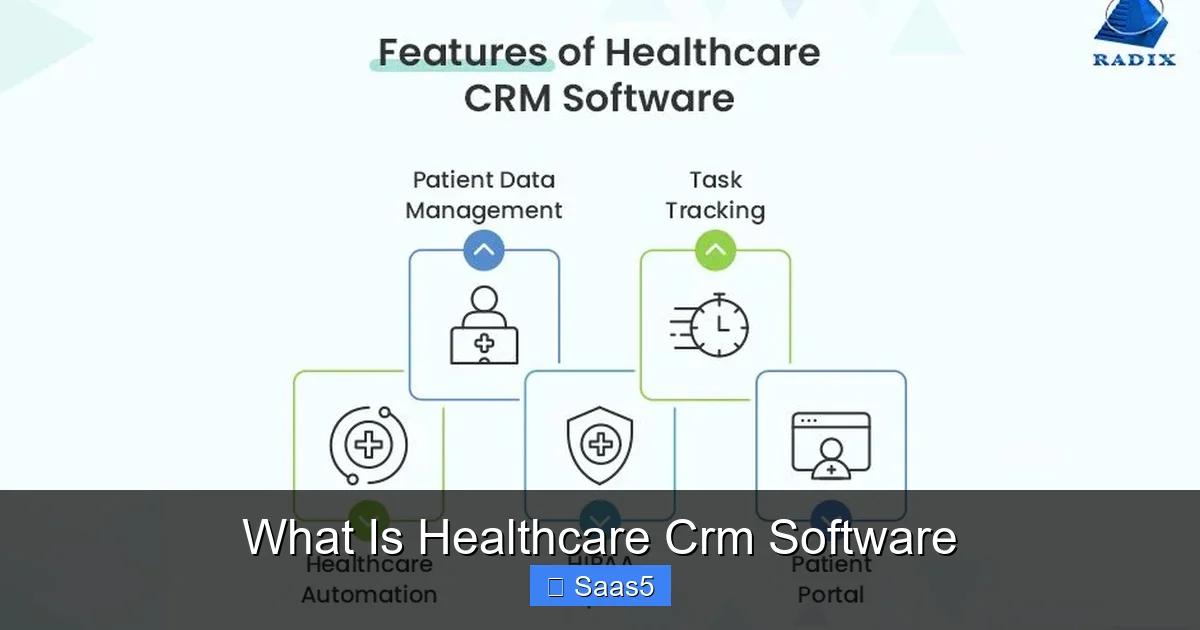
HIPAA & Security Compliance as a Foundation
This cannot be overstated. The vendor must provide a signed Business Associate Agreement (BAA), employ encryption (at rest and in transit), have rigorous access controls and audit logs, and host data in secure, compliant data centers. Ask about their security certifications (like HITRUST) and incident response protocols. Any platform that treats security as an add-on is a immediate red flag.
Deep, Bi-Directional EHR/EMR Integration
A CRM that doesn’t “talk” to your EHR is just an expensive contact list. Look for pre-built, native integrations with major EHR vendors (Epic, Cerner, Allscripts, eClinicalWorks, Athenahealth, etc.). Data should flow seamlessly in both directions. For example, a diagnosis code added in the EHR should automatically update the patient’s segment in the CRM. An appointment scheduled in the CRM should create an encounter in the EHR. API-based custom integrations are possible but costly and fragile; native integrations are ideal.
Patient Portal & Secure Messaging
Modern patients expect a digital front door. An integrated, branded patient portal (often white-labeled from the CRM) allows for secure messaging, bill pay, appointment requests, and access to educational materials. This is a key engagement driver and reduces call center volume.
Omnichannel Communication Hub
The platform must support SMS/texting, email, voice (automated calls and click-to-call), and direct mail from a single interface. It should manage consent and opt-outs meticulously across all channels. The ability to design responsive email and SMS templates within the tool is a plus.
Advanced Segmentation & Campaign Builder
You need to be able to segment patients based on a combination of demographic, behavioral (e.g., opened last 3 emails), and clinical data (pulled from the EHR). The campaign builder should be visual and intuitive, allowing marketing or clinical staff to create complex, multi-step nurture paths without coding.
Reporting & Analytics Dashboard
Out-of-the-box reports for key metrics: campaign performance, patient acquisition cost, appointment fill rates, no-show trends, patient satisfaction (NPS/CSAT), and referral source analysis. The ability to build custom reports and dashboards for different departments (marketing, clinical operations, finance) is essential.
Implementation & Best Practices: Making Your CRM a Success
Choosing the software is step one. Success depends entirely on thoughtful implementation and adoption.
Start with a Clear Strategy, Not a Tool
Before a single line of code is written, define your goals. Is the primary goal to reduce no-shows by 25%? To increase patient satisfaction scores? To grow a new service line by 15%? Align the entire project around 2-3 key objectives. This will guide every configuration decision and prevent the CRM from becoming a dumping ground for every possible idea.
Form a Cross-Functional Team
This is not an IT-only project. Your team must include:
- Clinical Leadership: To ensure workflows support, not hinder, patient care.
- Marketing/Communications: The primary power users for campaigns.
- Patient Access/Admissions: The frontline staff who will use it daily for scheduling and communication.
- Care Coordination/Nursing: For population health and patient engagement workflows.
- IT/Integration Specialists: To manage EHR connections and data governance.
- Compliance/Legal: To oversee BAA and privacy policies.
Phased Rollout & Strong Change Management
Don’t try to boil the ocean. Start with a pilot department or a single, high-impact use case (e.g., automating appointment reminders for one clinic). Train a super-user group intensely. Gather feedback, refine processes, and celebrate early wins. Then scale to other departments. Invest heavily in training—not just on “how to click buttons,” but on “why this makes your job easier and our patients happier.” Address fears of automation replacing people by framing it as “automating the mundane so you can do the meaningful.”
Data Hygiene is Half the Battle
Garbage in, garbage out. Before migration, conduct a massive data cleanup in your source systems (EHR, old spreadsheets). Standardize phone numbers, deduplicate records, and ensure consent flags are accurate. A clean foundation is worth the upfront effort.
Define Clear Governance
Who can send a text blast? Who approves marketing campaigns? How are data access roles defined? Establish these policies in writing before go-live. The CRM’s power requires clear guardrails to prevent misuse and ensure compliance.
The Future of Healthcare CRM: Trends to Watch
The landscape is evolving rapidly. Here’s where the technology is heading:
AI & Predictive Analytics
Beyond simple segmentation, AI will predict patient behaviors and risks. It might identify patients with a high “no-show probability” so staff can intervene with a personal call. It could predict which patients are at risk of leaving the health system (churn) and trigger retention campaigns. It will also power chatbots for initial patient triage and FAQ handling on websites.
Hyper-Personalization at Scale
Using integrated clinical and behavioral data, communication will become incredibly personalized. A patient recovering from knee surgery might receive a series of videos on physical therapy exercises, recipes for anti-inflammatory foods, and invites to a local water aerobics class—all triggered automatically by their procedure code and recovery timeline.
True Interoperability & the FHIR Standard
With the push for data liquidity using standards like FHIR (Fast Healthcare Interoperability Resources), CRM-EHR connections will become deeper and more real-time. A patient update in the CRM could automatically generate a task for a social worker in the EHR, creating a closed-loop system.
Integration with Remote Patient Monitoring (RPM) & wearables
As RPM becomes mainstream, the CRM will be the communication layer that acts on data from a patient’s glucose monitor or blood pressure cuff. An abnormal reading could trigger a secure message to the care team and a personalized educational tip to the patient.
Patient Journey Orchestration Platforms
The CRM will evolve from a marketing tool to a full-fledged “patient journey orchestration” platform, mapping and optimizing every single touchpoint—from the first Google search to post-acute recovery—across all digital and human channels.
Conclusion: More Than Software, a Strategic Partner
Healthcare CRM software is no longer a “nice-to-have” marketing tool; it is a fundamental component of a modern, patient-centered, and efficient healthcare organization. It bridges the critical gap between clinical care and administrative communication, ensuring that the humanity of healthcare isn’t lost in the complexity of systems.
It empowers your staff with information, automates the repetitive to free up time for human connection, and provides the leadership with the data needed to navigate an increasingly competitive and value-driven landscape. The journey to select and implement the right platform requires careful planning, cross-functional buy-in, and a clear focus on improving the patient experience above all else.
The healthcare providers who thrive in the next decade will be those who master the art of relationship-building at scale. A powerful, integrated, and compliant healthcare CRM is not just the tool for that job—it’s the very engine of it. Start by assessing your current patient communication gaps, define your top three goals, and begin the search for a vendor partner who truly understands the delicate, vital business of healing.
Frequently Asked Questions
Is healthcare CRM software just a marketing tool?
No. While it excels at marketing, its scope is much broader. It’s a central platform for all patient-facing operations, including appointment scheduling, care coordination, patient service, feedback collection, and referral management. Marketing is one powerful component, but the core function is managing the entire patient relationship lifecycle.
How does healthcare CRM differ from a standard business CRM?
The key differences are integration, compliance, and focus. Healthcare CRM must integrate deeply with clinical systems (EHRs) to access PHI, is built from the ground up for HIPAA compliance with features like BAAs and audit logs, and is designed around patient health journeys and care team workflows, not sales pipelines.
Is it difficult to integrate a CRM with our existing EHR?
Integration complexity varies. The best healthcare CRM vendors offer pre-built, native integrations with major EHRs like Epic and Cerner, which significantly simplifies the process. Custom API integrations are possible but require more technical resources. The vendor’s implementation team should guide this process, and a clear data mapping strategy is essential for success.
What is the typical cost and ROI timeline for a healthcare CRM?
Cost is typically subscription-based (SaaS), priced per provider or per patient record, ranging from a few thousand to tens of thousands annually. ROI is often seen quickly in areas like reduced no-show rates (30-50% reduction) and decreased manual outreach time. A full ROI analysis that includes marketing efficiency and patient retention gains usually shows positive returns within 12-24 months.
How do we ensure HIPAA compliance when using a CRM?
First, choose a vendor that is explicitly designed for healthcare and will sign a Business Associate Agreement (BAA). Second, implement strict internal user access controls (role-based permissions) so staff only see the patient data they need. Third, use the CRM’s secure messaging features for all PHI, never unsecured email or text. Finally, conduct regular team training on privacy policies and proper use of the system.
What is the biggest challenge in implementing a healthcare CRM?
The biggest challenge is often change management and user adoption, not the technology. Staff may resist new workflows. Overcoming this requires strong executive sponsorship, involving end-users in the design phase, providing exceptional training, and clearly demonstrating how the CRM makes their specific jobs easier. Starting with a pilot and celebrating early wins is a proven strategy to build momentum.