What Is the Difference Between a Vhs and a Vcr Player
A VHS is a tape format used to store video, while a VCR is the actual machine that plays or records onto that tape. Many people confuse the two because they go hand in hand, but they are entirely different things. This guide breaks down each one clearly so you never mix them up again.
Key Takeaways
- VHS is a format: It stands for Video Home System and refers to the magnetic tape itself.
- A VCR is a device: It is the machine that reads, plays, and records VHS tapes.
- They work together: You need a VCR to play a VHS tape, but VHS can exist without a VCR.
- Other formats exist: VHS was one of several home video formats like Betamax and LaserDisc.
- Digital has replaced both: Most people now use streaming or digital files instead of VHS and VCR setups.
📑 Table of Contents
- What Is the Difference Between a Vhs and a Vcr Player
- What Is a VHS Tape
- What Is a VCR Player
- The Key Differences Between VHS and VCR
- The History of VHS and VCR Technology
- Common Uses for VHS Tapes and VCR Players
- How to Tell If You Have a VHS Tape or a VCR Player
- VHS vs VCR in the Modern World
- Common Mistakes People Make With VHS and VCR
- Quick Tips for Using VHS Tapes and VCR Players
- Conclusion
What Is the Difference Between a Vhs and a Vcr Player
If you have ever found a dusty box of old tapes and wondered what to do with them, you are not alone. Many people still have VHS tapes sitting in their closets. But here is the thing. People often use the words VHS and VCR interchangeably. They are not the same. Understanding the difference between a VHS and a VCR player is simpler than you think.
A VHS is a type of tape. It is the plastic shell with magnetic tape inside that holds your movies, home videos, or recordings. A VCR is the machine that spins that tape and turns it into moving pictures on your screen. Think of it like this. The VHS is the book, and the VCR is the reader. You need both to enjoy the content, but they are two completely different things.
This article will walk you through everything you need to know. We will cover what each term means, how they work, and why both mattered in home entertainment. By the end, you will never confuse the two again.
What Is a VHS Tape
VHS stands for Video Home System. It was introduced by JVC in 1976. The format quickly became the standard for home video recording and playback. A VHS tape looks like a flat rectangular plastic case with two spools inside. Magnetic tape wraps around those spools. When the tape moves past a playback head, video and audio signals are read and displayed on a screen.
How VHS Tapes Store Video
The tape inside a VHS cassette moves at a specific speed across the playback head. The head reads tiny magnetic patterns on the tape. Those patterns represent the video and audio information you see and hear. A standard VHS tape can hold about two hours of content on each side. Some extended play modes could stretch that to four hours, but the quality dropped.
VHS tapes came in different sizes too. The full-size VHS was the most common. But there was also the VHS-C, a smaller version used mostly in camcorders. You could play a VHS-C tape in a regular VCR with an adapter. There was also S-VHS, which offered better video quality. S-VHS tapes and players were backward compatible with standard VHS, but you got the best results when both matched.
Why VHS Became So Popular
VHS won the format war in the 1980s. It beat out competitors like Betamax, which was Sony’s earlier format. Betamax had better quality, but VHS tapes were longer and cheaper. Rental stores loved VHS because they could fit more content on each tape. By the late 1980s, VHS dominated the home video market completely.
The format stayed popular through the 1990s and into the early 2000s. People used VHS for movies, home recordings, and even educational content. Schools, libraries, and businesses all relied on VHS for years. It was a simple and reliable way to watch and share video.
What Is a VCR Player
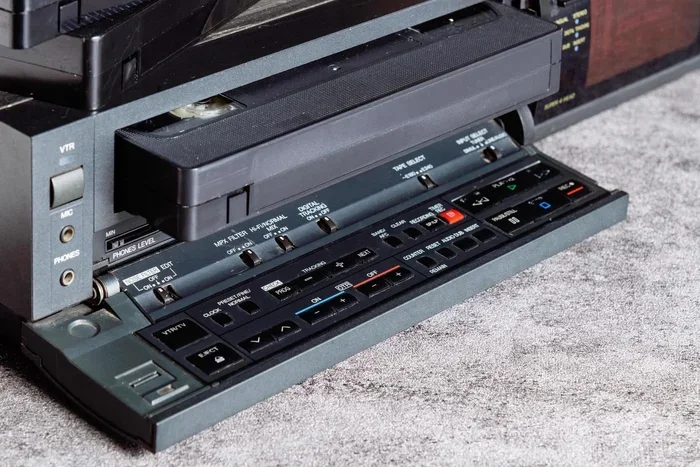
A VCR stands for Video Cassette Recorder. It is the physical machine that plays VHS tapes. A VCR has a loading tray or slot where you insert the cassette. Inside, a motor spins the tape past a playback head. The head reads the magnetic information and sends it to your television.
How a VCR Works
When you press play on a VCR player, several things happen at once. The motor begins to rotate the tape reel. The playback head moves across the tape and reads the magnetic patterns. A processor converts those patterns into video and audio signals. Those signals travel through a cable to your TV. The TV displays the picture and plays the sound.
Most VCRs also had a recording function. You could press record and the VCR would capture whatever was playing on your television onto a blank VHS tape. This was huge in the 1980s and 1990s. People recorded movies from TV, saved family events, and taped their favorite shows. The VCR gave people control over when and how they watched video.
Types of VCR Machines
Not all VCRs were the same. Here are the main types you might encounter:
- Standard VCR: Plays and records VHS tapes. This was the most common type in homes.
- VCR/DVD Combo: A single device that plays both VHS tapes and DVDs. These became popular as DVDs emerged in the late 1990s.
- VCR/DVD/Blu-ray Combo: An all-in-one machine that handles older and newer formats. These were convenient but sometimes compromised on quality.
- S-VCR: A VCR that supports S-VHS tapes for better video quality.
- Portable VCR: A smaller, battery-powered unit for on-the-go viewing. These were less common but useful for travel.
When shopping for a VCR player, you wanted to make sure it matched your tape format. A standard VCR plays standard VHS tapes. An S-VCR can play both standard VHS and S-VHS tapes. Using the wrong type could mean poor picture quality or a tape that does not fit.
The Key Differences Between VHS and VCR
This is where people get confused. Let us break it down clearly. The table below shows the main differences at a glance.
- VHS is a tape format. It is the physical medium that stores video and audio.
- VCR is a playback device. It is the machine that reads and displays the content on a VHS tape.
- VHS can exist without a VCR. You can hold a tape, store it, or sell it without ever needing a machine.
- A VCR needs a VHS tape to do its job. Without a tape, it is just an empty box with moving parts.
- VHS refers to the entire ecosystem of tapes and players. VCR refers only to the device.
A simple way to remember this is to think about CDs and CD players. A CD is the disc. A CD player is the machine. VHS and VCR work the same way. One is the content carrier, and the other is the device that reads it.
Another way to understand this is to compare it to other media formats. Just like a difference between subs and speakers is that one produces low-frequency sound and the other handles a broader range, a VHS tape and a VCR serve different roles in the video playback chain. Each has a specific job, and they work together to deliver the final experience.
Similarly, when you look at audio equipment, the difference between studio monitors and speakers shows that two things can sound similar but serve entirely different purposes. VHS and VCR follow the same logic. One is the medium, and the other is the machine.
The History of VHS and VCR Technology
The story of VHS and VCR technology is a fascinating look at how home entertainment evolved. JVC developed the VHS format in Japan during the mid-1970s. They wanted to create a standard that would allow consumers to record and watch video at home. Before VHS, watching movies at home meant going to a theater or waiting for a broadcast on TV.
The Rise of Home Video
When VHS players first hit the market, they were expensive. But prices dropped quickly through the late 1970s and 1980s. By the mid-1980s, most middle-class households in the United States and Europe had a VCR player. Rental stores like Blockbuster grew around the VHS format. You could walk in, pick a movie from a shelf, and take it home on a tape.
The VHS format also sparked a boom in home recording. Families could capture birthdays, holidays, and vacations on tape. This was revolutionary at the time. For the first time, ordinary people could create and preserve their own video memories without any professional equipment.
The Decline of VHS and VCR
The decline started in the late 1990s with the arrival of DVDs. DVDs offered better picture quality, smaller discs, and no rewinding. By the early 2000s, DVD players were replacing VCRs in most homes. The last major VHS release in the United States was in 2006. After that, production of both tapes and players slowed to a trickle.
Today, VHS and VCR machines are mostly collectors items. Some people still enjoy the nostalgic warmth of watching old tapes. Others use them for archiving rare or out-of-print content. If you still have a working VCR, you are sitting on a piece of technology history.
Common Uses for VHS Tapes and VCR Players
Even though both formats are largely outdated, they still have uses today. Here are some ways people still engage with VHS and VCR technology:
- Watching classic movies: Some films were only released on VHS and never made it to DVD or digital.
- Home video archives: Family recordings from the 1980s and 1990s are often still on VHS tape.
- Nostalgia and collecting: Retro enthusiasts collect both tapes and players as hobbies.
- Educational content: Some schools and training programs still use VHS for older materials.
- Art and creative projects: Artists use VHS aesthetics for retro-style videos and installations.
- Preservation: Many people digitize their old VHS tapes to preserve them before the tape degrades.
If you have a collection of old tapes, you might want to consider transferring them to digital format. Tape degrades over time, and a working VCR player can be hard to find. Digitizing your tapes now ensures you do not lose those precious memories.
How to Tell If You Have a VHS Tape or a VCR Player
This might sound obvious, but it is worth clarifying. If you hold a flat, rectangular plastic case with a tape visible inside, that is a VHS tape. If you have a machine with a loading tray where you slide the case in, that is a VCR player. The tape goes into the machine.
Here are a few quick tips to help you identify each:
- VHS tapes have two spools of tape visible through the clear plastic shell.
- VCR players have a front-loading tray or a top-loading slot for the cassette.
- VHS tapes usually have labels on the spine showing the title and recording time.
- VCR players have buttons or a remote control for play, rewind, fast forward, and record.
- VHS tapes are portable and can be stored on a shelf.
- VCR players are bulky electronic devices that need to be connected to a television.
If you are unsure whether something is a tape or a machine, look for the tape reels. If you see two spools of magnetic tape inside a plastic case, you have a VHS tape. If you see a machine with a slot or tray, you have a VCR player.
VHS vs VCR in the Modern World
Today, most people consume video through streaming services, digital downloads, or Blu-ray discs. The idea of inserting a physical tape into a machine might feel outdated. But the difference between a VHS and a VCR player still matters for several reasons.
First, there is a growing retro and vintage market. Collectors seek out working VCR machines and rare VHS tapes. The nostalgic appeal of watching a movie on an old tape has a certain charm that digital formats cannot replicate. The grainy picture, the warm colors, and the mechanical sound of the tape spinning all add to the experience.
Second, many people have irreplaceable content on VHS tapes. Old family videos, home movies, and personal recordings may only exist in VHS format. If the tape deteriorates or the VCR breaks, that content could be lost forever. Converting VHS to digital is the best way to preserve these memories.
Third, understanding the distinction between format and device is a valuable knowledge base. It applies to many other technology comparisons too. Whether you are comparing camera formats or storage devices, the same principle holds true. The format is the medium, and the device is the tool that reads it.
For example, when comparing video formats, the concept is similar to understanding the difference between a point and shoot camera and dslr. One is a type of device, the other is a category of technology. In the same way, VHS is the tape format, and VCR is the playback device.
Common Mistakes People Make With VHS and VCR
Even though the topic is straightforward, people still make mistakes. Here are the most common ones to avoid:
- Calling a VCR a VHS: This is the most common error. A VCR is the machine, not the tape.
- Assuming all VCRs play all tapes: Some VCRs only play standard VHS. They cannot handle S-VHS or VHS-C without adapters.
- Storing tapes improperly: Heat, humidity, and magnetic fields can damage VHS tapes. Store them in a cool, dry place away from electronics.
- Using a worn-out VCR: Old VCR players can damage tapes. The playback head wears down over time and can stretch or break the tape.
- Ignoring digitization: If you have old VHS tapes, do not wait to convert them. Tape quality degrades with age, and finding a working VCR gets harder every year.
Avoiding these mistakes will help you preserve your tapes and get the best experience from your equipment. A little care goes a long way when it comes to vintage video formats.
Quick Tips for Using VHS Tapes and VCR Players
If you still have a working setup, here are some tips to get the best results:
- Clean the VCR heads regularly: Use a head cleaning cassette every 10 to 20 hours of playback. Dirty heads cause poor picture quality.
- Rewind tapes before storing: This prevents uneven tension on the tape and reduces the risk of damage.
- Eject tapes properly: Do not force a tape out. Use the eject button and wait for the machine to release it fully.
- Keep tapes away from magnets: Magnetic fields can erase the data on your tapes. Keep them away from speakers, motors, and magnets.
- Check the tape before playing: Look for mold, warping, or visible damage. A damaged tape can jam or break inside the VCR.
These simple habits will extend the life of both your tapes and your machine. A little maintenance now saves you from headaches later.
Conclusion
The difference between a VHS and a VCR player comes down to one simple idea. VHS is the tape. VCR is the machine. One stores the video, and the other reads it. They work together to deliver home video entertainment, but they are not interchangeable terms.
Understanding this distinction helps you navigate the world of vintage technology with confidence. Whether you are cleaning out a storage space, building a retro collection, or preserving family memories, knowing the basics makes all the difference. Next time someone calls a VCR a VHS, you can politely correct them.
Take a moment to appreciate what these technologies meant. VHS and VCR players gave people the power to record, watch, and share video at home for the first time. That was a big deal. Even though digital formats have taken over, the legacy of VHS and VCR lives on in the memories they helped create.
Frequently Asked Questions
Can a VCR play anything other than VHS tapes?
A standard VCR can only play VHS tapes. Some combo machines can also play DVDs or Blu-ray discs, but those are separate functions. You cannot put a DVD or Blu-ray into a regular VCR and expect it to work.
Why do people still use VHS tapes today?
People use VHS for nostalgia, collecting, and preserving old family videos. Some movies were only released on VHS and never got a digital transfer. Others enjoy the retro aesthetic and the hands-on experience of watching a physical tape.
How long do VHS tapes last?
A well-stored VHS tape can last 10 to 20 years or more. However, heat, humidity, and magnetic fields can shorten that lifespan significantly. If you have important recordings, consider digitizing them as soon as possible.
Is it hard to find a working VCR player today?
It can be challenging but not impossible. Secondhand stores, online marketplaces, and vintage electronics shops often have working VCRs. You may need to clean or repair the machine, but many still function perfectly.
What is the best way to preserve old VHS tapes?
The best method is to digitize them. You can use a VCR connected to a capture card or a dedicated VHS-to-digital converter. This creates a digital copy that you can store on a computer or external drive and watch without needing the original tape.
Does VHS stand for something specific?
Yes. VHS stands for Video Home System. It was the name given to the format by its developer, JVC, when it was introduced in 1976. The name reflects its purpose of bringing video recording into the home.