What Is the Difference Between Smds and Leds
SMDs (Surface Mounted Devices) and LEDs (Light Emitting Diodes) are not the same thing — SMD is a mounting method, while LED is a lighting technology. SMD LEDs combine both concepts, using surface mount technology to package LED chips into compact, efficient light sources. This guide breaks down everything you need to know about SMD vs LED differences, uses, and benefits.
If you have ever looked closely at a screen, a LED strip, or even the tiny flash on your phone, you have seen SMD LEDs in action. These little components power a huge part of our modern tech world. But here is the thing — many people use the terms SMD and LED interchangeably, and that causes real confusion.
The truth is, SMD and LED are two different concepts that happen to work together beautifully. Understanding the difference matters whether you are building a DIY project, shopping for displays, or just curious about how your devices work. Let us break it all down in simple terms.
Key Takeaways
- SMD is a mounting technique: It refers to how electronic components are attached to a circuit board, not a light source itself.
- LED is a lighting technology: LEDs produce light when electrical current passes through a semiconductor diode.
- SMD LEDs merge both worlds: They use surface mount packaging to create smaller, brighter, and more efficient LED modules.
- SMD LEDs dominate modern displays: From phone screens to outdoor billboards, SMD LED technology powers most high-resolution displays today.
- Traditional LEDs come in larger packages: Through-hole LEDs are bigger but easier to hand-solder for DIY projects.
- Your choice depends on the application: SMD LEDs excel in compact, high-density designs, while traditional LEDs work well for simpler circuits.
📑 Table of Contents
What Are SMDs?
SMD stands for Surface Mounted Device. It describes a way of attaching electronic parts directly onto the surface of a circuit board. Instead of threading wire leads through holes in the board (the old-school method), SMD components sit flat on top and get soldered in place.
How SMD Technology Works
Surface mount technology, or SMT, revolutionized electronics manufacturing in the 1980s. Before SMD, every component had bulky leads that needed to go through holes. SMD components are tiny, compact, and designed to sit on the board surface. A machine places them precisely, and then solder paste holds them in place during a reflow process.
This method allows manufacturers to fit more components into smaller spaces. That is why your smartphone is so thin and powerful today. SMD technology makes it possible.
Common Types of SMD Components
SMD is not just about LEDs. Many electronic parts use surface mount packaging:
- Resistors and capacitors — the small black rectangles on any circuit board
- Microchips and processors — the brains of your devices
- SMD LEDs — light-producing diodes in a surface mount package
- Sensors and connectors — components that detect and transfer signals
So when someone says “SMD,” they are talking about the package style, not the function of the part. An SMD resistor and an SMD LED both use the same mounting method, but they do completely different jobs.
What Are LEDs?
LED stands for Light Emitting Diode. An LED is a semiconductor device that produces light when electricity flows through it. Unlike old incandescent bulbs that heat a filament, LEDs generate light through electroluminescence — a process that is far more efficient and long-lasting.
How LEDs Produce Light
Inside every LED, you will find a tiny semiconductor chip. When current passes through this chip, electrons recombine with electron holes, releasing energy in the form of photons — that is light. The color of the light depends on the semiconductor material used. Different materials produce red, green, blue, white, or even ultraviolet light.
LEDs have come a long way since the first visible red LED appeared in 1962. Today, they are used in everything from indicator lights to full-color displays and general lighting.
Types of LED Packages
LEDs come in several physical forms:
- Through-hole LEDs — the classic type with long leads that go through holes in a board
- SMD LEDs — surface mount LEDs designed to sit flat on a circuit board
- COB LEDs — chip-on-board LEDs that pack many tiny LED dies into one module
- LED strips and modules — pre-packaged LED arrays for easy installation
Each type has its strengths. Through-hole LEDs are great for beginners because they are easy to handle and solder. SMD LEDs are smaller and more efficient, which makes them ideal for modern electronics.
Key Differences Between SMDs and LEDs
Now that you know what each term means, let us look at the actual differences. The easiest way to understand this is to remember that SMD is about how a component is mounted, while LED is about what the component does.
SMD vs LED: A Direct Comparison
Here is a side-by-side look at how SMDs and LEDs compare across important factors:
- Definition: SMD refers to a mounting method. LED refers to a light-producing technology.
- Size: SMD LEDs are extremely small — often just a few millimeters across. Traditional through-hole LEDs are larger.
- Efficiency: SMD LEDs convert more electrical energy into light, wasting less as heat.
- Application: SMD LEDs dominate in displays, screens, and compact devices. Traditional LEDs work well for indicators and simple circuits.
- Soldering: SMD components require precise reflow soldering. Through-hole LEDs can be hand-soldered easily.
- Cost: SMD LEDs cost more to manufacture but deliver better performance per watt.
The comparison above shows that SMD and LED are not competitors — they are complementary. When you combine SMD technology with LED technology, you get an SMD LED: a compact, efficient, and bright light source that powers much of today’s electronics.
Understanding SMD LED Packages
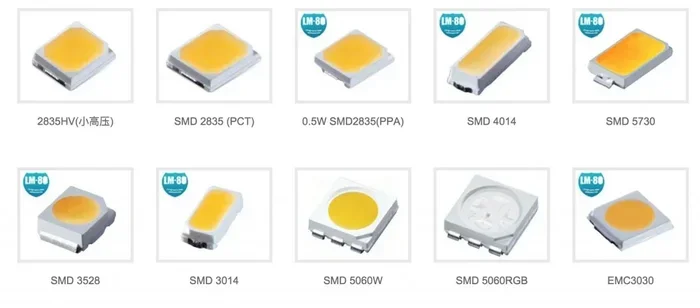
SMD LEDs come in standard sizes identified by numbers like 2835, 3528, 5050, and 5630. These numbers refer to the dimensions in millimeters. For example, a 2835 SMD LED is 2.8mm long and 3.5mm wide. The smaller the package, the higher the pixel density you can achieve in displays.
Here is a quick look at common SMD LED sizes and their uses:
- 2835: Used in LED strips and general lighting. Produces excellent brightness at low power.
- 3528: An older standard, still found in basic LED strip lights and decorative lighting.
- 5050: Contains three LED chips in one package, allowing RGB color mixing. Popular in accent lighting.
- 5630: High-power SMD LED used in flashlights and task lighting where brightness matters most.
Each size serves a different purpose. The smaller ones are perfect for dense displays, while the larger ones deliver maximum brightness for lighting applications.
Where SMD LEDs Are Used
SMD LED technology is everywhere in modern life. You interact with it more than you probably realize. Let us explore the most common applications.
Displays and Screens
Your television, phone screen, laptop display, and outdoor billboard all rely on SMD LEDs. In an LED TV or LED display, thousands of tiny SMD LED chips are arranged in a grid to produce images. Each pixel contains red, green, and blue SMD LEDs that mix to create the colors you see.
The smaller the SMD LED package, the sharper the image. That is why high-end displays use tiny 3535 or even smaller SMD LEDs to achieve incredible detail and clarity.
Lighting and Illumination
LED lighting has taken over the bulb market, and SMD LEDs are the reason. Modern LED bulbs use SMD chips mounted on a small circuit board to produce bright, energy-efficient light. Compared to old incandescent bulbs, SMD LED lights use up to 80% less energy and last much longer.
You will find SMD LEDs in:
- Home ceiling lights and panel lights
- Under-cabinet kitchen lighting
- Street lights and outdoor fixtures
- Automotive headlights and taillights
- Flashlights and portable lighting
Consumer Electronics
Think about the last time you used your phone or laptop. The notification lights, keyboard backlighting, and camera flash all use SMD LEDs. Even the power indicator on your charger is likely an SMD LED component.
In fact, the tiny flash next to your phone camera uses a specific type of SMD LED designed for high-intensity bursts of light. It is incredible how much technology fits into such a small space.
Signage and Advertising
LED signs and digital billboards depend heavily on SMD LED technology. The bright, vibrant colors you see in outdoor signs are produced by dense arrays of SMD LEDs. Because SMD LEDs can be packed closely together, sign manufacturers can create seamless, high-resolution displays that grab your attention from far away.
SMD vs Traditional LEDs: Which Should You Choose?
Deciding between SMD LEDs and traditional through-hole LEDs depends on your project and goals. Neither option is universally better — each has its place.
Choose SMD LEDs When
- You need a compact, space-saving design
- You want high brightness in a small footprint
- You are building a display or screen
- You need energy-efficient lighting for long hours
- You are working on a professional or commercial project
Choose Traditional LEDs When
- You are a beginner learning electronics
- You need to hand-solder components on a prototype
- You are building a simple circuit or indicator light
- You want easy replacement and swapping
- You are working on a low-cost project where size does not matter
For most modern applications, SMD LEDs are the clear winner. They offer better performance, smaller size, and greater efficiency. But there is still a place for traditional LEDs in education, prototyping, and simple DIY projects.
Quick Tips for Working with SMD LEDs
If you are new to SMD LEDs, keep these practical tips in mind:
- Use a reflow oven or hot plate — hand-soldering SMD LEDs is tricky and can damage them easily.
- Check the polarity — SMD LEDs have a positive and negative side, just like through-hole LEDs. Getting it wrong means no light.
- Start with LED strips — pre-made SMD LED strips are the easiest way to experiment with this technology.
- Watch your current limits — SMD LEDs can overheat if you exceed their rated current. Always check the datasheet.
- Use thermal management — a small heatsink or good PCB design helps SMD LEDs last longer and stay bright.
The Future of SMD LED Technology
SMD LED technology continues to evolve at a fast pace. Manufacturers are constantly developing smaller, brighter, and more efficient packages. The trend toward miniaturization means we can expect even denser displays and more compact lighting solutions in the coming years.
One exciting development is the rise of micro-LED displays. These use ultra-small SMD LEDs to create displays with incredible contrast, brightness, and energy efficiency. Companies are already working on micro-LED TVs and wearable devices that promise to change how we experience screens.
Another area of growth is in LED signage and smart lighting. SMD LEDs are being integrated with sensors, Wi-Fi, and smart home systems to create adaptive lighting that responds to your environment. The possibilities are expanding fast.
As LED technology improves and surface mount manufacturing becomes more precise, we will see SMD LEDs in even more products and applications. From flexible displays to wearable tech, this combination of mounting method and lighting technology is shaping the future of electronics.
Conclusion
The difference between SMDs and LEDs comes down to this: SMD is how a component is mounted on a board, and LED is what the component does — it emits light. When you combine them, you get SMD LEDs, which are at the heart of modern displays, lighting, and countless electronic devices we use every day.
Understanding this distinction helps you make better choices, whether you are shopping for a new TV, planning a lighting project, or just satisfying your curiosity. SMD LEDs offer compact size, high efficiency, and excellent brightness, making them the go-to choice for most modern applications.
Next time you look at a bright screen or switch on an LED light, you will know exactly what is happening inside — tiny SMD LEDs working together to produce the light and images you see. It is a small technology that makes a big difference in our daily lives.
Frequently Asked Questions
Is an SMD the same as an LED?
No, they are not the same. SMD stands for Surface Mounted Device, which is a mounting method. LED stands for Light Emitting Diode, which is a lighting technology. An SMD LED is an LED that uses surface mount packaging, combining both concepts into one component.
Why are SMD LEDs smaller than traditional LEDs?
SMD LEDs are designed to sit flat on a circuit board surface without long leads. This compact design removes the need for through-hole mounting, allowing manufacturers to create much smaller packages. A typical SMD LED chip is only a few millimeters in size.
Can I replace a traditional LED with an SMD LED?
It depends on your circuit design. SMD LEDs have different solder pads and mounting requirements than through-hole LEDs. You would need to redesign the circuit board or use an adapter. For most DIY projects, it is easier to stick with the type your board was designed for.
Are SMD LEDs more energy-efficient than regular LEDs?
SMD LEDs tend to be more efficient because their small size and surface mount design allow for better heat dissipation and closer component placement. However, efficiency also depends on the specific LED chip and driver circuit, not just the package type.
What does the number on an SMD LED mean?
The numbers like 2835 or 5050 refer to the LED package dimensions in millimeters. For example, 2835 means the LED is 2.8mm long and 3.5mm wide. These standardized sizes help designers choose the right component for their specific application.
Do SMD LEDs last longer than other types of LEDs?
SMD LEDs generally have a long lifespan, often rated at 50,000 hours or more. Their compact design and efficient heat management contribute to this longevity. However, actual lifespan depends on operating conditions, current levels, and the quality of the manufacturing process.