Mounting a car camera (dashcam) in California is legal but strictly regulated by Vehicle Code 26708 to prevent driver distraction. You can typically install it on the windshield in the lower corners behind the wiper sweep or on the dashboard, but never in the center or directly behind the rearview mirror where it obstructs your view. Always prioritize a clear, unobstructed field of vision for safe driving and to avoid costly citations.
So, you’ve decided to get a dashcam. Great choice! In today’s driving environment, having an unbiased eyewitness on your dashboard is one of the smartest investments you can make for peace of mind, insurance claims, and capturing those unexpected moments. But before you slap that suction cup on your windshield and hit the road, you need to know the rules. California, like many states, has specific laws about what you can and cannot attach to your car’s windshield. Getting it wrong can mean a ticket, a forced removal, and a frustrated day. This guide will walk you through exactly where you can mount a car camera in California, breaking down the legalese into simple, actionable advice.
Key Takeaways
- Windshield Mounts are Legal but Limited: You can mount a camera on the lower corners of the windshield (typically 5-inch square area), but not in the center 7-inch square directly behind the mirror or anywhere that blocks your view.
- Dashboard Mounts are a Safe Alternative: Securing the camera to the dash with a suction cup or adhesive pad is universally legal in California as it does not obstruct the windshield.
- Rearview Mirror Mounts are Risky: Mounting a camera *on* or *around* the rearview mirror assembly is almost always illegal as it interferes with the mirror’s primary function.
- No Obstructive Mounting Allowed: The core legal principle is that any device must not materially obstruct the driver’s clear view through the windshield. This applies to all mounts.
- Professional Installation is Recommended: To ensure compliance and safety, having a professional run the power cable along the headliner and door seals is the best practice for a clean, legal setup.
- Local Laws Can Be Stricter: While state law sets the baseline, some California cities or counties may have additional ordinances, so always check local regulations.
- Penalties for Illegal Mounts Include Fines: An improper mount is a “fix-it” ticket, but you can be pulled over, fined, and required to remove the device immediately.
📑 Table of Contents
Understanding California’s Windshield Obstruction Law (VC 26708)
Let’s start with the foundation. The rule that governs everything is California Vehicle Code Section 26708. This law states that no person shall drive a motor vehicle with any object or material placed, displayed, installed, affixed, or applied upon the windshield or side windows that materially obstructs the driver’s clear view through the windshield or side windows. That phrase “materially obstructs” is the key. It’s not about any object at all; it’s about whether that object gets in the way of you seeing the road, traffic signals, pedestrians, or other vehicles clearly.
The law doesn’t give you a free-for-all. It specifically targets the driver’s primary field of vision. To provide some concrete guidance, the law and subsequent law enforcement interpretations have defined two critical zones on the windshield:
- The “7-inch Square” (Center): This is the area directly behind the rearview mirror. It’s roughly a 7-inch square area. Placing anything here is a near-guaranteed violation. This area is considered absolutely critical for the driver’s forward view, and even a small object here is deemed obstructive.
- The “5-inch Square” (Lower Corners): This is the exception to the rule. The law permits the installation of certain devices, including dashcams, in the lower corners of the windshield. Specifically, in the area extending from the bottom of the windshield to a point not more than 5 inches above the bottom of the windshield, and between the vertical lines that are 5 inches from the left and right edges of the windshield. Think of it as two small rectangles in the bottom corners, often within the sweep of your windshield wipers.
This 5-inch square corner rule is your primary legal pathway for a windshield-mounted dashcam. It’s designed to allow for necessary devices (like toll transponders or dashcams) while protecting the vast majority of your forward view.
What Does “Materially Obstructs” Really Mean?
Even if you place your camera within the 5-inch square, an officer can still issue a citation if they believe it materially obstructs your view. This is subjective. A large, bulky camera with a wide housing might be seen as more obstructive than a slim, low-profile model. The position relative to your seating position matters. If, when you sit in your driver’s seat, the camera body or its lens housing blocks even a small portion of your view of the road ahead, it could be problematic. The goal is to have the lens itself clear, but the physical device should be as minimal and tucked away as possible.
The Safest & Most Legal Mounting Locations in California
Now that you understand the legal framework, let’s talk about your practical options, ranked from most recommended to riskiest.
Visual guide about Where Can I Mount a Car Camera in California
Image source: m.media-amazon.com
1. The Dashboard (The Gold Standard)
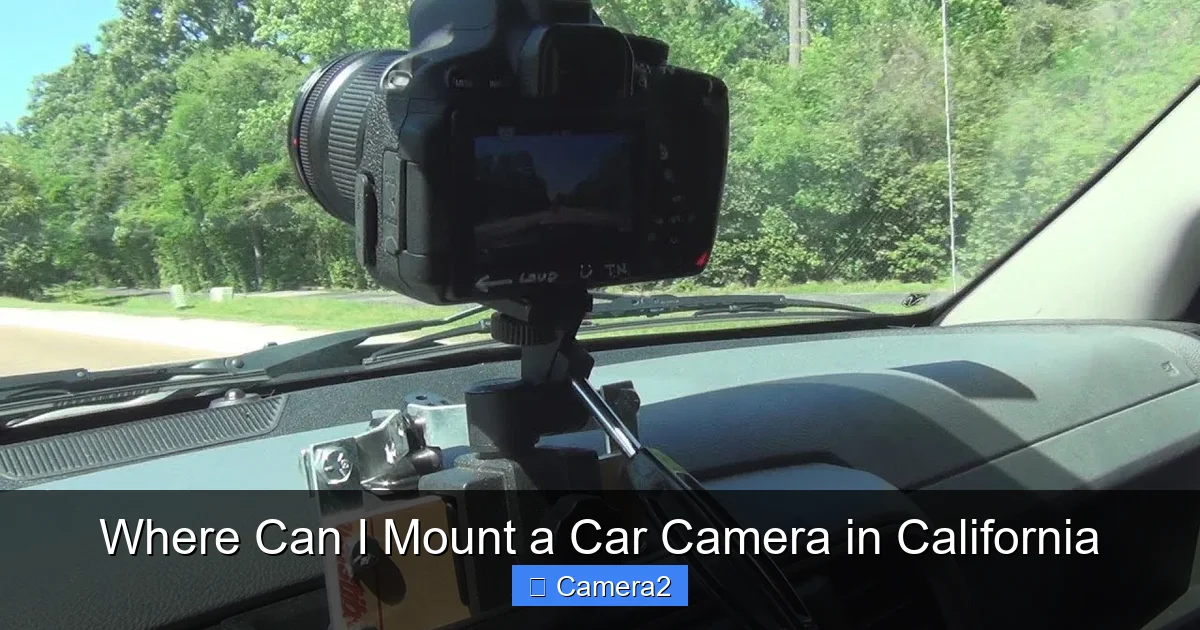
Mounting your dashcam directly on the dashboard with a suction cup or a heavy-duty adhesive pad (like 3M VHB) is, without question, the safest and most legally sound method. Why? Because it doesn’t involve the windshield at all. The law is very clear about the windshield and side windows. The dashboard is not mentioned. There is zero ambiguity here. A camera sitting on your dash, even if it’s large, cannot be cited for violating VC 26708 because it’s not on a window. The only consideration is ensuring it doesn’t slide around and become a projectile in a sudden stop, so a good, secure mount is essential. This is the method I always recommend for California drivers who want 100% peace of mind regarding the law.
2. The Lower Windshield Corners (The Legal Windshield Spot)
If you prefer the elevated view and the aesthetic of a windshield mount, you must place it within those defined 5-inch square areas in the lower corners. Here are the best practices for doing this correctly:
- Passenger Side Corner: This is often the preferred spot. It’s away from the driver’s primary line of sight and usually has a better angle for capturing the road ahead without the dashboard or hood blocking the view. It’s also typically out of the direct path of the driver’s natural glance to the right.
- Driver Side Corner: This is acceptable but can be more intrusive. Be extra mindful that the camera body does not impinge on your view of the left-side mirror or the left portion of the road. For most people, the passenger corner is simply a better choice.
- Behind the Wiper Sweep: Ideally, mount it low enough that the windshield wipers can clean the area in front of the lens. A dirty lens produces poor footage. Mounting behind the wiper path ensures the lens stays clear during rain.
Use a high-quality suction cup mount with a “wet” or “gel” ring for a super-secure hold on glass. Look for mounts with a small footprint—the smaller the camera’s housing against the glass, the less likely it is to be seen as obstructive.
3. Behind the Rearview Mirror (A Gray Area, But Generally No)
This is a tempting spot because it’s central and can hide the camera. However, it is almost universally illegal in California. Mounting anything on the mirror assembly itself violates the spirit and letter of the law, as it directly obstructs the mirror’s function. Even mounting a camera *immediately adjacent* to the mirror, where its body overlaps into the protected 7-inch square, is a violation. Some manufacturers sell “mirror-style” dashcams that integrate a camera into a replacement rearview mirror. These can be legal if and only if the entire assembly is a standard, approved rearview mirror (with a mirror surface) and the camera lens is integrated in a way that does not add bulk or obstruction beyond a standard mirror. For a standard clip-on or suction cup camera, avoid this zone entirely.
Installation Tips for a Clean, Legal, and Functional Setup
Where you mount is only half the battle. How you install it matters just as much for legality, safety, and longevity.
Visual guide about Where Can I Mount a Car Camera in California
Image source: i.ytimg.com
Routing the Power Cable
A dangling power cable from your camera to the 12V socket is not only unsightly but can be a minor distraction or snag hazard. The professional way is to hide the cable. For a windshield or dashboard mount:
- Plan the Route: Run the cable from the camera, up along the headliner (the fabric roof interior) to the A-pillar (the post between the windshield and front door).
- Use Trim Removal Tools: Gently pry open the plastic A-pillar trim. Do not use excessive force.
- Tuck the Cable: Tuck the cable behind the A-pillar plastic and down along the inside of the pillar.
- Under the Door Seal: Continue routing the cable under the rubber door seal (the one that meets the door frame when closed) and into the door itself, then along the door’s interior to the footwell.
- To the Fuse Box: From the footwell, you can route it to the fuse box for a hardwired, always-on power connection (using a fuse tap and a low-voltage cutoff module), or simply run it to the 12V socket under the dash/center console.
Pro Tip: If you’re not comfortable with this, many auto electronics shops and even some big-box stores offer professional installation for a reasonable fee. It’s worth it for a clean, factory-like look that doesn’t interfere with airbags or wiring.
The Importance of a Secure Mount
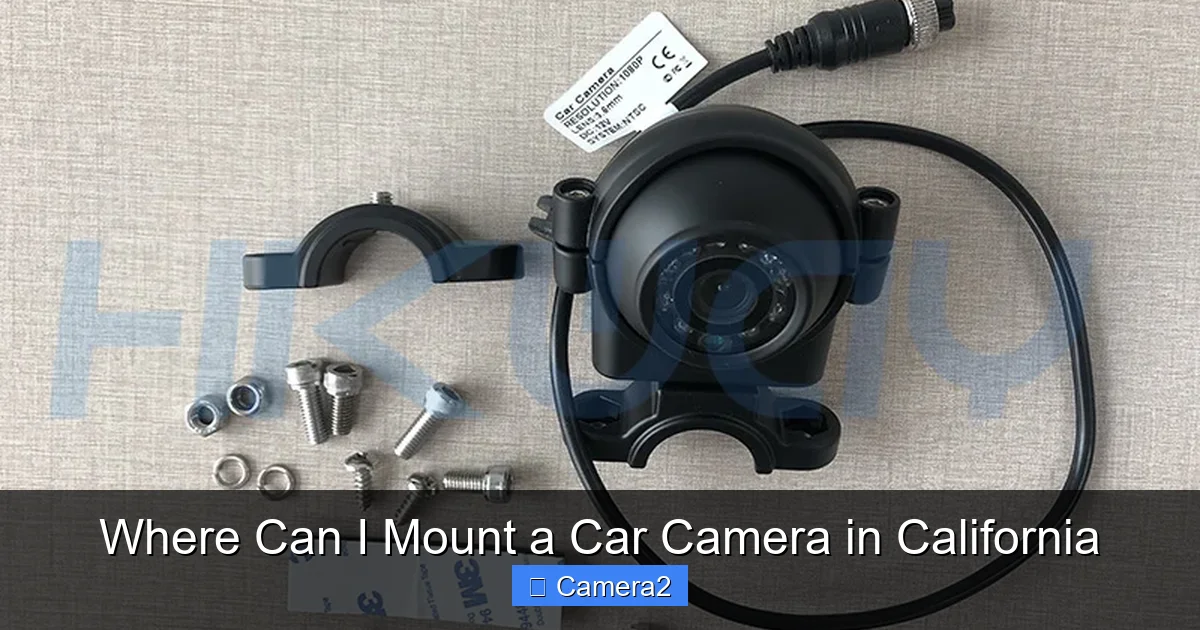
Your mount must hold the camera steady. A vibrating camera produces shaky, unusable footage. Test the mount’s grip before driving. For suction cups, clean the glass with alcohol first. For adhesive pads, ensure the dashboard surface is clean, dry, and free of wax or Armor All. Some adhesives are permanent; others are removable. Know which you’re using. A loose mount that falls off while driving could become a hazardous projectile.
Camera Settings and Field of View
Once mounted, set your camera correctly. Ensure the lens is focused on the road ahead, not the sky or your hood. Most cameras have a wide-angle lens (120-170 degrees). A 140-degree view is often the sweet spot for California—wide enough to capture both lanes and the shoulders, but not so wide that it distorts the edges excessively or unnecessarily captures too much interior. Adjust the recording resolution (1080p, 2K, 4K) based on your storage capacity needs. Higher resolution uses more memory but provides more detail for reading license plates.
The Consequences of an Improper Mount
Why go through all this trouble? Because the consequences of ignoring these rules are real and immediate.
Visual guide about Where Can I Mount a Car Camera in California
Image source: cdn11.bigcommerce.com
What Happens if You’re Pulled Over?
An officer who observes what they believe to be an obstructive device on your windshield has the authority to stop you. The most common outcome is a “fix-it” ticket (also called a correctable violation). You’ll be cited, and you’ll be required to remove the obstruction and potentially get a signed certificate from a law enforcement officer or a mechanic verifying it’s been corrected. You’ll then pay a small administrative fee to the court. It’s a hassle, and it costs money and time.
When It’s More Than a Fix-It Ticket
In some cases, especially if the officer deems the obstruction severe or if you are uncooperative, you could receive a standard moving violation with a higher fine and a point on your driving record. While a single point for an equipment violation is less severe than a moving violation like speeding, it still has implications for your insurance and driving record. The bigger issue is the stop itself—it wastes your time, and if you’re in a hurry or having a bad day, it’s the last thing you need.
Evidence Admissibility in Court
Here’s a critical, often-overlooked point: if your dashcam footage is used as evidence in a court case (either for or against you), the opposing attorney could potentially challenge its legality. They might argue that because the camera was illegally mounted (obstructing your view), the entire stop or incident was tainted, or that your attention was diverted. While this is a complex legal argument and not an automatic disqualifier, it’s another reason to ensure your setup is 100% compliant from the start. A clean, legal installation strengthens the credibility of your footage.
California-Specific Nuances and Comparisons
California’s law is fairly standard but has some specific interpretations.
The “7-inch” vs. “5-inch” Rule is Key
Many states have no specific measurement and rely solely on the “obstruction” standard, which is more subjective. California’s codified 5-inch corner exception provides clearer guidance. If you’re driving across state lines, remember that laws change. What’s legal in California might be illegal in Nevada or Oregon, and vice-versa. The safest bet for cross-country travel is a dashboard mount, which is universally acceptable.
What About GPS Units and Phone Mounts?
The same law applies to all devices. Your GPS navigation unit or your phone mounted for using a maps app is subject to the exact same rules. You cannot mount your phone in the center windshield or in a way that blocks your view. The 5-inch corner rule applies to them as well. This is why so many people use dashboard or vent mounts for their phones—it’s the only way to be certain of compliance. Don’t think the dashcam rules are different; they are identical for any electronic device on the windshield.
Commercial Vehicles and Fleet Rules
Commercial drivers (with a CDL) and fleet vehicle operators often have additional, stricter company policies regarding dashcam placement, regardless of state law. Always check your employer’s guidelines. The legal standard is the minimum; company policy may be more restrictive.
Conclusion: Mount Smart, Drive Safe
In summary, the answer to “where can I mount a car camera in California?” has a clear and simple hierarchy:
- First Choice: The dashboard. It’s completely outside the scope of the windshield obstruction law.
- Second Choice: The lower corners of the windshield (the 5-inch square areas), preferably on the passenger side, behind the wiper sweep, with a low-profile camera and secure mount.
- Never: The center of the windshield behind the mirror, on the rearview mirror itself, or anywhere your direct line of sight to the road is compromised.
Take the time to install your dashcam correctly. A clean, hidden wire run and a secure, legally-placed mount make all the difference. You’ll have your valuable evidence recorder without the nagging worry of a ticket. You bought the camera to reduce stress and risk—don’t introduce new legal risk with a careless installation. Mount it right, drive safely, and let your dashcam be your silent, legal guardian on the road.
Frequently Asked Questions
Is it completely illegal to have anything on my windshield in California?
No. California law (VC 26708) specifically allows devices to be mounted in the lower corners of the windshield (the 5-inch square areas). Objects that do not materially obstruct the driver’s view may also be permitted, but the corner rule is the primary safe harbor for dashcams and GPS units.
Can I mount my dashcam on the rearview mirror itself?
No. Mounting any device on, in, or immediately around the rearview mirror assembly is illegal in California. The area directly behind the mirror (the 7-inch square) is protected to ensure an unobstructed forward view. Even clip-on mirror cameras typically violate this rule.
What is the penalty for an illegal dashcam mount in California?
You will likely receive a “fix-it” ticket, which requires you to correct the violation (remove the obstruction) and obtain certification from an officer or mechanic. You’ll pay an administrative fee. In some cases, it could be a standard moving violation with a higher fine and a point on your record.
Is a suction cup mount on the dashboard legal?
Yes, absolutely. Since the dashboard is not part of the windshield or side windows covered by VC 26708, mounting a camera there with a suction cup or adhesive is 100% legal and is the most recommended method to avoid any legal issues.
Does the size of my dashcam matter for legality?
While the law doesn’t specify size, a smaller, low-profile camera mounted correctly in the corner is far less likely to be cited than a large, bulky camera that visibly blocks part of your view, even if technically within the 5-inch zone. “Material obstruction” is the standard, so smaller is better.
I’m driving to another state. Do I need to remount my dashcam?
California’s corner rule is specific. Other states may have different interpretations or no specific measurements at all, relying solely on the “obstruction” standard. A dashboard mount is legal in all 50 states. If using a windshield mount, when entering a state with stricter laws (or if you’re unsure), the safest practice is to ensure your camera is low in the corner and as non-obstructive as possible.