Dslr Camera for Photo Booth
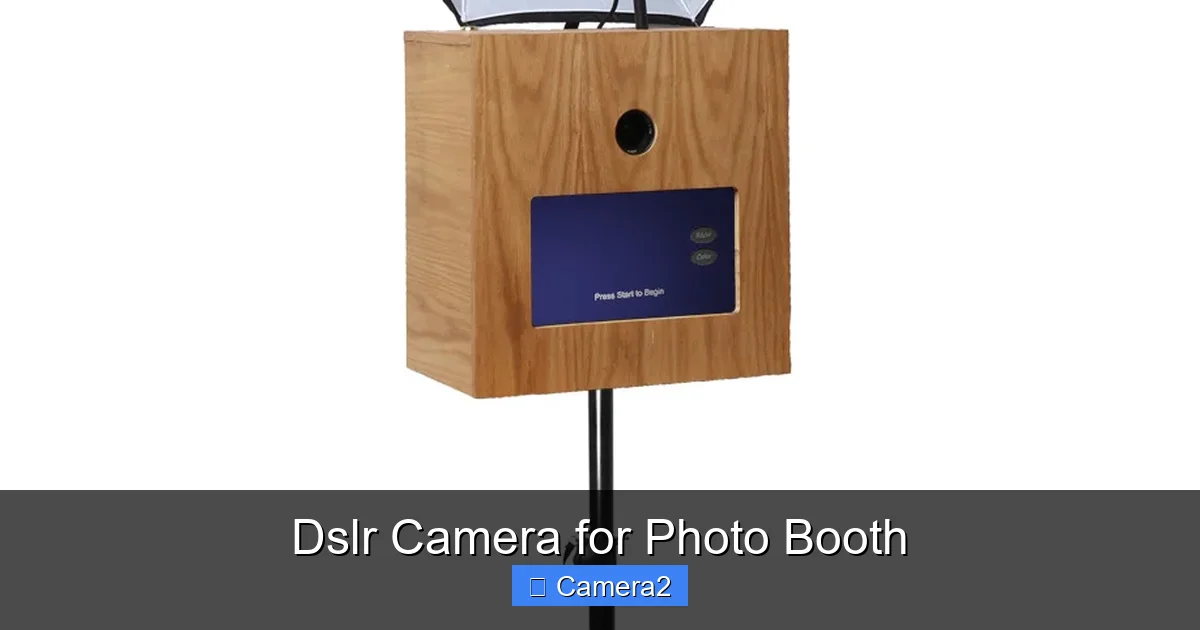
Choosing a DSLR camera for photo booth use is a proven strategy for professional, high-throughput results. Its robust build, superior autofocus, and excellent low-light capabilities ensure sharp, vibrant photos even in chaotic party environments. This guide cuts through the noise to show you exactly which features matter most and how to set up your system for seamless, fun operation.
So, you’re building or upgrading a photo booth. The excitement is real! You’ve got the backdrop, the props, the fun software, and the perfect spot at the wedding or corporate event. But at the heart of it all, the machine that actually captures the joy, laughter, and silly faces, is the camera. And for serious photo booth operators, the debate often circles back to one proven workhorse: the DSLR camera for photo booth applications.
You might be wondering, “Why a DSLR? Aren’t mirrorless cameras the new thing?” It’s a great question. While mirrorless tech is fantastic, DSLRs hold a special place in the photo booth world for a simple reason: they are built like tanks for a marathon, not a sprint. Their optical viewfinders provide a direct, lag-free view, their battery life is often legendary, and their shutter mechanisms are engineered for extreme longevity. In the high-stakes, non-stop environment of a photo booth where a single missed shot or a blurry face can mean a disappointed client, the reliability and raw speed of a good DSLR are hard to beat. This isn’t about chasing the latest trend; it’s about investing in a tool that will pay for itself through sheer, dependable performance. Let’s dive into exactly what makes a DSLR the right choice and how to pick the perfect one for your business.
Key Takeaways
- DSLRs Excel in High-Volume Settings: Their durable, mechanical shutters and fast cycle times are built for thousands of shots, making them ideal for the relentless pace of a photo booth.
- Sensor Size Dictates Image Quality: Full-frame sensors provide the best low-light performance and dynamic range, but high-quality APS-C sensors are a cost-effective and capable alternative for well-lit booths.
- Lens Choice is Critical: A fast prime lens (like 35mm or 50mm f/1.8) is non-negotiable for sharpness, low-light ability, and the classic, flattering perspective guests expect.
- Autofocus Speed & Accuracy are Paramount: You need a camera with a fast, reliable phase-detection AF system to lock onto guests instantly, avoiding blurry or missed shots during energetic moments.
- Durability & Connectivity Matter: Look for weather-sealed bodies and reliable tethered shooting ports (USB or Ethernet) to ensure the camera survives the party and connects flawlessly to your computer.
- Don’t Neglect the Support Ecosystem: A sturdy tripod, a dedicated external power source, and proper lighting are just as important as the camera body itself for a professional, trouble-free setup.
[FEATURED_IMAGE_PLACEHOLDER]
📑 Table of Contents
- The Unbeatable Case for DSLR in Photo Booths
- Decoding the Sensor: Full-Frame vs. APS-C for Your Booth
- The Lens: Your Most Important Investment
- Autofocus: The Speed Demon You Need
- Conquering the Low-Light Beast: ISO Performance
- Durability, Portability, and the “Booth-Ready” Setup
- Putting It All Together: Recommended DSLR Setups for Your Budget
The Unbeatable Case for DSLR in Photo Booths
Before we talk about specific models, let’s establish the foundational “why.” A photo booth isn’t a casual photography scenario. It’s a controlled, repetitive, high-volume production line. The camera is an industrial tool, not an artistic one. Its job is to execute the same perfect shot, hundreds of times a night, without complaint. DSLRs excel here because of their inherent design philosophy.
Built for the Marathon, Not the Sprint
Think about the mechanical shutter in a DSLR. It’s a physical, moving curtain that has been refined for decades. Manufacturers rate these shutters for hundreds of thousands of cycles. A mirrorless camera’s electronic shutter is silent and fast, but in a photo booth with bright studio strobes, you often need to use the mechanical shutter anyway to avoid banding from the flash pulse. A DSLR’s mechanical shutter is its primary mode, designed from the ground up for this kind of work. The body construction is typically more robust, with magnesium alloy frames on pro models, capable of withstanding the bumps, vibrations, and occasional transport mishaps that come with the event business.
Battery Life That Lasts the Whole Wedding
One of the most significant practical advantages is power. A DSLR using an optical viewfinder sips battery compared to a mirrorless camera constantly powering a high-resolution electronic viewfinder (EVF) and sensor. A single charge on a pro-level DSLR like a Canon EOS 5D Mark IV or Nikon D850 can easily last a full 8-hour event of continuous tethered shooting, especially when paired with a battery grip. For a photo booth operator, this means fewer battery swaps, less downtime, and one less thing to worry about when you’re in the middle of a packed reception.
The Lag-Free, Bright Optical Viewfinder
When a guest jumps into the booth, you have seconds to compose and capture. There is zero lag in a DSLR’s optical viewfinder. What you see is exactly what the lens sees, in real-time, with no processing delay. In a fast-paced, often chaotic environment where people are moving quickly, this instantaneous feedback is invaluable. You see the exact moment someone’s eyes close or a prop flies off, and you can react instantly. While modern EVFs are amazing, a minuscule amount of lag can mean the difference between a keeper and a miss in a split-second photo booth scenario.
Decoding the Sensor: Full-Frame vs. APS-C for Your Booth
The sensor is the camera’s heart. It determines image quality, low-light performance, and the field of view with your lenses. For photo booths, the choice often comes down to full-frame (36mm x 24mm) or APS-C (smaller, cropped sensor). Both can produce fantastic results, but they have different strengths and implications for your setup.
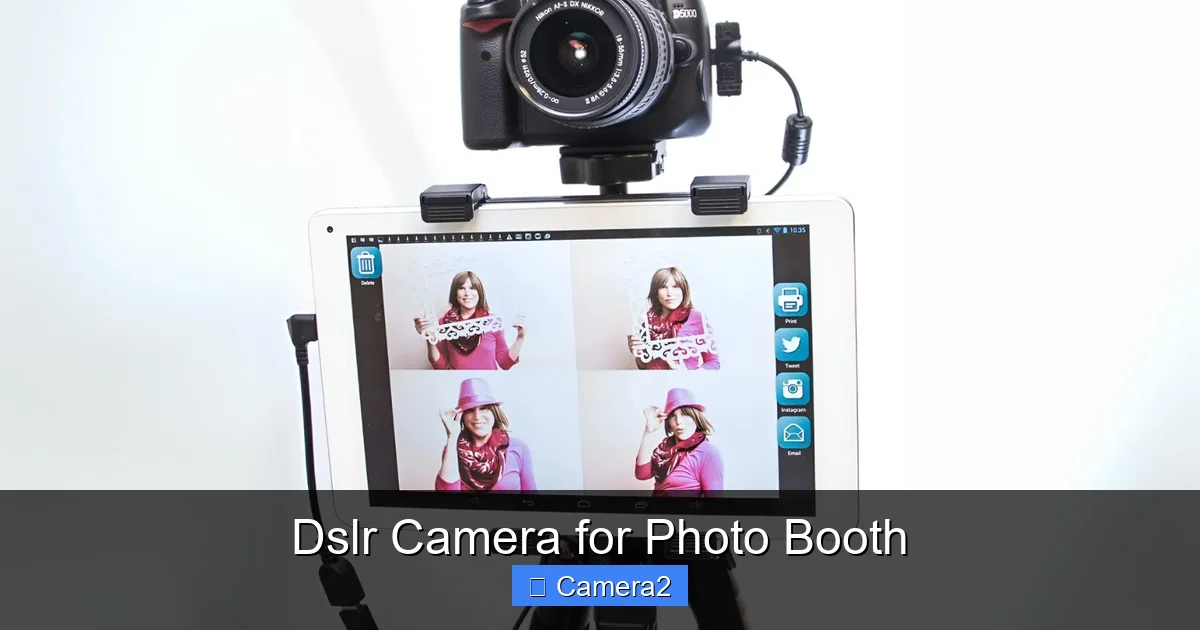
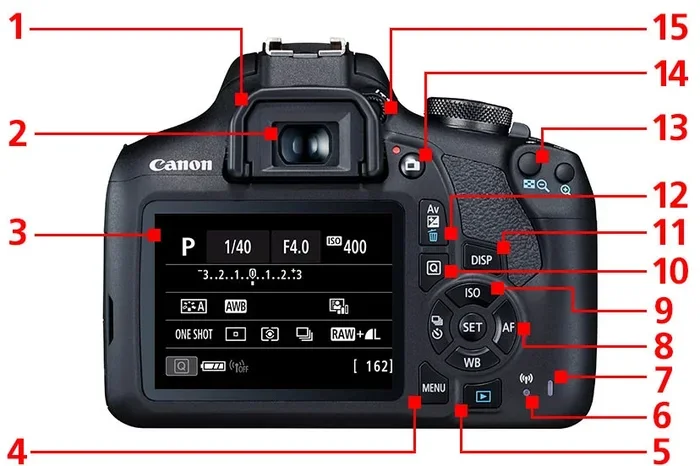
Visual guide about Dslr Camera for Photo Booth
Image source: robots.net
Full-Frame: The Gold Standard for Versatility
A full-frame sensor is the industry standard for professional photography for good reason. Its larger pixels generally capture more light, resulting in superior dynamic range (the ability to see details in both shadows and highlights) and high-ISO performance (less noise in low light). For a photo booth, this is crucial. Why? Because you can’t always control the ambient light. A dimly lit banquet hall, a dark winter evening, or even just the spill from your own booth lights can create challenging conditions. A full-frame DSLR will give you cleaner, more vibrant images at higher ISO settings (like 1600 or 3200) than an APS-C sensor, allowing you to use faster shutter speeds or smaller apertures for greater depth of field without a noise penalty. The field of view is also “native”—a 50mm lens gives you a true 50mm perspective, which is a classic, flattering look for group portraits.
Practical Example: The Canon EOS 5D Mark IV or Nikon D850 are classic full-frame workhorses. In a booth with softbox lighting, you might shoot at ISO 400, f/5.6, 1/125s. If the venue lights dim, you can comfortably bump the ISO to 800 or 1600 on these cameras and still get pristine, noise-free prints.
APS-C: The Smart, Cost-Effective Powerhouse
Don’t underestimate the APS-C sensor. Modern models, like those in the Canon EOS 90D or Nikon D500, are incredibly capable. The main difference is the “crop factor” (usually 1.5x or 1.6x). This effectively multiplies your lens’s focal length. A 35mm lens on a Nikon APS-C (1.5x crop) acts like a 52.5mm lens. This can be an advantage in a tight photo booth space, giving you a slightly tighter frame without needing to back up. The downside is a slight disadvantage in extreme low-light scenarios compared to a modern full-frame sensor, though the gap has narrowed dramatically. The biggest win is cost. You can get a high-resolution, rugged APS-C DSLR body for significantly less than a full-frame counterpart, allowing you to invest more in a superb lens or better lighting—which often makes a bigger difference in image quality than the sensor size alone.
Practical Example: A Nikon D500 paired with a Sigma 18-35mm f/1.8 Art lens is a legendary combo for photo booths. The crop factor gives you an effective 27-52mm range, covering classic wide to standard portrait lengths with a beautiful, fast aperture. It’s a compact, tough, and incredibly sharp setup that excels in most indoor event lighting.
The Verdict for Photo Booths
If your budget allows and you frequently work in very low-light venues (think clubs, dark ballrooms), the full-frame sensor’s low-light prowess is worth the investment. However, for the vast majority of wedding and corporate photo booths where you control the lighting with your own flash/strobe system, a high-end APS-C DSLR is more than sufficient and represents exceptional value. The money saved should be redirected to the next most critical component: the lens.
The Lens: Your Most Important Investment
I will say this plainly: the lens is more important than the camera body for photo booth image quality. A mediocre lens on a great body will still produce mediocre photos. A superb lens on a mid-tier body will make that body sing. For a DSLR camera for photo booth use, you need one specific type of lens: a fast prime lens.
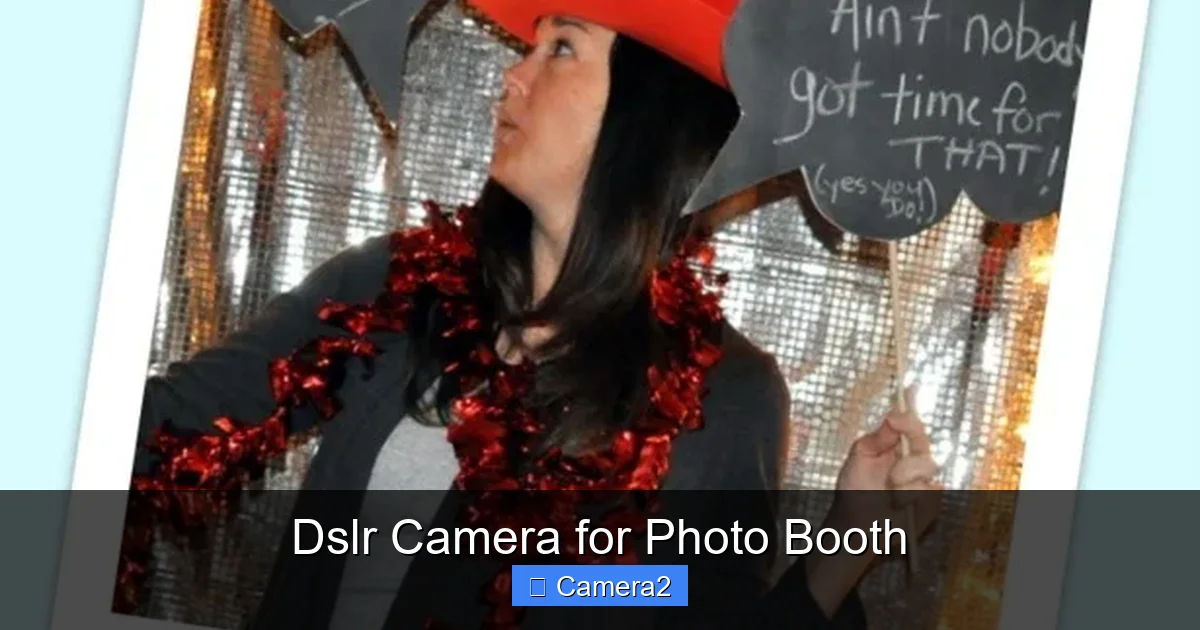
Visual guide about Dslr Camera for Photo Booth
Image source: cleverlyinspired.com
Why a Prime Lens? (And Why Not a Zoom?)
A prime lens has a fixed focal length (e.g., 35mm, 50mm). It doesn’t zoom. This is a good thing for photo booths. First, they are almost always faster—meaning they have a wider maximum aperture like f/1.8 or f/1.4. A wide aperture is your best friend for two reasons: 1) It allows you to use faster shutter speeds to freeze motion (people jumping, throwing props), and 2) It creates a beautiful, shallow depth of field that makes your subjects pop against a softly blurred background, which looks professional and flattering. Zooms, especially kit zooms, are typically slower (f/3.5-5.6) and less sharp at the edges. Second, prime lenses are optically simpler and therefore generally sharper across the entire frame, especially at the center where faces will be. No zooming means no accidental zoom changes mid-event. You set it and forget it.
The Magic Focal Lengths: 35mm vs. 50mm
This is the classic debate. For a photo booth, both are excellent, but they produce a different feel.
- 35mm (on Full-Frame) / 24mm (on APS-C): This is the classic “environmental portrait” lens. It’s slightly wider, allowing you to fit more people into the frame in a confined booth space without having to step back as far. It gives a more inclusive, fun, “we’re all in this together” vibe. It’s incredibly versatile and is the most popular choice for photo booths. On an APS-C sensor, a 24mm lens gives you a true ~35mm equivalent field of view.
- 50mm (on Full-Frame) / 35mm (on APS-C): This is the “standard” perspective, closest to human vision. It produces a very natural, flattering look with minimal distortion. It’s excellent for tighter, more classic portrait-style strips. It might require you to position the booth’s camera a bit further back to fit groups of 4-5 people.
My Recommendation: Start with a 35mm (or APS-C equivalent 24mm). It’s the safest, most flexible bet for the unpredictable group sizes in a photo booth. The Canon EF 35mm f/1.4L II USM or Nikon AF-S 35mm f/1.8G ED are top-tier choices. For budget-conscious setups, the Canon EF 35mm f/2 IS USM or Nikon 35mm f/1.8G are exceptional values that deliver 90% of the performance at half the price.
Non-Negotiable Features in Your Lens
- Fast Aperture (f/1.8 or wider): As discussed, this is key for motion freezing and subject isolation.
- Sharpness: Read reviews. You want a lens that is razor-sharp from f/2.8 to f/5.6, which is likely your shooting range. Avoid lenses that are soft wide open.
- Build Quality: It will get handled, bumped, and transported. A lens with a metal mount and solid construction is worth it. Weather sealing is a huge bonus.
- Silent Autofocus Motor (USM/STM/SWM): While the camera’s shutter sound will dominate, a quiet focus motor is still a nice touch for less intrusive operation, especially during solemn parts of events like ceremonies.
Autofocus: The Speed Demon You Need
In a photo booth, you don’t have time to fiddle with manual focus. Guests press the button, they pose (or don’t!), and you have 1-2 seconds to get a sharp image. Your DSLR’s autofocus system must be able to lock on instantly and track moving subjects if needed (like a child running into the frame). This is where DSLRs truly shine over many older or entry-level mirrorless cameras in continuous use.
Visual guide about Dslr Camera for Photo Booth
Image source: cleverlyinspired.com
Phase-Detection vs. Contrast-Detection
DSLRs use dedicated phase-detection autofocus sensors. This is a mature, incredibly fast technology that can calculate focus distance in a single pass. Mirrorless cameras often rely on contrast-detection on the main sensor (though high-end models now have hybrid systems). For single-shot (AF-S) focusing on a stationary group, both can be fast. But for the unpredictable nature of a photo booth—someone leaning in at the last second, a quick smile—the predictive, snappy nature of a DSLR’s phase-detection system is incredibly reliable. Look for a camera with a high number of cross-type AF points (points that are sensitive to both vertical and horizontal detail), as these are the most accurate and fastest.
AF Points and Coverage
A dense array of AF points gives you flexibility to compose your shot and still have a focus point where you need it. Prosumer and professional DSLRs (like the Nikon D7500, Canon EOS 90D, Canon 5D Mark IV) have 50+ points covering a wide area of the frame. Entry-level DSLRs have fewer points clustered in the center. For a photo booth, you’re usually composing with the group centered, so a central cluster is often acceptable. However, more points mean you can be more precise, especially if you have a guest slightly off-center.
Practical Tip: Use a single AF point (the center point is usually the most sensitive) and manually select it. Don’t rely on auto-area AF. You want to tell the camera exactly where to focus—on the eyes of the person in the middle of the group. Use the “half-press” technique: have your subject roughly in place, half-press the shutter to lock focus, then fully press to capture. This is a fundamental skill for a photo booth operator.
Conquering the Low-Light Beast: ISO Performance
Even with your own lighting, you’ll encounter low-light situations. Maybe the venue’s main lights are off, or you’re shooting a “golden hour” outdoor booth. Your camera’s ability to produce clean images at higher ISOs (like 1600, 3200, or even 6400) is a direct measure of its quality and your final print quality. Noise (grain) is the enemy of fun, crisp photo booth strips.
Why Full-Frame Has the Edge Here
As mentioned in the sensor section, the physics of a larger sensor give it an inherent advantage. The photosites (pixels) can be larger, gathering more light per pixel, which results in less noise when you amplify the signal (increase ISO). A top-tier full-frame DSLR from the last 5-6 years will produce remarkably clean images at ISO 3200, giving you a huge safety net. An excellent APS-C sensor will be very good at ISO 1600-3200 but may start showing more color noise at the very highest settings.
The Real-World Impact on Your Booth Settings
Let’s translate this into your day-to-day settings. Your goal is to use the lowest possible ISO for the cleanest image. You control this with your aperture (lens) and shutter speed. A fast lens (f/1.8) lets in more light, allowing you to use a lower ISO. Your shutter speed must be fast enough to freeze motion—generally 1/125s or faster for people standing, 1/250s+ for jumping. If you’re in a dark venue and your lens is at f/1.8, but you need 1/250s to freeze a jump, your camera’s ISO will need to rise to compensate. A camera with poor high-ISO performance will force you to compromise: either use a slower shutter speed (risk of motion blur) or a smaller aperture (risk of less subject isolation and more depth of field issues). A DSLR with great ISO performance gives you options. You can confidently shoot at ISO 800-1600 in a pinch and still get fantastic, printable results.
Durability, Portability, and the “Booth-Ready” Setup
A photo booth camera is not a delicate museum piece. It gets set up, torn down, transported in a van, and operated by sometimes less-than-graceful assistants (no judgment!). It needs to be tough. It also needs to integrate seamlessly into your booth’s computer system via tethering.
Weather Sealing and Build Quality
Look for terms like “weather-sealed” or “dust and drip resistant” in the specs. This doesn’t mean you can use it underwater, but it provides peace of mind against spilled drinks, dust from venue carpets, and the occasional humidity. Pro-level bodies (Canon 1D/5D series, Nikon D6/D850) have extensive sealing. Even mid-range models like the Canon 90D or Nikon D500 offer very good protection. A magnesium alloy top plate and bottom plate are signs of a robust build. A plastic body can still be durable, but metal is inherently more resistant to cracking under stress.
The Critical Importance of Tethered Shooting
This is the #1 technical requirement for a photo booth DSLR. You must be able to connect the camera directly to your booth computer via USB (and sometimes Ethernet for longer runs) and have the computer instantly control the camera and download the full-resolution image. This is how modern photo booth software (like DSLR Booth, Sparkbooth, dslrBooth) works. The software triggers the shutter, downloads the image, adds the graphics, and prints or displays it—all automatically. Your DSLR must support reliable USB tethering. Almost all modern DSLRs do, but you should verify compatibility with your chosen software’s supported camera list. A flaky tether connection will ruin your event. A wired connection is far more reliable than wireless for this task.
Power Solutions: Never Run Out Mid-Event
The camera’s internal battery is for backup only. You need a dedicated, continuous power solution. This means:
- AC Power Adapter: An official Canon or Nikon AC adapter (like the Canon LC-E5 or Nikon EH-5a) that plugs into the wall or a power strip. This is the primary power source.
- Dummy Battery: A third-party battery-shaped plug that connects to the AC adapter and fits into the camera’s battery compartment. This is what you’ll use constantly.
- Battery Grip (Optional but Recommended): For events with no accessible power or as a backup, a vertical battery grip (BG-E21 for Canon 90D, MB-D18 for Nikon D850) holds two batteries, doubling your run time and providing a more ergonomic portrait orientation.
Never rely on the internal battery alone. Always have the AC adapter/dummy battery setup as your main power and a fully charged spare internal battery as a hot-swappable backup.
Putting It All Together: Recommended DSLR Setups for Your Budget
Now, let’s get practical. Here are three tiers of DSLR camera for photo booth setups, balancing performance, durability, and value.
Workhorse Tier (Best Value & Performance)
This is the sweet spot for most professional operators. You get a rugged, high-resolution APS-C or entry-level full-frame body with superb features, paired with a stellar prime lens.
- Body: Nikon D500 or Canon EOS 90D. The D500 is arguably the greatest APS-C DSLR ever made, with incredible AF, 10fps shooting, and pro-level weather sealing. The 90D offers a whopping 45MP sensor, excellent 4K video, and a very robust feature set. Both have superb tethering support.
- Lens: Nikon AF-S 35mm f/1.8G ED or Canon EF 35mm f/2 IS USM. Both are sharp, fast, relatively compact, and offer image stabilization (IS for Canon), which can help with handheld test shots. Alternatively, the Sigma 18-35mm f/1.8 Art DC HSM for Canon or Nikon mounts is a phenomenal, sharp zoom that covers the classic wide-to-standard range with a constant f/1.8 aperture.
- Why this combo: You are spending money where it counts—on a lens that will deliver stunning images and a body that will never let you down. The total cost is reasonable for the return on investment in reliability and quality.
Pro Tier (No-Compromise Performance)
For operators who demand the absolute best low-light performance, ultimate build quality, and have the budget for it.
- Body: Canon EOS 5D Mark IV or Nikon D850. These are legendary full-frame workhorses. The 5D Mark IV is a reliable, all-around champion with excellent color science. The D850 boasts a 45.7MP sensor with mind-blowing dynamic range and a superb AF system. Both are built to last a decade.
- Lens: Canon EF 35mm f/1.4L II USM or Nikon AF-S 35mm f/1.4G ED. These are professional-grade primes: exceptionally sharp, fast, and built like tanks. They offer that extra half-stop of light (f/1.4 vs f/1.8) which can be a meaningful advantage in very dark corners of a venue.
- Why this combo: This is a “buy once, cry once” setup. The image quality, especially in challenging light, is phenomenal. The durability is unmatched. It’s an investment that will serve a business for many years.
Budget-Conscious Starter Tier
You can start a viable photo booth business without breaking the bank, but you must prioritize the lens.
- Body: Canon EOS Rebel T8i (EOS 850D) or Nikon D3500. These are excellent entry-level DSLRs. They have modern sensors, decent AF systems, and fully support USB tethering. They are lightweight but less weather-sealed than higher tiers.
- Lens: Canon EF 50mm f/1.8 STM or Nikon AF-S 50mm f/1.8G. The “nifty fifty” is the best value lens in any system. It’s incredibly sharp for its price, very fast, and a 50mm on APS-C gives a classic ~75mm portrait equivalent, which is flattering for 2-3 people. Do not buy a kit zoom lens. Invest in this prime first.
- Why this combo: It gets you 90% of the image quality of the pro setups for a fraction of the cost. The body is capable enough for well-lit events. You can upgrade the body later while keeping your excellent lens.
Frequently Asked Questions
Is a DSLR really better than a mirrorless camera for a photo booth?
For many photo booth operators, yes. DSLRs typically offer superior battery life, a lag-free optical viewfinder, and a robust mechanical shutter built for high-volume use. While high-end mirrorless cameras are excellent, the proven reliability, durability, and often lower cost of entry for a capable DSLR body make it a safer, more economical bet for a business-critical tool.
What is the single most important feature to look for in a DSLR for a photo booth?
Reliable USB tethering support. This is non-negotiable. The camera must connect seamlessly and consistently to your booth computer so the software can control the shutter and download images automatically. Always check your photo booth software’s official list of supported and tested cameras before purchasing.
Should I buy a used DSLR for my photo booth?
Used can be a great way to save money, especially for the body. Focus on models from the last 5-7 years (Canon 70D/80D/90D, Nikon D7100/D7200/D500, Canon 5D Mark III/IV, Nikon D800/D810/D850). Inspect the shutter count (most are rated for 150,000+ clicks, a used pro body with 100k is fine). Prioritize buying from a reputable dealer with a warranty. Always buy the best lens you can afford, even if it’s new.
What settings should I use on my DSLR for a typical indoor photo booth?
Start in Manual (M) mode. Set your lens to its sharpest aperture, usually f/5.6 or f/8 (not wide open). Set your shutter speed to at least 1/125s to freeze motion. Set your ISO to the base native ISO (usually 100 or 200) and use your booth’s flash/strobes to provide the light. If your flashes are not powerful enough, increase ISO in steps (400, 800, 1600) until you get a properly exposed, noise-free image. Use single-point autofocus (AF-S) on the center point.
Do I need a battery grip for my photo booth DSLR?
It’s highly recommended, especially for long events or if your booth’s power outlet is far away. A battery grip doubles your battery life and provides a more comfortable grip for portrait-oriented shots. More importantly, it allows you to use a dummy battery connected to an AC adapter as your primary power source, with two fresh batteries in the grip as a hot-swappable backup.
Can I use a kit zoom lens (like 18-55mm) for my photo booth?
You can, but you shouldn’t. Kit zooms are slow (f/3.5-5.6), which forces you to use higher ISO or slower shutter speeds in your booth’s fixed lighting, leading to noise or blur. They are also not as sharp as prime lenses, especially at the edges. The money saved by not buying a prime lens will cost you in image quality and operational flexibility. Invest in a fast prime lens first—it’s the most important piece of glass you’ll buy.
=== CONCLUSION ===
Choosing the right DSLR camera for photo booth duty is a strategic decision that pays dividends in reliability, customer satisfaction, and your own peace of mind. It’s about selecting a rugged, high-performance tool that thrives under pressure, not one that merely survives it. By prioritizing a fast, sharp prime lens, ensuring robust tethering capabilities, and securing a continuous power solution, you build a foundation for a seamless photo booth experience. Whether you opt for the exceptional value of an APS-C workhorse like the Nikon D500 or the unparalleled low-light mastery of a full-frame Canon 5D Mark IV, you are investing in a partner that will capture thousands of genuine smiles without fail. Remember, in the world of photo booths, the best camera is the one that never gets in the way of the fun. A well-chosen DSLR does exactly that, becoming an invisible, utterly dependable engine of joy for every single guest.