Is 8 Megapixel Camera Good
Wondering if an 8 megapixel camera is good? In short, it can be perfectly fine for casual snaps, social media, and even some prints, but it has limits for large‑format prints and heavy cropping. Read on for a friendly breakdown of strengths, weaknesses, and practical ways to get the most out of an 8 MP sensor.
Key Takeaways
- Good for everyday use: 8 MP satisfies most social‑media and smartphone‑level needs.
- Print size matters: Expect crisp 8×10‑inch prints; larger sizes may need up‑sampling.
- Sensor size counts: A larger sensor (e.g., 1‑inch) can outperform a higher‑MP smaller sensor.
- Lighting is king: Proper illumination can make an 8 MP image look sharper than a higher‑MP shot in low light.
- Post‑processing tricks: Sharpening, noise reduction, and smart up‑scaling can extend the usable range.
- Budget friendly: 8 MP cameras often cost less, offering good value for beginners.
- Future‑proofing: If you plan to print large or crop heavily, consider 12 MP+ models.
📑 Table of Contents
- Introduction: Why the 8 Megapixel Question Pops Up
- Understanding Megapixels: The Basics
- When an 8 MP Camera Shines
- Limitations: When 8 MP May Not Be Enough
- How to Get the Most Out of an 8 MP Camera
- Comparing Popular 8 MP Models
- Is 8 Megapixel Camera Good? The Bottom Line
- Practical Tips for First‑Time Buyers
- Conclusion: Making the Right Choice
Introduction: Why the 8 Megapixel Question Pops Up
When you walk into a store and see a compact camera labeled “8 MP,” your brain might jump to “Is that good enough?” The answer isn’t a simple yes or no. It depends on what you want to capture, where you’ll share it, and how much you’re willing to spend. In this article we’ll break down the technology, compare it to other resolutions, and give you practical tips so you can decide if an 8 megapixel camera is good for you.
Think of megapixels like the bricks in a wall. More bricks (pixels) give you a bigger wall (image), but the quality of each brick matters too. A well‑made brick wall with fewer bricks can look better than a sloppy wall with many. The same principle applies to cameras: sensor size, lens quality, and processing all play a part.
Understanding Megapixels: The Basics
What Does “8 MP” Actually Mean?
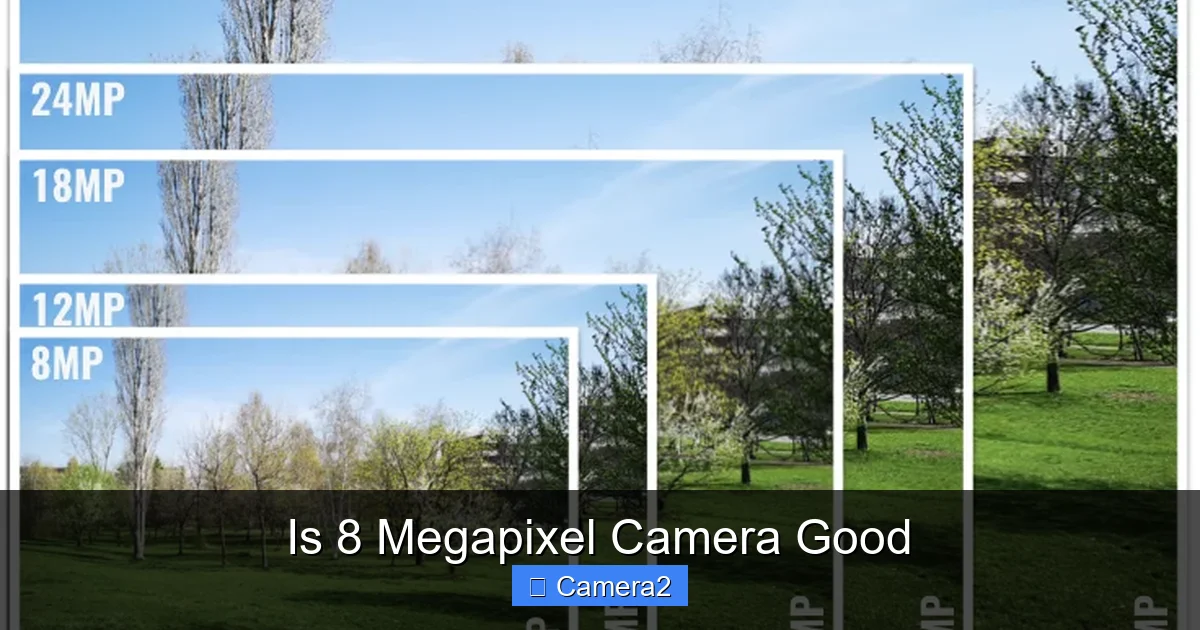
“8 MP” means the sensor can capture roughly eight million individual picture elements. In practice, that translates to an image size of about 3264 × 2448 pixels (a common 4:3 ratio). For most phone‑screen viewing and social‑media platforms, this resolution is more than sufficient.
Sensor Size vs. Megapixels
A larger sensor gathers more light, which reduces noise and improves dynamic range. An 8 MP sensor on a 1‑inch chip will usually outperform a 12 MP sensor on a tiny 1/2.3‑inch chip. So when you ask, “is 8 megabyte camera good?” the answer often lies in the sensor’s physical dimensions, not just the number.
Real‑World Comparison
- Smartphone (12 MP, 1/2.55‑inch): Good for everyday snaps, but struggles in low light.
- Compact 8 MP (1‑inch): Better low‑light performance, smoother colors.
- Entry‑level DSLR (18 MP, APS‑C): Higher resolution and larger sensor for serious hobbyists.
When an 8 MP Camera Shines
Social Media and Online Sharing
Platforms like Instagram, Facebook, and TikTok compress images heavily. An 8 MP file (around 3‑5 MB) is already more than enough to look sharp after compression. You’ll save storage space and upload faster.
Visual guide about Is 8 Megapixel Camera Good
Image source: fdn.gsmarena.com
Travel and Everyday Carry
Compact cameras with 8 MP sensors are lightweight, pocket‑friendly, and often come with built‑in zoom lenses. They’re ideal for travelers who want better optics than a phone without the bulk of a DSLR.
Printing Small to Medium Sizes
At 300 dpi (dots per inch), an 8 MP image prints cleanly up to about 8×10 inches. For family photos, postcards, or wall art at that size, the quality is excellent. If you need larger prints, you can use smart up‑scaling software, but expect a slight loss of sharpness.
Budget‑Conscious Buyers
Because they use fewer pixels, 8 MP cameras tend to be cheaper. You can often get a model with a good lens, optical image stabilization, and decent low‑light performance for a fraction of the price of a 20 MP flagship.
Limitations: When 8 MP May Not Be Enough
Heavy Cropping and Large Prints
If you love cropping tightly or printing banners larger than 11×14 inches, 8 MP will start to show softness. Each crop reduces the pixel count, making the final image grainier.
Professional Workflows
Commercial photographers, real estate agents, or graphic designers often need higher resolution files for client‑level editing and large‑format advertising. In those cases, a 12 MP or higher sensor is the safer bet.
Future‑Proofing Concerns
Technology moves fast. If you plan to keep the camera for many years, you might want extra resolution to stay relevant as display standards rise (e.g., 4K monitors, high‑resolution prints).
How to Get the Most Out of an 8 MP Camera
Master Lighting
Good lighting can dramatically improve image sharpness and reduce noise. Shoot in daylight or use a simple reflector to bounce light onto your subject. The better the light, the less the sensor has to “guess,” and the clearer the 8 MP result.
Use the Right Lens Settings
- Aperture: Choose a mid‑range f‑stop (f/4‑f/5.6) for balanced depth of field and sharpness.
- Stabilization: Turn on optical image stabilization (OIS) if available to avoid blur, especially in low light.
- Focus Mode: Use single‑point AF for static subjects; continuous AF for moving subjects.
Post‑Processing Tips
Even a modest 8 MP file can look professional with a few edits:
- Sharpening: Apply a subtle unsharp mask to bring out fine details.
- Noise Reduction: Use software like Lightroom or free alternatives (e.g., Darktable) to clean up high‑ISO grain.
- Upscaling: Tools like Gigapixel AI can enlarge images with AI‑driven detail preservation, useful for prints up to 16×20 inches.
Choose the Right Storage
Because files are smaller, you can store many more images on a single SD card. A 64 GB card can hold roughly 1,500–2,000 raw 8 MP shots, giving you ample room for experimentation.
Comparing Popular 8 MP Models
Compact Point‑and‑Shoot Options
Examples include the Canon PowerShot SX740 HS and Sony Cyber‑shot WX350. Both pack 8 MP sensors with 30× optical zoom, OIS, and Wi‑Fi for easy sharing.
Bridge Cameras
Bridge cameras blend DSLR ergonomics with long zoom lenses. The Panasonic Lumix DMC‑FZ80, for instance, offers an 8 MP sensor with a 60× zoom range—great for wildlife or travel when you need reach.
Smartphone Alternatives
Some budget smartphones still use 8 MP primary sensors. While convenient, they often lack the larger sensor and dedicated optics found in stand‑alone cameras, which can affect low‑light performance.
Choosing Based on Use‑Case
- Travel: Look for compact size, good zoom, and OIS.
- Vlogging: Prioritize a flip screen and microphone input.
- Outdoor Adventure: Pair your camera with a good camera backpack for hiking to protect it from the elements.
Is 8 Megapixel Camera Good? The Bottom Line
Answering the headline question: yes, an 8 MP camera can be good**, but “good” is relative to your needs. For everyday snapshots, social media, and modest prints, it delivers more than enough quality. If you need large‑format prints, heavy cropping, or professional‑grade flexibility, you’ll likely want a camera with more pixels and a larger sensor.
Ultimately, the best camera is the one that fits your style, budget, and shooting situations. An 8 MP model can be a fantastic entry point, especially when paired with good techniques and a little post‑processing love.
Practical Tips for First‑Time Buyers
Test Before You Buy
Visit a store and take a few test shots. Look at the viewfinder and LCD—does the camera feel comfortable? Check the autofocus speed and how quickly it recovers from low‑light scenes.
Consider the Ecosystem
Some cameras integrate with apps for easy cloud backup. Others have accessories like external flashes or lens adapters. Think about what you might add later.
Read the Fine Print
Check for firmware updates, warranty length, and return policies. A solid warranty can save you money if the camera develops a sensor issue.
Legal and Ethical Use
When shooting in public, be aware of local regulations. For example, it’s useful to understand is it illegal to have a camera in a classroom before bringing your device into schools.
Conclusion: Making the Right Choice
In the grand scheme of photography, megapixels are just one piece of the puzzle. An 8 MP camera can be a reliable companion for casual shooters, travelers, and anyone on a budget. By mastering lighting, using proper settings, and applying simple post‑processing, you can extract impressive results that rival higher‑resolution devices in many everyday scenarios.
Remember, the joy of photography comes from capturing moments, not counting pixels. If an 8 MP camera meets your everyday needs and fits your pocket, it’s more than good—it’s a smart, practical choice.
Frequently Asked Questions
Is an 8 MP camera suitable for printing large photos?
It prints crisply up to about 8×10 inches at 300 dpi. Larger prints are possible with up‑scaling software, but you may notice some softness.
How does sensor size affect an 8 MP camera’s performance?
A larger sensor gathers more light, reducing noise and improving dynamic range. An 8 MP sensor on a 1‑inch chip often outperforms a higher‑MP sensor on a tiny chip.
Can I use an 8 MP camera for professional work?
For casual or hobby work, absolutely. For high‑end commercial projects that require heavy cropping or very large prints, a higher‑resolution camera is usually preferred.
Do I need special lenses for an 8 MP camera?
Most 8 MP compact cameras come with a built‑in zoom lens that’s adequate for everyday use. If you need specialized optics, look for models with interchangeable lenses.
What are the best post‑processing steps for 8 MP images?
Start with basic exposure and white‑balance adjustments, then apply sharpening, noise reduction, and, if needed, AI‑based up‑scaling for larger prints.
How does an 8 MP camera compare to modern smartphones?
Many smartphones now have 12 MP or more, but an 8 MP camera with a larger sensor and quality optics can often produce better low‑light and color results than a phone with a smaller sensor.