4 Gig Ddr3 Laptop Ram
4 Gig DDR3 laptop RAM is a common memory size that still works well for everyday tasks like browsing, office work, and light multitasking. This guide covers what DDR3 RAM is, whether 4GB is enough, how to upgrade, and which laptops use this memory type. You will learn practical tips to boost your laptop’s performance with the right RAM.
Key Takeaways
- DDR3 RAM is an older but still reliable memory type found in many laptops built before 2018.
- 4GB of RAM is enough for basic tasks like web browsing, email, and document editing.
- DDR3 SODIMM modules come in different speeds, and understanding CAS latency helps you choose the right one.
- Upgrading from 4GB to 8GB or more can significantly improve multitasking and overall system responsiveness.
- Always check your laptop’s motherboard for RAM compatibility before buying a new memory module.
- Installing RAM is simple and can be done at home with basic tools.
- Used and refurbished DDR3 RAM is affordable, making upgrades budget-friendly.
📑 Table of Contents
- What Is 4 Gig DDR3 Laptop RAM?
- Is 4GB of DDR3 RAM Enough for a Laptop?
- Benefits of 4 Gig DDR3 Laptop RAM
- DDR3 vs DDR4 vs DDR5: How Do They Compare?
- How to Check Your Current RAM
- When Should You Upgrade from 4GB DDR3 RAM?
- Tips for Buying 4 Gig DDR3 Laptop RAM
- Common Mistakes When Upgrading Laptop RAM
- Expert Insights on DDR3 Laptop Memory
- Conclusion
What Is 4 Gig DDR3 Laptop RAM?
When you hear the term 4 Gig DDR3 Laptop RAM, it means your laptop has a 4GB memory module that uses DDR3 technology. DDR3 stands for Double Data Rate 3. It is a type of synchronous dynamic random-access memory, or SDRAM, that was very popular in laptops from the mid-2000s through the mid-2010s.
RAM is the short-term memory your laptop uses while it is running. Every app, browser tab, and background process needs a share of this memory. Think of RAM like your desk at work. The bigger the desk, the more papers you can spread out and work on at the same time.
A 4GB DDR3 module is a single memory stick that fits into a special slot called a SODIMM slot. SODIMM stands for Small Outline Dual In-Line Memory Module. It is the compact version of desktop RAM made specifically for laptops and notebooks. These modules are small, about the size of a stick of gum, and plug directly into the motherboard.
DDR3 RAM comes in different speeds, measured in megahertz (MHz). Common DDR3 speeds include 1066MHz, 1333MHz, and 1600MHz. The speed tells you how fast data moves between the RAM and the processor. Higher numbers mean faster data transfer, but the difference is not always noticeable for simple tasks.
One important thing to know is that DDR3 is not the same as DDR4 or DDR5. These are newer generations of RAM. They are faster and more efficient. But DDR3 is still found in thousands of laptops today, especially older models and budget notebooks.
How DDR3 RAM Works
DDR3 RAM transfers data on both the rising and falling edges of the clock signal. This is why it is called “Double Data Rate.” It effectively doubles the work done per clock cycle compared to older DDR2 RAM.
Each memory module has a set of pins that connect to the motherboard. DDR3 SODIMMs have 204 pins. These pins carry data, power, and control signals. The module also has a small notch that ensures you insert it the right way.
CAS latency is another term you will see with DDR3 RAM. It stands for Column Address Strobe latency. It measures the delay between when the RAM receives a command and when it starts delivering data. Lower CAS latency means faster response times. DDR3 RAM typically has CAS latency values of 9, 11, or 13.
Is 4GB of DDR3 RAM Enough for a Laptop?
This is one of the most common questions people ask. The short answer is: it depends on what you do. For very basic tasks, 4GB is still workable. But for anything more demanding, you will likely feel the squeeze.
Here is a quick look at what 4GB of RAM can handle:
- Web browsing with a few tabs open
- Word processing and spreadsheet work
- Email and light email management
- Streaming videos on YouTube or Netflix
- Basic photo viewing and simple editing
Now, here is what 4GB struggles with:
- Running multiple apps at the same time
- Modern web browsing with many tabs open
- Photo or video editing software
- Gaming beyond very old or simple titles
- Running Windows 10 or 11 with background apps
Modern operating systems like Windows 10 and Windows 11 use a lot of memory just to run. Windows 11 recommends at least 8GB of RAM for smooth performance. So 4GB will feel tight. You may see your laptop slow down when you open a few extra programs.
If you use your laptop for schoolwork, writing emails, or casual browsing, 4GB DDR3 can still get the job done. But if you want a smoother experience, consider upgrading to 8GB or more. Check out our guide on how much RAM you really need for your laptop to find the right amount for your needs.
Benefits of 4 Gig DDR3 Laptop RAM
Even though 4GB is not the fastest or largest option today, it still has real benefits. Let us look at why DDR3 RAM is still worth considering.
1. It Is Affordable
DDR3 RAM is one of the cheapest types of memory you can buy. Because it is older technology, manufacturers produce less of it now. But that also means prices are low. You can often find 4GB DDR3 SODIMM modules for under $15. This makes it a great option if you are on a tight budget.
Upgrading your laptop memory does not have to break the bank. A small investment in RAM can breathe new life into an older machine. Instead of buying a new laptop, adding a memory stick can make your current one feel much faster.
2. Wide Compatibility
DDR3 RAM was the standard for many years. This means it fits into a huge number of laptops. Brands like HP, Dell, Lenovo, Acer, and Asus all used DDR3 memory in many of their models from 2007 to 2017.
Before you buy, check your laptop model number. You can find this on the bottom of the laptop or in the system settings. Then look up the memory specifications for your exact model. This ensures you buy the right type of RAM.
3. Easy to Install
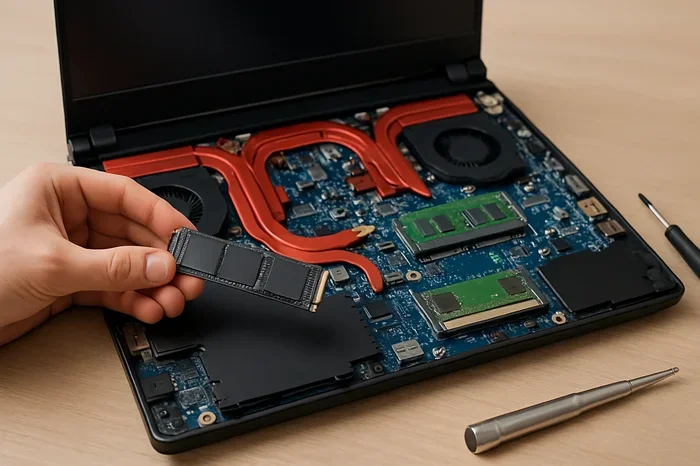
Installing a 4GB DDR3 SODIMM is one of the easiest laptop upgrades you can do. You do not need to be a tech expert. Most laptops have a small access panel on the bottom. Open it with a screwdriver, and you will see the RAM slot.
Here is a simple step-by-step process:
- Turn off the laptop and unplug it.
- Remove the battery if possible.
- Open the bottom access panel.
- Push the metal clips on either side of the RAM stick outward.
- The old module will pop up at an angle.
- Align the new DDR3 module with the slot.
- Press it down firmly until the clips click.
- Replace the panel and battery.
- Power on the laptop.
If you want a detailed walkthrough, check out our guide on how to install laptop RAM. It covers the process step by step with tips for beginners.
4. Low Power Consumption
DDR3 RAM uses less power than older DDR2 memory. This helps your laptop battery last longer. While DDR4 and DDR5 are even more efficient, DDR3 is still a solid choice for older laptops that were designed with it in mind.
DDR3 vs DDR4 vs DDR5: How Do They Compare?
Understanding the differences between RAM generations helps you make the best choice. Here is a simple comparison of the three main types.
| Feature | DDR3 | DDR4 | DDR5 |
|---|---|---|---|
| Release Year | 2007 | 2014 | 2020 |
| Speed Range | 800–2133 MHz | 2133–4800 MHz | 4800–8400 MHz |
| Voltage | 1.5V | 1.2V | 1.1V |
| Module Type | 204-pin SODIMM | 260-pin SODIMM | 262-pin SODIMM |
| Max Capacity per Module | 8GB (common) | 16–32GB | 16–64GB |
| Best For | Older laptops | Mid-range laptops | Modern high-end laptops |
DDR3 RAM is the oldest of the three. It is slower and uses more power than DDR4 and DDR5. But it is still perfectly fine for light computing. If your laptop only supports DDR3, then a 4GB DDR3 module is the right choice for you.
DDR4 became the standard around 2015–2016. Most laptops built after 2016 use DDR4. DDR5 is the newest standard and is found in premium laptops from 2022 onward. Each generation is not backward compatible. This means a DDR4 stick will not work in a DDR3 slot, and a DDR5 stick will not work in a DDR4 slot.
How to Check Your Current RAM
Before you buy any new memory, find out what your laptop currently has. Checking your RAM is quick and easy.
On Windows, press the Ctrl + Shift + Esc keys to open the Task Manager. Click on the “Performance” tab. Then select “Memory.” You will see your total RAM, the type (like DDR3), and how many slots are being used.
On a Mac, click the Apple menu and select “About This Mac.” You will see the memory details, including the type and amount.
You can also use free tools like CPU-Z to get detailed information about your RAM. This tool shows the exact DDR3 speed, CAS latency, and module manufacturer. Knowing these details helps you buy the right replacement or upgrade module.
If you want to learn more about checking your RAM, visit our guide on how to check the RAM on your laptop. It covers multiple methods for Windows and Mac users.
When Should You Upgrade from 4GB DDR3 RAM?
Knowing when to upgrade is just as important as knowing how to upgrade. Here are clear signs that your 4GB of memory is holding you back.
Your Laptop Is Slow
If your laptop takes a long time to open apps or feels sluggish when you switch between tasks, low RAM could be the cause. When your laptop runs out of physical memory, it uses your hard drive as temporary storage. This is called paging or using a swap file. Hard drives are much slower than RAM, so everything slows down.
You Get Frequent Freezes
Running out of memory can cause your laptop to freeze or become unresponsive. You might see the spinning wheel of death on a Mac or the “Not Responding” message on Windows. These are signs that your system needs more RAM.
You Want to Run Modern Software
Modern apps and web browsers are more demanding than ever. Google Chrome, for example, uses a lot of memory. If you like to keep many tabs open, 4GB will not be enough. Upgrading to 8GB or 16GB makes a big difference.
You Plan to Use Windows 11
Windows 11 has higher system requirements than Windows 10. While Microsoft says 4GB is the minimum, real-world performance with 4GB is poor. For a comfortable Windows 11 experience, aim for at least 8GB of RAM.
If you are considering a bigger upgrade, check out our article on 4GB RAM memory for laptops to understand what 4GB can and cannot do in today’s computing environment.
Tips for Buying 4 Gig DDR3 Laptop RAM
Not all DDR3 RAM is the same. Here are some tips to help you buy the right module.
- Check the speed: Match the speed of your new RAM to your existing RAM. If you have 1333MHz, buy 1333MHz. Mixing speeds can cause both modules to run at the slower speed.
- Match the CAS latency: Try to get a module with the same CAS latency as your current RAM. Different latencies can cause minor compatibility issues.
- Buy from a reputable brand: Brands like Kingston, Crucial, Corsair, and Samsung make reliable DDR3 memory.
- Check the form factor: Make sure you buy a SODIMM, not a desktop DIMM. SODIMM is the small version made for laptops.
- Read the warranty: Good RAM brands offer lifetime warranties. This gives you peace of mind.
Also, check if your laptop has one or two RAM slots. If it has two slots and one is already filled with 4GB, you can add another 4GB stick for a total of 8GB. This is often cheaper than replacing the existing module.
Common Mistakes When Upgrading Laptop RAM
Avoid these common mistakes to save time and money.
- Buying the wrong RAM type: DDR3 will not work in a DDR4 or DDR5 slot. Always double-check your laptop’s RAM type before purchasing.
- Ignoring the maximum supported RAM: Some older laptops can only handle 8GB or 16GB total. Check your laptop’s manual or the manufacturer’s website for the maximum RAM capacity.
- Forgetting to ground yourself: Static electricity can damage RAM modules. Touch a metal surface before handling memory to discharge any static.
- Not removing the old RAM: If both slots are occupied and you want to replace them, you must remove the old modules first. You cannot just add new ones without freeing up a slot.
- Skipping the BIOS update: Sometimes a BIOS update fixes RAM compatibility issues. Check your laptop manufacturer’s website for the latest BIOS version.
Expert Insights on DDR3 Laptop Memory
Even though DDR3 is older technology, it remains relevant. Many budget laptops and refurbished notebooks still use DDR3 memory. For students, seniors, and anyone who needs a simple machine for basic tasks, a laptop with 4GB of DDR3 RAM is a perfectly fine choice.
Tech experts often recommend upgrading to at least 8GB for a better experience. But if your budget is limited, 4GB DDR3 still works. You just need to manage your expectations and close unnecessary background apps to free up memory.
The key is knowing what you need. If you only browse the web and write documents, 4GB is enough. If you edit videos or play modern games, you need more. Understanding your usage patterns helps you make the right decision.
For more guidance on choosing the right memory for your laptop, read our article on what is good RAM on a laptop. It covers everything from basic usage to heavy workloads.
Conclusion
4 Gig DDR3 Laptop RAM is a solid choice for basic computing needs. It is affordable, widely compatible, and easy to install. While it may not be enough for heavy multitasking or modern gaming, it still serves millions of laptop users every day.
If your laptop currently has 4GB of DDR3 memory, you have options. You can keep it as is for light tasks, or upgrade to 8GB or more for a smoother experience. Either way, understanding your RAM helps you make smart decisions about your laptop.
Take a few minutes to check your current memory. Look at your usage habits. Then decide if an upgrade makes sense for you. A small change like adding RAM can make your laptop feel like new again.
Frequently Asked Questions
Can I mix 4GB and 8GB DDR3 RAM in my laptop?
Yes, you can mix different sizes of DDR3 RAM in most laptops. However, both modules will run at the speed of the slower one. For example, if you pair 4GB DDR3-1333MHz with 8GB DDR3-1600MHz, both will run at 1333MHz. This is called flex mode and it works fine for most users.
Is 4GB DDR3 RAM enough for Windows 11?
Windows 11 lists 4GB as the minimum requirement. But in real-world use, 4GB feels very limited. The operating system alone uses a significant portion of that memory. You will likely experience slow performance and frequent slowdowns when running multiple apps.
How much does a 4GB DDR3 laptop RAM stick cost?
A 4GB DDR3 SODIMM module typically costs between $8 and $20. Prices vary based on brand, speed, and where you buy it. Used or refurbished options can be even cheaper. Always buy from a trusted retailer to avoid counterfeit products.
Can I upgrade from 4GB DDR3 to 16GB DDR3?
It depends on your laptop. Many DDR3 laptops support up to 8GB or 16GB total. Check your laptop’s maximum RAM capacity in the user manual or on the manufacturer’s website. You also need to have enough free RAM slots to install a larger module or add a second one.
What is the difference between DDR3 and DDR3L RAM?
DDR3L stands for DDR3 Low Voltage. It runs at 1.35V instead of the standard 1.5V. DDR3L is common in Ultrabook laptops and newer Intel processors. Standard DDR3 and DDR3L are often interchangeable, but always check your laptop’s specifications to be sure.
How do I know if my laptop uses DDR3 RAM?
You can check your RAM type in Windows by opening Task Manager and clicking the Performance tab. Select Memory and look for the type. It will say DDR3, DDR4, or DDR5. You can also use a free tool like CPU-Z for detailed memory information including the exact DDR3 generation and speed.