Is Netflix a Saas
Netflix delivers streaming content over the internet, but does that make it a SaaS product? In this article we break down the definition of SaaS, compare Netflix’s service model, and explain why the answer isn’t as simple as “yes” or “no.” Read on to see how Netflix’s architecture, pricing, and licensing stack up against classic SaaS examples.
Key Takeaways
- Definition matters: SaaS (Software‑as‑a‑Service) is a delivery model where software is hosted centrally and accessed via subscription.
- Netflix’s core is content, not software: The platform’s primary value is streaming movies and series, which sets it apart from typical SaaS apps.
- Hybrid characteristics: Netflix uses SaaS‑like infrastructure (cloud hosting, APIs, subscription billing) while functioning as a media‑streaming service.
- Licensing nuances: Unlike traditional SaaS, Netflix does not license its software to customers; users only license the right to view content.
- Business implications: Understanding the difference helps investors, developers, and marketers position Netflix correctly in market analyses.
- Future trends: As streaming services adopt more interactive features, the line between SaaS and media platforms may blur.
- Practical tip: When evaluating a platform, ask if the value proposition is software functionality or content delivery.
📑 Table of Contents
- Introduction: Why the Question Matters
- What Exactly Is SaaS?
- Netflix’s Service Model: A Quick Overview
- Comparing Netflix to Classic SaaS Products
- Licensing and Legal Perspective
- Business Implications of the Classification
- Typical Benefits of SaaS and How Netflix Leverages Them
- Future Trends: Will Netflix Become More SaaS‑Like?
- Practical Tips: How to Talk About Netflix’s Model
- Conclusion
Introduction: Why the Question Matters
When you hear “Netflix,” you probably think of binge‑watching the latest series on your couch. Yet, in business circles the term “SaaS” (Software‑as‑a‑Service) pops up constantly. Many tech enthusiasts wonder, is Netflix a SaaS? The answer can shape how we think about streaming giants, influence investor reports, and guide developers who want to build similar platforms.
In this friendly, step‑by‑step guide we’ll define SaaS, explore Netflix’s architecture, compare it with classic SaaS examples, and give you practical takeaways. By the end you’ll be able to explain the nuances to a friend—or a boardroom.
What Exactly Is SaaS?
Core definition
SaaS stands for Software‑as‑a‑Service. It is a cloud‑based delivery model where a provider hosts an application and customers access it over the internet, usually through a subscription. The key elements are:

Visual guide about Is Netflix a Saas
Image source: thumbs.dreamstime.com
- Hosted software: The provider maintains servers, updates, and security.
- Multi‑tenant architecture: One codebase serves many customers.
- Subscription pricing: Users pay recurring fees for access.
- Scalable access: Users can log in from any device with an internet connection.
If you want a deeper dive into the environment that makes SaaS possible, check out our article on what is a SaaS environment.
Typical SaaS examples
Think of tools like Salesforce, Slack, or Zoom. Their main value is the software itself – a CRM, a messaging platform, a video‑conference system. Users don’t own the software; they rent its functionality.
Netflix’s Service Model: A Quick Overview
Content‑first approach
Netflix’s headline offering is a massive library of movies, TV shows, and original productions. Users pay a monthly fee to stream this content on demand. The software (the app) is just the vehicle that delivers the media.
Visual guide about Is Netflix a Saas
Image source: static.shuomingshu.cn
Technology stack
Behind the scenes, Netflix runs on Amazon Web Services (AWS), uses micro‑services, and employs sophisticated recommendation algorithms. Its infrastructure is undeniably cloud‑native, which is a hallmark of SaaS platforms.
Subscription billing
Netflix charges a recurring subscription, offers tiered plans, and lets users manage accounts online – all classic SaaS traits.
Comparing Netflix to Classic SaaS Products
Similarities
- Cloud hosting: Like any SaaS, Netflix’s platform lives in the cloud.
- API‑driven: Third‑party devices (smart TVs, gaming consoles) use Netflix APIs to fetch content.
- Subscription model: Users pay monthly, and the service auto‑renews.
Differences
- Primary value: SaaS sells software functionality; Netflix sells licensed media.
- Licensing rights: Customers don’t get a license to the software; they get a license to view content.
- Data ownership: In SaaS, user‑generated data (e.g., CRM contacts) belongs to the customer. Netflix owns the content library.
Hybrid classification
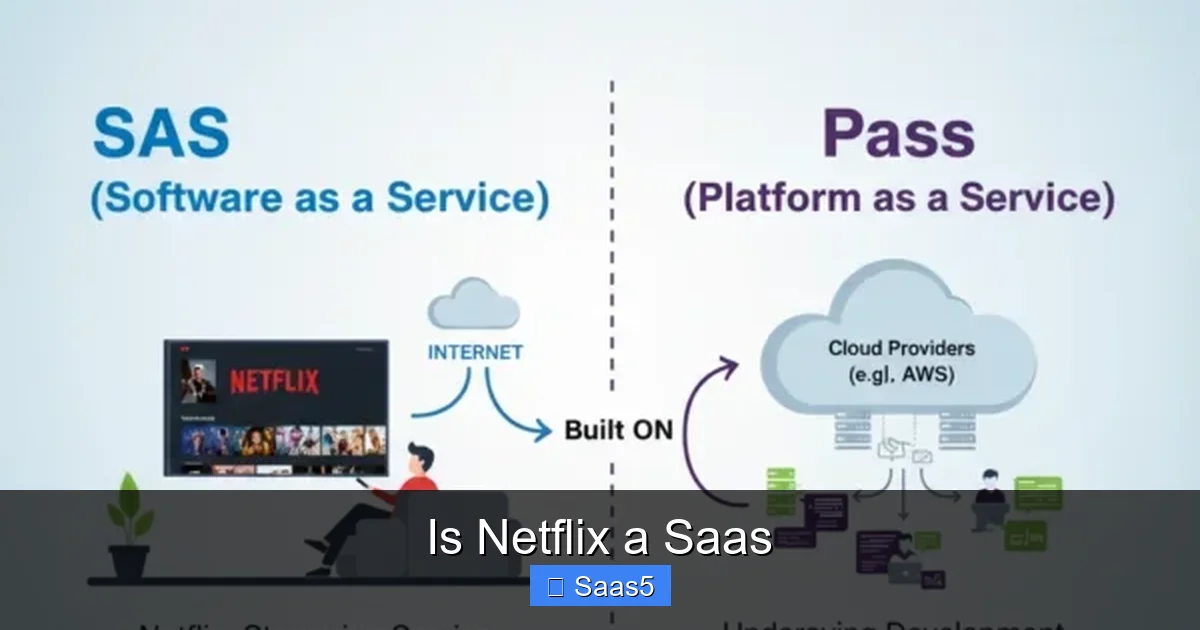
Because Netflix blends SaaS‑like delivery with a content‑centric product, many experts label it a “media‑as‑a‑service” (MaaS) or a “streaming‑as‑a‑service” platform. It’s a hybrid that borrows heavily from SaaS best practices without fitting the textbook definition.
Visual guide about Is Netflix a Saas
Image source: vkreview.com
Licensing and Legal Perspective
How Netflix licenses its product
When you sign up, you agree to a Terms of Service that grants you a non‑exclusive, non‑transferable right to stream content. This is fundamentally different from a SaaS license, where the customer receives rights to use the software itself. For more on SaaS licensing, read how to license a SaaS.
Content licensing vs. software licensing
Netflix negotiates rights with studios and creators. Those agreements dictate what can be shown, where, and for how long. The software that powers the streaming experience is proprietary to Netflix and is not licensed to users.
Business Implications of the Classification
Investor analysis
Investors often compare SaaS companies using metrics like ARR (Annual Recurring Revenue) and churn rate. Netflix reports similar metrics (subscriber growth, ARPU) but also tracks content spend, a line item absent in pure SaaS firms. Misclassifying Netflix as SaaS could lead to faulty valuation models.
Product development insights
Understanding the SaaS elements (cloud scaling, API design) helps developers build better streaming services. At the same time, focusing solely on SaaS best practices might cause a team to overlook the importance of content acquisition and rights management.
Customer expectations
Because Netflix feels like a SaaS product—easy sign‑up, automatic updates, cross‑device access—users expect a seamless experience. Any downtime or poor UI can feel as damaging as a software outage, reinforcing the need for SaaS‑grade reliability.
Typical Benefits of SaaS and How Netflix Leverages Them
To see why SaaS traits matter for Netflix, consider the classic advantages listed in typical benefits of a SaaS application:
- Scalability: Netflix can add millions of concurrent streams during a new series launch, thanks to cloud elasticity.
- Rapid updates: New UI features roll out instantly, similar to software patches in SaaS.
- Lower upfront cost: Users pay a modest monthly fee instead of buying or renting individual movies.
- Accessibility: Content works on phones, tablets, smart TVs—mirroring SaaS’s device‑agnostic promise.
Future Trends: Will Netflix Become More SaaS‑Like?
Interactive storytelling
Netflix is experimenting with choose‑your‑own‑adventure style shows (e.g., “Bandersnatch”). This adds a layer of software‑driven interactivity, nudging the platform closer to a true SaaS experience where user input shapes outcomes.
Integration with third‑party tools
Imagine Netflix APIs that let developers embed streaming into their own apps, or allow corporate training platforms to use Netflix originals as learning material. Such integrations would deepen the SaaS characteristics.
Potential subscription bundling
Netflix could bundle with other SaaS tools (e.g., productivity suites) to create a lifestyle subscription. This would blur the line even further, making classification a moving target.
Practical Tips: How to Talk About Netflix’s Model
- Use “streaming‑as‑a‑service” when you need a precise term.
- Highlight the SaaS‑like infrastructure if discussing technical scalability.
- Emphasize content licensing when the conversation is about rights and royalties.
- When comparing valuations, separate software‑related metrics from content‑spend metrics.
Conclusion
So, is Netflix a SaaS? The short answer: not in the purest sense. Netflix is fundamentally a media‑streaming service that adopts many SaaS delivery mechanisms. It lives in a hybrid space where the line between software and content blurs. Recognizing this nuance helps investors, developers, and marketers speak accurately about the platform and its future direction.
Whether you’re a tech enthusiast, a business analyst, or just a curious viewer, understanding the distinction equips you with the right vocabulary to discuss Netflix’s place in the digital ecosystem.
Frequently Asked Questions
Is Netflix considered a SaaS company?
Netflix is not a traditional SaaS company because its primary offering is licensed media content, not software functionality. However, it uses SaaS‑like delivery methods such as cloud hosting and subscription billing.
What makes a service qualify as SaaS?
A service qualifies as SaaS when it provides software that is centrally hosted, accessed via the internet, and sold on a subscription basis, with the software itself being the core value.
Does Netflix offer any SaaS features?
Yes. Netflix’s cloud‑native architecture, API access for devices, and recurring subscription model are all characteristics commonly found in SaaS platforms.
How does Netflix’s licensing differ from SaaS licensing?
Netflix grants users a right to stream content, not a license to use the software. SaaS licensing typically gives customers rights to use the software itself for their own business processes.
Will Netflix become a true SaaS in the future?
Future interactive features and deeper API integrations could push Netflix closer to a true SaaS model, but its core business will likely remain content‑driven.
Why does the classification matter for investors?
Classifying Netflix correctly influences which financial metrics are used (e.g., ARR vs. content spend) and ensures more accurate valuation and risk assessments.