Pros and Cons of Mirrorless Cameras
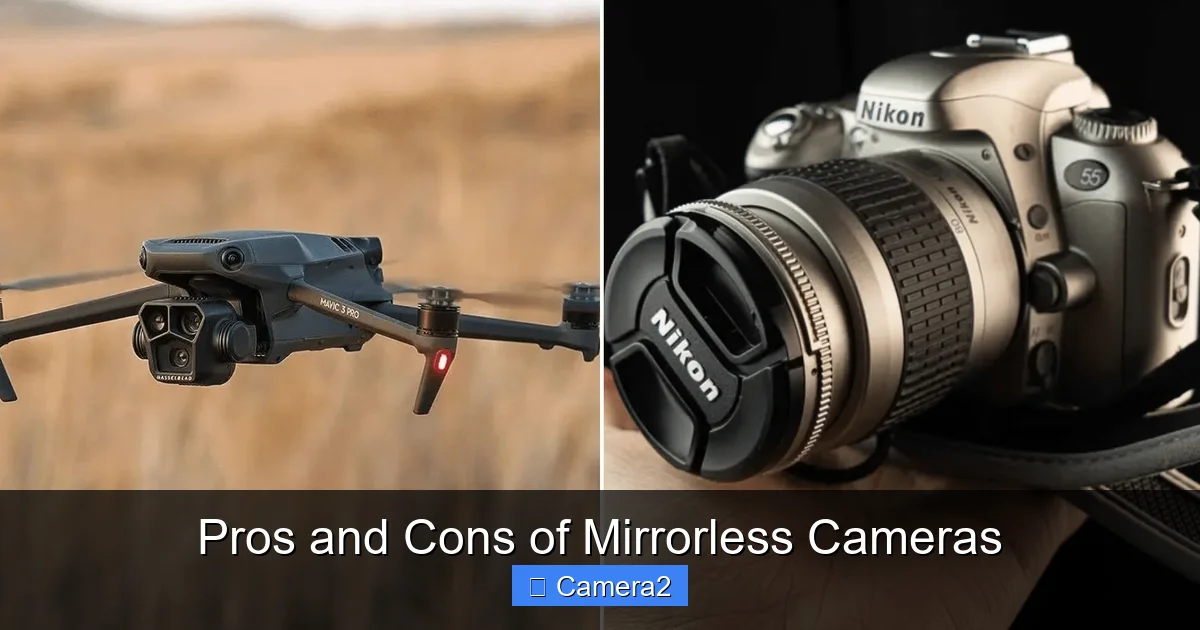
Mirrorless cameras blend compact size with powerful performance, offering fast autofocus, silent shooting, and cutting‑edge video features. However, they can be pricier, have shorter battery life, and sometimes lack the rugged build of DSLRs. This guide breaks down every advantage and drawback to help you decide if a mirrorless system fits your photography style.
Key Takeaways
- Size & weight: Mirrorless bodies are generally smaller and lighter than DSLRs, making them easier to carry.
- Autofocus speed: On‑sensor phase‑detect pixels give lightning‑fast focus, especially for video and moving subjects.
- Battery life: Smaller bodies mean smaller batteries, so expect fewer shots per charge compared to DSLRs.
- Lens ecosystem: Native mirrorless lenses are growing fast, but adapters may be needed for legacy glass.
- Electronic viewfinder (EVF): EVFs show exposure, white‑balance, and depth‑of‑field in real time, but can lag in low light.
- Cost considerations: High‑end mirrorless models often cost more than entry‑level DSLRs, though prices are dropping.
- Future‑proofing: Mirrorless tech is the industry’s direction, promising firmware updates and new features for years.
📑 Table of Contents
- Introduction: Why Mirrorless Cameras Are the Talk of the Town
- 1. The Big Advantages of Going Mirrorless
- 2. The Drawbacks You Shouldn’t Ignore
- 3. Real‑World Scenarios: When Mirrorless Shines and When It Falters
- 4. Tips for Choosing the Right Mirrorless System
- 5. Mirrorless vs. DSLR: A Quick Comparison Table
- Conclusion: Are Mirrorless Cameras Right for You?
- Related Reading
Introduction: Why Mirrorless Cameras Are the Talk of the Town
When you walk into a camera shop today, chances are the newest arrivals are mirrorless. Over the past decade, manufacturers have shifted focus from traditional DSLR designs to sleek, electronic‑preview systems. If you’re wondering whether this trend is just hype or a real upgrade, you’ve come to the right place.
In this article we’ll walk through the pros and cons of mirrorless cameras step by step. We’ll compare them to DSLRs, share real‑world examples, and give you practical tips for picking the system that matches your needs. By the end, you’ll know exactly why many pros are swapping lenses, and whether the trade‑offs matter for you.
1. The Big Advantages of Going Mirrorless
1.1 Compact Size and Light Weight
One of the first things you’ll notice is how much lighter a mirrorless body feels. Without the pentaprism and mirror box, manufacturers can shave off 150‑300 grams. For travel photographers, that difference adds up—a lighter kit means less strain on your shoulders and more room for accessories.
Visual guide about Pros and Cons of Mirrorless Cameras
Image source: unboxrex.com
1.2 Faster, More Accurate Autofocus
Mirrorless cameras place focus points directly on the sensor. This on‑sensor phase‑detect (PDAF) system can lock onto subjects in just a few milliseconds. Sports shooters love the ability to track birds in flight, while videographers appreciate smooth focus transitions during a walk‑and‑talk.
1.3 Real‑Time Exposure Preview
The electronic viewfinder (EVF) shows exactly what the sensor records—exposure, white balance, depth of field, and even a histogram. You can spot blown highlights before you press the shutter, which is a huge confidence boost for beginners.
1.4 Silent Shooting and Video‑Centric Features
Because there’s no mirror slap, many mirrorless bodies offer completely silent shooting modes. This is perfect for weddings, wildlife, or street photography where you don’t want to attract attention. Additionally, video specs often lead the market: 4K/60p, 10‑bit color, and log profiles are common.
1.5 Future‑Proof Lens Ecosystem
Major brands (Sony, Canon, Nikon, Fujifilm, Panasonic) are investing heavily in native mirrorless lenses. The selection is expanding rapidly, and many lenses include advanced optics like aspherical elements and fast apertures that were once reserved for high‑end DSLR glass.
2. The Drawbacks You Shouldn’t Ignore
2.1 Battery Life Limitations
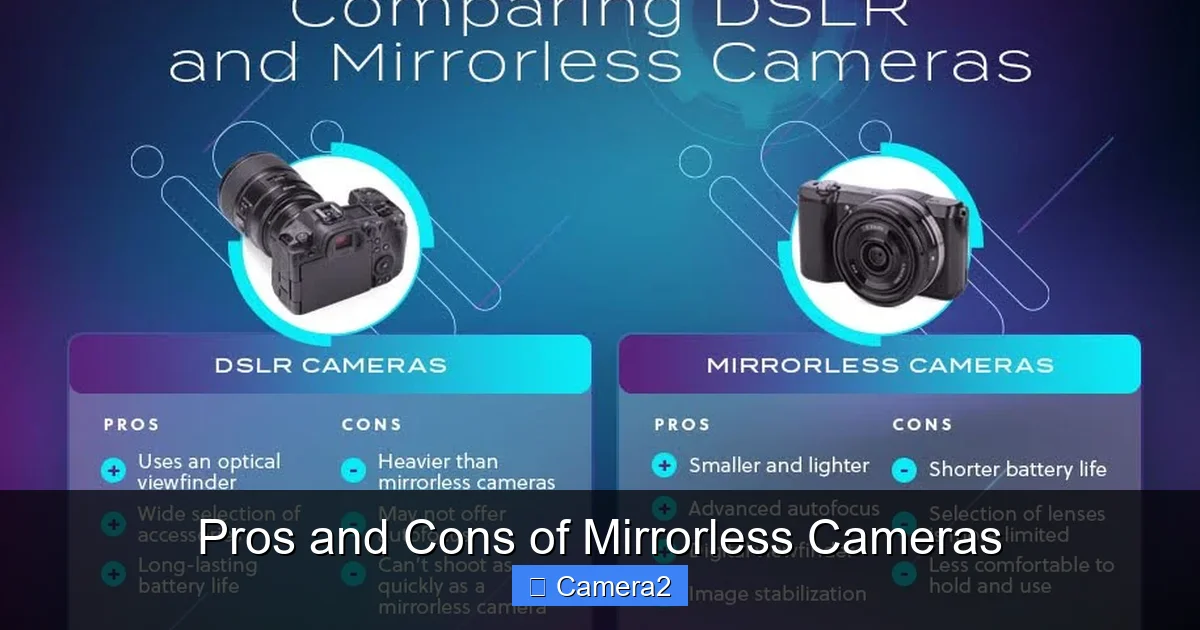
Since the EVF and sensor are always active, mirrorless batteries drain faster. Typical CIPA ratings range from 300‑600 shots per charge, compared to 800‑1200 for DSLRs. Carrying spare batteries is essential, especially on long shoots.
Visual guide about Pros and Cons of Mirrorless Cameras
Image source: 60a99bedadae98078522-a9b6cded92292ef3bace063619038eb1.ssl.cf2.rackcdn.com
2.2 Higher Price Tags for Flagship Models
Top‑of‑the‑line mirrorless bodies often cost more than mid‑range DSLRs. The technology (high‑resolution sensors, fast processors, EVF) adds to the price. However, entry‑level mirrorless options are becoming more affordable, narrowing the gap.
2.3 Lens Compatibility and Adapter Use
If you already own a collection of DSLR lenses, you’ll need an adapter to mount them on a mirrorless body. While adapters work well, they can add bulk and may not support all autofocus features, especially with older glass.
2.4 EVF Lag and Performance in Low Light
In very dark environments, the EVF can become grainy or laggy. Some photographers still prefer an optical viewfinder (OVF) for its instant, blackout‑free view.
2.5 Durability Concerns
Because mirrorless bodies are often made of more lightweight materials, they may not be as rugged as pro‑grade DSLRs. If you shoot in harsh weather, look for models with weather sealing and robust construction.
3. Real‑World Scenarios: When Mirrorless Shines and When It Falters
3.1 Travel and Street Photography
Imagine walking through the alleys of Kyoto with a 35mm f/1.8 lens on a Sony α7 C. The camera’s pocketable size lets you blend in, while the EVF shows you exactly how the image will look. Silent shooting means you won’t disturb locals or monks.

Visual guide about Pros and Cons of Mirrorless Cameras
Image source: highmindedagency.com
3.2 Sports and Wildlife
For a fast‑moving subject like a hummingbird, the continuous autofocus of a Canon EOS R5 can keep the bird in focus across the frame. The high‑speed burst (up to 20 fps) and deep buffer allow you to capture the decisive moment.
3.3 Studio Portraits
In a controlled studio, battery life isn’t a concern, but the EVF’s real‑time exposure preview can speed up lighting tweaks. However, some portrait shooters still favor a DSLR’s optical viewfinder for its natural feel.
3.4 Long‑Form Video Production
When shooting a documentary with a Panasonic GH6, the unlimited recording time, 10‑bit 4:2:2 output, and built‑in ND filters make mirrorless the clear winner over most DSLRs.
4. Tips for Choosing the Right Mirrorless System
4.1 Define Your Primary Use
List the types of photography you do most—travel, sports, portrait, video. Match those needs to a camera’s strengths. For video‑heavy work, prioritize models with high‑bitrate codecs and headphone jacks.
4.2 Test the Ergonomics
Even if a camera looks great on paper, it must feel comfortable in your hands. Visit a store, grip the body, press the buttons, and check the depth‑of‑field preview on the EVF.
4.3 Consider the Lens Lineup
Look at the native lenses available for the mount. A system with a wide range of fast primes (e.g., 24mm f/1.4, 50mm f/1.2) will serve you better than one that relies on adapters.
4.4 Budget for Accessories
Don’t forget batteries, memory cards, and a sturdy bag. Mirrorless cameras often need high‑speed SD cards to keep up with 4K video and fast burst shooting.
4.5 Future Upgrade Path
Check the manufacturer’s roadmap. Brands that regularly release firmware updates and new lenses will keep your system relevant longer.
5. Mirrorless vs. DSLR: A Quick Comparison Table
Below is a snapshot of how the two formats stack up on key criteria.
- Size: Mirrorless smaller vs. DSLR bigger
- Autofocus: Mirrorless on‑sensor PDAF vs. DSLR phase‑detect via mirror
- Battery Life: DSLR longer vs. Mirrorless shorter
- Viewfinder: DSLR optical vs. Mirrorless electronic
- Video: Mirrorless generally superior vs. DSLR limited
- Lens Compatibility: DSLR native vs. Mirrorless requires adapters for legacy lenses
Conclusion: Are Mirrorless Cameras Right for You?
The pros and cons of mirrorless cameras paint a picture of a technology that’s rapidly maturing. If you value compactness, cutting‑edge autofocus, and strong video capabilities, the benefits often outweigh the drawbacks. On the other hand, if you shoot for hours on a single charge, need an ultra‑rugged body, or already own a vast DSLR lens collection, a DSLR may still make sense.
Ultimately, the choice comes down to your shooting style, budget, and willingness to adapt to a new workflow. Mirrorless systems are here to stay, and investing now can future‑proof your photography for the next decade.
Related Reading
Want to see how other tech trends balance benefits and drawbacks? Check out our article on Advantages And Disadvantages Of Saas for a parallel look at pros and cons in a different industry.
If you’re curious about using multiple cameras for a single project, read How To Use Two Cameras Live Sports To Video for practical tips that also apply to mirrorless setups.
For a deeper dive into camera tech beyond photography, explore Do Dash Cameras Work When The Car Is Off and learn how power management varies across devices.
Frequently Asked Questions
What is the main advantage of a mirrorless camera over a DSLR?
The biggest advantage is size and weight—without the mirror box, mirrorless bodies are more compact, making them easier to carry for travel and street shooting.
Do mirrorless cameras have shorter battery life?
Yes. Because the electronic viewfinder and sensor are always active, mirrorless batteries usually provide fewer shots per charge than DSLR batteries.
Can I use my old DSLR lenses on a mirrorless body?
Most brands offer adapters that let you mount DSLR lenses on mirrorless cameras. Performance may vary, especially for fast autofocus, so check compatibility before buying.
Are electronic viewfinders reliable in low light?
EVFs can become grainy or lag in very dark conditions. Some high‑end models mitigate this with higher refresh rates and low‑light boost, but an optical viewfinder still has an edge in complete darkness.
Is mirrorless better for video?
Generally, yes. Mirrorless cameras often include advanced video features like 4K/60p, 10‑bit color, and log profiles, making them a preferred choice for videographers.
Will mirrorless lenses become cheaper over time?
As the market matures, manufacturers are releasing more affordable native lenses. Prices are already dropping, and the selection continues to broaden, offering budget‑friendly options.