4 Speakers 2 Channel Amp
Connecting 4 speakers 2 channel amp setups is possible but requires careful wiring. You must understand impedance matching to protect your gear. This guide explains series, parallel, and series-parallel methods. Read on to get great sound without blowing your amplifier.
So you want big sound. You have four speakers waiting to be installed. But you only have a two-channel amplifier. This is a very common situation for car audio lovers. It is also common for home stereo setups. The good news is that you can make this work. The bad news is that you must be careful. Wiring things wrong can hurt your equipment.
Many people ask if it is safe to connect extra speakers to an amp. The answer is yes, but with conditions. You need to know about impedance. You also need to know about power handling. This article will walk you through everything. We will keep it simple and clear. You will learn how to get the best sound safely.
Let’s dive into the details. We will cover wiring methods and safety tips. You will understand the risks involved. By the end, you will feel confident. You can set up your 4 speakers 2 channel amp system correctly. Let’s get started on building your perfect sound system.
Key Takeaways
- Impedance Matters: Always check speaker ohm ratings before wiring to avoid amp damage.
- Wiring Options: You can wire speakers in series, parallel, or a combination of both.
- Amp Limits: A 2-channel amplifier has specific power limits per channel you must respect.
- Sound Quality: Proper wiring ensures balanced sound across all four speakers.
- Safety First: Turn off the system before making any connections to prevent shorts.
- Use Diagrams: Visual guides help prevent costly wiring mistakes during installation.
- Consult Experts: If unsure about ohm loads, seek professional advice for your specific setup.
📑 Table of Contents
Understanding the Basics of 4 Speakers 2 Channel Amp
Before you touch any wires, you need to know the basics. An amplifier has channels. Each channel sends power to a speaker. A two-channel amp usually drives two speakers. One speaker per channel is the standard way. But you want to drive four speakers. This means you need to split the power.
Think of electricity like water flowing through a pipe. The amp is the pump. The speakers are the wheels turning. If you add too many wheels, the pump might struggle. This is where impedance comes in. Impedance is measured in ohms. It tells you how much resistance the speaker offers.
Most car speakers are 4 ohms. Some are 2 ohms. Home speakers might be 8 ohms. Your amplifier has a minimum ohm rating. You cannot go below this number. If you do, the amp might overheat. It could shut down or get damaged. So, checking the ohm load is step one.
Why Impedance Is Critical
Impedance matching is the most important rule. When you wire speakers, the total ohm load changes. Connecting speakers in series adds the ohms. Connecting them in parallel lowers the ohms. You need to keep the total load within your amp’s safe range.
For example, if you have two 4-ohm speakers on one channel. Wiring them in parallel gives you 2 ohms total. If your amp is stable at 2 ohms, you are good. If it is only stable at 4 ohms, you have a problem. You would need to wire them in series instead. This would give you 8 ohms total.
Always check your amplifier’s manual. Look for the stable ohm ratings. Some amps handle 4 ohms per channel. Some handle 2 ohms. Some can even handle a 1-ohm load. Knowing this number saves your gear. It also ensures you get the power you expect.
Power Distribution Explained
When you connect four speakers to two channels, power splits. Each channel now drives two speakers. The amp still puts out the same total power. But that power is shared. This means each speaker might get less power than if it had its own channel.
This is not always bad. Sometimes you do not need max power. If your speakers are efficient, they sound loud with less power. But if you want big bass, you might notice a drop. You need to manage expectations. A 4 speakers 2 channel amp setup works best for clear sound. It might not be ideal for earth-shaking bass.
You also need to match power ratings. Your speakers should handle the power the amp sends. If the amp is too strong, you risk blowing the speakers. If the amp is too weak, you turn it up too high. This adds distortion. Distortion hurts speakers more than raw power sometimes.
Wiring Methods for 4 Speakers on 2 Channels
Now let’s talk about how to actually connect them. There are three main ways to do this. You can wire in series. You can wire in parallel. Or you can use a series-parallel combination. The best method depends on your ohm ratings.
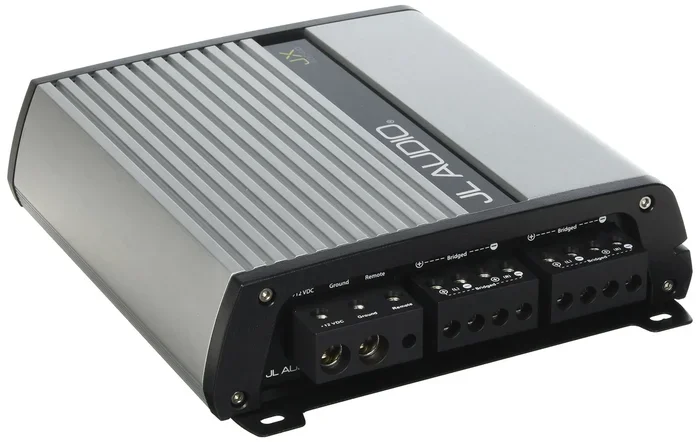
Visual guide about 4 channel amplifier car audio
Image source: m.media-amazon.com
You should always plan your wiring before cutting cables. Use a piece of paper to draw it out. This helps you visualize the connections. It prevents mistakes. Mistakes can lead to short circuits. Short circuits can kill an amplifier instantly.
Series Wiring Method
Series wiring is simple. You connect the positive terminal of the amp to the first speaker. Then you connect the negative of the first speaker to the positive of the second speaker. Finally, you connect the negative of the second speaker back to the amp.
This method adds the ohm loads. If you have two 4-ohm speakers in series, the total is 8 ohms. This is very safe for most amplifiers. It protects the amp from low ohm loads. However, it reduces the power output. The amp sees higher resistance. So it sends less current.
Series wiring is great if your amp is not stable at low ohms. It is also good if you want to protect your equipment. The sound might be slightly less dynamic. But it is safer. Many people choose series wiring for peace of mind.
Parallel Wiring Method
Parallel wiring is different. You connect both positives together. You connect both negatives together. Then you connect these bundles to the amp channel. This method lowers the ohm load.
If you have two 4-ohm speakers in parallel, the total is 2 ohms. This allows the amp to send more power. You get louder sound and more bass response. But your amp must be stable at 2 ohms. If it is not, you risk overheating.
Parallel wiring is popular for car audio. People want maximum volume. But you must check your amp specs. Never force a low ohm load on an amp that cannot handle it. For more details on this specific setup, you can read about connecting 4 speakers to 2 channel amp configurations.
Series-Parallel Combination
Sometimes you need a mix. This is common when wiring four speakers to one channel. But since we have two channels, we usually put two speakers per channel. If you need a specific ohm load, you might mix methods.
For example, you might wire two pairs in series. Then wire those pairs in parallel. This gets complicated. For a 4 speakers 2 channel amp setup, keep it simple. Just use series or parallel per channel. Only mix if you have odd ohm ratings.
If you have 8-ohm home speakers, parallel wiring gives you 4 ohms. This is perfect for many home amps. If you have 4-ohm car speakers, series wiring gives you 8 ohms. This is very safe. Choose the method that matches your amp’s sweet spot.
Calculating Impedance Loads Safely
Math is your friend here. You do not need to be a genius. You just need to know two formulas. One is for series. One is for parallel. Using these helps you stay safe.
For series, you just add the numbers. If you have a 4-ohm speaker and a 4-ohm speaker, you add them. 4 plus 4 equals 8 ohms. Easy. For parallel, it is a bit trickier. If the speakers are the same ohm, you divide by the number of speakers. Two 4-ohm speakers in parallel equal 2 ohms.
If the speakers are different, use the product-over-sum rule. Multiply the two ohms. Then divide by the sum of the ohms. For example, 4 ohms and 8 ohms. 4 times 8 is 32. 4 plus 8 is 12. 32 divided by 12 is roughly 2.67 ohms. This helps when mixing old and new speakers.
Why You Should Use a Calculator
Online calculators can help. They save time and reduce errors. You input your speaker ohms. You input your wiring method. The calculator gives you the total load. This is very useful for complex setups.
You can find tools for 4 ohm speakers wiring diagram needs online. These tools visualize the connections too. They show you which wire goes where. This is helpful for beginners. It builds confidence before you start working.
Always double-check your math. Write it down. Then measure with a multimeter if you can. A multimeter tells you the actual ohm load. This confirms your wiring is correct. It is a small step that prevents big problems.
Choosing the Right Amplifier for the Job
Not all amplifiers are the same. Some are built for high power. Some are built for clarity. You need to pick one that fits your speaker count. A 2 channel amplifier 4 speakers setup needs a robust amp.
Look at the power ratings. RMS power is the continuous power. Peak power is the max burst. Focus on RMS. This tells you what the amp can do all day. Match this to your speaker handling. If your speakers handle 50 watts each, you need an amp that can supply enough power for all four.
Mono vs Stereo Considerations
Most amps are stereo. This means they have left and right channels. This is perfect for two speakers. For four speakers, you use both channels. Each channel drives two speakers. This maintains stereo separation.
Some people use mono amps for subwoofers. But for regular speakers, stereo is better. You want sound staging. You want instruments to come from different places. A stereo amp allows this. Just make sure it has enough channels or you wire multiple speakers per channel.
If you plan to expand later, think ahead. Maybe you want a 6 speakers 4 channel amp setup in the future. Buying a 4-channel amp now might be smarter. Then you can add more speakers later without rewiring everything.
Installation Tips and Best Practices
Installation is where things can go wrong. Take your time. Rushing leads to errors. Here are some tips to help you succeed.
First, disconnect the battery. If this is a car system, safety is key. You do not want sparks near fuel. You do not want to short the electrical system. Second, use good quality wire. Thin wire causes resistance. Resistance kills power and creates heat.
- Use Correct Gauge: Thicker wire is better for long runs.
- Secure Connections: Tighten terminals firmly. Loose wires cause noise.
- Label Wires: Use tape to mark left and right channels.
- Test Before Mounting: Turn on the system before hiding wires.
- Check Polarity: Ensure positive goes to positive. Reversing polarity cancels bass.
Avoiding Common Mistakes
One common mistake is ignoring ground loops. This causes humming noises. Make sure all grounds connect to one point. Another mistake is underpowering the speakers. If the amp is too weak, you crank the volume. This adds distortion. Distortion blows speakers.
Also, do not mix speaker types on the same channel. If one speaker is fast and one is slow, sound gets muddy. Try to use matching speakers. This ensures balanced sound. For more on speaker types, check the difference between 2 way and 4 way speakers.
Finally, do not forget cooling. Amps generate heat. If you pack them in a tight box, they might overheat. Leave space around the amplifier. This helps air flow. It keeps the system running longer.
Troubleshooting Your Setup
Sometimes things do not work right. You might hear crackling. You might notice one side is quieter. Do not panic. Most issues are easy to fix.
Start with the basics. Check all connections. Wiggle the wires gently. If sound cuts in and out, you have a loose wire. Check the fuse on the amp. If it is blown, replace it. But find out why it blew first.
When to Seek Professional Help
If you smell burning, turn it off. This is a bad sign. It means something is overheating. If you are unsure about ohm loads, ask an expert. It is better to pay for advice than replace gear.
Complex wiring might need a pro. If you are mixing different ohm speakers, get help. You can learn more about can you run 4 ohm speakers at 2 ohms to understand limits. Safety is always the priority.
Conclusion
Setting up a 4 speakers 2 channel amp system is very doable. You just need to follow the rules. Understand impedance. Choose the right wiring method. Take your time during installation.
You can enjoy great sound with four speakers. It saves money compared to buying a bigger amp. It also uses space efficiently. Just remember to check your specs. Protect your equipment from low ohm loads.
Now you have the knowledge. Go ahead and build your system. Listen to your music with confidence. You built it safely and correctly. Enjoy the upgrade.
Frequently Asked Questions
Can I connect 4 speakers to a 2 channel amp?
Yes, you can connect 4 speakers to a 2 channel amp by wiring two speakers per channel. You must ensure the total impedance load remains within your amplifier’s safe operating range to avoid damage.
What happens if I wire speakers with too low impedance?
If you wire speakers with too low impedance, the amplifier may overheat and shut down. In worst cases, it can permanently damage the internal electronics of your amp due to excessive current draw.
Is series or parallel wiring better for 4 speakers?
Series wiring increases impedance and is safer for most amps, while parallel wiring lowers impedance for more power. The best choice depends on your specific amplifier’s stability rating and your speaker ohm values.
Will adding more speakers reduce sound quality?
Adding more speakers can reduce power per speaker, which might lower maximum volume. However, if wired correctly, you can maintain good sound quality and stereo separation across all four speakers.
Do I need a special wire for this setup?
You should use high-quality copper wire with the correct gauge for your power needs. Thicker wire reduces resistance and ensures efficient power delivery to all four speakers in your system.
How do I check if my amp is 2 ohm stable?
Check your amplifier’s user manual or look for a label on the device itself. It will list the minimum impedance load per channel, telling you if it can safely handle 2 ohms or 4 ohms.