16 Gig Ddr3 Ram Laptop
A 16 gig ddr3 ram laptop delivers solid performance for everyday tasks, light gaming, and work. Upgrading to 16gb ddr3 ram can breathe new life into an older machine. This guide covers everything you need to know about choosing, installing, and maximizing laptop memory with DDR3 technology.
A 16 gig ddr3 ram laptop can handle a surprising amount of work without breaking a sweat. Whether you use your computer for school, office tasks, or casual gaming, having enough memory makes everything smoother. Many people still run older laptops that came with just 4GB or 8GB of RAM. That is not enough for today’s multitasking demands. Upgrading to 16gb ddr3 ram is one of the easiest and most affordable ways to speed things up.
DDR3 RAM has been around for a long time. It is reliable, widely available, and still found in thousands of laptops worldwide. You might wonder if ddr3 ram upgrade options are worth it in 2024. The answer is yes, especially if your laptop does not support DDR4 or DDR5. In this guide, we will walk you through everything you need to know about 16 gig ddr3 ram laptop setups. We will cover compatibility, installation, performance gains, and the best ways to get the most out of your machine.
Key Takeaways
- DDR3 RAM is still widely used: Many laptops still rely on ddr3 ram upgrade options, and 16GB offers a great balance of speed and affordability.
- Compatibility matters: Not every laptop supports 16gb ddr3 ram. You must check your motherboard, RAM type (SODIMM), and maximum capacity before buying.
- Dual channel boosts performance: Installing two 8GB sticks instead of one 16GB stick can improve speed significantly in a 16 gig ddr3 ram laptop.
- Upgrading RAM is cost-effective: Adding laptop memory is one of the cheapest ways to speed up an older computer without replacing it.
- DDR3 and DDR4 are not interchangeable: Always verify which RAM type your laptop uses before purchasing an upgrade laptop ram ddr3 module.
- Pair RAM with an SSD: Combining 16gb ram for laptop with a solid-state drive delivers the best performance boost for aging machines.
📑 Table of Contents
- What Is DDR3 RAM and Why Does It Matter?
- Why Upgrade to 16GB of DDR3 RAM?
- How to Check if Your Laptop Supports 16GB DDR3 RAM
- How to Install 16GB DDR3 RAM in Your Laptop
- Performance Gains: What to Expect After Upgrading
- Common Mistakes to Avoid When Upgrading RAM
- Top Laptops and Upgrades for 16GB DDR3 RAM
- Expert Tips for Getting the Most from Your 16GB DDR3 Setup
- Conclusion
What Is DDR3 RAM and Why Does It Matter?
DDR3 stands for Double Data Rate 3. It is a type of computer memory that transfers data at high speeds. Ddr3 ram for laptop modules come in a smaller form factor called SODIMM. This stands for Small Outline Dual In-line Memory Module. It is specifically designed to fit inside laptops and compact computers.
DDR3 RAM has been the standard for many years. It came after DDR2 and before DDR4. While DDR4 and DDR5 are newer, DDR3 still powers millions of laptops. Many budget and older machines use ddr3 1600mhz ram or ddr3 1333mhz ram. These speeds are perfectly fine for everyday use.
How DDR3 RAM Works
DDR3 RAM works by storing temporary data that your laptop needs quick access to. When you open a browser, a document, or a game, the data loads into RAM. This is much faster than pulling it from your hard drive. The more RAM you have, the more programs you can run at the same time without slowdowns.
DDR3 modules transfer data on both the rising and falling edges of a clock signal. This is what makes them “double data rate.” A 16 gig ddr3 ram laptop can store a lot of temporary data. This means your processor spends less time waiting and more time working.
DDR3 vs DDR4 vs DDR5: What Is the Difference?
Each generation of RAM brings improvements. DDR3 uses less power than DDR2. DDR4 uses less power than DDR3. DDR5 is the newest and fastest. But here is the thing: your laptop can only use the type of RAM it was designed for. You cannot put DDR4 RAM into a laptop that only takes DDR3. Always check your laptop manual or use a tool like CPU-Z to find out what laptop ram vs desktop ram type your machine supports.
| Feature | DDR3 | DDR4 | DDR5 |
|---|---|---|---|
| Speed Range | 800-2133 MHz | 2133-4800 MHz | 4800-8400 MHz |
| Voltage | 1.5V | 1.2V | 1.1V |
| Form Factor | SODIMM (laptop) | SODIMM (laptop) | SODIMM (laptop) |
| Max Capacity per Stick | 16GB | 32GB | 64GB |
| Best For | Older laptops | Mid-range laptops | Modern laptops |
As you can see, 16gb ddr3 ram is the maximum capacity you can get per stick for DDR3. This makes it a perfect upgrade target. If your laptop supports dual channel, you can install two 8GB sticks for a total of 16 gig ddr3 ram laptop capacity.
Why Upgrade to 16GB of DDR3 RAM?
Many older laptops come with only 4GB or 8GB of RAM. That was fine years ago, but modern web pages, apps, and operating systems use much more memory. Windows 11, for example, can use 4GB of RAM just idling. Add a few browser tabs and some background apps, and you are already hitting the limit.
Upgrading to 16gb ram for laptop gives you breathing room. You can keep dozens of browser tabs open, run office apps, and have music playing in the background without any lag. It is one of the most noticeable upgrades you can make to an older machine.
Who Benefits Most from a 16GB DDR3 Upgrade?
Several types of users will see a big improvement from a 16 gig ddr3 ram laptop setup:
- Students: Running multiple apps, research tabs, and documents at once becomes effortless.
- Office Workers: Spreadsheets, presentations, and video calls run smoothly with plenty of memory to spare.
- Casual Gamers: Many older games run well on DDR3. 16GB ensures the game and your browser or streaming app can coexist.
- Content Creators: Photo editing in programs like Photoshop benefits from extra memory.
- Users of Older Laptops: If you have an older machine you want to keep using, upgrading the laptop memory 16gb is the best value move.
How Much RAM Do You Actually Need?
That depends on what you do. For basic tasks like browsing and word processing, 8GB is fine. But if you multitask heavily or use memory-hungry apps, 16GB makes a real difference. Check out our article on what is good ram on a laptop for more guidance.
How to Check if Your Laptop Supports 16GB DDR3 RAM
Before you buy any ddr3 ram upgrade modules, you need to confirm your laptop can handle them. Not every laptop supports 16GB of RAM. Some older models have a maximum limit of 8GB. Here is how to check.
Step 1: Check Your Laptop Model
Find your laptop model number. It is usually on a sticker on the bottom of the laptop. Once you have the model, search the manufacturer’s website for the specifications page. Look for the maximum RAM capacity and the type of RAM supported.
Step 2: Use a Free Tool Like CPU-Z
CPU-Z is a free program that tells you everything about your laptop’s hardware. It shows you the current RAM type, speed, and how many memory slots are available. Download it, open it, and click the Memory tab. You will see if your laptop uses DDR3 and how many slots are free.
Step 3: Check the RAM Slots
Some laptops have one RAM slot. Others have two. If your laptop has one slot, you can install a single 16GB DDR3 stick. If it has two slots, you can install two 8GB sticks for better performance through dual channel mode. If both slots are already filled, you may need to replace the existing sticks with 16GB modules.
Common Compatibility Issues
Watch out for these common problems when planning a 16gb ram for laptop upgrade:
- Wrong RAM type: DDR3 and DDR4 look similar but are not compatible. Always double-check.
- Limited slots: Some budget laptops have only one slot, which limits your upgrade options.
- Maximum capacity: Some older laptops cannot recognize more than 8GB of RAM, even if you install 16GB.
- Operating system limits: A 32-bit version of Windows can only use about 3.5GB of RAM. You need a 64-bit operating system to use 16GB.
If you are unsure about compatibility, check out our guide on 16 Gb Ram For Laptop for detailed compatibility tips.
How to Install 16GB DDR3 RAM in Your Laptop
Installing RAM in a laptop is easier than most people think. You do not need to be a tech expert. With a few basic tools and about 15 minutes, you can complete the upgrade yourself.
What You Will Need
- A compatible 16GB DDR3 SODIMM RAM stick (or two 8GB sticks for dual channel)
- A small Phillips-head screwdriver
- A soft, clean workspace
- An anti-static wrist strap (optional but recommended)
Step-by-Step Installation Guide
- Power off your laptop: Shut it down completely. Unplug the power adapter and remove the battery if possible.
- Find the RAM access panel: Look for a small panel on the bottom of the laptop. It usually has a small icon of memory sticks.
- Remove the panel: Unscrew the panel and gently lift it off.
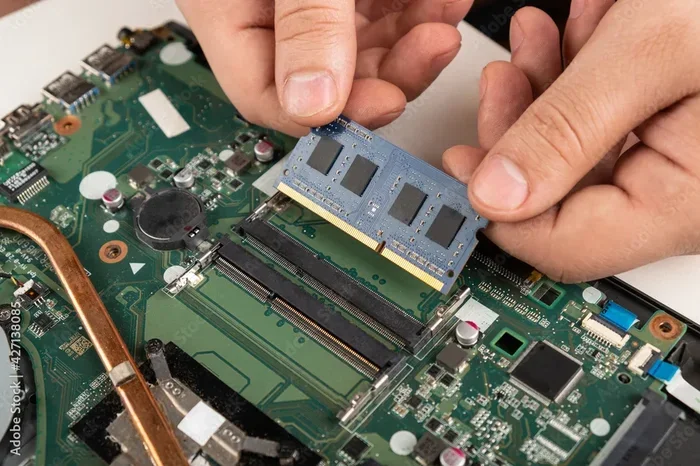
- Remove old RAM (if needed): Push the metal clips on either side of the existing RAM stick outward. The stick will pop up at an angle. Pull it out gently.
- Insert the new RAM: Align the notch on the DDR3 SODIMM with the slot. Insert it at a 30-degree angle and press down firmly until the clips click into place.
- Replace the panel: Put the access panel back on and screw it in.
- Power on and verify: Turn on your laptop. Right-click on “This PC” or “My Computer” and select Properties. You should see 16GB of RAM listed.
If you want to learn more about RAM types and speeds, visit our page on DDR3 64 X1 Laptop Ram.
Tips for a Smooth Installation
- Always handle RAM by the edges. Avoid touching the gold contacts.
- Work on a non-carpeted surface to reduce static electricity.
- If the laptop does not recognize the new RAM, try reseating it. Remove and reinsert the stick.
- For the best performance, use matched pairs of RAM in dual channel mode. Check out 16Gb Ram 512Gb Ssd Laptop options for a complete upgrade package.
Performance Gains: What to Expect After Upgrading
Once you install 16gb ddr3 ram in your laptop, the difference can be dramatic. Here is what you can expect.
Faster Multitasking
With 16GB of memory, you can keep many applications open at once. You can have a browser with 20 tabs, a Word document, and Spotify all running without any slowdown. This is one of the biggest benefits of a 16 gig ddr3 ram laptop setup.
Better Gaming Performance
DDR3 RAM can still handle many games well. Older titles and indie games run smoothly. Even some newer games can work if you adjust the settings. Having 16GB ensures the game has enough memory to load textures and assets quickly. Check out our gaming laptop 16 gb ram guide for more tips.
Quicker Boot Times
While an SSD has the biggest impact on boot speed, extra RAM helps too. Your system can load more startup services into memory, which reduces delays. Pairing 16gb ram for laptop with an SSD is the best combination for a fast machine.
Improved Video Editing and Rendering
If you edit photos or short videos, 16GB of RAM gives you much more headroom. Programs like Premiere Elements or GIMP can use all available memory. This means smoother previews and faster exports.
Common Mistakes to Avoid When Upgrading RAM
Even though upgrading RAM is straightforward, people still make mistakes. Here are some common ones to watch out for.
- Buying the wrong RAM type: DDR3 and DDR4 look almost identical. Make sure you buy DDR3 if your laptop requires it. Mixing types will not work.
- Ignoring RAM speed: DDR3 RAM comes in different speeds, like 1333MHz and 1600MHz. Try to match the speed of your existing RAM for the best results.
- Not enabling dual channel: If your laptop has two slots, install two sticks instead of one. This doubles the memory bandwidth and improves performance.
- Forgetting to check the OS: A 32-bit Windows system cannot use more than 4GB of RAM. Make sure you are running a 64-bit operating system.
- Skipping the BIOS update: Sometimes, updating your laptop BIOS helps it recognize new RAM modules properly.
For more tips on avoiding upgrade pitfalls, read our article on 8gb ram laptop windows 11 for insights on memory and OS compatibility.
Top Laptops and Upgrades for 16GB DDR3 RAM
Many popular laptops support 16gb ddr3 ram upgrades. Here are some common models and what you should know.
Lenovo ThinkPad Series
Lenovo ThinkPad laptops are known for their durability and upgradeability. Many models in the T-series and X-series support up to 16GB of DDR3 RAM. These are great candidates for a 16 gig ddr3 ram laptop upgrade. If you have a used ThinkPad, adding RAM is one of the best investments you can make.
HP ProBook and EliteBook
HP’s business line of laptops often supports DDR3 RAM and can be upgraded to 16GB. These machines are built for professionals who need reliability and performance. Check your specific model to confirm the maximum RAM capacity.
Acer Aspire and TravelMate
Acer offers several models that accept DDR3 RAM upgrades. The Aspire and TravelMate lines are popular budget options. Upgrading from 4GB or 8GB to 16GB can make these laptops feel like new machines again. For more details on Acer laptops with DDR3 RAM, see our guide on Acer Aspire 5 Laptop Inexpensive 16 0 Gb Ram.
Expert Tips for Getting the Most from Your 16GB DDR3 Setup
Once you have upgraded to 16gb ddr3 ram, there are a few things you can do to squeeze out every bit of performance.
- Use an SSD: If your laptop still has a mechanical hard drive, replacing it with an SSD is the single best upgrade you can make. Combine that with 16GB of RAM and your laptop will feel incredibly fast.
- Keep your OS updated: Windows updates often include memory management improvements that help your system run more efficiently.
- Close unused apps: Even with 16GB of RAM, leaving unused programs running in the background wastes memory. Get in the habit of closing what you are not using.
- Adjust virtual memory: If you ever run low on RAM, Windows uses your hard drive as virtual memory. Setting this correctly can prevent slowdowns.
- Scan for malware: Malware can secretly use your RAM and slow down your system. Run regular scans to keep your laptop running smoothly.
For more information on optimizing your laptop’s memory, check out our article on what does ram do on a laptop.
Conclusion
Upgrading to a 16 gig ddr3 ram laptop is one of the smartest investments you can make. It is affordable, easy to install, and delivers noticeable improvements in speed and multitasking. Whether you are using an older ThinkPad, HP ProBook, or Acer Aspire, adding 16gb ddr3 ram can bring your machine back to life.
Always check compatibility before buying. Confirm your laptop supports DDR3 and can handle 16GB of memory. Install the RAM carefully, and consider pairing it with an SSD for the best results. With these steps, your laptop will run faster and smoother than it has in years.
Do not let a slow computer hold you back. A ddr3 ram upgrade is a simple fix that makes a big difference. Take the time to upgrade your laptop memory 16gb today, and you will wonder why you did not do it sooner.
Frequently Asked Questions
Can I put 16GB DDR3 RAM in any laptop?
No, not every laptop supports 16GB of DDR3 RAM. You need to check your laptop’s maximum RAM capacity and confirm it uses DDR3 SODIMM modules. Some older laptops have a limit of 8GB or use a different RAM type entirely.
Is DDR3 RAM still good in 2024?
Yes, DDR3 RAM is still perfectly good for everyday tasks. It may not be as fast as DDR4 or DDR5, but for browsing, office work, and light gaming, 16gb ddr3 ram provides more than enough performance for most users.
How much does a 16GB DDR3 RAM stick cost?
Prices vary, but a 16GB DDR3 SODIMM stick typically costs between $30 and $60. It is one of the most affordable upgrades you can make to speed up an older laptop.
Do I need to install RAM in pairs?
You can install a single 16GB stick if your laptop has one slot. However, if your laptop has two slots, installing two 8GB sticks in dual channel mode will give you better performance than a single 16GB stick.
What happens if I install the wrong type of RAM?
If you install DDR4 RAM in a DDR3 laptop, it simply will not work. The slots are physically different and not interchangeable. Always verify the RAM type before purchasing.
Will upgrading RAM fix a slow laptop?
Upgrading RAM can significantly improve a slow laptop, especially if you currently have 4GB or less. But if your laptop has a slow hard drive or an outdated processor, you may also need other upgrades like an SSD for the best results.