How to Install More Ram on My Laptop
Installing more RAM on your laptop is one of the simplest and most affordable ways to boost performance. Whether you want smoother multitasking or faster application loading, this guide walks you through the entire laptop RAM upgrade process. You will learn how to check compatibility, choose the right memory, and complete the installation in under 30 minutes.
Is your laptop running slow? Do apps take forever to open, and your browser keeps freezing with too many tabs? The answer might be simpler than you think. Adding more memory can transform a sluggish computer into a responsive machine that handles everyday tasks with ease.
Upgrading your laptop’s memory is one of the most impactful improvements you can make. It costs less than a new laptop, takes just a few minutes, and delivers noticeable results immediately. In this guide, we will walk you through every step of the how to install more ram on my laptop process. From checking what your laptop supports to physically installing the new memory stick, we have you covered.
Whether you are a student, a remote worker, or someone who just wants a faster machine, this tutorial makes it easy. No technical degree required. Just follow along, and your laptop will thank you.
Key Takeaways
- Check compatibility first: Not every laptop supports RAM upgrades, so verify your model before buying anything.
- Know your RAM type: DDR4 and DDR3 are the most common, and using the wrong type won’t work.
- Ground yourself: Static electricity can damage components, so always discharge yourself before touching internal parts.
- Max out your slots: Filling all available RAM slots gives you the best performance boost.
- Test after installation: Always verify the new RAM is recognized by your system before closing everything up.
- Match RAM sticks: Using identical RAM modules in dual-channel mode improves speed and stability.
📑 Table of Contents
Why Installing More RAM Makes a Difference
RAM, or random access memory, acts as your laptop’s short-term memory. Every app, browser tab, and background process uses it. When your RAM fills up, your laptop starts swapping data to the hard drive, which slows everything down dramatically.
More RAM means your laptop can keep more programs open at once without slowing. Think of it like adding more desks to a busy office. More desks means more workers can operate simultaneously without bumping into each other.
Here are the main benefits you will notice after a memory upgrade:
- Faster multitasking: Switch between apps smoothly without lag.
- Quicker app launches: Programs open faster because they load into memory more efficiently.
- Better browser performance: Keep dozens of tabs open without crashes.
- Improved gaming: Many games require a minimum amount of memory to run well.
- Smoother video editing: Large files process faster with more available memory.
If you have been wondering whether an upgrade is worth it, the answer is almost always yes. Even a small increase in memory can make a huge difference in daily use.
Before You Start: Check Compatibility
Not every laptop allows RAM upgrades. Some modern ultrabooks have memory soldered directly to the motherboard, which means you cannot add more. Before buying any components, you need to confirm whether your machine supports this upgrade.
How to Check If Your Laptop Supports More RAM
Start by finding out what your laptop model supports. You can search online for your specific model number along with the word “specifications.” Most manufacturers list the maximum memory capacity, the number of RAM slots, and the supported RAM type on their website.
Another quick way is to use a built-in tool. On Windows, you can open the Task Manager by pressing Ctrl + Shift + Esc, then click the Performance tab and select Memory. This shows you how many slots are in use and how many are available.
If you want a deeper look, you can check your current RAM using system information tools. This tells you exactly what type and speed of memory your laptop uses.
Understanding RAM Types and Speeds
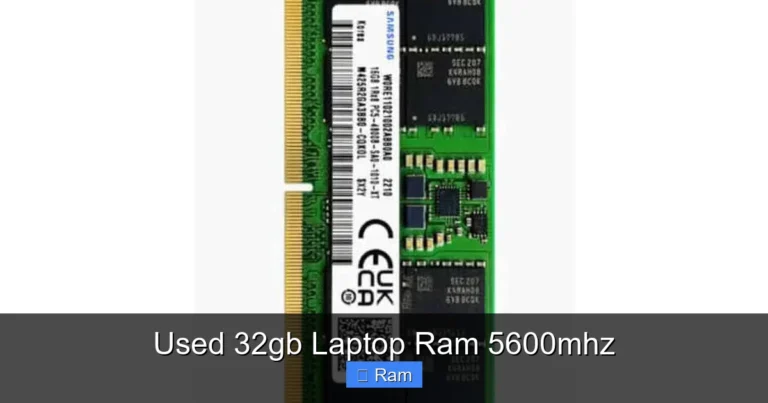
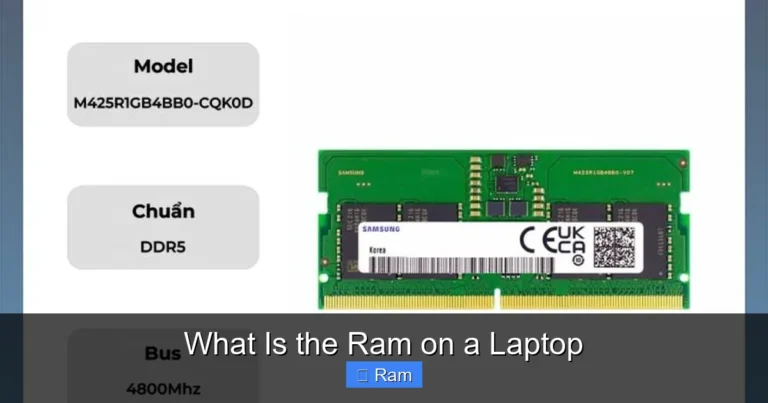
RAM comes in different generations, and your laptop only supports specific types. The most common types you will encounter are DDR3 and DDR4. DDR5 is newer and appears in some modern laptops, but it is not yet widespread.
Here is a quick comparison of the most common RAM types:
- DDR3: Older but still found in many laptops. Slower than DDR4 but perfectly fine for basic tasks.
- DDR4: The current standard for most laptops. Faster, more efficient, and widely available.
- DDR5: The newest generation. Found in high-end and newer laptops. Offers the best performance.
RAM speed, measured in megahertz (MHz), also matters. Higher speed numbers generally mean faster data transfer. However, your laptop motherboard will only support certain speeds. Always match the speed of your new RAM to what your laptop supports.
When choosing RAM, you also need to decide between single-channel and dual-channel configurations. Dual-channel means using two matching RAM sticks, which can improve performance by up to 15%. If your laptop has two slots, buy a pair of matching sticks for the best results.
What You Will Need
Before you begin the installation, gather everything you need. Having all the tools ready makes the process smooth and stress-free.
Here is your checklist:
- The new RAM module (make sure it matches your laptop’s specifications)
- A small Phillips-head screwdriver
- A clean, flat workspace
- An anti-static wrist strap (optional but recommended)
- Your laptop’s user manual or a service guide for your model
You can find your laptop’s service guide by searching for the model number followed by “service manual” or “disassembly guide.” These documents show you exactly where the RAM slots are and how to open your specific model.
One important tip: buy RAM from a reputable brand like Crucial, Kingston, Corsair, or Samsung. These brands offer reliable modules with good warranties. If you are unsure which RAM to buy, you can use a memory scanner tool on your laptop to find compatible options.
Step-by-Step Installation Guide
Now comes the fun part. Installing RAM is straightforward, but you need to be careful and patient. Follow these steps exactly, and you will have your new memory running in no time.
Step 1: Power Down and Unplug
Turn off your laptop completely. Do not just put it to sleep. Shut it down fully. Then unplug the power cable and disconnect any external devices like USB drives, mice, or monitors.
If your laptop has a removable battery, take it out. This adds an extra layer of safety by disconnecting power from the motherboard. For laptops with built-in batteries, simply holding the power button for 15 seconds after unplugging will discharge any remaining electricity.
Step 2: Ground Yourself
Static electricity is the enemy of computer components. A tiny shock that you cannot even feel can damage your new RAM or other parts. To prevent this, touch a metal surface like a radiator or a metal part of your desk before handling any internal components.
For extra protection, wear an anti-static wrist strap. Clip it to a metal part of your laptop chassis. This keeps your body at the same electrical charge as the machine, preventing static discharge.
Step 3: Open the Laptop Back Panel
Flip your laptop over and locate the screws holding the back panel in place. Use your screwdriver to remove them carefully. Keep the screws in a small bowl or magnetized tray so you do not lose them.
Gently pry the back panel off using a plastic spudger or your fingernail. Start at a corner and work your way around. Avoid using metal tools, as they can scratch or damage the laptop chassis.
Once the panel is off, set it aside in a safe place. You should now see the internal components of your laptop, including the hard drive, battery, and the RAM slots.
Step 4: Locate the RAM Slots
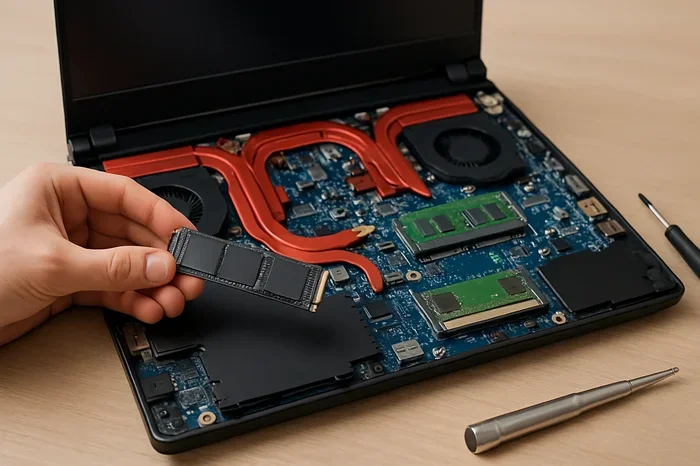
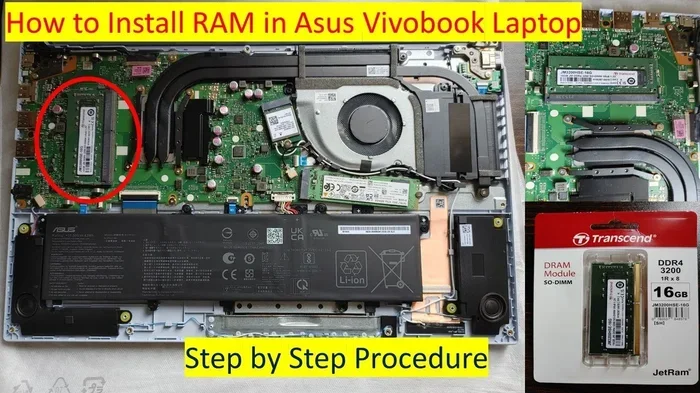
The RAM slots are long, thin connectors usually located near the center of the laptop. They have small metal clips on either end that hold the RAM sticks in place. Some laptops have one slot; others have two or even four.
If you are replacing existing RAM, gently press the metal clips outward. The RAM stick will pop up at an angle. Pull it straight out carefully.
If you are adding RAM to empty slots, you can skip this step and move to the next one.
Step 5: Install the New RAM
Take your new RAM stick out of its anti-static bag. Hold it by the edges. Avoid touching the gold contacts on the bottom, as oils from your fingers can cause connection problems.
Align the notch on the RAM stick with the ridge in the RAM slot. This ensures you insert it the right way. You can only insert it one direction, so do not force it.
Press the RAM stick firmly and evenly into the slot. Apply pressure on both ends simultaneously. When the stick is fully seated, the metal clips on both sides will click into place automatically. You should hear a distinct click, which confirms the RAM is locked in.
If you are installing two RAM sticks, repeat this process for the second slot. Make sure both sticks are fully seated and clipped securely.
Step 6: Close Up and Test
Replace the back panel and screw it back in. Do not overtighten the screws. Hand-tight is usually enough.
If you removed the battery, reinsert it now. Reconnect the power cable and any external devices.
Turn on your laptop and check if the new RAM is recognized. On Windows, press Ctrl + Shift + Esc to open Task Manager, then go to the Performance tab and select Memory. You should see the total amount of RAM reflect your upgrade.
If the new memory is not showing up, try reseating the RAM sticks. Turn off the laptop, open the panel again, and press the sticks firmly until they click. Sometimes they need a second push to make full contact.
For more detailed guidance on the installation process, you can also refer to our article on how to install RAM on laptop, which covers additional tips and troubleshooting steps.
Common Mistakes to Avoid
Even though installing RAM is relatively simple, mistakes can happen. Here are the most common errors and how to avoid them.
- Buying the wrong RAM type: Always double-check your laptop’s specifications before purchasing. DDR3 will not fit in a DDR4 slot, and vice versa.
- Forcing the RAM stick: If it does not go in easily, you may have it aligned incorrectly. Remove it, flip it around, and try again. Forcing it can damage the slot.
- Skipping the grounding step: Skipping this step risks static damage. It takes only five seconds and can save you hundreds of dollars in repairs.
- Mixing different RAM brands: While it often works, mixing brands can cause compatibility issues. Stick with the same brand, speed, and capacity for best results.
- Forgetting to test before closing up: Always verify the RAM is recognized before screwing the back panel back on. It saves you from having to reopen the laptop.
By avoiding these mistakes, you ensure a smooth and successful upgrade every time.
How Much RAM Do You Actually Need?
The right amount of RAM depends on what you use your laptop for. Different tasks require different amounts of memory. Here is a simple guide to help you decide.
- 4GB: Enough for basic web browsing and word processing. But it is the bare minimum in 2024 and will feel limiting.
- 8GB: The sweet spot for most users. Handles multitasking, light photo editing, and casual gaming well.
- 16GB: Ideal for power users, video editors, and gamers. Provides headroom for demanding applications.
- 32GB: Overkill for most people. Only necessary for professional workloads like 3D rendering or heavy data analysis.
If you are not sure what how much RAM you need for your specific use case, consider your daily workflow. If you regularly have many apps open, or if your laptop slows down during heavy tasks, more RAM will help significantly.
For most people, upgrading to 16GB is the best investment. It strikes the perfect balance between performance and cost. You can find more detailed recommendations in our guide on how much RAM do I need on my laptop.
When to Consider a Professional
While installing RAM is a beginner-friendly task, there are situations where professional help makes sense. If your laptop has a sealed chassis with no user-accessible panels, opening it may void your warranty. Some manufacturers also require authorized service centers to perform upgrades.
Additionally, if you are uncomfortable working inside your laptop, there is no shame in asking a professional. Many computer repair shops offer RAM installation services for a reasonable fee. It is a quick job for them and gives you peace of mind.
Also, if you have checked and your laptop does not support RAM upgrades, a professional can confirm this and suggest other ways to improve performance, such as replacing a mechanical hard drive with a solid-state drive.
Final Thoughts
Installing more RAM on your laptop is one of the easiest and most rewarding upgrades you can perform. It costs a fraction of what a new laptop costs, takes less than half an hour, and delivers instant improvements in speed and responsiveness.
Remember to check compatibility first, choose the right type of memory, and follow each step carefully. With the right RAM stick and a little patience, your laptop will feel brand new again.
Do not let a slow laptop hold you back any longer. Gather your tools, find the right memory for your model, and give your laptop the boost it deserves. Once you experience the difference that a memory upgrade makes, you will wonder why you did not do it sooner.
For additional help with laptop upgrades and maintenance, explore more of our guides. Whether you need help with other hardware improvements or troubleshooting common issues, we have the resources to support you every step of the way.
Frequently Asked Questions
Can I install more RAM on any laptop?
No, not every laptop supports RAM upgrades. Some models have memory soldered to the motherboard, which cannot be changed. Always check your laptop’s specifications before purchasing RAM to confirm it is upgradeable.
How do I know which RAM is compatible with my laptop?
Check your laptop’s user manual or search online for your model number followed by “RAM specifications.” You need to match the RAM type (DDR3, DDR4, or DDR5), speed, and form factor (usually SODIMM for laptops).
Is it hard to install RAM in a laptop?
No, it is one of the easiest laptop upgrades you can do. Most laptops have a dedicated access panel for the RAM, and the installation process takes only a few minutes with basic tools.
Will adding more RAM speed up my laptop?
Yes, if your laptop is currently low on memory. Adding RAM improves multitasking, app loading times, and overall responsiveness. However, if your laptop already has enough RAM for your needs, the improvement may be minimal.
Can I mix two different RAM sticks together?
You can, but it is best to use matching sticks from the same brand, speed, and capacity. Mixing different RAM can sometimes cause compatibility issues or prevent dual-channel mode from working properly.
How much does it cost to upgrade laptop RAM?
A laptop RAM upgrade typically costs between $20 and $60 for a single stick, depending on the capacity and type. DDR4 8GB and 16GB modules are the most common and affordable options available today.