16 Gig Ram for Laptop
16 gig ram for laptop is the sweet spot for most users who need smooth multitasking, fast performance, and future-ready computing. Whether you work, game, or create content, 16GB of RAM delivers the speed and capacity you need without overspending. This guide covers everything from compatibility to buying tips so you can make the right choice.
If you have ever wondered whether 16 gig ram for laptop is worth the investment, you are in the right place. RAM, or random access memory, is the short-term memory your laptop uses to handle everything you do. From opening browser tabs to running demanding software, your system memory plays a huge role in how fast and smooth your experience feels.
Many people ask, “Is 16GB enough?” The short answer is yes — for most users, 16 gig ram for laptop hits the perfect balance between performance and price. Whether you are a student, a professional, or a casual gamer, this amount of memory can handle your daily tasks without breaking a sweat. Let us dive into everything you need to know.
Key Takeaways
- 16GB RAM is the ideal balance between performance and cost for most laptop users.
- Dual-channel configuration can significantly boost memory bandwidth and overall speed.
- DDR4 and DDR5 are the two main types of RAM available for modern laptops.
- Compatibility matters — always check your laptop model before purchasing a RAM upgrade.
- 16GB handles gaming, video editing, and heavy multitasking with ease for most workflows.
- Upgrading RAM is one of the most affordable ways to breathe new life into an older laptop.
📑 Table of Contents
- What Is 16 Gig RAM for Laptop and Why Does It Matter?
- Who Benefits Most from 16GB of RAM?
- How Much RAM Does Your Laptop Actually Need?
- Types of RAM: DDR4 vs DDR5
- How to Check if Your Laptop Supports 16GB RAM
- Is 16GB RAM Enough for Gaming?
- How Much Does a 16GB RAM Upgrade Cost?
- Common Mistakes to Avoid When Upgrading RAM
- Expert Tips to Get the Most from Your 16GB RAM
- Final Thoughts on 16 Gig RAM for Laptop
What Is 16 Gig RAM for Laptop and Why Does It Matter?
RAM is the workspace your laptop uses to keep apps and files ready while you are using them. Think of it like a desk — the bigger the desk, the more papers you can spread out at once without slowing down. 16 gig ram for laptop gives you a generous workspace that handles modern workloads with confidence.
When your laptop has enough memory, programs launch faster, switching between apps feels instant, and your system does not freeze when you have many things open at once. Without sufficient RAM, your laptop has to rely on slower storage memory, which creates frustrating delays.
How RAM Differs from Storage
People often confuse RAM with storage, but they serve very different purposes. Your hard drive or SSD stores files permanently. RAM holds data temporarily while your laptop is running. When you close a program, it clears from RAM. This is why having enough system memory matters so much for day-to-day speed.
Here is a simple way to think about it. Storage is like your filing cabinet — it holds everything long-term. RAM is like your desk — it holds what you are actively working on right now. The more desk space you have, the faster you can get things done.
Who Benefits Most from 16GB of RAM?
Not everyone needs the same amount of memory. Your ideal RAM capacity depends on what you do with your laptop each day. Here is a breakdown of who gets the most value from 16 gig ram for laptop.
Students and Remote Workers
Students who juggle multiple browser tabs, video calls, and document editing need reliable memory. 16 gig ram for laptop makes it easy to research, write papers, and attend online classes without lag. Remote workers who use video conferencing tools alongside spreadsheets and communication apps also see a big improvement with 16GB.
Content Creators
Video editors, graphic designers, and music producers work with large files that demand significant memory. A 16GB RAM laptop handles photo editing in Photoshop, light video rendering, and multitasking across creative software much better than 8GB options. It is the minimum recommended amount for most creative workflows today.
Casual and Mid-Range Gamers
Many modern games recommend or require 16GB of memory for smooth gameplay. If you play titles like Cyberpunk 2077, Hogwarts Legacy, or Red Dead Redemption 2, 16 gig ram for laptop gives you the headroom you need. It also keeps background apps from stealing resources while you play.
How Much RAM Does Your Laptop Actually Need?
Choosing the right amount of memory depends on your usage patterns. While 16 gig ram for laptop works well for most people, some situations call for more or less. Let us look at the options.
4GB and 8GB: Who Are These For?
4GB of RAM is enough only for very basic tasks like web browsing and word processing. 8GB has become the bare minimum for most users today. It handles everyday work but can struggle with heavy multitasking or modern software demands.
If you mostly use your laptop for email, light browsing, and simple documents, 8GB might still work. But even then, upgrading to 16GB can make a noticeable difference in how responsive your machine feels.
32GB and Beyond: Who Needs That Much?
Professional video editors, 3D animators, and software developers who run virtual machines or compile large codebases often need 32GB or more. For these users, 16GB is a starting point, not the ceiling. However, for the average user, 32GB is overkill and not worth the extra cost.
| RAM Amount | Best For | Performance Level |
|---|---|---|
| 4GB | Basic browsing, light tasks | Very limited |
| 8GB | Everyday use, students | Adequate |
| 16GB | Multitasking, gaming, creative work | Excellent |
| 32GB+ | Professional editing, development | Top-tier |
If you are still unsure, check out our guide on what is a good RAM size for a laptop to help you decide.
Types of RAM: DDR4 vs DDR5
When shopping for memory, you will encounter two main types: DDR4 and DDR5. Both are common in modern laptops, but they have important differences.
DDR4 RAM
DDR4 has been the standard for several years and remains widely used. It offers reliable performance at affordable prices. Most laptops with 16 gig ram for laptop configurations use DDR4 memory. It works great for everyday tasks, gaming, and creative work.
DDR4 RAM typically runs at speeds between 2400MHz and 3200MHz. While it is not the fastest option available, it still delivers excellent value and broad compatibility with older and newer laptops.
DDR5 RAM
DDR5 is the newer generation and offers faster speeds and better efficiency. It starts at higher base speeds and can handle more data per clock cycle. If you are buying a new laptop, DDR5 support is a nice bonus.
However, DDR5 is still more expensive than DDR4. For most users, the performance jump does not justify the extra cost yet. If you are upgrading an existing laptop, check whether it supports DDR5 before spending extra money.
How to Check if Your Laptop Supports 16GB RAM
Before you buy or upgrade, you need to confirm your laptop can handle 16GB of memory. Not every laptop supports this amount, and compatibility depends on several factors.
Check Your Current RAM Configuration
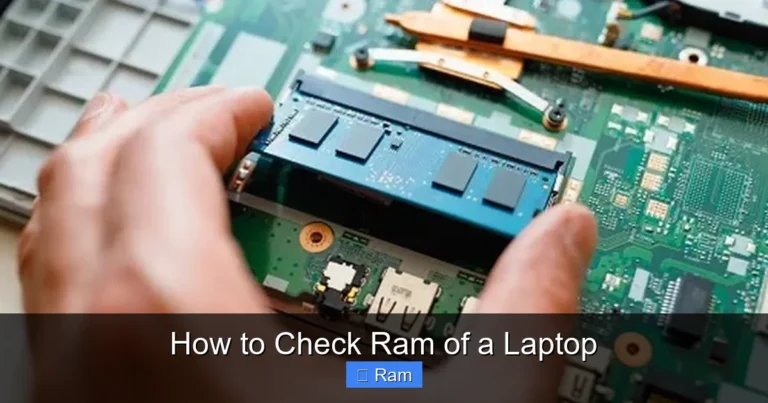
On Windows, open Task Manager and go to the Performance tab. Click on Memory to see how much RAM you currently have and how many slots are available. On a Mac, click the Apple menu and select About This Mac.
Look for two key details: your current memory amount and the number of free slots. If your laptop has two slots and both are occupied with 8GB sticks, you can replace them with 8GB sticks to reach 16GB total.
Maximum RAM Support
Every laptop model has a maximum memory limit. Some older laptops only support up to 8GB or 12GB, which means you cannot install 16GB. Check your laptop manufacturer’s specifications online to confirm the maximum supported capacity.
If you own an HP laptop, you might want to read our article on RAM memory for HP laptop for model-specific guidance.
Single Channel vs Dual Channel
Dual-channel memory configuration can boost performance by up to 20-30% compared to single-channel. This means using two RAM sticks instead of one. For example, two 8GB sticks in dual-channel mode will outperform a single 16GB stick in most scenarios.
When buying 16 gig ram for laptop, consider purchasing two 8GB sticks rather than a single 16GB stick if your laptop has two available slots. This simple change can make a real difference in memory bandwidth and overall responsiveness.
Is 16GB RAM Enough for Gaming?
Gaming is one of the most memory-intensive activities for a laptop. Modern games demand more and more RAM with each new release. The good news is that 16 gig ram for laptop is widely considered the minimum standard for gaming in 2024 and beyond.
Most popular games run well with 16GB of memory. Titles like Fortnite, Valorant, Minecraft, and The Witcher 3 all perform great at this capacity. Even more demanding games like Elden Ring and Baldur’s Gate 3 run smoothly with 16GB, as long as you have a decent processor and graphics card.
For competitive gaming, 16GB gives you enough headroom to run the game, Discord, a browser for guides, and background processes without any stuttering. It is the sweet spot that balances performance and cost effectively.
If you want to explore more about gaming setups, check out our guide on gaming laptop 16GB RAM for detailed recommendations.
How Much Does a 16GB RAM Upgrade Cost?
One of the best things about upgrading RAM is that it is relatively affordable. The cost of 16 gig ram for laptop varies depending on the type, brand, and where you buy it.
DDR4 16GB kits typically range from $40 to $80. DDR5 16GB kits cost a bit more, usually between $70 and $120. If you already have 8GB and want to add another 8GB stick, you can often do so for around $40 to $60.
Compared to buying a whole new laptop, upgrading your RAM is one of the most cost-effective ways to improve performance. A laptop that feels slow and sluggish with 8GB can feel brand new after a memory upgrade.
If you are looking for deals or want to compare prices, visit our page on how much RAM for laptop to explore current options.
Common Mistakes to Avoid When Upgrading RAM
Upgrading your laptop memory is straightforward, but there are a few common pitfalls to watch out for.
Buying the Wrong RAM Type
Not all RAM is the same. DDR4 and DDR5 are not interchangeable. SODIMM modules for laptops are different from desktop DIMMs. Always double-check your laptop’s specifications before purchasing memory.
Ignoring Speed and Latency
RAM speed, measured in MHz, affects performance. Higher speeds generally mean better performance, but the difference is more noticeable in some tasks than others. For most users, RAM running at 3200MHz provides excellent value.
Mixing Different RAM Sticks
While it is sometimes possible to mix RAM sticks, it is best to use matching pairs. Different brands, speeds, or capacities can cause compatibility issues and prevent your laptop from running at optimal performance.
Forgetting to Ground Yourself
When physically installing RAM, static electricity can damage your components. Always touch a metal surface before handling RAM sticks, or use an anti-static wrist strap. This simple precaution can save you from costly mistakes.
Expert Tips to Get the Most from Your 16GB RAM
Once you have 16 gig ram for laptop set up, a few simple habits can help you get the most out of it.
First, close apps you are not using. Even with 16GB, leaving dozens of browser tabs and background programs open will slow things down. Second, keep your operating system updated. Software updates often include memory management improvements that boost performance.
Third, consider using an SSD instead of an HDD. While RAM handles active tasks, your storage affects how quickly your laptop boots and loads files. Combining 16GB of RAM with a solid-state drive creates a fast, responsive system.
Finally, monitor your memory usage regularly. Windows Task Manager and Mac Activity Monitor let you see how much RAM your apps are consuming. If you notice you are consistently using less than 80% of your memory, 16GB is more than enough for your needs.
Final Thoughts on 16 Gig RAM for Laptop
16 gig ram for laptop remains the best all-around choice for most users in 2024 and beyond. It delivers excellent performance for work, play, and creative tasks without costing a fortune. Whether you are upgrading an existing laptop or buying a new one, 16GB of memory gives you the headroom to handle whatever comes your way.
The key is to make sure your laptop supports it, choose the right type of RAM, and install it correctly. With these steps, you can enjoy a faster, smoother computing experience that keeps up with your daily demands.
If you are curious about whether 16GB is enough for your specific situation, check out our detailed guide on is 16GB RAM enough for laptop for more insights.
Investing in the right amount of memory is one of the smartest things you can do for your laptop. It is affordable, easy to install, and delivers immediate results. Make the upgrade and feel the difference every time you open your laptop.
Frequently Asked Questions
Is 16GB RAM enough for a laptop in 2024?
Yes, 16GB is widely considered the ideal amount for most laptop users in 2024. It handles multitasking, gaming, content creation, and everyday work with ease. For the average user, it provides the perfect balance of performance and value.
Can I upgrade my laptop to 16GB RAM?
Most laptops that support RAM upgrades can be expanded to 16GB. Check your laptop’s maximum memory support and available slots before purchasing. Many older laptops accept standard SODIMM modules that are easy to install.
What is the difference between 8GB and 16GB RAM for laptop?
The main difference is multitasking capability. With 8GB, you may experience slowdowns when running several apps at once. 16GB gives you much more breathing room, allowing smoother performance across demanding workloads and modern software.
Does RAM speed matter for a 16GB laptop setup?
RAM speed does matter, but the impact varies by task. For gaming and content creation, faster RAM can improve frame rates and rendering times. For everyday tasks like browsing and office work, the difference is minimal. DDR4 at 3200MHz is a great sweet spot for most users.
Should I buy one 16GB stick or two 8GB sticks?
Two 8GB sticks are generally better because they enable dual-channel mode, which boosts memory bandwidth. Dual-channel configuration can improve performance by 20-30% compared to a single stick. However, if you only have one free slot, a single 16GB stick still works well.
How long will 16GB RAM last for a laptop?
16GB of RAM should last most users 4-5 years before feeling outdated. As software becomes more demanding, this amount of memory will remain relevant for everyday tasks and moderate gaming. It is a future-proof choice for the majority of laptop users.