Apartment Security Camera Laws in New York State
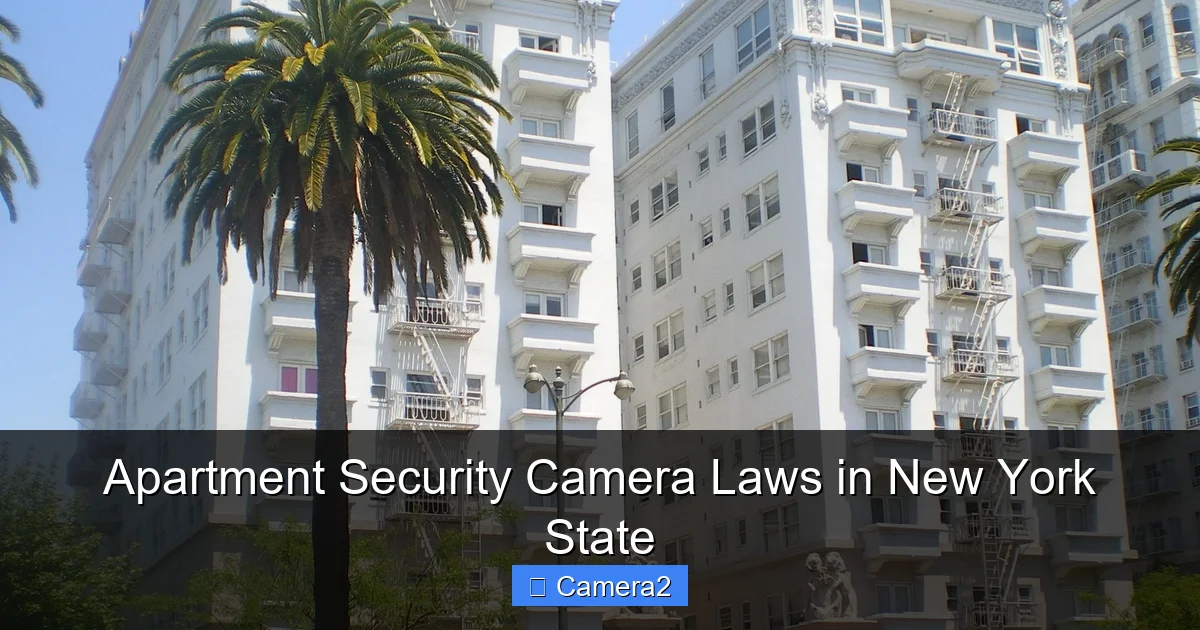
New York State has clear rules about where and how security cameras can be used in apartments. Landlords may install cameras in common areas, but private spaces like bedrooms and bathrooms are off‑limits. Tenants also have rights to notice, privacy, and data protection.
Key Takeaways
- Common‑area rule: Cameras are allowed only in shared spaces such as lobbies, hallways, and parking lots.
- Privacy zones prohibited: No recording in bedrooms, bathrooms, or any area where a reasonable expectation of privacy exists.
- Notice requirement: Landlords must give tenants written notice before installing any camera.
- Data handling: Recorded footage must be stored securely and retained only as long as necessary.
- Tenant consent: Tenants may request removal or relocation of a camera that invades privacy.
- State vs. local: New York City has stricter ordinances that add extra layers of protection.
- Enforcement: Violations can lead to civil lawsuits, penalties, and possible criminal charges under privacy statutes.
📑 Table of Contents
- Introduction: Why Apartment Security Cameras Matter
- 1. The Legal Foundations in New York State
- 2. Where Can Landlords Legally Place Cameras?
- 3. Notice, Consent, and Signage Requirements
- 4. Handling and Storing Recorded Footage
- 5. Practical Tips for Tenants and Landlords
- 6. Enforcement and Remedies
- Conclusion: Balancing Safety and Privacy
Introduction: Why Apartment Security Cameras Matter
Living in an apartment building can feel both cozy and vulnerable. On one hand, you share walls, elevators, and laundry rooms with neighbors; on the other, you worry about theft, vandalism, or unwanted visitors. Security cameras seem like a simple fix, but the law in New York State draws a line between safety and privacy.
In this guide we’ll walk through the major statutes, explain what landlords can and cannot do, and give you practical tips to protect your rights. Think of it as a friendly chat with a neighbor who just happens to know the legal side of things.
1. The Legal Foundations in New York State
1.1. New York Civil Rights Law (CRL) § 50‑1
The cornerstone for privacy in New York is Civil Rights Law § 50‑1, which makes it illegal to “intrude upon the seclusion of another” through electronic surveillance. The law does not ban cameras outright; it simply says you cannot record someone who has a reasonable expectation of privacy without consent.
Visual guide about Apartment Security Camera Laws in New York State
Image source: upload.wikimedia.org
1.2. New York Penal Law § 250.35 – Eavesdropping
If a camera captures audio in a private setting, it may also run afoul of the eavesdropping statute. Audio‑recording a conversation without all parties’ consent is a misdemeanor, and in some cases, a felony.
1.3. Local Ordinances – New York City Example
New York City adds its own layer with the “NYC Surveillance Camera Ordinance.” The city requires signposting, a public‑record request process, and limits on retention time (usually 30 days). While the state law applies everywhere, city rules are stricter and must be followed in the five boroughs.
2. Where Can Landlords Legally Place Cameras?
2.1. Allowed Locations: Common Areas
Think of the lobby, front entrance, hallways, stairwells, parking garages, and building amenities (gym, laundry room). These are considered “public” spaces where a tenant’s expectation of privacy is low. Installing a camera here is generally permissible, provided the landlord follows notice rules.
Visual guide about Apartment Security Camera Laws in New York State
Image source: th03.deviantart.net
2.2. Prohibited Locations: Private Spaces
- Bedrooms
- Bathrooms or shower areas
- Inside individual apartments (unless the tenant gives explicit written consent)
- Changing rooms or any place where a person is undressed
Even a small “corner” camera pointing toward a bedroom window can be deemed illegal under CRL § 50‑1.
2.3. The “Grey Zone” – Entryways to Units
Hallway doors that lead to private apartments are a gray area. A camera placed outside the door, watching only the hallway, is usually fine. However, if the lens can see inside the doorway or the peephole, it crosses into the private realm. Many landlords opt for motion‑activated lights instead of cameras in these spots to avoid legal risk.
3. Notice, Consent, and Signage Requirements
3.1. Written Notice Before Installation
New York law does not have a specific “notice” statute for security cameras, but courts have repeatedly ruled that tenants must be informed. A short clause in the lease or a separate written notice (email or paper) detailing the camera’s location, purpose, and retention policy is the safest route.
Visual guide about Apartment Security Camera Laws in New York State
Image source: c2.staticflickr.com
3.2. Signage in Common Areas
NYC’s ordinance mandates a clearly visible sign stating “Surveillance in progress” within 10 feet of each camera. Even outside the city, posting a sign helps demonstrate good faith and can protect the landlord if a privacy claim arises.
3.3. Tenant Consent for Inside‑Unit Cameras
If a landlord wishes to place a camera inside a tenant’s unit (for example, in a furnished studio where the landlord retains a key), the tenant must sign a separate consent form. The consent should specify the exact field of view, storage method, and the right to withdraw consent at any time.
4. Handling and Storing Recorded Footage
4.1. Secure Storage Practices
Footage should be stored on encrypted drives or cloud services with limited access. Only authorized personnel (property manager, security staff) should view the recordings, and each access event should be logged.
4.2. Retention Periods
New York State does not set a universal retention period, but the NYC ordinance caps it at 30 days unless the footage is needed for an ongoing investigation. Landlords should adopt a policy that automatically deletes older files to reduce liability.
4.3. Tenant Requests for Access or Deletion
Under the New York SHIELD Act, tenants can request a copy of any footage that includes them. Landlords must comply within a reasonable timeframe (usually 30 days) and may charge a modest copying fee. If a tenant believes a camera is invasive, they can also request its removal.
5. Practical Tips for Tenants and Landlords
5.1. For Tenants: Know Your Rights
- Ask to see any camera placements during move‑in.
- Request a copy of the building’s surveillance policy.
- If you spot a camera in a private area, document it (photo) and notify the landlord in writing.
- Consider a privacy screen or rearranging furniture to block a camera’s view if you feel uncomfortable.
5.2. For Landlords: Stay Compliant and Build Trust
- Conduct a “privacy audit” before installing any new camera.
- Use signage that meets NYC standards, even if you’re outside the city.
- Keep a written log of installation dates, locations, and maintenance checks.
- Invest in a 16 channel security camera system that offers encrypted storage and easy retention settings.
- Train staff on privacy policies and how to handle footage requests.
5.3. Real‑World Example: A Brooklyn Apartment Building
Imagine a 12‑story walk‑up in Bushwick. The owner wants to deter package theft, so they install a camera in the lobby and another covering the bike storage area. They post “Surveillance in Progress” signs, add a clause to the lease about lobby cameras, and store footage on a secure cloud server for 30 days. Tenants feel safer, and no privacy lawsuits arise. This scenario follows the law perfectly.
5.4. When Things Go Wrong – Common Pitfalls
- Camera pointing into a balcony: Even if the balcony is technically “outside,” it’s still a private space for the resident.
- Audio recording without consent: Capturing conversations in a lobby can trigger eavesdropping charges.
- Failing to delete old footage: Retaining years‑old video without justification may be considered “unreasonable” under the SHIELD Act.
6. Enforcement and Remedies
6.1. Civil Lawsuits
Tenants can sue for invasion of privacy, seeking damages, injunctions to remove the camera, and attorneys’ fees. Courts often look at whether the landlord gave proper notice and whether the camera was in a location with a reasonable expectation of privacy.
6.2. Criminal Penalties
Willful violation of eavesdropping statutes (recording audio without consent) can lead to misdemeanor charges, with fines up to $1,000 and possible jail time.
6.3. Administrative Actions
In New York City, the Department of Buildings can issue violations and fines for non‑compliance with the surveillance ordinance. Fines start at $250 per violation and increase with repeated offenses.
Conclusion: Balancing Safety and Privacy
Apartment security cameras can make residents feel safer, but they must be used responsibly. New York State’s privacy laws, combined with local ordinances, draw a clear line: cameras are welcome in shared spaces, but not where people expect solitude. By giving proper notice, posting signs, handling footage securely, and respecting tenant rights, landlords can protect their property without stepping on privacy. Tenants, on the other hand, should stay informed, ask questions, and know they can demand removal if a camera crosses the line. When both sides work together, everyone enjoys a safer, more comfortable home.
Frequently Asked Questions
Can a landlord install a camera inside my apartment?
Only with your written consent. Without it, placing a camera inside a private unit violates New York Civil Rights Law and can lead to civil liability.
Do I have to sign a lease addendum for lobby cameras?
No, but the landlord must give you written notice about the camera’s location and purpose. Including a clause in the lease is the easiest way to provide that notice.
How long can a landlord keep security footage?
New York State does not set a specific limit, but NYC’s ordinance caps retention at 30 days unless the footage is needed for an investigation. Most landlords adopt a 30‑day policy to stay compliant.
What should I do if I see a camera in my bedroom?
Document the camera with photos, write to the landlord demanding removal, and consider consulting an attorney. Recording in a bedroom is a clear violation of privacy statutes.
Are audio recordings allowed in common areas?
Generally no. Capturing audio without all parties’ consent can violate Penal Law § 250.35 (eavesdropping). Video‑only surveillance is safer.
Do security cameras affect my rent?
Installing cameras is a property‑maintenance decision and cannot be used to raise rent or change lease terms without proper notice and agreement.