Is It Illegal to Have Speakers in Your Motorcycle Helmet

Riding with speakers built into your helmet can be legal or illegal depending on where you live and how you use them. This guide breaks down the key regulations, safety concerns, and practical steps so you can enjoy music on the road without breaking the law.
Key Takeaways
- Legal landscape varies: Some states and countries ban any audio device that blocks outside sounds, while others allow low‑volume listening.
- Safety first: Even where it’s legal, speakers that drown out traffic noise increase crash risk.
- Helmet certification matters: Modifying a DOT‑ or ECE‑approved helmet can void its safety rating.
- Volume limits are common: Many jurisdictions set a maximum decibel level for helmet speakers.
- Enforcement is spotty: Police may issue warnings or tickets based on visible modifications.
- Alternative solutions exist: Bluetooth communication systems often meet legal requirements.
- Stay informed: Check local DMV or transportation authority rules before installing speakers.
📑 Table of Contents
- Introduction: Why the Question Pops Up
- 1. Understanding the Legal Framework
- 2. Safety Concerns: Hearing vs. Hearing‑Loss
- 3. Types of Helmet Audio Solutions
- 4. How to Install Speakers Legally and Safely
- 5. Real‑World Examples and Tips
- 6. Frequently Overlooked Legal Nuances
- Conclusion: Ride Smart, Ride Legal
- Related Topics
Introduction: Why the Question Pops Up
Imagine cruising down the highway, your favorite playlist humming in your ears, and the wind rushing past. It feels like the perfect ride, right? Many riders wonder if they can make that fantasy a reality by installing speakers directly into their motorcycle helmet.
The short answer is: it depends. Laws differ from state to state, and even city ordinances can add extra rules. On top of that, safety agencies like the U.S. Department of Transportation (DOT) and the European Economic Commission (ECE) have strict standards for helmets. Tinkering with those standards can turn a safe helmet into a legal liability.
This article walks you through the legal landscape, safety implications, and practical tips so you can decide whether to add speakers, how to do it safely, and how to stay on the right side of the law.
1. Understanding the Legal Framework
Federal vs. State Regulations (U.S.)
In the United States, there is no federal law that outright bans speakers in helmets. However, the DOT’s safety standards (FMVSS 218) require helmets to meet impact, penetration, and retention‑system criteria. Adding electronics can compromise those standards, especially if the modification changes the helmet’s weight distribution or structural integrity.

Visual guide about Is It Illegal to Have Speakers in Your Motorcycle Helmet
Image source: tse-mm.bing.com
Most states defer to local law enforcement to interpret “obstructing the rider’s ability to hear traffic.” For example:
- California: Vehicle Code 27400 prohibits any device that “materially interferes” with a driver’s hearing.
- Texas: No specific statute, but officers can cite riders under “unsafe equipment” provisions.
- Florida: The law focuses on “visual distractions,” but audio devices that block ambient sound may be deemed unsafe.
Because the wording is vague, enforcement can be inconsistent. Some officers issue warnings; others hand out citations.
International Perspectives
Outside the U.S., the rules vary even more:
- United Kingdom: The Highway Code advises against “any device that impedes hearing.” Police have issued fines for helmets with built‑in speakers that exceed safe volume levels.
- Germany: ECE Regulation 22.05 allows helmets with integrated communication systems, provided they meet specific acoustic standards.
- Australia: State road rules generally forbid “any device that reduces situational awareness,” which includes high‑volume helmet speakers.
Before you buy a set of speakers, check your local transport authority’s website for the most up‑to‑date guidance.
2. Safety Concerns: Hearing vs. Hearing‑Loss
How Sound Affects Rider Awareness
Riders rely on a 360‑degree soundscape: horns, brakes, engines, and even the subtle hiss of a car changing lanes. Speakers that deliver loud music can mask these cues. Studies from the National Highway Traffic Safety Administration (NHTSA) show that a 70 dB background noise can increase reaction time by up to 0.5 seconds—a critical delay at highway speeds.

Visual guide about Is It Illegal to Have Speakers in Your Motorcycle Helmet
Image source: pic.baike.soso.com
Decibel Limits and Safe Listening
Many safety organizations recommend keeping helmet audio below 85 dB. Some jurisdictions have codified this number. For instance, the Canadian province of Ontario caps helmet speaker volume at 85 dB SPL (Sound Pressure Level). Using a simple sound meter app on your phone can help you stay within the limit.
Potential Helmet Integrity Issues
Installing speakers usually involves drilling holes, adding wiring, or gluing components to the inner liner. These actions can:
- Compromise the impact‑absorbing foam.
- Weaken the shell’s structural integrity.
- Void the DOT or ECE certification, making the helmet illegal to use in an accident claim.
When in doubt, choose helmets that come with factory‑installed audio systems, as they’re tested for compliance.
3. Types of Helmet Audio Solutions
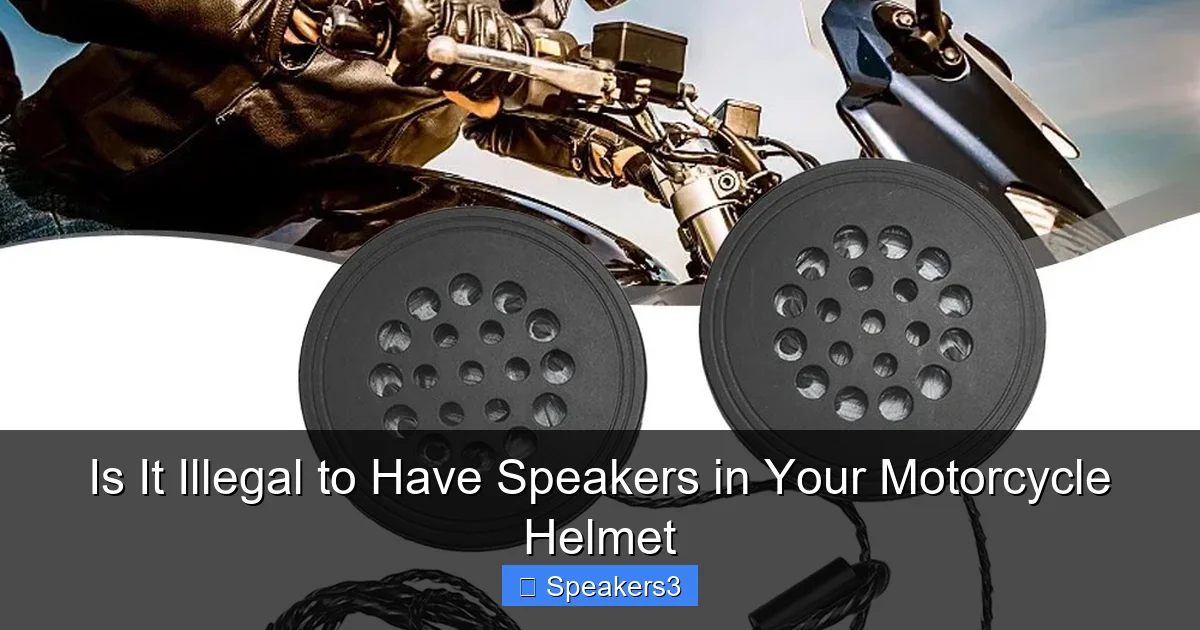
Aftermarket Speaker Kits
These kits typically include small waterproof speakers, a Bluetooth receiver, and a battery pack. Installation varies from simple “clip‑on” models to more invasive setups that require cutting the liner.
Visual guide about Is It Illegal to Have Speakers in Your Motorcycle Helmet
Image source: i.ebayimg.com
Pros:
- Customizable placement.
- Often cheaper than factory‑integrated helmets.
Cons:
- Higher risk of voiding helmet certification.
- Potential for loose wiring that can rattle or short.
Factory‑Integrated Audio Helmets
Brands like Sena, Cardo, and Scorpion offer helmets with built‑in speakers and intercom systems. These helmets are engineered to meet safety standards while providing clear audio.
Pros:
- Certified safety compliance.
- Seamless integration, no DIY drilling.
Cons:
- Typically more expensive.
- Limited to the brand’s audio ecosystem.
Alternative: Bluetooth Communication Systems
Instead of pure speakers, many riders use Bluetooth intercoms that double as “hear‑through” devices. They let you listen to navigation prompts or a passenger while still picking up ambient sounds through a built‑in microphone.
This solution often satisfies legal requirements because the system is designed to keep external noise audible.
4. How to Install Speakers Legally and Safely
Step‑by‑Step Guide for Aftermarket Kits
- Choose a certified helmet: Verify that your helmet has a DOT or ECE label.
- Read local regulations: Confirm any volume or modification limits.
- Plan speaker placement: Most kits recommend the ear‑cup area to avoid covering the visor.
- Use non‑invasive mounting: Velcro strips or adhesive pads are preferable to drilling.
- Route wiring carefully: Keep cables flat against the liner to avoid pressure points.
- Test volume levels: Use a sound meter app; stay below the legal dB limit.
- Re‑seal the helmet: If you had to cut any material, use a strong, heat‑resistant tape approved for helmets.
After installation, ride a short test route to ensure the helmet still fits snugly and that you can hear traffic clearly.
When to Seek Professional Help
If you’re uncomfortable drilling or modifying the liner, take the helmet to a certified motorcycle gear shop. Professionals can often install speaker modules that preserve the helmet’s safety rating.
5. Real‑World Examples and Tips
Case Study: Rider in Colorado
John, a 32‑year‑old rider from Denver, installed a Bluetooth speaker kit in his DOT‑approved helmet. He kept the volume at 70 dB, used a “hear‑through” mic, and never received a ticket. However, after a minor crash, his insurance claim was denied because the helmet’s liner had been cut, voiding the certification. Lesson: Even if you stay within legal volume limits, any structural alteration can affect insurance.
Practical Tips for Safe Riding with Audio
- Set a volume limit: Many Bluetooth apps let you cap the maximum dB.
- Use “ambient mode”: Some systems boost external sounds when they detect horns or sirens.
- Limit listening while riding: Keep music on only for short stretches; turn it off in heavy traffic.
- Regularly inspect the helmet: Look for loose wires, battery swelling, or damage to the liner.
- Carry a backup: Keep a small portable speaker for pit stops so you can remove the helmet when you need louder audio.
6. Frequently Overlooked Legal Nuances
“Obstruction” vs. “Distraction” Language
Many statutes use vague terms like “obstructs hearing” or “distracts the rider.” Courts have sometimes interpreted these broadly, meaning even a tiny speaker could be deemed illegal if it interferes with the rider’s ability to perceive sound.
Impact on Helmet Warranty
Most manufacturers state that any modification voids the warranty. If you need a replacement due to a crash, you may have to purchase a new helmet outright.
Insurance Implications
Insurance policies often require that your safety gear be “unmodified.” A claim could be rejected if the insurer discovers that you altered the helmet, even if the alteration was legal in your state.
Conclusion: Ride Smart, Ride Legal
Whether or not it’s illegal to have speakers in your motorcycle helmet hinges on local laws, how you install them, and the volume you use. The safest route is to opt for a helmet that comes with factory‑integrated audio or a certified Bluetooth communication system. If you choose an aftermarket kit, follow the installation steps carefully, keep the volume low, and always verify that you haven’t compromised the helmet’s safety certification.
By staying informed and prioritizing safety, you can enjoy your favorite tunes on the open road without risking a ticket—or worse, your life.
Related Topics
Looking for more audio‑related insights? Check out how many speakers does the 12 Civic Si Coupe have for a deep dive into speaker configurations, learn why speakers serve as SDS for listeners, and explore wiring basics in 2 8 Ohm speakers in series.
Frequently Asked Questions
Is it illegal to have speakers in my motorcycle helmet?
It depends on where you ride. Some states and countries prohibit any device that blocks outside sounds, while others allow low‑volume speakers that meet safety standards.
Can I install speakers without voiding my helmet’s certification?
Only if the helmet is designed for audio integration. Aftermarket kits that require drilling or cutting the liner usually void DOT or ECE certification.
What volume is considered safe and legal?
Most guidelines recommend staying below 85 dB SPL. Some jurisdictions set this as a legal limit, so using a sound meter app is a good practice.
Will using helmet speakers affect my insurance?
Yes. If your insurer discovers the helmet was modified, they may deny a claim, even if the modification was legal in your area.
Are Bluetooth communication systems a better legal alternative?
Often, yes. Many Bluetooth intercoms include “hear‑through” features that keep ambient traffic noise audible, which satisfies most legal requirements.
Do I need a special license to ride with helmet speakers?
No special license is required, but you must obey local traffic laws and equipment regulations. Violations can result in fines or citations.