Pcie 4.0 Nvme M.2 Ssd
PCIe 4.0 NVMe M.2 SSDs deliver blistering speeds that slash boot times and file transfers, making them the ultimate upgrade for serious gamers and creators. These drives harness the PCIe Gen 4 interface to offer up to 7,000 MB/s read speeds, dramatically reducing load screens in demanding titles and video projects. If you want to future-proof your system with top-tier storage, knowing what a PCIe 4.0 NVMe M.2 SSD brings to the table is essential.
Pcie 4.0 Nvme M.2 Ssd
If you have been looking to upgrade your storage, the pcie 4.0 nvme m.2 ssd is probably on your radar. And for good reason. These drives deliver blazing fast speeds that make everything from booting your PC to loading heavy games feel instant. In this guide, we will break down everything you need to know about pcie 4.0 nvme m.2 ssd technology, from how it works to which drives are worth your money.
The pcie 4.0 nvme m.2 ssd represents the current sweet spot for storage performance. It offers a massive leap over older pcie 3.0 drives while remaining widely compatible with modern motherboards. Whether you are a gamer, a content creator, or just someone tired of slow load times, understanding these drives will help you make a smarter buying decision.
We will cover the benefits, compare generations, look at real-world performance, and share practical tips for choosing and installing the right drive. By the end, you will have a clear picture of why the pcie 4.0 nvme m.2 ssd is one of the best storage upgrades you can make today.
Key Takeaways
- PCIE 4.0 doubles bandwidth over 3.0: speeds reach 7000 MB/s for lightning-fast transfers.
- Gamers and creators benefit most: load times drop significantly with these high-speed drives.
- Check motherboard compatibility first: not all boards support PCIE 4.0 M.2 NVMe drives.
- Future-proof your build today: PCIE 4.0 ensures readiness for upcoming storage demands.
- Price gaps are shrinking fast: PCIE 4.0 SSDs now deliver excellent value for the speed.
- Install with proper cooling: M.2 NVMe drives run hot and need adequate airflow.
- Upgrade path is simple: most modern systems support seamless PCIE 4.0 NVMe M.2 swaps.
📑 Table of Contents
- What Is a PCIe 4.0 NVMe M.2 SSD?
- Key Benefits of PCIe 4.0 NVMe M.2 SSDs
- PCIe 4.0 vs PCIe 3.0: What Is the Real Difference?
- Top PCIe 4.0 NVMe M.2 SSDs Worth Considering
- How to Choose the Right PCIe 4.0 NVMe M.2 SSD
- Installation and Setup Tips
- Who Should Upgrade to a PCIe 4.0 NVMe M.2 SSD?
- Final Thoughts
What Is a PCIe 4.0 NVMe M.2 SSD?
A pcie 4.0 nvme m.2 ssd is a type of solid state drive that uses the PCIe Gen 4 interface and the NVMe protocol. Let us break that down into simpler terms.
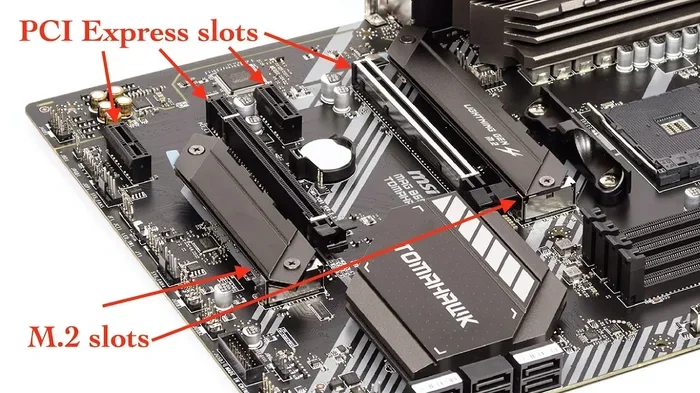
First, the M.2 form factor refers to the physical shape and size of the drive. It is a small, flat stick that plugs directly into your motherboard. There is no cables, no mounting brackets, and no wasted space. You slot it in and you are done.
Next, NVMe stands for Non-Volatile Memory Express. This is the communication protocol that allows the drive to talk to your system at full speed. Traditional SATA SSDs use an older protocol that creates a bottleneck. The NVMe protocol removes that bottleneck entirely.
Finally, PCIe 4.0 refers to the fourth generation of the Peripheral Component Interconnect Express bus. Each new generation roughly doubles the bandwidth available. PCIe 4.0 offers up to 16 gigatransfers per second per lane, which means the pcie 4.0 nvme m.2 ssd can read and write data at speeds that were unthinkable just a few years ago.
Most pcie 4.0 nvme m.2 ssd drives use TLC (Triple-Level Cell) NAND flash memory. This means each cell stores three bits of data, offering a good balance between speed, endurance, and cost. The combination of PCIe 4.0 bandwidth, NVMe efficiency, and M.2 compactness makes these drives incredibly compelling.
Key Benefits of PCIe 4.0 NVMe M.2 SSDs
So why should you care about pcie 4.0 nvme m.2 ssd drives? Here are the biggest advantages that set them apart from older storage options.
Blazing Sequential Read and Write Speeds
The most noticeable benefit is raw speed. A typical pcie 4.0 nvme m.2 ssd can deliver sequential read speeds of 5,000 to 7,000 MB/s and write speeds of 4,000 to 5,000 MB/s. Compare that to a standard SATA SSD, which tops out around 550 MB/s. The difference is night and day.
In real-world terms, this means:
- Games load in seconds instead of minutes.
- Large video files transfer in a fraction of the time.
- Your operating system boots almost instantly.
- Applications open without any noticeable delay.
Compact and Space Efficient
The M.2 form factor is tiny. Most pcie 4.0 nvme m.2 ssd drives are about the size of a stick of gum. This makes them perfect for small form factor PCs, laptops, and builds where every millimeter of space counts.
Because they mount directly onto the motherboard, there is no need for power cables or SATA data cables. This simplifies cable management and improves airflow inside your case.
Lower Power Consumption
NVMe drives are designed to be energy efficient. They consume less power than traditional hard drives or even some SATA SSDs. This can translate to slightly better battery life on laptops and lower heat output overall.
Future Proofing Your Build
Investing in a pcie 4.0 nvme m.2 ssd means your storage is ready for what comes next. PCIe 4.0 is supported by current generation platforms from both Intel and AMD. While PCIe 5.0 is emerging, PCIe 4.0 remains the mainstream standard and offers excellent performance per dollar.
PCIe 4.0 vs PCIe 3.0: What Is the Real Difference?
It is easy to get confused by the different PCIe generations. Let us look at the key differences between PCIe 3.0 and PCIe 4.0 in practical terms.
A pcie 3.0 nvme m.2 ssd typically maxes out around 3,500 MB/s in sequential reads. A pcie 4.0 nvme m.2 ssd roughly doubles that to 5,000 to 7,000 MB/s. The theoretical bandwidth of PCIe 3.0 is about 8 GT/s per lane, while PCIe 4.0 doubles that to 16 GT/s per lane.
Does this mean every game or application will run twice as fast? Not exactly. In many everyday tasks, the difference is less dramatic. However, for large file transfers, video editing, and loading massive game worlds, the speed gap becomes very real.
Here is a quick comparison:
| Feature | PCIe 3.0 NVMe M.2 SSD | PCIe 4.0 NVMe M.2 SSD |
|---|---|---|
| Max Sequential Read | ~3,500 MB/s | ~7,000 MB/s |
| Max Sequential Write | ~3,000 MB/s | ~5,000 MB/s |
| Bandwidth Per Lane | 8 GT/s | 16 GT/s |
| Typical Use | General computing | Gaming, content creation |
| Availability | Widely available | Widely available |
| Price (per TB) | Lower | Slightly higher |
The bottom line is this. If you already have a PCIe 3.0 drive, upgrading to a pcie 4.0 nvme m.2 ssd will feel noticeably faster for heavy workloads. But if you are on a tight budget, a PCIe 3.0 drive still offers excellent value and solid performance for everyday tasks.
Top PCIe 4.0 NVMe M.2 SSDs Worth Considering
The market for pcie 4.0 nvme m.2 ssd drives has grown significantly. Here are some of the most popular and well-reviewed options right now.
Crucial T705
The Crucial T705 is a powerhouse that pushes the boundaries of what a consumer NVMe drive can do. It uses a Phison E26 controller and delivers sequential reads up to 12,400 MB/s on the Gen 5 version, though PCIe 4.0 variants are also available with excellent performance. The T705 is a great choice if you want top-tier speed and reliability.
Samsung 970 EVO Plus
The Samsung 970 EVO Plus remains a fan favorite. While it is technically a PCIe 3.0 drive, its real-world performance is still competitive and it offers excellent endurance. Samsung’s V-NAND technology and software ecosystem make it a trusted choice for many users.
Kingston and WD Blue Options
For more budget-friendly options, brands like Kingston and WD Blue offer reliable pcie 4.0 nvme m.2 ssd drives that deliver solid speeds without breaking the bank. These are great choices for everyday computing and casual gaming.
When shopping, look for drives that offer at least 3,500 MB/s read speeds and 3,000 MB/s write speeds. Anything above those numbers means you are getting a true PCIe 4.0 experience.
How to Choose the Right PCIe 4.0 NVMe M.2 SSD
Not all pcie 4.0 nvme m.2 ssd drives are created equal. Here are the factors you should consider before buying.
Check Your Motherboard Compatibility
This is the most important step. Not every motherboard supports PCIe 4.0. Older boards may only support PCIe 3.0, which means your pcie 4.0 nvme m.2 ssd will still work but will run at PCIe 3.0 speeds. Check your motherboard manual or manufacturer website to confirm which PCIe generations are supported on each M.2 slot.
Consider Your Storage Needs
Drives typically come in 500GB, 1TB, 2TB, and 4TB capacities. For most users, a 1TB drive strikes the best balance between price and capacity. If you store large video libraries or play many modern games, a 2TB NVMe M.2 SSD might be a better fit.
Look at Endurance Ratings
Every NVMe drive has a TBW (Terabytes Written) rating. This tells you how much data you can write to the drive over its warranty period before it is expected to fail. Higher TBW means better long-term durability. For most users, a TBW rating of 300 TB or above is more than sufficient.
Thermal Management Matters
High-speed NVMe drives generate heat. Some pcie 4.0 nvme m.2 ssd models come with built-in heatsinks. Others benefit from an aftermarket M.2 heatsink. Keeping your drive cool helps maintain consistent performance over long workloads.
Price to Performance Ratio
Finally, compare prices across different capacities. The cost per gigabyte tends to drop as you buy larger drives. A 2TB drive often costs less per terabyte than a 1TB drive, so consider your future storage needs when making a decision.
Installation and Setup Tips
Installing a pcie 4.0 nvme m.2 ssd is one of the simplest hardware upgrades you can do. Here is how to do it right.
Step-by-Step Installation
- Turn off your PC and unplug it from power.
- Open your case and locate the M.2 slot on your motherboard.
- Remove the M.2 heatsink or cover if one is already installed.
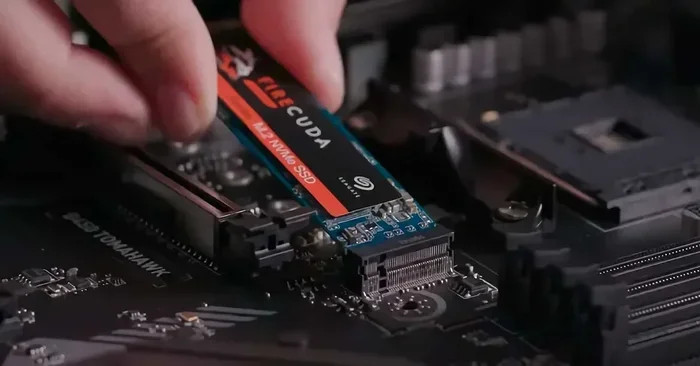
- Insert the NVMe drive at a 30-degree angle into the M.2 slot.
- Press the drive down gently and secure it with the small screw.
- Reinstall the heatsink if your motherboard has one.
- Close your case and reconnect power.
Initial Setup
After installation, you may need to go into your BIOS and ensure the M.2 slot is enabled. Most modern motherboards detect NVMe drives automatically. You can then format the drive through Windows Disk Management and start using it right away.
Quick Tips for Best Performance
- Always update your motherboard BIOS before installing a new NVMe drive.
- Enable XMP/EXPO profiles if you want your system to run at full speed.
- Keep your drive firmware updated through the manufacturer’s software tool.
- Use the drive as your primary boot drive for the best experience.
For those interested in external enclosures, you can also check out an NVMe enclosure to use your drive externally. This is a great option for backing up large files or transferring data between systems.
Who Should Upgrade to a PCIe 4.0 NVMe M.2 SSD?
The honest answer is: most people will benefit from a pcie 4.0 nvme m.2 ssd. Here are a few scenarios where the upgrade makes the most sense.
If you are a gamer, you will love the reduced load times. Modern games are massive and often span dozens of gigabytes. A fast NVMe drive cuts through those load screens like butter.
If you are a content creator working with video or image files, the high sequential read and write speeds will save you hours of waiting during exports, renders, and file transfers.
If you are building a new PC or upgrading an older one, installing a pcie 4.0 nvme m.2 ssd as your primary drive is one of the single best improvements you can make. It transforms the entire feel of your system.
Even for general office work and web browsing, the responsiveness of an NVMe drive is noticeable. Applications launch faster, files open instantly, and your system feels snappier overall.
Final Thoughts
The pcie 4.0 nvme m.2 ssd is an outstanding storage solution that delivers real-world speed improvements you can actually feel. From the compact M.2 form factor to the raw performance of the PCIe 4.0 interface, these drives represent excellent value for nearly any user.
Whether you are upgrading an existing system or building a new one, a pcie 4.0 nvme m.2 ssd should be near the top of your list. The technology is mature, prices have come down significantly, and the performance gains over older storage are dramatic.
Take the time to choose the right capacity, check your motherboard compatibility, and enjoy the fastest storage experience available at a mainstream price point. Your system will thank you every single day.
Frequently Asked Questions
What is a PCIe 4.0 NVMe M.2 SSD?
A PCIe 4.0 NVMe M.2 SSD is a high-speed solid-state drive that uses the fourth generation of the PCIe interface to deliver faster data transfer rates. It plugs directly into your motherboard via the M.2 slot and uses the NVMe protocol for lightning-fast performance. These drives offer read speeds up to 7,000 MB/s, making them ideal for gaming, video editing, and heavy workloads.
How much faster is PCIe 4.0 compared to PCIe 3.0 NVMe SSDs?
A PCIe 4.0 NVMe M.2 SSD is roughly twice as fast as a PCIe 3.0 drive, with sequential read speeds reaching around 7,000 MB/s compared to 3,500 MB/s on the older standard. This means games load faster, large files transfer quicker, and your system feels more responsive. For most everyday users, the real-world difference is noticeable but not dramatic.
Do I need a special motherboard for PCIe 4.0 NVMe M.2 SSDs?
Yes, you need a motherboard with a PCIe 4.0-compatible M.2 slot to take full advantage of a PCIe 4.0 NVMe M.2 SSD. Older motherboards with PCIe 3.0 slots will still work, but they will cap your speeds at the older standard. Check your motherboard specs or manual to confirm it supports the fourth generation of PCIe before purchasing.
Can I use a PCIe 4.0 NVMe M.2 SSD in a PCIe 5.0 slot?
Yes, a PCIe 4.0 NVMe M.2 SSD is fully backward compatible with PCIe 5.0 M.2 slots on newer motherboards. However, the drive will operate at PCIe 4.0 speeds and will not automatically upgrade to PCIe 5.0 performance. This works both ways, so PCIe 5.0 drives can also run in PCIe 4.0 slots without any issues.
Is a PCIe 4.0 NVMe M.2 SSD worth it for gaming?
Absolutely. A PCIe 4.0 NVMe M.2 SSD dramatically reduces game load times and texture streaming stutters, especially in open-world titles. It also frees up your CPU and storage bandwidth, giving your system a smoother overall experience during intense gaming sessions. If you are building or upgrading a gaming PC in 2024 and beyond, this is the go-to storage choice.
What are the best PCIe 4.0 NVMe M.2 SSDs available right now?
Top picks for a PCIe 4.0 NVMe M.2 SSD include the Samsung 980 Pro, WD Black SN850X, and Crucial P5 Plus, all offering excellent read and write speeds. Each drive balances performance, durability, and price differently, so your choice depends on your specific needs and budget. Reading trusted reviews and benchmarks will help you find the best fit for your setup.