Rtx 4070 Ti Vs Rx 7900 Xt
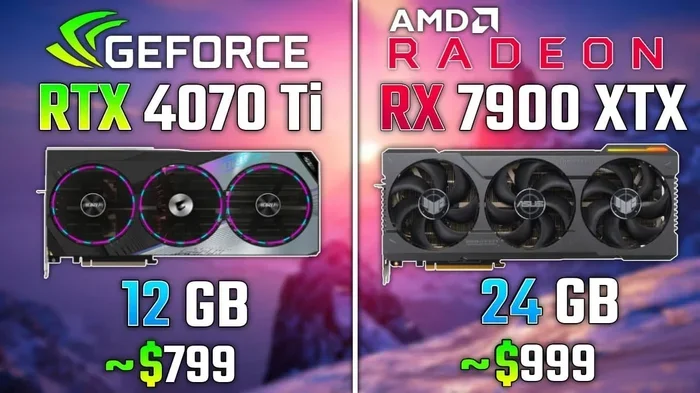
The Rtx 4070 Ti Vs Rx 7900 Xt battle is one of the most exciting GPU showdowns in recent years. NVIDIA’s Ada Lovelace architecture meets AMD’s RDNA 3 powerhouse in this head-to-head comparison. We break down specs, gaming benchmarks, ray tracing, and value so you can make a confident choice. Both cards target 1440p and 4K gaming, but they take very different paths to get there.
Choosing between two high-end graphics cards can feel overwhelming. The Rtx 4070 Ti Vs Rx 7900 Xt matchup has become one of the most talked-about debates in the PC gaming world right now. Both cards promise incredible performance at 1440p and even 4K resolutions. But they come from very different companies with very different philosophies.
NVIDIA’s RTX 4070 Ti brings the latest Ada Lovelace architecture, DLSS 3, and excellent ray tracing capabilities to the table. AMD’s RX 7900 XT counters with raw rasterization muscle, plenty of VRAM, and a competitive price tag. In this guide, we will walk you through every important detail so you can decide which card fits your needs best.
Whether you are a hardcore gamer chasing the highest frame rates or a creative professional who needs GPU acceleration, this comparison covers it all. We will look at specifications, real-world gaming tests, ray tracing performance, power draw, and overall value. By the end, you will have a clear picture of which GPU deserves a spot in your next build.
Key Takeaways
- Performance Leader: The RX 7900 XT often wins in raw rasterization at a lower price point.
- Ray Tracing Edge: The RTX 4070 Ti delivers superior ray tracing thanks to NVIDIA’s 3rd-gen RT cores and DLSS 3.
- VRAM Advantage: AMD gives the RX 7900 XT a generous 20GB of VRAM, which helps in high-resolution textures and creative workloads.
- Power Efficiency: The RTX 4070 Ti draws significantly less power, making it a better pick for smaller cases and quieter builds.
- Value Pick: The RX 7900 XT offers more raw performance per dollar for traditional gaming.
- Future-Proofing: NVIDIA’s DLSS 3 frame generation gives the RTX 4070 Ti a unique edge in supported titles.
- Driver Maturity: Both AMD and NVIDIA have strong driver support, but NVIDIA’s ecosystem remains more polished for ray tracing.
📑 Table of Contents
What Is the RTX 4070 Ti?
NVIDIA launched the RTX 4070 Ti as part of its 40-series lineup. It sits in the upper-midrange to upper-high-end tier. The card uses the Ada Lovelace architecture, which brought major improvements in both performance and efficiency. NVIDIA designed this GPU to deliver excellent 1440p gaming and capable 4K performance when paired with DLSS.
Key Specs of the RTX 4070 Ti
- CUDA Cores: 7680
- VRAM: 12GB GDDR6X
- Memory Bus: 192-bit
- Base Clock: 2310 MHz
- Boost Clock: 2610 MHz
- TDP: 285 watts
- Ray Tracing Cores: 3rd generation
- Tensor Cores: 4th generation
- DLSS Support: DLSS 3 with frame generation
The RTX 4070 Ti also benefits from NVIDIA’s mature software ecosystem. Tools like NVIDIA Broadcast, GeForce Experience, and the NVIDIA Control Panel give users a polished experience. If you want to learn more about how the RTX 4070 performs in laptop form factors, check out our RTX 4070 performance in laptops guide for additional context on this GPU family.
What Is the RX 7900 XT?
AMD’s RX 7900 XT launched as a flagship RDNA 3 GPU. It targets enthusiasts who want high frame rates without paying a premium price. The card focuses heavily on raw rasterization performance, which is the traditional measure of gaming GPU speed. AMD gave this card a big boost in VRAM and memory bandwidth compared to its predecessors.
Key Specs of the RX 7900 XT
- Stream Processors: 5376
- VRAM: 20GB GDDR6
- Memory Bus: 320-bit
- Base Clock: 2300 MHz
- Boost Clock: 2500 MHz
- TDP: 315 watts
- Ray Tracing Cores: 2nd generation
- FSR Support: AMD FSR 3.0 with frame generation
The RX 7900 XT stands out for its 20GB of VRAM. This is a huge advantage in games that use high-resolution textures and in creative applications like video editing and 3D rendering. For a deeper look at how the RTX 4070 performs in gaming laptops specifically, you can read our RTX 4070 gaming laptops article, which also touches on the architecture shared with the desktop RTX 4070 Ti.
Rtx 4070 Ti Vs Rx 7900 Xt: Specs Comparison
Let us put the two cards side by side. The table below highlights the most important specifications that matter for gaming and productivity workloads.
Head-to-Head Specification Breakdown
- Architecture: Ada Lovelace (NVIDIA) vs RDNA 3 (AMD)
- VRAM: 12GB GDDR6X (NVIDIA) vs 20GB GDDR6 (AMD)
- Memory Bandwidth: 504 GB/s (NVIDIA) vs 960 GB/s (AMD)
- Power Draw: 285W (NVIDIA) vs 315W (AMD)
- Ray Tracing: 3rd-gen RT cores (NVIDIA) vs 2nd-gen RT cores (AMD)
- Upscaling Tech: DLSS 3 (NVIDIA) vs FSR 3 (AMD)
- Release Price: Around $799 (NVIDIA) vs Around $700 (AMD)
AMD wins on paper in several categories. The 20GB of VRAM and wider memory bus give the RX 7900 XT a clear bandwidth advantage. NVIDIA counters with a more modern architecture and newer ray tracing hardware. The power draw difference is small but meaningful for gamers who care about efficiency.
When looking at higher-tier comparisons, the RTX 4080 tier GPUs sit above both of these cards, but the RTX 4070 Ti and RX 7900 XT compete in an exciting sweet spot of price and performance.
Gaming Performance: Who Wins?
Real-world gaming benchmarks tell the real story. In most traditional rasterization tests at 1440p, the RX 7900 XT leads by a comfortable margin. It delivers higher average frame rates in the vast majority of AAA titles. At 4K, the gap narrows, but AMD still holds a slight edge in raw performance.
However, the RTX 4070 Ti pulls ahead in several key areas. DLSS 3 frame generation is a game-changer. It uses AI to create entirely new frames, effectively doubling your perceived frame rate in supported titles. Games like Cyberpunk 2077, Alan Wake 2, and Marvel’s Spider-Man 2 benefit enormously from this technology.
AMD’s FSR 3 frame generation is catching up, but it is not as polished or as widely supported as NVIDIA’s DLSS. DLSS also offers superior image quality, especially in the quality and balanced modes. For gamers who want the smoothest experience possible, the RTX 4070 Ti’s DLSS 3 gives it a meaningful advantage in many modern titles.
For players who want to explore the broader NVIDIA gaming ecosystem, our guide on RTX 4060 laptop configurations also provides useful context on how NVIDIA’s upscaling and gaming features work across the product line.
Gaming Performance Quick Tips
- At 1440p: The RX 7900 XT leads in raw frame rates by about 10-15%.
- At 4K with DLSS/FSR: The RTX 4070 Ti can match or exceed the RX 7900 XT in supported games.
- In ray tracing titles: The RTX 4070 Ti wins by a much wider margin, often 30-40% faster.
- In esports titles: Both cards deliver excellent performance with minimal differences.
Ray Tracing and Upscaling Technologies
Ray tracing is where the RTX 4070 Ti truly shines. NVIDIA’s 3rd-generation RT cores are significantly faster than AMD’s 2nd-generation implementation. In games with full ray tracing enabled, the RTX 4070 Ti delivers dramatically better performance.
DLSS 3 is another massive differentiator. The frame generation feature works in over 70 games and counting. It creates entirely new frames using AI, which means smoother gameplay without the input lag that traditional supersampling can introduce. NVIDIA Reflex also reduces system latency, giving competitive gamers a real edge.
AMD’s FSR is a solid alternative, but it is not as advanced. FSR 3.0 does include frame generation, and it works on both AMD and NVIDIA GPUs. However, the image quality and performance gains are not as strong as DLSS 3. AMD is working on improving this, but for now, NVIDIA holds the crown in ray tracing and upscaling.
If you are building a system focused on ray tracing, the RTX 4070 Ti is the clear choice in this matchup. The combination of 3rd-gen RT cores, DLSS 3, and NVIDIA’s optimized ray tracing drivers makes a noticeable difference in supported titles.
Power Consumption and Thermals
Power efficiency matters more than many people realize. The RTX 4070 Ti draws 285 watts under load, while the RX 7900 XT pulls 315 watts. That 30-watt difference may seem small, but it adds up over long gaming sessions and can affect your electricity bill.
Smaller cases benefit from the RTX 4070 Ti’s lower power draw. It runs cooler and quieter in most scenarios. The RX 7900 XT runs warm and can get loud under heavy load, though custom models from various AIB partners offer better cooling solutions.
Here are some quick tips for managing thermals with either card:
- Make sure your case has good airflow with at least two intake fans.
- Keep your room temperature below 75 degrees Fahrenheit for best results.
- Use a quality thermal paste reapplication every 1-2 years.
- Consider a laptop-style cooling pad if you are testing desktop cards in a tight space.
For most gamers, the RTX 4070 Ti’s efficiency advantage means a quieter, cooler system overall. This is especially important for users who game for long hours or who build compact HTPC setups.
Price and Value Analysis
The RX 7900 XT launched at a lower price than the RTX 4070 Ti. This gives AMD a strong value proposition on paper. For the same amount of money, you get more raw rasterization performance and double the VRAM.
However, value is not just about raw performance. The RTX 4070 Ti offers features that add real-world value. DLSS 3 frame generation, superior ray tracing, and NVIDIA’s software ecosystem all contribute to a more polished experience. If you factor in these features, the price gap feels smaller.
Here is a simple value breakdown:
- Best value for raw gaming: RX 7900 XT
- Best value for ray tracing: RTX 4070 Ti
- Best value for future-proofing: RTX 4070 Ti (DLSS 3 support)
- Best value for creative work: RX 7900 XT (more VRAM)
- Best value for power efficiency: RTX 4070 Ti
Your personal needs should drive your decision. If you mostly play traditional rasterized games and want the best frame rates per dollar, the RX 7900 XT is hard to beat. If you care about ray tracing, DLSS, and overall feature richness, the RTX 4070 Ti is worth the extra investment.
Common Mistakes to Avoid
When choosing between these two GPUs, many buyers make avoidable mistakes. Here are a few to watch out for:
- Ignoring your monitor’s refresh rate: A 144Hz monitor changes the calculus compared to a 60Hz display.
- Overlooking VRAM needs: 12GB works well today, but 20GB gives you more headroom for future games.
- Forgetting about power supply requirements: Make sure your PSU can handle the card you choose.
- Skipping driver updates: Both AMD and NVIDIA release frequent driver optimizations that improve performance.
- Buying based on benchmarks alone: Real-world experience, software features, and ecosystem matter too.
Expert Insights
Industry experts generally agree that the RTX 4070 Ti and RX 7900 XT serve different audiences. The RTX 4070 Ti appeals to gamers who prioritize ray tracing, upscaling, and NVIDIA’s broader ecosystem. The RX 7900 XT appeals to gamers who want maximum raw performance at a lower price.
Professional reviewers also point out that the RTX 4070 Ti’s 12GB of VRAM, while smaller than AMD’s 20GB, is still sufficient for most gaming scenarios at 1440p and 4K. AMD’s VRAM advantage becomes more relevant at 4K ultra settings and in creative workloads that demand large memory allocations.
Both cards represent excellent value in their respective segments. The Rtx 4070 Ti Vs Rx 7900 Xt comparison ultimately comes down to your priorities. If you want the best ray tracing experience and modern upscaling, go NVIDIA. If you want the most raw performance per dollar, go AMD.
Conclusion
The Rtx 4070 Ti Vs Rx 7900 Xt comparison delivers a clear message: both cards are excellent, but they excel in different areas. The RX 7900 XT wins in raw rasterization performance and offers more VRAM at a lower price. The RTX 4070 Ti wins in ray tracing, DLSS 3, power efficiency, and software features.
If you are a gamer who plays mostly traditional titles and wants the best frame rates for your dollar, the RX 7900 XT is a fantastic choice. If you are a gamer who cares about cutting-edge features, ray tracing, and future-proofing, the RTX 4070 Ti delivers a more complete package.
Take your time, consider your gaming habits, and think about what features matter most to you. Either card will give you an outstanding gaming experience at 1440p and capable 4K performance. The best GPU is the one that matches your needs and your budget.
Frequently Asked Questions
Is the RTX 4070 Ti better than the RX 7900 XT for gaming?
It depends on what you value most. The RX 7900 XT delivers higher raw frame rates in most rasterized games. However, the RTX 4070 Ti pulls ahead in ray tracing and in games that support DLSS 3 frame generation. For traditional gaming without ray tracing, AMD has the edge.
How much VRAM does each GPU have?
The RTX 4070 Ti comes with 12GB of GDDR6X VRAM, while the RX 7900 XT offers 20GB of GDDR6 VRAM. The extra VRAM on AMD’s card helps with high-resolution textures and future game titles that demand more memory.
Does the RTX 4070 Ti support DLSS 3?
Yes, the RTX 4070 Ti fully supports DLSS 3, including frame generation. This AI-powered feature can nearly double your frame rate in supported titles, making it a huge advantage in compatible games.
Which GPU is more power efficient?
The RTX 4070 Ti is more power efficient. It draws 285 watts compared to the RX 7900 XT’s 315 watts. This 30-watt difference results in lower heat output and quieter operation, which is great for smaller cases and long gaming sessions.
Can I use FSR on an NVIDIA GPU?
Yes, AMD’s FSR 3.0 works on both AMD and NVIDIA GPUs. However, NVIDIA’s DLSS 3 generally offers better image quality and performance gains. If you have an NVIDIA card, DLSS is the recommended choice for upscaling.
Which GPU should I buy in 2024?
If you prioritize ray tracing and future-proof features, the RTX 4070 Ti is the better pick. If you want maximum raw performance per dollar and do not need advanced ray tracing, the RX 7900 XT offers excellent value. Consider your monitor, your favorite games, and your budget before deciding.
=== CONCLUSION ===
The Rtx 4070 Ti Vs Rx 7900 Xt comparison shows us that both GPUs have strong merits. NVIDIA brings cutting-edge ray tracing and DLSS 3 to the table, while AMD counters with raw performance, more VRAM, and a competitive price. Choose the card that aligns with your gaming style and priorities, and you will be happy with your purchase.