South Carolina Security Camera Laws
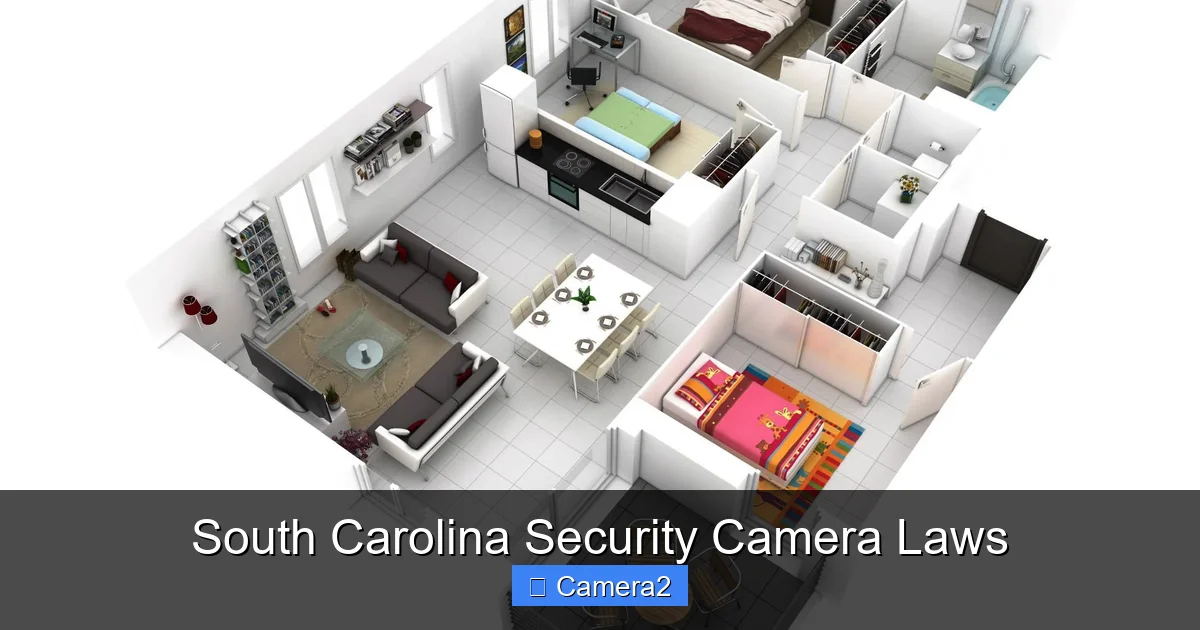
South Carolina’s security camera laws balance safety with privacy, allowing video monitoring in public spaces while restricting hidden surveillance in private areas. Understanding consent, signage requirements, and lawful use helps homeowners, businesses, and employers avoid costly mistakes and protect everyone’s rights.
Key Takeaways
- Public vs. private distinction: Cameras are generally allowed in public places, but private spaces require consent.
- Signage is essential: Visible notices must inform people they are being recorded.
- Audio recording adds complexity: South Carolina follows federal wiretap rules, so audio needs all‑party consent.
- Employer guidelines: Workplace cameras are permitted for safety, but employees must be notified.
- Penalties exist: Violations can lead to civil lawsuits, criminal charges, and hefty fines.
- Data storage matters: Secure storage and reasonable retention periods protect privacy.
- Special settings: Schools, healthcare facilities, and rental properties have extra rules.
📑 Table of Contents
- Introduction: Why Knowing the Rules Matters
- 1. Public Spaces vs. Private Property
- 2. Consent and Signage Requirements
- 3. Audio Recording: The Extra Layer of Law
- 4. Workplace Surveillance
- 5. Residential and Rental Property Rules
- 6. Schools, Healthcare, and Other Sensitive Locations
- 7. Penalties for Violating South Carolina Camera Laws
- Conclusion: Stay Safe, Stay Legal
Introduction: Why Knowing the Rules Matters
Imagine you’re setting up a new security system for your home or business in the Palmetto State. You pick the perfect 16‑channel security camera system, install it, and feel safe—until a neighbor claims you’re spying on them. Or a retailer installs cameras in the checkout line, only to discover the footage includes a private conversation that could be illegal to record.
South Carolina tries to keep both safety and privacy in balance. The state’s statutes, combined with federal wiretap laws, create a clear framework for where you can point a lens, what you can record, and how you must treat the footage. This guide walks you through the most common scenarios—homeowners, businesses, landlords, schools, and employers—so you can enjoy the benefits of video surveillance without stepping on anyone’s rights.
1. Public Spaces vs. Private Property
What the law defines as “public”
In South Carolina, any area where the public is legally invited—streets, parks, sidewalks, and shopping centers—is considered public. The state does not require a warrant to film these places, and you can place cameras on your own property that capture the public view (for example, a storefront looking out onto a sidewalk).
When private property limits you
Private property includes homes, apartments, hotel rooms, and any area where a reasonable expectation of privacy exists—bathrooms, dressing rooms, and hotel closets, to name a few. Recording in these zones without consent is a violation of both state privacy statutes and federal wiretap rules.
Practical tip
- Before installing a camera that looks onto a neighbor’s yard, test the angle. If the view includes a bedroom window or a fenced backyard, adjust or add a privacy screen.
- Use signage at the entrance of any area you monitor, even if it’s technically public, to avoid “secret” camera claims.
2. Consent and Signage Requirements
Getting consent the right way
South Carolina follows the “one‑party consent” rule for audio recording, meaning you can record a conversation if at least one participant (you) consents. However, for video‑only surveillance, no consent is needed in public spaces. The moment you add audio, you must obtain consent from all parties involved, or you risk violating the federal Electronic Communications Privacy Act (ECPA).
Visual guide about South Carolina Security Camera Laws
Image source: assets.cadbull.com
Signage must be clear and visible
State law (S.C. Code Ann. § 16‑17‑140) requires that any area under video surveillance display a notice that is “conspicuously placed” and states the purpose of the recording. The notice should include:
- The name of the entity operating the cameras.
- The reason for surveillance (e.g., “for safety and loss prevention”).
- Contact information for inquiries.
Example of proper signage
“This property is under video surveillance for security purposes. For questions, call 555‑123‑4567.” Place this sign at every entrance and in any area where cameras are visible.
Internal link example
If you’re looking for a reliable system to monitor a parking lot, consider reading our guide on parking lot security camera footage for best practices on signage placement.
3. Audio Recording: The Extra Layer of Law
Federal wiretap rules apply
South Carolina does not have its own standalone law for audio recording, so the federal one‑party consent rule is the standard. If you record sound in a public hallway, you’re okay as long as you’re the one speaking. But if the camera picks up a private conversation in a break room, you must have all participants’ consent.
Visual guide about South Carolina Security Camera Laws
Image source: boot-img.xuexi.cn
How to stay compliant
- Disable audio on cameras placed in areas where people expect privacy.
- Post an additional notice that says “Audio is being recorded” if you must capture sound.
- Consider using a “no‑audio” mode for cameras pointed at public streets.
4. Workplace Surveillance
What employers can record
South Carolina employers may install cameras in common areas—lobbies, warehouses, and parking lots—to protect assets and deter misconduct. However, cameras in restrooms, changing rooms, or any area where employees have a reasonable expectation of privacy are strictly prohibited.
Employee notification
Even though the law does not require a written policy, the best practice is to include video surveillance details in the employee handbook and to post signs in monitored zones. Transparency reduces the risk of lawsuits for invasion of privacy.
Data retention for workplaces
Keep footage for no longer than necessary. A common standard is 30‑90 days, unless the video is needed for an ongoing investigation. Store the files on a secure, password‑protected server and limit access to HR or security personnel.
5. Residential and Rental Property Rules
Homeowners’ rights
As a homeowner, you can place cameras on your own property, even if they capture part of the street. The key is to avoid recording inside neighboring homes or private spaces. A useful tool is a “birdhouse with solar powered camera” which can be positioned high enough to stay out of private sightlines—see our article on birdhouse with solar powered camera for inspiration.
Landlords and tenants
Landlords may install cameras in common areas of an apartment complex, such as lobbies, hallways, and laundry rooms, but must give tenants written notice. Inside individual units, cameras are only allowed if the tenant gives explicit, written consent. Failure to obtain consent can lead to a civil claim for invasion of privacy.
6. Schools, Healthcare, and Other Sensitive Locations
Educational settings
Public schools can use video surveillance for security, but they must follow the Family Educational Rights and Privacy Act (FERPA). Cameras should not be placed in classrooms where students are engaged in private activities (e.g., testing). Signage and parent notification are essential.
Medical facilities
Hospitals and clinics must comply with HIPAA when recording areas where protected health information (PHI) is visible. Video that captures patient identifiers must be encrypted and stored separately from regular surveillance footage.
7. Penalties for Violating South Carolina Camera Laws
Civil liability
If someone proves you recorded them in a place where they had a reasonable expectation of privacy, they can sue for damages, emotional distress, and attorney fees. South Carolina courts have awarded punitive damages in egregious cases.
Criminal consequences
Under S.C. Code Ann. § 16‑17‑140, knowingly installing a hidden camera in a private place can be classified as a misdemeanor, punishable by up to one year in jail and a $2,000 fine. Repeated offenses may elevate the charge to a felony.
How to mitigate risk
- Conduct a privacy audit before installing any new camera.
- Keep a log of where each camera points, the purpose, and the date of installation.
- Regularly review footage access logs to ensure only authorized personnel view recordings.
Conclusion: Stay Safe, Stay Legal
Security cameras are powerful tools for protecting property, deterring crime, and providing peace of mind. In South Carolina, the law is clear: public spaces are open to surveillance, private spaces are not, and consent—especially for audio—is the cornerstone of compliance. By posting clear signage, respecting privacy expectations, and handling footage responsibly, you can enjoy the benefits of modern surveillance without risking lawsuits or criminal charges. Keep these guidelines handy, revisit them whenever you upgrade your system, and you’ll stay on the right side of the law while keeping your property safe.
Frequently Asked Questions
Can I record video on a public street from my home?
Yes. South Carolina allows video recording of public areas without consent, as long as you do not capture audio without all‑party consent.
Do I need a permit to install security cameras on my business?
No specific state permit is required, but you must follow signage and privacy rules, and you may need local zoning approval if the cameras are mounted on the exterior of the building.
Is it illegal to have a hidden camera in a restroom?
Absolutely. Recording in any area where a person has a reasonable expectation of privacy, such as restrooms or changing rooms, is illegal and can result in criminal charges.
Can an employer monitor employee break rooms?
Employers may monitor common areas, but they must provide clear notice and cannot record audio without consent. Break rooms are considered semi‑private, so posting signs is essential.
How long can I keep security footage?
There is no strict state limit, but best practice is to retain footage for 30‑90 days unless it’s needed for an investigation or legal matter.
What should I do if I receive a privacy lawsuit over my cameras?
Consult an attorney immediately, preserve all footage, and be prepared to show that you posted proper signage and did not record in private spaces. Prompt corrective action can reduce damages.