Unity Ceo Resigns After Extreme Developer Backlash
Unity CEO John Riccitiello has resigned following an extreme, industry-wide backlash against the company’s proposed new runtime fee policy. The controversial “Unity Runtime Fee,” which would have charged developers based on game installs after certain revenue and install thresholds, ignited a firestorm of criticism from indie studios to major publishers. This collective outrage, culminating in threats to abandon the engine, forced a rapid corporate reversal and the CEO’s departure. The incident marks a watershed moment, highlighting the immense power of the developer community and raising fundamental questions about trust, platform economics, and the future of the world’s most popular game engine.
If you make video games, or even just play them, there’s a shockingly high chance you’ve touched a project built with Unity. From the quirky, world-conquering Among Us to the visually stunning Genshin Impact, from hyper-casual mobile time-wasters to ambitious indie darlings on Steam, Unity’s engine has been the silent workhorse. Its promise was simple and powerful: a professional-grade toolset, free to use until you succeed. You only paid when you won. It was the great democratizer. So when the company announced a seismic shift to that promise in September 2023, the reaction wasn’t just disappointment—it was a full-throated, industry-wide revolt that would ultimately claim the scalp of its own Chief Executive Officer.
This is the story of how a pricing policy change sparked the most extreme developer backlash in memory, how a community found its collective voice, and why the resignation of Unity CEO John Riccitiello is more than a corporate footnote—it’s a landmark event in the relationship between platform holders and the creators who depend on them.
Key Takeaways
- The “Runtime Fee” was the catalyst: Unity’s proposed fee, charging per-install beyond set thresholds, was perceived as a betrayal of its “democratizing” ethos and a financial threat to sustainable development, especially for mobile and successful indie games.
- Developer unity is a powerful force: The backlash was unprecedented in its scale and coordination, with studios of all sizes publicly condemning the policy, creating a unified front that Unity could not ignore.
- Trust, once broken, is hard to repair: The episode severely damaged developer trust in Unity’s leadership and its long-term commitment to its community, a rift that will take years to heal, if ever.
- Leadership change was the immediate cost: The resignation of CEO John Riccitiello, a long-time executive, was the direct and swift consequence of the strategic misstep and the ensuing crisis of confidence.
- Unity’s business model is under existential scrutiny: The incident forces a deep examination of how a free-to-use engine can sustainably monetize its massive user base without alienating the very creators who fuel its ecosystem.
- The industry’s dynamics have shifted: This event demonstrated that engine providers cannot unilaterally change core economic terms without severe repercussions, rebalancing power slightly back toward developers.
- A precedent for future negotiations: The “Unity Crisis” will now be a case study in business strategy, community management, and contract renegotiation for every platform and service in tech.
📑 Table of Contents
- The Fee That Broke The Camel’s Back: Understanding the Runtime Fee
- The Inferno: How the Backlash Exploded
- The Fallout: Reversal, Apology, and a CEO’s Exit
- The New Landscape: What Does This Mean For Developers?
- The Future of Unity: Can It Recover?
- The Bigger Picture: A Watershed Moment for the Industry
- Conclusion: A Community That Found Its Voice
The Fee That Broke The Camel’s Back: Understanding the Runtime Fee
To understand the fury, you must first understand the change. On September 12, 2023, Unity published a blog post titled “A new Unity runtime fee.” The language was technocratic, buried in a package of updates to its subscription plans. But the implications were explosive. Previously, Unity Pro cost a flat $1,800 per year per seat. The new structure introduced two new fees based on a game’s performance: the “Unity Runtime Fee.”
The Thresholds That Terrified Everyone
The fee had two key thresholds, differing by platform:
- For games on mobile (iOS/Android) and in-game ads-supported platforms: A fee would be charged if a game generated over $200,000 in revenue in the last 12 months and had over 200,000 installs.
- For games on all other platforms (PC, console, etc.): A fee would be charged if a game generated over $1 million in revenue in the last 12 months and had over 1,000,000 installs.
Crossing both thresholds triggered a per-install fee: $0.20 per install for mobile, and a sliding scale from $0.01 to $0.20 per install for other platforms, based on revenue tiers.
On paper, it might sound reasonable for a company to share in the success of blockbuster hits. But for developers, the wording was a nightmare. “Installs” were never clearly defined. Was it a unique download? A re-install? A pre-load? A trial version? Could Unity track it accurately and transparently? More importantly, the $200k/200k install threshold for mobile was a death knell for a huge swath of successful mobile games. A game could be profitable and beloved with 250,000 installs and $150,000 in revenue—just under the revenue threshold, so no fee. But if a sudden marketing push or a feature on the App Store pushed installs to 210,000 while revenue stayed at $150,000, suddenly the game would be liable for a fee on those 10,000 extra installs, potentially turning a profit into a loss. It created a brutal, unpredictable cliff edge.
The Betrayal of the “Indie Promise”
The deeper wound was philosophical. Unity had built its kingdom on the backs of indie developers, students, and small studios. The “free until $100k” model was sacred. It allowed a developer in a bedroom to use the same engine as a AAA studio. The Runtime Fee wasn’t just a price change; it was the gutting of that promise. It signaled that Unity no longer saw its community as partners in growth but as a vast reservoir of potential revenue to be mined once they reached a certain scale. The trust, cultivated over years, evaporated overnight.
The Inferno: How the Backlash Exploded
The reaction was not a slow burn. It was an immediate, all-consuming firestorm that lit up Twitter, Reddit, Discord servers, and industry news sites within hours. The backlash was extreme because it was universal.
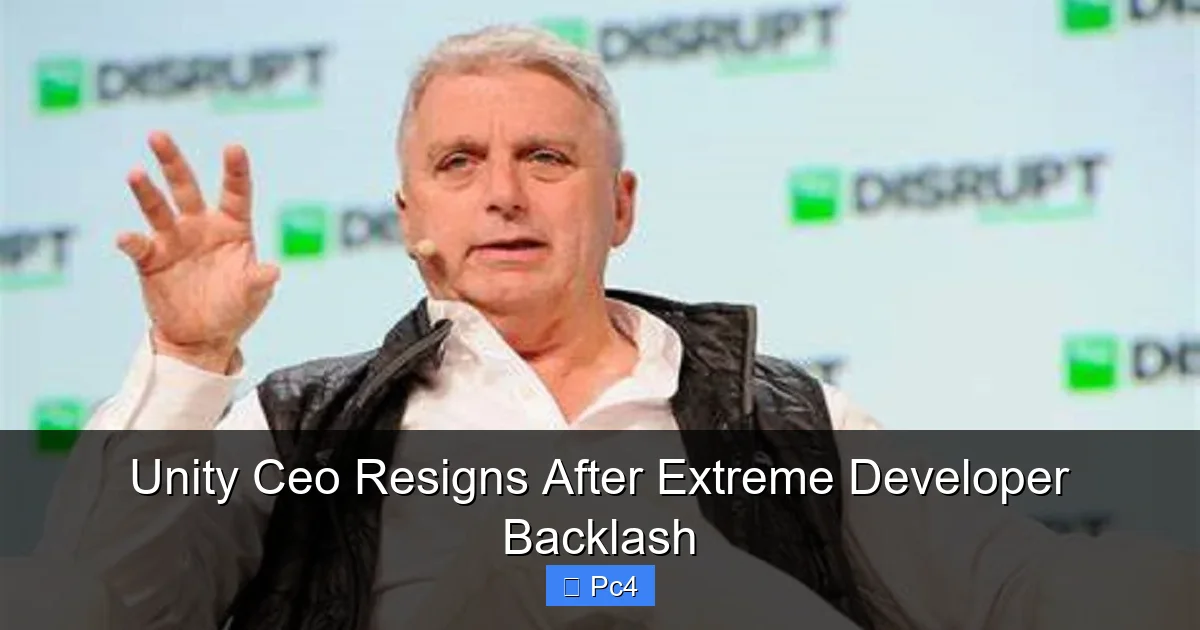
Visual guide about Unity Ceo Resigns After Extreme Developer Backlash
Image source: phoneworld.com.pk
A Unified Front From Indies to Giants
Within a day, the #UnityHasFailed hashtag was trending. Small indie teams, the lifeblood of Unity, posted anguished threads about their business models collapsing. But the shock came when major studios and publishers, who had significant financial investments in Unity, began to speak out. Innersloth (Among Us) issued a statement calling the policy “unacceptable” and said they would not update their existing games to the new Unity version. Xbox and PlayStation reportedly reached out to their partnered studios to assess the impact. Pokemon GO developer Niantic, a massive Unity licensee, publicly condemned the move. Even studios that had just shipped major hits on Unity, like MiHoYo/HoYoverse (Genshin Impact), were said to be in crisis meetings. The message was clear: from the bedroom coder to the billion-dollar publisher, everyone felt targeted and betrayed.
The “Unity Ban” and the Great Engine Exodus
The community’s response evolved from criticism to action. A grassroots movement, often called the “Unity Ban,” encouraged developers to collectively switch their new projects to competing engines like Unreal Engine (which has a 5% royalty after $1 million gross per product), Godot (fully open-source and permissively licensed), or GameMaker. GitHub repositories appeared with guides on migrating projects. Godot’s download servers crashed from the surge in interest. This wasn’t just talk; it was a direct, existential threat to Unity’s market share and, more importantly, its future talent pipeline. If new developers learned Godot instead of Unity, the entire next generation would bypass the platform.
Why This Backlash Was “Extreme”
Past Unity controversies, like the “Unity Runtime Fee” of 2016 (a much smaller, different fee) or the removal of the Personal Edition splash screen, caused grumbles. This was different because:
- It attacked the core economic model: It changed the rules for successful games retroactively and unpredictably.
- It lacked transparency: The definition of “install” was a black box, raising fears of audit nightmares and hidden costs.
- It felt like a bait-and-switch: Developers felt they had been lured in with one set of rules, only to have them changed when they were most vulnerable—upon achieving success.
- It came at a time of distrust: Unity had recently laid off hundreds of staff, including key community figures, and was pushing hard into non-game sectors (like the “Unity Industry” initiative). Developers felt like a cash cow, not a community.
The Fallout: Reversal, Apology, and a CEO’s Exit
Faced with a revolt that threatened to empty its user base, Unity’s response was a masterclass in crisis mismanagement, followed by a desperate course correction.
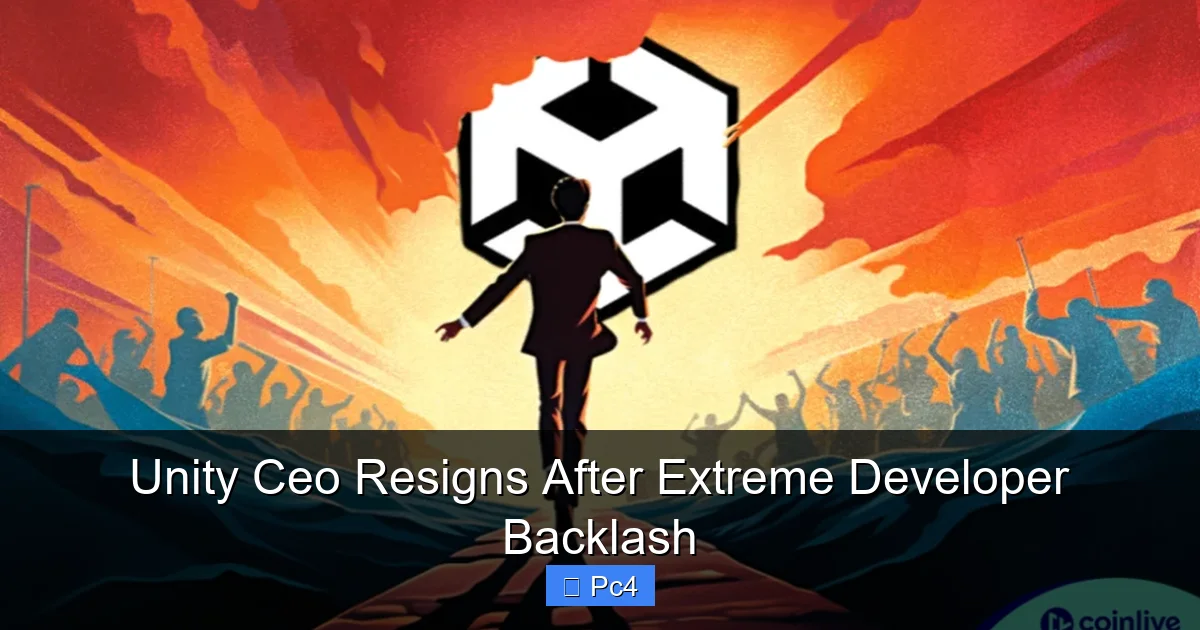
Visual guide about Unity Ceo Resigns After Extreme Developer Backlash
Image source: image.coinlive.com
The Chaotic “Clarification”
On September 15, three days after the initial post, Unity’s President of Create Solutions, Marc Whitten, published a “clarification.” It attempted to walk back the most egregious parts: the fee would not apply to games already released, only to new projects using the new Unity Runtime (version 2024.1+). Developers could stay on older, free versions. But the damage was done. The trust was shattered. The clarification felt like a panicked, piecemeal fix that didn’t address the fundamental issue: the principle of a per-install fee. It also created a terrifying fragmentation of the engine’s version ecosystem, where “safe” old versions and “dangerous” new versions would coexist.
The Full Reversal and the “Unity Genie”
The backlash only intensified. On September 22, just nine days after the original announcement, Unity performed a full, humiliating reversal. The Runtime Fee was gone. The new subscription plans (Unity Pro at $1,800/year, Unity Enterprise pricing) would be the only changes. They promised a “listening period” with developers. But the genie was out of the bottle. The apology, while complete, felt like a surrender to a mob. It didn’t restore trust; it just stopped the immediate bleeding.
The Head on the Spike: John Riccitiello Resigns
The ultimate corporate sacrifice came on October 9, 2023. Unity announced that John Riccitiello, its CEO since 2014 (and a former CEO of Electronic Arts), would be stepping down. James M. Whitehurst, a former Red Hat CEO and Unity board member, was named Interim CEO. The official statement was diplomatic, but the subtext was clear: the single most identifiable architect of Unity’s strategic direction—including the aggressive push for new revenue streams that birthed the Runtime Fee idea—was being held accountable. Riccitiello had been a vocal proponent of making Unity “profitable” after years of investment, and the Runtime Fee was the linchpin of that plan. Its catastrophic failure made his position untenable. The resignation was the direct, tangible result of “extreme developer backlash.” It was the community sending a message to the board: this strategy, and the leader behind it, was unacceptable.
The New Landscape: What Does This Mean For Developers?
With the fee gone and the CEO gone, what is the real impact? The scars remain.
Visual guide about Unity Ceo Resigns After Extreme Developer Backlash
Image source: img.decrypt.co
The Trust is Forever Cracked
The most significant outcome is psychological. Developers now view Unity with profound suspicion. The “family” feeling is gone, replaced by a cold, transactional relationship. Every future blog post from Unity will be scrutinized not for features, but for hidden traps. The mental load of wondering “what’s the catch?” is a new, permanent tax on using the engine. Many studios, even those who stayed, have begun the painful and expensive process of evaluating alternatives or at least maintaining a “plan B.” This diversion of time and resources is a silent, ongoing cost of the crisis.
The Viable Alternatives Have Gained Legitimacy
Before September 2023, suggesting a switch from Unity to Godot for a serious 3D project was often met with skepticism about its capabilities. After the backlash, that conversation changed. Godot 4’s release was perfectly timed, and its community exploded. Unreal Engine’s 5% royalty, once seen as steep for small projects, now looks like a transparent, predictable, and fair deal compared to the per-install uncertainty. GameMaker, with its recent price changes, also saw a surge. The playing field is now truly level. The “default” choice for indie and mobile is no longer a given.
Practical Next Steps for Unity Developers
If you’re a current Unity developer, what should you do?
- Lock Your Project Version: If you are on a stable, pre-2024.1 version of Unity and it meets your needs, do not upgrade lightly. Understand the features you need and stick to a known-safe version.
- Audit Your Contracts: Review all your publishing and platform agreements. Ensure no clause could be interpreted to pass Unity’s (now defunct) Runtime Fee onto you.
- Diversify Your Skills: Invest time in learning another engine, even at a basic level. Build a small prototype in Unreal or Godot. This isn’t about immediate migration, but about reducing dependency risk.
- Engage with the New Leadership: Follow Interim CEO James Whitehurst and the new, more community-focused executives. Provide constructive feedback. A healthy, vocal community is the best defense against future overreach.
- Document Everything: If you are starting a new project, document your engine choice decision, including the risk assessment related to Unity’s recent policy volatility. This is crucial for team alignment and investor conversations.
The Future of Unity: Can It Recover?
Unity is not going away. It has a $3 billion+ market cap, a colossal installed base, and deep integrations into countless non-gaming industries (automotive, architecture, film). But its path forward is treacherous.
The Search for a Sustainable, Trustworthy Model
The core problem remains: how does Unity monetize its ~2 million monthly active creators without alienating them? The old model (Pro seats) wasn’t generating enough growth for Wall Street. The Runtime Fee model failed catastrophically. The solution likely lies in a hybrid model: higher-value, tiered Pro subscriptions with genuine enterprise features (cloud diagnostics, advanced multiplayer, etc.) that large studios will pay for, while keeping a truly free, capable tier for students and tiny indies. The key will be transparency, predictability, and grandfathering existing projects indefinitely. Any future change must be phased in over years, not months, and must be communicated as a partnership, not a dictate.
Rebuilding the Developer Relationship
The new leadership must undertake a humbling, long-term effort. This means:
- Publishing clear, legally-vetted definitions of any future fees before they are implemented.
- Creating a formal Developer Advisory Board with real influence.
- Re-investing in community programs, documentation, and support that feel generous, not stingy.
- Publicly celebrating indie successes built on Unity without tying them directly to revenue milestones.
It’s a decade-long trust-building project after a five-minute policy announcement destroyed years of goodwill.
The Bigger Picture: A Watershed Moment for the Industry
The Unity Crisis is not an isolated incident. It is a symptom of larger tensions in the platform-driven tech economy.
The Power of Collective Action
For years, individual developers have felt powerless against the dictates of Apple’s App Store, Google Play, or engine providers. The Unity backlash proved that collective, coordinated action works. When the entire ecosystem—from solo devs to mega-studios—speaks with one voice, platforms listen. It sets a precedent. Future changes from any major tech platform (Steam, console SDKs, social media APIs) will now be met with a more skeptical, organized, and ready-to-mobilize community.
The Fragility of “Free”
The myth of a truly free, forever engine has been shattered. Every tool has a cost, and that cost must be clear and fair. The industry is moving toward a model of transparent, value-based pricing. You pay for what you use, and the rules are known upfront. This is healthier in the long run, even if it means the end of the “everything for free” dream. The takeaway for developers is to deeply understand the long-term economics of their toolchain, not just the upfront cost.
A Call for Empathy in Platform Strategy
Finally, this is a lesson in empathy for every product manager and executive. You are not building a tool for a nameless “user base.” You are building for a community of artists, storytellers, and entrepreneurs for whom your tool is their livelihood. A change that looks like a “business optimization” on a spreadsheet can be an existential threat to someone’s business. The human impact must be the first consideration, not an afterthought in a PR statement. The resignation of a CEO is the ultimate proof that this empathy was utterly missing in Unity’s strategy room.
Conclusion: A Community That Found Its Voice
The story of the Unity CEO’s resignation is, at its heart, a story about power. For years, Unity held all the power. It set the rules, and developers, grateful for the access, largely complied. The Runtime Fee proposal was the moment the community realized its own collective strength. The backlash was extreme because the threat was perceived as extreme—an attack on the very premise of their creative and economic freedom. Their unified roar was so loud it echoed into the boardroom and toppled a king.
Unity will survive, but it will be a different company—more cautious, more transparent (or at least more careful in its messaging), and forever aware that its license to operate is granted daily by its developers, not by its board. For developers, the lesson is empowering: your voice matters. Your collective action has teeth. The tools you use are not immutable laws of nature; they are business relationships. Nurture them, question them, and be prepared to walk away when the deal turns sour. The dust is settling on the Unity Crisis, but the tremors it sent through the industry will be felt for a generation. The era of passive acceptance is over. The era of the engaged, skeptical, and unified creator has just begun.
Frequently Asked Questions
What was the “Unity Runtime Fee”?
It was a proposed fee that would charge game developers a set amount (e.g., $0.20) for each time their game was installed, after their game crossed specific revenue and install thresholds. It was a major shift from Unity’s previous flat-fee subscription model.
Why were developers so angry about the fee?
Developers were angry because the fee was unpredictable (the definition of “install” was unclear), applied retroactively to successful games, created dangerous revenue cliffs, and was seen as a betrayal of Unity’s long-standing promise to be a fair, democratizing tool for developers of all sizes.
Is Unity still free to use?
Yes. After the full reversal, Unity reverted to its previous subscription model. The Unity Personal plan remains free for individuals and small teams meeting certain revenue criteria (under $100k in the last 12 months). The Unity Pro plan remains $1,800 per year per seat. There is no per-install Runtime Fee.
Should I still use Unity for my new game project?
This depends on your risk tolerance and project needs. Unity remains a powerful, feature-rich engine with a massive asset store and community. However, the trust breach is real. You should now evaluate alternatives like Unreal Engine, Godot, or GameMaker with the same seriousness you always evaluated Unity. Consider your team’s existing skills and your project’s specific technical requirements.
What happens to games already made with Unity?
Games already released are completely safe. The reversed policy stated that the Runtime Fee would only apply to new projects using the new Unity Runtime (2024.1+). You can continue to develop, update, and publish your existing Unity projects using older, supported versions without any new per-install fees.
Will Unity’s stock price and business be okay?
Unity’s stock (U) took a significant hit following the announcement and backlash, and the CEO’s resignation added further volatility. While the company has substantial revenue from non-gaming industries, the crisis damaged its reputation with its core game developer customer base—its most important asset. Long-term recovery depends on executing a sustainable, transparent monetization strategy that rebuilds trust. The short-term financial impact was severe, and the long-term brand damage will take years to quantify.