What Is P0 in Indesign
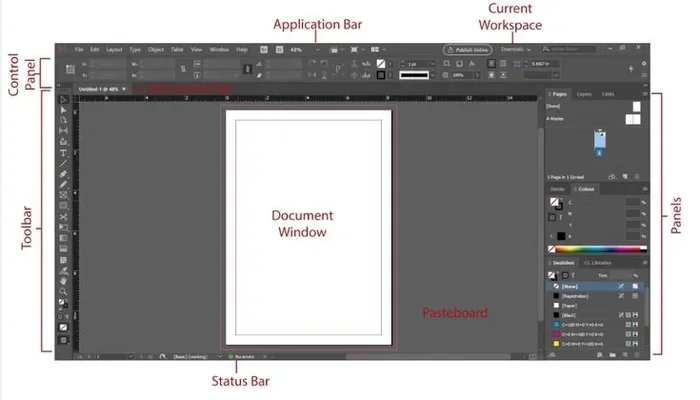
P0 in InDesign refers to the default paragraph style that controls how all new text looks in a fresh document. It is the foundation of every text layout you build in Adobe InDesign. Understanding P0 helps you avoid formatting headaches and keeps your design work consistent. This guide walks you through what P0 is, how it works, and how to customize it like a pro.
Adobe InDesign is one of the most powerful design tools out there. Whether you are building a magazine layout or a simple flyer, the way your text looks matters a lot. At the heart of every InDesign document sits a style that most beginners never think about. That style is called P0, and it plays a bigger role than you might expect.
If you have ever wondered why your text looks a certain way the moment you start typing, P0 is the answer. This default paragraph style sets the tone for everything. In this article, we will break down exactly what P0 in InDesign is, why it matters, and how you can take control of it. Let us dive in.
Key Takeaways
- P0 is the default paragraph style: It is the base style applied to all new text in InDesign.
- P0 controls basic text appearance: Font, size, leading, and spacing all start here.
- Customizing P0 saves time: Setting it up once means consistent formatting across your whole project.
- Style overrides can cause confusion: Local formatting changes on top of P0 can create messy documents.
- P0 affects every new document: Changes to P0 in your template carry forward to all future files.
- GREP styles build on P0: Advanced text formatting often starts from the P0 base style.
📑 Table of Contents
What Is P0 in InDesign?
Every new InDesign document comes with a built-in paragraph style. That style is named P0 by default. It is the first and most basic style in your style list. When you open a blank document and start typing, every word you write uses P0 unless you change it.
Think of P0 as the blank canvas for your text. It defines things like font family, font size, leading, kerning, and paragraph spacing. All of these settings stack together to create the look of your body text. If you have ever opened a document and noticed that all your text looks the same, that is P0 doing its job.
InDesign also creates a companion style called Basic Paragraph, which is essentially the same thing as P0 in most cases. Some users use the names interchangeably, but P0 is the technical label you see in the style panel. Understanding this connection helps you navigate InDesign style management with more confidence.
Why P0 Matters More Than You Think
Many designers skip right past P0 and jump into creating custom styles. That is fine for quick projects. But for larger documents, P0 is the backbone. Every paragraph style you build later inherits some of its properties from P0. This concept is called style inheritance, and it keeps your formatting clean and predictable.
Here is a simple example. Let us say you set P0 to use Minion Pro at 10 points with 14-point leading. Then you create a new paragraph style called “Heading 1.” If you do not change the font settings, Heading 1 will inherit the font from P0. This means your headings and body text stay visually connected. That is the power of a well-configured P0 default style.
How P0 Works in Practice
When you first open InDesign, P0 looks pretty plain. It uses the default font your system provides, usually Adobe Caslon or Minion Pro. The size is typically 10 points, and the leading is set to a value that ensures comfortable reading. These are safe, standard choices that work for most projects.
But here is the thing — P0 is fully customizable. You can change every single setting in the paragraph style options. Let us walk through what you can adjust.
Key Settings Inside P0
The paragraph style options panel gives you access to a lot of controls. Here are the most important ones:
- Font Family and Style: This sets the typeface for your body text. Popular choices include Minion Pro, Garamond, and Helvetica.
- Font Size: Most body text sits between 9 and 12 points. P0 lets you lock in your preferred size.
- Leading: This controls the vertical space between lines. A good rule of thumb is to set leading 20 to 30 percent larger than your font size.
- Paragraph Spacing: You can set space before and after paragraphs to control the flow of your text.
- Alignment: Left, right, center, or justified — P0 handles it all.
- Indentation: First-line indents and left/right margins can be set right here.
Each of these settings shapes the way your reader experiences the text. Getting P0 right from the start makes your InDesign workflow so much smoother.
Customizing P0 for Your Projects
Now that you know what P0 does, let us talk about how to customize it. The process is simple, but the results are powerful.
Step-by-Step Guide to Editing P0
Follow these steps to make P0 work for you:
- Open your InDesign document or template.
- Go to the Window menu and select Styles, then Paragraph Styles.
- Double-click on P0 in the list.
- The Paragraph Style Options dialog box will open.
- Adjust the settings you want to change — font, size, leading, spacing, and more.
- Click OK to save your changes.
That is it. Every new paragraph you type will now use your updated P0 settings. This is especially useful when you are building a template for repeated use. If you save your document as a template, your customized P0 travels with it.
Saving P0 as a Template Base
One of the best habits you can build is creating a custom template with your ideal P0 settings. This way, every new document you start already has your preferred text formatting baked in. You do not have to reconfigure your styles every time.
To do this, set up your P0 the way you like it, then go to File > Save As and choose InDesign Template as the file format. Now every new document built from that template starts with your perfect P0.
Common Mistakes with P0
Even experienced InDesign users sometimes run into trouble with P0. Here are the most common mistakes and how to avoid them.
Applying Local Formatting Over P0
This is the number one mistake. You select a paragraph and manually change the font or size using the Control panel. This creates what is called a style override. The paragraph still uses P0, but it now has a temporary local change sitting on top of it.
Style overrides are not bad in small doses. But when they pile up, your document becomes hard to manage. You might notice that some paragraphs look different even though they all use P0. The fix is simple: clear overrides by clicking the Clear Overrides button in the Paragraph Styles panel.
Ignoring P0 When Building New Styles
When you create a new paragraph style, InDesign bases it on the style you have selected. If P0 is selected, your new style inherits P0’s settings. If you forget this, you might accidentally carry over unwanted formatting. Always check the Based On dropdown when building new styles to make sure you are starting from the right base.
Forgetting to Update P0 in Templates
If you change P0 in an existing document but do not update your template, your future documents will not reflect those changes. Always remember to save your template after updating P0 so that your design software workflows stay consistent.
Advanced P0 Tips for Power Users
Once you are comfortable with the basics of P0, you can start using it in more advanced ways. These tips will help you get even more out of your InDesign projects.
Using GREP Styles with P0
GREP styles let you apply formatting to specific patterns of text within a paragraph. Since GREP styles build on top of P0, they are a great way to add visual interest without creating extra styles. For example, you could use a GREP style to make all numbers bold or to italicize words that follow a colon.
To add a GREP style, open the Paragraph Style Options for P0, go to the GREP Styles section, and click New GREP Style. From there, you can define the pattern and the formatting you want to apply.
Nested Styles and P0
Nested styles let you format parts of a paragraph differently based on things like a colon or a specific word count. These styles also inherit from P0, which means they respect your base settings while adding targeted formatting. This is incredibly useful for things like running headers, drop caps, and numbered lists.
P0 and Paragraph Numbering
If you are working on a document with numbered sections or items, P0 plays a role here too. You can enable paragraph numbering in the Paragraph Style Options for P0. This is especially handy for legal documents, technical manuals, and structured reports.
Hardware Considerations for InDesign Work
While P0 is all about software, your hardware still plays a role in how smoothly InDesign runs. A well-configured system makes working with styles, text, and layouts much more enjoyable.
Your computer needs enough RAM to handle large InDesign files without slowdowns. If you are running multiple Adobe apps at once, having enough memory is essential for a smooth InDesign workflow. Check out our guide on what RAM is good for in a laptop to make sure your machine can keep up.
Also, make sure your display is running properly. If you notice your mouse speed is not changing correctly in Windows 11 while you are working in InDesign, it can slow down your editing flow. A responsive cursor makes precise text and layout adjustments much easier.
Your GPU also matters when working with complex layouts and high-resolution images. Keep an eye on your GPU temperature to make sure your system stays cool during long design sessions. Overheating can cause performance drops that interrupt your creative flow.
Conclusion
P0 in InDesign is more than just a default style — it is the foundation of every text layout you will ever build. From font choices to paragraph spacing, P0 sets the stage for your entire design. Taking the time to understand and customize P0 pays off in cleaner, more consistent documents.
Whether you are a beginner just starting out or a seasoned designer looking to streamline your process, P0 deserves your attention. Start by opening your Paragraph Styles panel today. Double-click P0. Explore the options. You might be surprised at how much control you already have.
The best designers are not the ones who use the most tools. They are the ones who understand the tools they already have. And P0 is one of the most powerful tools sitting right there in your InDesign workspace. Use it wisely, and your documents will thank you.
Frequently Asked Questions
What does P0 stand for in InDesign?
P0 stands for the first default paragraph style in Adobe InDesign. It is the base style applied to all new text in a fresh document. You can think of it as the starting point for all your text formatting.
Can I delete P0 from my InDesign document?
Technically yes, but it is not recommended. Deleting P0 can cause unexpected formatting issues because other styles may be based on it. It is better to customize P0 to match your needs rather than remove it entirely.
How is P0 different from Basic Paragraph?
In most cases, P0 and Basic Paragraph are the same style. The name you see depends on your InDesign version and language settings. Both serve as the default paragraph style for new documents.
Can I change P0 after I have already started typing?
Absolutely. You can modify P0 at any point in your project. Just keep in mind that changing P0 will only affect text that is still using the base style. Text with local overrides or custom styles will not be affected.
Does P0 carry over when I import text from another document?
Imported text keeps its original formatting unless you choose to reapply styles. When you place text into a new document, you can use the Load Styles feature to bring in paragraph styles, including P0, from the source file.
Is P0 the same across all Adobe InDesign versions?
The concept of P0 remains consistent across versions, but the exact default settings may vary slightly. Newer versions of InDesign may use different default fonts or leading values, but P0 always serves as the base paragraph style.
=== CONCLUSION ===
What Is P0 in InDesign is a question that opens the door to better, more efficient design work. P0 is your default paragraph style, and it shapes every paragraph you type until you tell it otherwise. By understanding how P0 works and taking the time to customize it, you set yourself up for success on every project.
Remember, great design starts with the basics. P0 might seem simple, but it is the engine behind consistent, professional-looking documents. Take control of it, explore its options, and watch your InDesign projects transform.