
What Materials Are Used to Make Cell Phones
Cell phones are made from a mix of glass, aluminum, steel, plastics, rare earth elements, and advanced electronics. Understanding what materials are used to make cell phones helps you appreciate the technology in your pocket and make smarter choices about recycling and buying. This guide breaks down every major material used in smartphone components, from the screen to the battery.
Have you ever wondered what materials are used to make cell phones? Your smartphone is a tiny masterpiece of engineering. It combines dozens of different materials into a slim, sleek device that fits in your pocket. From the screen you touch every day to the battery that keeps it running, each part is carefully chosen for a specific job.
Learning about the materials inside your phone is more interesting than you might think. It also helps you understand why phones cost what they do, why some feel premium and others feel cheap, and how to recycle old devices the right way. Let us walk through everything that goes into building a modern cell phone.
Whether you are a tech enthusiast or just curious about your device, this guide covers every major material used in phone manufacturing. We will break it down section by section so it is easy to follow. No jargon, no fluff, just clear and helpful information about the world of smartphone components.
Key Takeaways
- Glass and aluminum are the most common outer materials in modern smartphones.
- Rare earth elements like neodymium and dysprosium are essential for phone speakers and motors.
- Lithium-ion batteries rely on lithium, cobalt, and graphite to power your device.
- Circuit boards use fiberglass and copper to connect all the electronic parts inside.
- Plastics and polymers are used in internal framing and housing components.
- Recycling phone materials helps reduce mining and environmental damage.
- Understanding phone materials helps you choose durable devices and dispose of old ones responsibly.
📑 Table of Contents
- Glass and Ceramic: The Screen and Back Panel
- Metals: Aluminum, Steel, and Titanium Frames
- Plastics and Polymers: The Internal Housing
- Rare Earth Elements: The Hidden Heroes
- Batteries: Lithium, Cobalt, and Graphite
- Circuit Boards and Electronic Components
- Screen Technology: LCD, OLED, and Touch Layers
- Other Materials You Will Find Inside
- Why Knowing About Phone Materials Matters
- Common Mistakes People Make With Phone Materials
- Expert Insights: The Future of Phone Materials
- Final Thoughts
Glass and Ceramic: The Screen and Back Panel
The first thing you notice about any phone is its screen. Most modern smartphones use gorilla glass or similar strengthened glass. This material is tough, scratch-resistant, and lets touch signals pass through clearly. Some phones also use ceramic glass, which feels even smoother and resists scratches better than regular glass.
Why Glass Is So Popular
Glass is lightweight and lets designers create edge-to-edge displays. It also feels premium in your hand. The downside is that glass can crack when dropped. That is why many phone makers pair glass with a protective coating. The coating adds a layer of defense without making the phone bulky.
Ceramic as an Alternative
Ceramic back panels are becoming more common in flagship phones. Ceramic is harder than glass and more heat-resistant. It also feels great to touch. However, ceramic is heavier and more expensive to produce. That is why you usually only see it on high-end devices.
Metals: Aluminum, Steel, and Titanium Frames
The frame of a phone is what holds everything together. Most phones use aluminum for their frame. Aluminum is light, strong, and easy to shape. It also helps dissipate heat, which keeps your phone from overheating during heavy use.
Aluminum Frames
Aluminum is the go-to material for most mid-range and budget phones. It is affordable and works well for mass production. Anodized aluminum adds a colored finish that resists scratches and looks great. Many popular phone brands rely on aluminum for their entire lineup.
Stainless Steel and Titanium
Premium phones often use stainless steel or titanium. These metals are stronger and more durable than aluminum. They also feel heavier, which some people associate with quality. Titanium is especially popular in top-tier phones because it is strong but lighter than steel. If you are comparing phone builds, checking the frame material is a smart first step.
Plastics and Polymers: The Internal Housing
Not every part of a phone is metal or glass. Inside, you will find various plastics and polymers. These materials are used for internal brackets, covers, and housings. They keep the electronic parts secure without adding too much weight.
Why Plastics Matter
Plastics are excellent insulators. They prevent electrical parts from touching each other and short-circuiting. They are also cheap to produce in large quantities. Budget phones often use more plastic on the outside, which keeps the price down but can feel less premium.
Engineering Plastics
Some phones use advanced engineering plastics like polycarbonate. These materials are much stronger than regular plastic. They can absorb shocks and resist bending. A few phone makers use polycarbonate frames wrapped in a metal finish to get the best of both worlds.
Rare Earth Elements: The Hidden Heroes
Here is something most people do not know. Your phone contains rare earth elements. These are minerals that are essential for many electronic functions. They are called rare because they are hard to mine and process, not because they are scarce in the earth.
Neodymium and Dysprosium
Neodymium is used in the tiny magnets inside your phone speaker and vibration motor. Dysprosium makes those magnets stronger and more heat-resistant. Without these elements, your phone would not ring, vibrate, or produce clear sound.
Other Rare Earth Materials
Other rare earth elements like yttrium and europium are used in the phone screen. They help create the vibrant colors you see on your display. Each phone contains a small amount of many different rare earth materials. Together, they add up to a complex mix that makes modern smartphones possible.
Batteries: Lithium, Cobalt, and Graphite
The battery is one of the most important parts of any phone. Most smartphones use lithium-ion batteries. These batteries store a lot of energy in a small space, which is exactly what you need in a slim device.
How Lithium-Ion Batteries Work
Lithium ions move between two layers inside the battery to create power. The key materials include lithium, cobalt, and graphite. Lithium is the lightest metal, which makes it perfect for portable devices. Cobalt helps stabilize the battery and extend its life. Graphite acts as the anode material, storing and releasing energy efficiently.
Battery Recycling and Sustainability
Mining these materials has environmental costs. Cobalt mining, in particular, has raised concerns about worker safety and pollution. Many phone companies are now working on recycling programs. They recover lithium and cobalt from old batteries to use in new ones. Recycling helps reduce the need for fresh mining and keeps harmful materials out of landfills.
Circuit Boards and Electronic Components
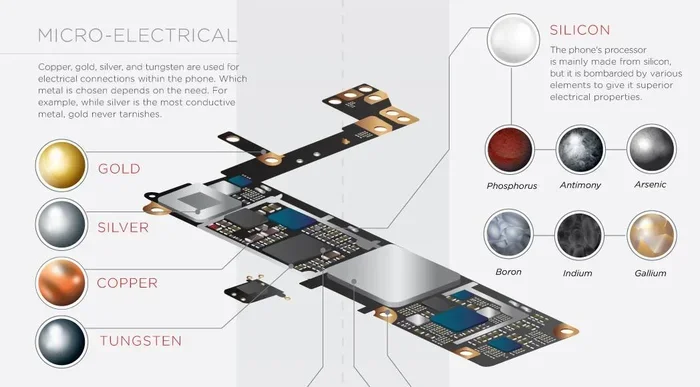
Inside your phone is a complex network of electronic parts. The circuit board is the backbone that connects everything. It is made from fiberglass and copper, with tiny electronic parts soldered onto its surface.
Printed Circuit Boards
Printed circuit boards, or PCBs, are the foundation of every phone. They are made from layers of fiberglass and epoxy resin. Copper traces run through these layers to carry electrical signals. The PCB holds the processor, memory chips, and connectors in place.
Processor and Memory Chips
The processor is the brain of your phone. It is made from silicon, one of the most abundant materials on earth. Silicon wafers are etched with incredibly tiny circuits to create powerful chips. Memory chips store your photos, apps, and data. Together, the processor and memory determine how fast and smooth your phone feels.
Connectors and Wiring
Gold is often used for connectors and wiring inside phones. Gold does not corrode and conducts electricity very well. Even though only tiny amounts are used, gold plays an important role in keeping your phone reliable over time. Some phones also use copper wiring for internal connections.
When you compare phone builds, the internal electronics matter just as much as the outer materials. If you are curious about how phone components stack up against other tech devices, you can check out what are the best laptop brands for a look at how different tech devices are built.
Screen Technology: LCD, OLED, and Touch Layers
The screen is more than just glass. It is a layered system of materials working together. Modern phones use either LCD or OLED display technology, and each has its own material requirements.
OLED Screens
OLED screens use organic compounds that emit light when electricity passes through them. This allows for brighter colors and deeper blacks. OLED screens do not need a backlight, which makes them thinner and more energy-efficient. Most flagship phones now use OLED displays.
LCD Screens
LCD screens use liquid crystals and a backlight to create images. They are less expensive to produce than OLED screens. Budget phones often use LCD displays because they keep the cost down. Both LCD and OLED screens rely on transparent conductive materials like indium tin oxide.
Touchscreen Layers
The touch layer is a thin sheet of conductive material that sits on top of the display. When you press the screen, your finger completes a circuit. The phone registers where you touched and responds accordingly. This technology is so precise that you can feel it working instantly every time you swipe or tap.
Understanding these layers helps you appreciate how much engineering goes into every phone. It also explains why screen replacements can be expensive. The screen is not just one piece of material, it is a stack of carefully engineered layers.
Other Materials You Will Find Inside
There are many other materials that go into a phone. Here are some of the most important ones you might not think about.
- Silicone and rubber are used as seals to keep water and dust out. These gaskets help make phones water-resistant.
- Tantalum is used in small capacitors that regulate electrical current. It is mined from conflict zones, which raises ethical concerns.
- Nickel is used in some battery components and connectors.
- Solder is a metal alloy that holds electronic parts in place on the circuit board.
- Adhesives are used to bond glass to metal frames. These strong glues help make phones rigid and durable.
Each of these materials plays a small but important role. Without any one of them, the phone would not work the way it should. The next time you pick up your phone, think about all the materials working together inside it.
Why Knowing About Phone Materials Matters
Understanding what materials are used to make cell phones is not just interesting, it is practical. Here is why it matters in everyday life.
Making Better Buying Decisions
When you know what materials go into a phone, you can make better choices. A phone with an aluminum frame and Gorilla Glass will feel different from one with a plastic body. You can weigh durability, weight, and feel before you buy. This knowledge helps you get the best value for your money.
Recycling and Environmental Impact
Phones contain valuable materials that can be recycled. When you throw an old phone in the trash, those materials end up in a landfill. Recycling programs recover gold, silver, copper, and rare earth elements. These recovered materials can be used to make new phones and other electronics. Recycling one million phones can recover a significant amount of precious metals.
If you are curious about how phone components compare to other tech hardware, learning about how to know what RAM is compatible with my laptop can give you a broader understanding of how internal components work across different devices.
Supporting Ethical Manufacturing
Some phone materials come from regions with poor mining practices. By choosing brands that prioritize ethical sourcing, you support better working conditions and environmental protection. Many phone companies now publish reports about where they source their materials. Look for brands that are transparent about their supply chains.
Common Mistakes People Make With Phone Materials
Here are a few mistakes to avoid when thinking about phone materials and care.
- Assuming all glass is the same. Not all phone glass is created equal. Some are much more scratch-resistant and shatter-resistant than others.
- Ignoring the frame material. The frame affects durability, weight, and heat dissipation. Do not overlook it when choosing a phone.
- Throwing old phones in the trash. This wastes valuable materials and harms the environment. Always recycle old phones properly.
- Using harsh cleaners on screens. Some cleaning products can damage the oleophobic coating on your screen. Use a soft, damp cloth instead.
- Thinking plastic phones are low quality. Some plastic phones are very durable and well-engineered. Do not judge a phone solely by its exterior material.
Expert Insights: The Future of Phone Materials
The world of phone materials is always evolving. Manufacturers are constantly looking for better, more sustainable options. Here are some trends to watch.
Recycled materials are becoming more common. Some phone makers now use recycled aluminum and recycled plastic in their devices. This reduces the need for new mining and lowers the environmental footprint.
Bio-based plastics are another emerging trend. These plastics are made from renewable sources like corn starch or sugarcane. They are biodegradable and much better for the environment than traditional plastics.
Sapphire glass is being explored as an alternative to traditional screen glass. Sapphire is extremely hard and scratch-resistant. It is currently used in some watch screens, and phone makers are testing it for future devices.
Modular phone designs aim to make repairs easier. If a part breaks, you can replace just that part instead of the whole phone. This extends the life of your device and reduces electronic waste.
These innovations show that the phone industry is taking materials seriously. The materials used to make cell phones will only become more advanced and more sustainable in the years ahead.
Final Thoughts
So, what materials are used to make cell phones? The answer is a fascinating mix of glass, metal, plastic, rare earth elements, and advanced electronics. Every material serves a purpose, from the sturdy aluminum frame to the tiny gold connectors inside the circuit board.
Understanding these materials helps you appreciate the technology in your hand. It also empowers you to make better buying decisions, recycle responsibly, and support ethical manufacturing. The next time you pick up your phone, take a moment to think about all the materials that came together to create it.
Your phone is more than a device, it is a combination of science, engineering, and thoughtful material choices. And knowing that makes every tap, swipe, and call just a little more meaningful.
If you are interested in how phone components compare to other tech hardware, check out what GPU is the Ryzen 7 5700G equivalent to for a deeper look at how processors and graphics chips work across different devices.
Frequently Asked Questions
What are the main materials used to make cell phones?
The main materials include glass, aluminum, steel, titanium, plastics, rare earth elements, lithium, cobalt, graphite, copper, gold, and silicon. Each material serves a specific purpose, from the outer frame and screen to the internal circuit boards and battery.
Why are rare earth elements important in cell phones?
Rare earth elements like neodymium and dysprosium are used in phone speakers, vibration motors, and display colors. Without them, your phone would not produce sound, vibrate, or show vibrant images. They are essential even though they are used in tiny amounts.
Can I recycle the materials from my old cell phone?
Yes, you can. Old phones contain valuable materials like gold, silver, copper, and lithium that can be recovered and reused. Many electronics stores and recycling programs accept old phones. Recycling helps reduce mining and keeps harmful materials out of landfills.
Are phone screens made of just glass?
No, phone screens are made of multiple layers. There is a protective glass layer, a touchscreen conductive layer, an OLED or LCD display layer, and adhesive layers that hold everything together. Each layer uses different materials designed for a specific function.
What makes a phone feel premium versus budget?
The materials used in the build play a big role. Premium phones often use glass and metal or titanium frames, while budget phones use more plastic. The type of screen, the quality of internal components, and the overall build quality all contribute to the feel of a phone.
How do phone manufacturers choose their materials?
Manufacturers choose materials based on durability, weight, cost, and design goals. They also consider how materials affect heat dissipation, signal strength, and water resistance. Sustainability and ethical sourcing are becoming increasingly important factors in material selection.
=== CONCLUSION ===
What materials are used to make cell phones is a question that opens up a world of fascinating details. From the glass that protects your screen to the rare earth elements hidden inside, every material has a purpose. Understanding these materials helps you appreciate the technology you use every day and make smarter choices about buying and recycling.
Next time you hold your phone, remember the incredible mix of materials that came together to create it. And when it is time to upgrade, make sure to recycle your old device so those valuable materials can be put to good use again.