6 by 9 Car Speakers
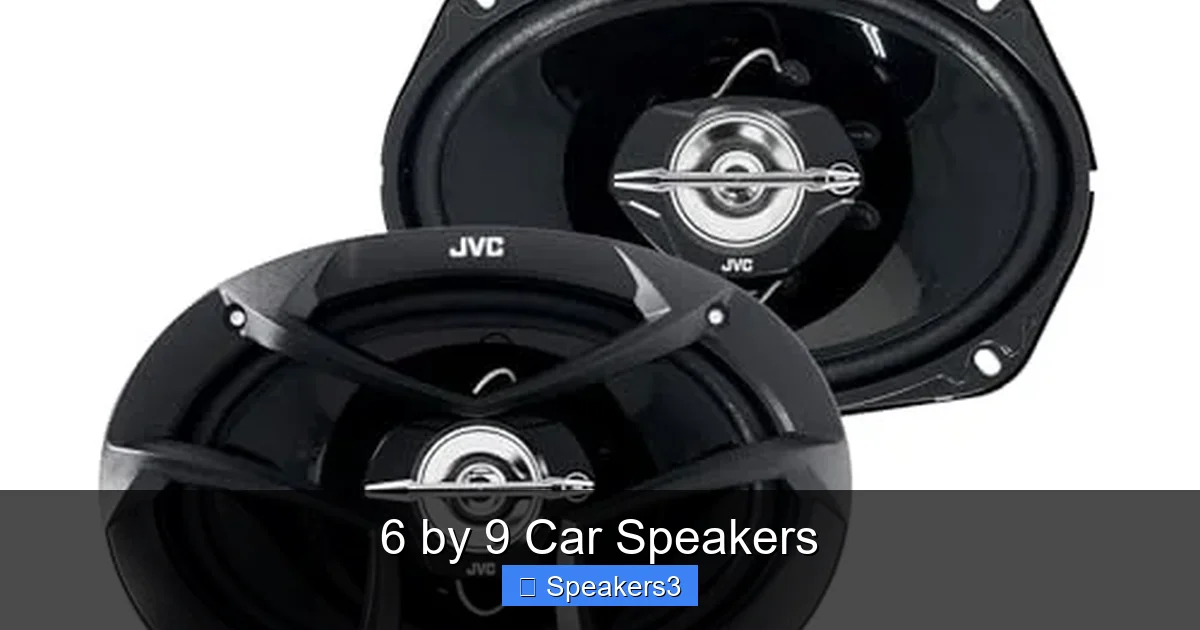
6×9 car speakers are the most popular and versatile size for a reason. They deliver a fantastic balance of powerful bass, clear mids, and detailed highs, fitting perfectly in many factory speaker locations. Whether you’re a casual listener or an audio enthusiast, upgrading to a quality pair of 6 by 9 speakers is the single most effective step to transform your car’s sound system. This guide breaks down everything you need to know, from technical specs to top models and easy installation tips.
You’re cruising down the highway, your favorite song comes on, and… it sounds flat, thin, and disappointing. The factory speakers in your car, designed for cost-cutting, not sound, have failed you. There’s a solution so effective and popular it has become the gold standard for car audio upgrades: 6 by 9 car speakers. This isn’t just another size option; it’s the cornerstone of a great-sounding car stereo for millions of drivers. But why exactly are 6x9s so special? What makes them tick, and how do you choose the right pair for your vehicle and your ears? This is your complete, no-nonsense guide to everything 6×9.
Think of this guide as your friendly neighborhood car audio expert, explaining the tech in simple terms. We’ll cut through the jargon of ohms, watts, and tweeter types. You’ll learn why this specific oval shape is a magic fit for so many cars, what separates a $50 speaker from a $200 one, and get straight talk on installation. By the end, you’ll be confident in your ability to pick the perfect 6×9 speakers to finally hear the music the way the artist intended, with punchy bass, clear vocals, and sparkling highs. Let’s dive in.
Key Takeaways
- Perfect Size Compromise: The 6×9 oval shape fits many front and rear factory locations (especially in doors) while offering a larger cone surface area than round speakers for better bass response.
- Superior Soundstage: Their size and shape help create a wider, more immersive soundstage, making your music feel bigger and more alive inside the car.
- Coaxial Dominance: Most 6×9 upgrades are coaxial (all drivers in one basket), making them a simple drop-in replacement. Component sets (separate tweeter) are rarer but offer higher performance.
- Power Handling is Key: Match the speaker’s RMS power rating to your car stereo or amplifier’s clean output for optimal volume and clarity without distortion.
- Sensitivity Matters: A higher sensitivity rating (e.g., 92dB) means the speaker will get louder with less power, ideal for using your factory radio.
- Material Build Quality: Look for woven fiberglass, polypropylene, or Kevlar cones with rubber surrounds for durability and weather resistance.
- DIY-Friendly Upgrade: With basic tools and the right adapter brackets, installing 6 by 9 car speakers is one of the easiest and most rewarding car audio projects.
📑 Table of Contents
- Why 6×9? The Unbeatable Formula of Shape and Sound
- Decoding the Specs: What You Really Need to Know
- The Contenders: Top Brands and What They Offer
- Your Buying Guide: Matching Speakers to Your Needs and Car
- Installation: It’s Easier Than You Think (A Practical Guide)
- Beyond the Speakers: The Complete System Picture
- Maintenance and Troubleshooting: Keep Them Singing
- Conclusion: Your Journey to Great Sound Starts Here
Why 6×9? The Unbeatable Formula of Shape and Sound
Before we talk brands and specs, we must address the elephant in the room: why is the 6×9 oval the most common and recommended size? It comes down to a brilliant intersection of physics, car design, and practicality.
The Physics of the Oval: More Cone, More Bass
A speaker makes sound by moving air. The surface area of the cone (the part that moves) directly impacts how much air it can move, especially for low frequencies (bass). A 6.5-inch round speaker has a cone area of about 33 square inches. A 6×9 oval, despite its “6-inch” name, has a significantly larger surface area—typically around 40-45 square inches. That extra area means it can displace more air with less effort, translating to deeper, tighter, and more impactful bass notes. You’re getting subwoofer-like performance from a mid-range speaker size. For many people, this single advantage solves the “my car has no bass” problem without needing a separate subwoofer box.
The Car Manufacturer’s Secret (and Your Opportunity)
Here’s a fun fact: automakers have been using 6×9 locations for decades, especially in the rear deck (the parcel shelf behind the back seats) and sometimes in the front doors. Why? The oval shape is excellent for fitting into the often-awkward, space-constrained cavities of a car’s interior, particularly near the rear window where a round speaker would waste space. It’s a design choice born of packaging efficiency. Your opportunity? That means there are almost certainly high-quality, direct-fit replacement 6 by 9 speakers for your specific car make and model. You often don’t need major fabrication; you just need the right speaker and maybe a simple adapter bracket. It’s the path of least resistance to a massive audio upgrade.
The Soundstage Advantage
Soundstage is the imaginary “stage” where you perceive instruments and vocals coming from. A wider soundstage feels more immersive and live. The horizontal orientation of a 6×9 (9 inches wide, 6 inches tall) helps disperse sound more evenly across the car’s cabin compared to a round speaker, which can sometimes focus sound in a narrower beam. This creates a more enveloping listening experience, making it feel like the band is playing all around you, not just from two points in the front or rear.
Decoding the Specs: What You Really Need to Know
Walk into an audio store or scroll online, and you’ll see a wall of numbers. Don’t panic. For 6×9 car speakers, only a few specs truly matter for your buying decision. Let’s translate them.
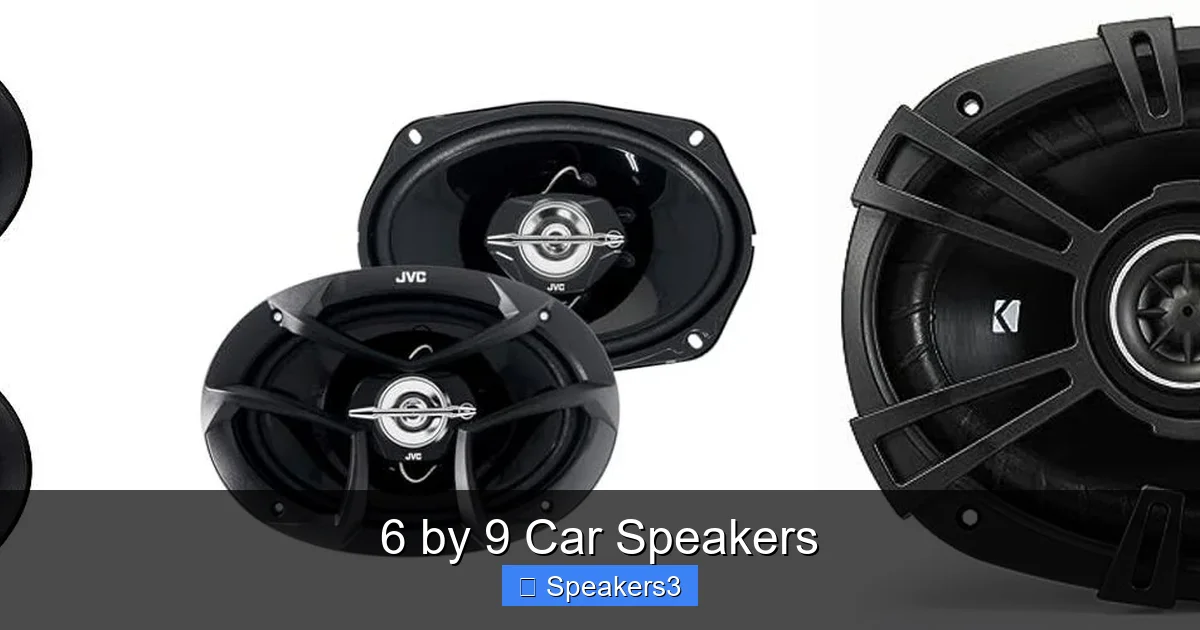
Visual guide about 6 by 9 Car Speakers
Image source: carcuring.com
Power Handling: RMS vs. Peak
This is the most misunderstood spec. You’ll see “Peak Power” advertised as a huge, exciting number (e.g., 300 Watts). Ignore it. Peak power is a momentary, theoretical maximum the speaker might survive for a millisecond. It’s meaningless for real-world use. The only number that matters is RMS (Root Mean Square) power handling. This is the continuous, real-world power a speaker can handle without overheating or distorting. Match the speaker’s RMS rating to the RMS output of your car’s head unit (stereo) or external amplifier. If your head unit puts out 15 RMS watts per channel, get a speaker rated for at least 15-25 RMS watts. Underpowering a speaker (using a 50 RMS speaker with a 15-watt radio) is perfectly safe and common. Overpowering it (using a 15 RMS speaker with a 100-watt amp) is how you blow speakers.
Sensitivity (dB)
Sensitivity tells you how loud a speaker will play with a given amount of power. It’s measured in decibels (dB) at 1 watt with 1 meter of distance. A higher number is better. A speaker with a 92dB sensitivity will sound noticeably louder than an 88dB speaker when both are powered by the same 15-watt factory radio. If you’re keeping your stock stereo, look for a sensitivity of 90dB or higher. If you’re adding an amp, sensitivity becomes slightly less critical, but a higher-rated speaker will always be more efficient.
Impedance (Ohms)
Most car speakers are 4-ohm. This is the standard impedance for almost all car audio systems. Your factory radio and aftermarket amps are designed to work with 4-ohm speakers. Just make sure all your speakers are the same impedance (usually 4-ohm) to avoid unbalanced volume or potential amp issues. You’ll rarely see 2-ohm or 8-ohm 6×9 car speakers in the mainstream market.
Frequency Response
This shows the range of sound a speaker can reproduce, from the lowest bass to the highest treble, measured in Hertz (Hz). A wider range (e.g., 45Hz – 20kHz) is generally better, indicating the speaker can handle deep bass and sparkling highs. However, the *shape* of the response curve and how it integrates with your other speakers (like a subwoofer) is more important than the raw numbers. Don’t get hung up on a 5Hz difference between two models.
The Contenders: Top Brands and What They Offer
Not all speakers are created equal. The market is segmented into tiers, from budget-friendly replacements to high-performance audiophile pieces. Here’s a look at the major players in the 6×9 game and what defines them.
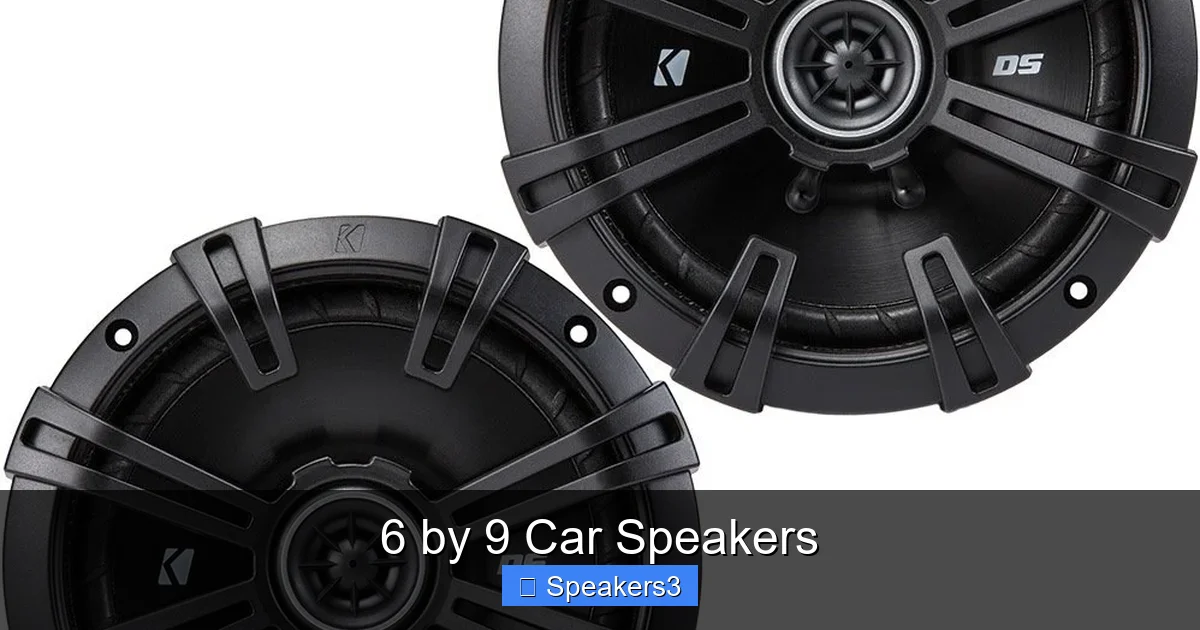
Visual guide about 6 by 9 Car Speakers
Image source: top5bestproducts.com
Value & Performance Kings (JBL, Rockford Fosgate, Kenwood)
These brands dominate the mid-range ($75-$150 per pair) because they offer exceptional performance for the money. They use proven, durable materials and engineering from their high-end lines.
- JBL: Famous for their “Club” series and now the “GX” and “Club” lines. They often feature flexible, woven fiberglass cones and oversized tweeters for a smooth, powerful sound. Their “Selectable Impedance” technology on some models is a clever trick to match your system.
- Rockford Fosgate: The “Punch” brand. Their Prime and Punch lines are workhorses. Look for their “Tweeter” that can be rotated to aim high frequencies. They are built tough and handle power well, often with a slightly aggressive, lively tuning.
- Kenwood: Reliable, clear-sounding speakers. Their “Excelon” line is top-tier, but even their standard “Kenwood” series offers great clarity and a balanced sound. They often use soft-dome tweeters for smooth highs.
Premium & Audiophile (Hertz, Morel, Focal, Audison)
When you want the last word in detail, transparency, and musicality, you look here ($200+ per pair). These use exotic materials and meticulous design.
- Hertz (MPK, Dieci): Italian design, exceptional build quality. Their MPK line uses a potassium-doped silk dome tweeter for incredibly smooth, non-fatiguing highs and a treated paper cone for natural mids.
- Morel: Perhaps the king of soft-dome tweeter technology. Their “Integra” and “Maximo” lines are renowned for a tweeter that sounds like a fine instrument—detailed but never harsh. The midbass is also superb.
- Focal: French engineering, known for a very precise, “clinical” sound with incredible detail retrieval. Their “Access” and “Flux” lines use inverted dome tweeters for a wide dispersion.
The Budget Workhorses (Pioneer, Boss, Planet Audio)
For under $60 a pair, these brands get you on the road with better sound than stock. They are perfect for a first upgrade, a spare car, or a basic system. Don’t expect sonic nirvana, but expect a clear, louder sound with decent bass. Pioneer’s TS-A series is a long-time favorite in this category for its reliability.
Your Buying Guide: Matching Speakers to Your Needs and Car
Okay, you know the specs and the brands. Now, how do you actually choose? Answer these three questions.
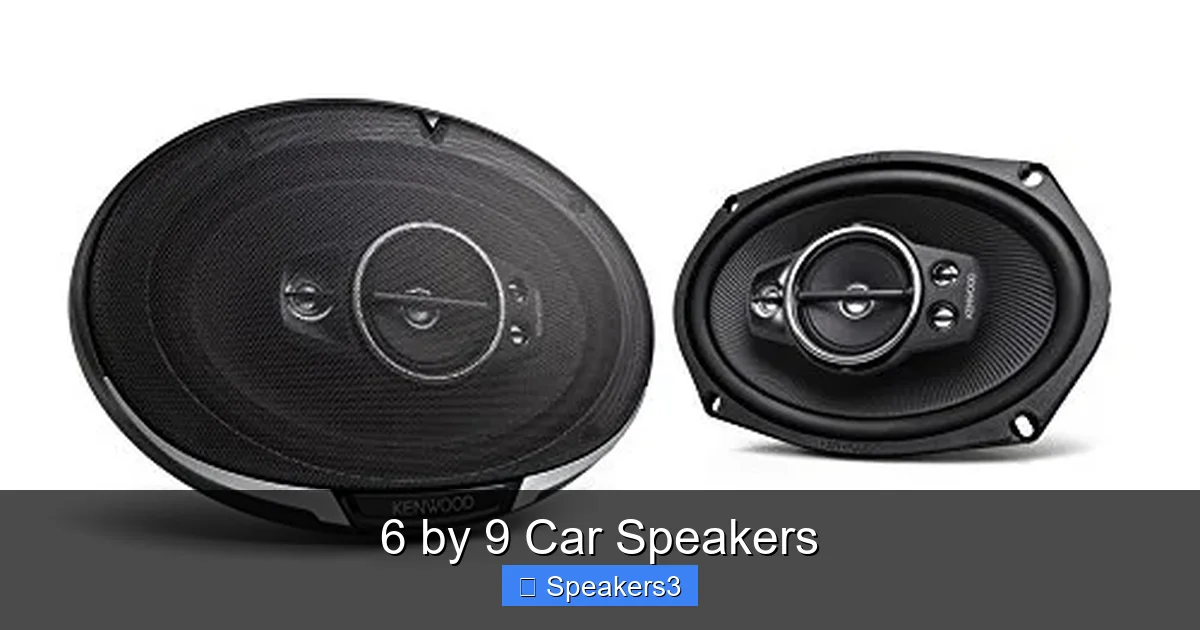
Visual guide about 6 by 9 Car Speakers
Image source: top5bestproducts.com
Question 1: What’s My Power Source?
This is your starting point.
- Stock Factory Radio (No Amp): You have limited power (usually 10-20 RMS watts per channel). Your top priorities are High Sensitivity (90dB+) and Efficient Design. Look at JBL GX, Morel Integra, Hertz Dieci. These will squeeze every decibel from your weak factory amp.
- Aftermarket Radio (Basic): A decent aftermarket head unit might provide 18-25 RMS watts per channel. You have more flexibility. Most mid-range speakers from JBL, Rockford, and Kenwood will shine here.
- I Have/Am Adding an Amplifier: Great! Now you can focus on speakers with excellent power handling (higher RMS) and superior sound quality. You can choose more demanding speakers (like some Focals) that need power to sound their best. Match your amp’s RMS output per channel to the speaker’s RMS rating.
Question 2: What’s My Desired Sound Signature?
Speakers have personalities.
- Warm & Balanced: Great for all music. Smooth highs, rich mids. Look at Hertz, Morel, Kenwood Excelon.
- Bright & Exciting: Sparkling highs, punchy mids. Good for rock, pop, electronic. Rockford Fosgate, JBL Club.
- Detailed & Precise: Reveals every nuance in the recording. Can be tiring if too bright. Focal, Audison.
- Bass-Heavy: Strong mid-bass impact. Many modern 6x9s excel here due to their size. JBL and Rockford often have a slight low-end boost.
Question 3: Will They Fit My Car? (The Crucial Check)
Never assume. A “6×9” is a nominal size. Actual cutout dimensions vary by brand and model by a few millimeters. You must:
- Find your car’s exact speaker location dimensions (search “[Your Car Make/Model/Year] 6×9 speaker size”). Crutchfield’s website is an invaluable resource for this—they have a massive database that tells you the exact speaker size and what fits.
- Check the Cutout Dimensions (the hole the speaker sits in) and the Mounting Depth (how far the speaker protrudes into the door/rear deck) listed on the speaker’s spec sheet.
- Compare these to your car’s available space. Often, you’ll need a Speaker Adapter Bracket (sometimes called a “spacer” or “sleeve”) to properly mount the new speaker, seal the opening, and sometimes increase depth. These are cheap ($10-$30) and make installation 100x easier.
Installation: It’s Easier Than You Think (A Practical Guide)
For many cars, swapping the rear deck 6×9 speakers is a 30-minute job with a screwdriver. Front door 6x9s can be trickier, but still very DIY-friendly. Here’s the general flow.
Step 1: The Safest First Step – Disconnect the Battery
Always disconnect the negative terminal of your car battery before touching any wiring. This prevents shorts that could blow your fuse or damage your new radio/amp.
Step 2: Access and Removal
Rear Deck (Most Common): Usually, you fold down the rear seats (if possible) and remove a few screws holding the rear deck panel (the piece of trim covering the speakers and the trunk opening). Gently pry up the panel. The old speakers are typically held by 4 screws or plastic clips. Unclip any wiring harnesses connected to them. Note which wire is positive (+) and negative (-). The factory harness is often keyed, but take a photo.
Front Door: This varies wildly. You often need to remove the door panel (usually by prying off plastic covers and unscrewing hidden screws behind armrests or door handles). Consult a YouTube tutorial for your specific car. Once the panel is off, the speaker is usually mounted in a plastic bracket. Remove it.
Step 3: Wiring – The Critical Part
You have two choices:
- Use a Speaker Harness Adapter: This is the easiest, most professional method. You buy a $5-$15 wiring harness that plugs into your car’s factory speaker plug on one end and has standard speaker wire on the other. You then solder or use quality crimp connectors to attach this wire to your new 6×9 speakers. This keeps your car’s wiring intact and is completely reversible.
- Cut and Splice Directly: More permanent. You cut the factory speaker connector off, strip the wires, and connect them directly to your new speaker with soldered connections and heat-shrink tubing. This is more work but creates a very solid connection.
Polarity is Non-Negotiable: Connect the positive (+) wire from the car to the positive (+) terminal on the speaker (usually marked with a red dot or + sign). Same for negative (-). Getting this wrong will cause the speakers to be out of phase, canceling bass and making the sound weird and thin.
Step 4: Mounting and Test
If you have an adapter bracket, secure the new speaker to it with the provided screws (do not overtighten and crack the magnet frame). Place the assembly into the hole in your car. If it’s a direct fit, just screw the speaker in. Before reassembling the trim, reconnect the battery and test. Turn the radio on, play a familiar song, and listen. Both speakers should sound full and balanced. If one is quiet or distorted, check your wiring connections and polarity. Once confirmed, reassemble all panels. You’re done!
Beyond the Speakers: The Complete System Picture
Great 6×9 car speakers are the heart of your system, but they don’t operate in a vacuum. For the best experience, consider these supporting elements.
The Secret Weapon: A Small Subwoofer
Even the best 6×9 has physical limits to deep bass (below ~50Hz). A compact, powered subwoofer (like an 8-inch or 10-inch under-seat model) fills in that missing foundation. It takes the taxing, low-frequency work off your 6x9s, allowing them to play louder and cleaner in the mid-bass range. The result is a full-range, powerful sound. For many, a pair of quality 6x9s plus a small sub is the ultimate “no-box” or “minimal-box” high-performance system.
Power Amp: The Real Volume and Clarity Booster
If you love volume and dynamic range (the difference between quiet and loud parts of a song), a dedicated 4-channel amplifier is transformative. It provides clean, robust power (50+ RMS watts per channel) that a head unit simply cannot match. This lets your 6×9 speakers perform at their peak, delivering louder, distortion-free sound and better control over the bass. It’s the professional’s choice for a reason.
Sound Deadening: The Unseen Upgrade
Your car’s doors and rear deck are thin metal boxes full of air and rattles. They resonate and rob your speakers of efficiency and bass. Applying butyl-based sound deadening material (like Dynamat or Noico) to the inner door panels (for front 6x9s) and the rear deck floor around the speaker opening does two things: it reduces road noise and wind turbulence, and it creates a rigid, sealed enclosure for the speaker. This makes your 6x9s sound tighter, louder, and more bass-rich. It’s a mod that pays massive sonic dividends.
Maintenance and Troubleshooting: Keep Them Singing
Your new speakers are an investment. With a little care, they’ll last 10+ years.
- Avoid Clipping: The #1 cause of speaker failure is distortion from overdriving a weak amplifier (the “crackling” sound). If you hear distortion, turn the volume down. It’s not the speaker’s fault; it’s a signal problem.
- Keep Them Dry: Modern speakers are weather-resistant, but prolonged exposure to water (like a leaky door) will destroy them. Ensure your door seals are good.
- Check Connections: Once a year, if you’re handy, check that your speaker terminals are tight and your wiring connections are solid. Corrosion or a loose wire can cause intermittent sound or damage.
- Blown Speaker Symptoms: A fully blown speaker often has a torn cone or a voice coil that’s unwound and rubbing. It will sound scratchy, have no bass, or produce no sound at all on one channel. A partially blown speaker might just sound distorted at moderate volumes. Diagnosis usually requires removal.
- Protect from Theft: If you live in a high-theft area, consider that your new, noticeable 6×9 speakers might be a target. Using security screws (like Torx) for the mounting can deter casual theft.
Conclusion: Your Journey to Great Sound Starts Here
Choosing 6 by 9 car speakers is one of the smartest, most impactful upgrades you can make to your vehicle. They solve the fundamental problems of factory audio—weak bass, harsh highs, and a narrow soundstage—with a simple, often direct-fit solution. You now understand why the 6×9 form factor is so special, how to read the spec sheet to match your power and taste, which brands offer the best value for your budget, and the straightforward steps to get them installed and sounding their best.
Remember, the goal is enjoyment. Don’t get lost in the specs. For most people with a stock radio, a pair of high-sensitivity speakers from JBL, Hertz, or Morel will be a jaw-dropping improvement. If you’re building a system with an amp, you can aim higher. Take the time to verify fitment for your specific car, get the right adapter bracket, and take your time with the wiring. The moment you fire up your new 6×9 speakers and hear the full, rich, detailed sound filling your car for the first time, you’ll understand why this upgrade is so beloved. It’s not just about volume; it’s about connection. It’s about rediscovering your music collection on the open road. Now, go make it happen.
Frequently Asked Questions
Are 6×9 speakers a good upgrade for any car?
Yes, if your car has a factory 6×9 location (most common in rear decks and some front doors). They are the easiest high-impact upgrade. If your car has a different size (like 6.5″), you would need a different size speaker or major fabrication, so 6x9s are only a “good upgrade” for cars designed to accept them.
What’s the difference between a coaxial and component 6×9 speaker?
Almost all 6×9 car speakers are coaxial, meaning the woofer and tweeter are mounted together on one basket. This makes them a simple, one-speaker drop-in replacement. True component sets (where the tweeter is separate and mounts elsewhere) are extremely rare in 6×9 size because the oval shape makes separate mounting difficult. For 99% of users, a high-quality coaxial 6×9 is the correct and only choice.
Do I need an amplifier for 6×9 speakers?
You don’t *need* one, but you’ll get dramatically better results. Your factory radio has very little power (10-20 watts). A good aftermarket head unit provides a bit more (18-25 watts). To truly make your 6×9 speakers play loudly with clean, tight bass and detailed highs without distortion, a dedicated amplifier is highly recommended. It’s the single biggest upgrade after the speakers themselves.
Which brand of 6×9 speakers is the best?
There is no single “best” brand, as it depends on your budget and sound preference. For overall value and performance with factory radios, JBL and Hertz are often top-rated. For a bright, lively sound, Rockford Fosgate is excellent. For ultimate smoothness and detail, Morel is hard to beat. For a first upgrade on a tight budget, Pioneer’s TS-A series is a proven winner.
Can I install 6×9 speakers myself?
Absolutely. For rear deck installations, it’s often a 20-30 minute job involving removing a panel and unplugging/plugging connectors. Front door installations can be more complex, requiring door panel removal, but are still very manageable with a YouTube tutorial for your specific car. The key is having the correct adapter bracket and wiring harness for a clean, secure install.
How long do 6×9 car speakers typically last?
With normal use and no abuse (like constant max-volume distortion), a well-built pair of 6×9 speakers from a reputable brand can easily last 10-15 years or more. The main failure points are the foam/rubber surround (which can dry out and crack over a decade) and the voice coil (which fails from overheating due to distortion). Keeping them out of extreme moisture and avoiding clipping will maximize their lifespan.