What Is Difference Between 2 Way and 3 Way Speakers
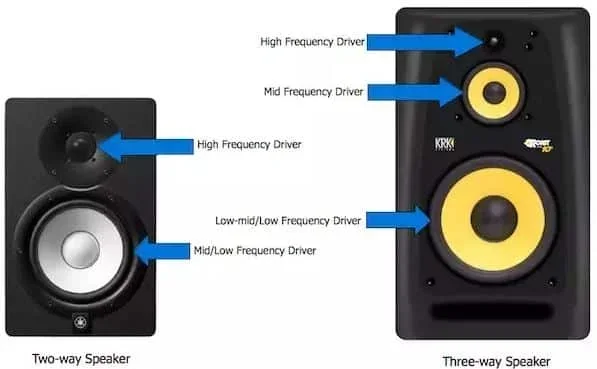
The main difference lies in how many specialized drivers handle your audio frequencies. 2 way speakers use two drivers for midrange and high sounds, while 3 way speakers add a dedicated low-frequency driver for deeper bass. This setup changes clarity, power handling, and overall listening experience. Understanding these designs helps you pick the right gear for music, home theater, or car audio.
Choosing the right speaker setup can feel confusing at first. You see numbers like two way and three way, and you wonder what they really mean for your music. The good news is that the idea is simple once you break it down. It all comes down to how many specialized drivers share the work of playing your audio.
What Is Difference Between 2 Way and 3 Way Speakers comes down to driver design and frequency handling. A 2 way speaker splits sound between two drivers, usually a woofer and a tweeter. A 3 way speaker adds another driver, often a midrange unit, so each part of the sound gets more focused attention. That extra division can change clarity, bass response, and overall balance.
If you have ever compared a compact bookshelf speaker with a larger home audio box, you have probably noticed a difference in how the sound feels. Some systems sound smooth and balanced. Others feel more detailed and powerful. The driver arrangement is one of the biggest reasons for that difference. It affects how your speaker handles vocals, instruments, and bass-heavy tracks.
This guide will walk you through the basics in plain language. You will learn how each design works, what they sound like, and which option may fit your space better. By the end, you should feel confident about choosing the right speaker type for your needs.
Key Takeaways
- Driver Count Matters: 2 way speakers use two drivers, while 3 way speakers use three to split audio frequencies more precisely.
- Frequency Division: More drivers mean cleaner separation between bass, mids, and highs, reducing distortion at high volumes.
- Sound Quality vs. Simplicity: 3 way designs often deliver richer bass and clearer vocals, but 2 way models are usually simpler and more affordable.
- Crossover Complexity: Adding a third driver requires a more advanced crossover network to manage frequency handoffs smoothly.
- Use Case Fit: 2 way speakers work well for casual listening and compact spaces, while 3 way speakers suit audiophiles and larger rooms.
- Installation Considerations: 3 way speakers may need more careful placement and tuning to get the best sound balance.
- Budget Awareness: Your choice should match your listening goals, room size, and overall audio system budget.
📑 Table of Contents
How 2 Way Speakers Work
A 2 way speaker uses two drivers to handle different parts of the audio spectrum. One driver covers the lower and middle frequencies, while the other handles the higher frequencies. This setup is common because it keeps the design simple and efficient.
The larger driver is usually called a woofer. It handles bass and midrange sounds. The smaller driver is the tweeter, and it takes care of the bright, crisp details. Together, they cover most of what you hear in everyday music.
Because there are only two drivers, the speaker relies on a crossover to divide the sound. The crossover sends the right frequencies to the right driver. When it is designed well, the transition between drivers can sound smooth and natural.
Benefits of a 2 Way Design
One big advantage is simplicity. Fewer parts often means easier construction and lower cost. That makes 2 way speakers a popular choice for many listeners. They can also fit well in smaller spaces where a larger speaker would feel awkward.
Another benefit is balance. With only two drivers, the sound can remain cohesive if the crossover is tuned properly. Many people enjoy the smooth, easy-to-listen-to character of a good 2 way speaker.
Limitations to Consider
The main tradeoff is that one driver must cover a wider range of frequencies. That can sometimes reduce precision, especially if the speaker is pushed hard. In some designs, the midrange and bass may not feel as separated as they do in a more divided system.
If you listen to complex music with lots of layers, you may notice that details compete a bit more. This does not mean 2 way speakers sound bad. It just means the sound is handled differently.
How 3 Way Speakers Work
A 3 way speaker adds another driver to the mix. In many designs, you get a woofer for bass, a midrange driver for vocals and instruments, and a tweeter for high frequencies. This gives each driver a more focused job.
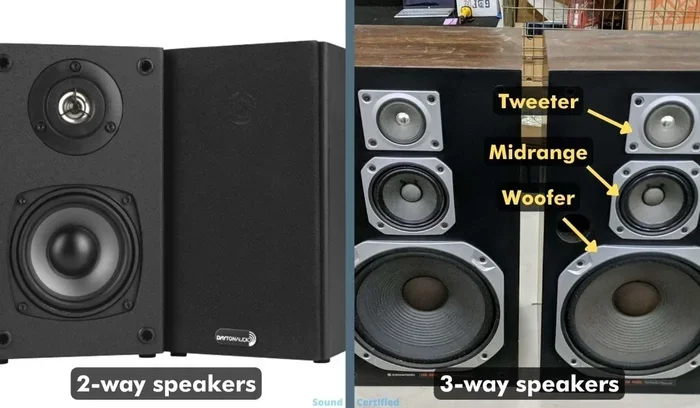
Visual guide about 2 way 3 way speaker comparison
Image source: soundcertified.com
The idea is simple. If each driver handles a narrower range of sound, it may do that job more accurately. That can lead to better clarity, especially in the middle part of the audio spectrum where most music lives.
Of course, adding a driver also adds complexity. The crossover must manage three points of division instead of two. That means the design has to be more carefully planned to avoid awkward gaps or overlaps between frequencies.
Why the Extra Driver Matters
The middle frequencies are where many listeners notice the biggest difference. Vocals, guitars, keyboards, and many other instruments sit in that range. A dedicated midrange driver can help those sounds stand out more clearly.
For some listeners, this creates a more detailed and lifelike presentation. For others, the difference may be subtle. Much depends on the quality of the drivers, the crossover, and the overall speaker design.
When a 3 Way Setup Shines
A 3 way speaker can be a strong choice when you want more separation and a fuller sound. It may work well in larger rooms or for listeners who enjoy critically listening to music. The added driver can also help manage power more effectively across different frequency ranges.
That said, bigger does not always mean better for everyone. If your room is small or your listening habits are casual, the extra complexity may not be necessary.
Sound Differences You Can Actually Hear
Sound is subjective, but there are some general patterns that many listeners notice. A 2 way speaker often delivers a smooth, balanced sound with less separation between mids and bass. A 3 way speaker may sound more detailed, with clearer midrange and more defined bass handling.
Think of it like a team project. In a 2 way speaker, two people share the work. In a 3 way speaker, three people divide the tasks more finely. When the team is well organized, the result can feel more precise.
Clarity and Detail
Detail comes from how well a speaker reproduces small sounds. A 3 way design can sometimes improve clarity because the midrange driver focuses on the most important part of the music. This can make vocals and instruments feel more present.
A 2 way speaker can still sound very clear, especially if it is well made. The difference is often about how much specialization each driver has.
Bass and Low-End Feel
Bass is another area where people often expect a big difference. A 3 way speaker may handle low frequencies more cleanly because the woofer is not also trying to cover as much midrange. That can make bass feel tighter and more controlled.
However, bass quality depends on many things, including enclosure size, driver quality, and room acoustics. The number of drivers is important, but it is not the only factor.
Vocals and Midrange Performance
If you listen to vocal-heavy music, the midrange matters a lot. This is where a 3 way speaker may have an advantage. By giving midrange frequencies their own driver, the speaker can focus on the part of sound that carries human voice and many key instruments.
For casual listening, a 2 way speaker may still sound perfectly enjoyable. But if you want a more focused vocal presentation, the 3 way design is worth considering.
Crossover Design and Why It Matters
The crossover is the part that decides which frequencies go to which driver. In a 2 way speaker, it splits the sound into two bands. In a 3 way speaker, it splits the sound into three bands. That makes the crossover more important in a 3 way design.
A good crossover helps the drivers work together smoothly. A poor crossover can create harsh transitions or muddy sound. This is why two speakers with the same driver count can still sound very different.
Passive vs Active Crossovers
Some speakers use passive crossovers, which sit between the amplifier and the drivers. Others use active crossovers, which divide the signal before amplification. Both approaches have their place, and each affects sound in different ways.
For most home listeners, passive crossovers are common in boxed speakers. Active setups are more often found in specialized audio systems and powered speakers.
Why Matching Matters
Driver matching is important in any speaker, but especially in a 3 way speaker. The three drivers need to blend well so the sound does not feel split into separate pieces. If they do not match well, you may hear inconsistencies.
This is one reason quality matters more than driver count alone. A well-tuned 2 way speaker can outperform a poorly designed 3 way speaker.
Which Speaker Type Fits Your Needs
The best choice depends on how you listen, where you listen, and what you value most. A 2 way speaker is often a smart pick for simplicity, smaller spaces, and balanced everyday listening. A 3 way speaker may suit listeners who want more detail and a more divided frequency approach.
Best Uses for 2 Way Speakers
- Small to medium rooms
- Casual music listening
- Simple home audio setups
- Compact bookshelf designs
- Budget-friendly audio projects
Best Uses for 3 Way Speakers
- Larger listening rooms
- Critical music listening
- Systems where midrange clarity matters
- Audio setups that need more frequency separation
- Listeners who prefer a more detailed presentation
Questions to Ask Yourself
Before choosing, think about your main goal. Do you want something easy and space-friendly? Or do you want a more specialized listening experience? Your answer can guide you toward the right design.
Also consider your amplifier, room size, and the type of music you play most often. A speaker that fits your system will usually sound better than one that simply has more drivers.
Common Mistakes When Choosing Speakers
One common mistake is assuming more drivers always mean better sound. That is not true. Design quality, tuning, and component matching matter just as much as driver count.
Another mistake is ignoring room size. A large speaker in a small room can overwhelm the space. A small speaker in a large room may struggle to fill it properly.
Mistake to Avoid
Do not focus only on specs on paper. Frequency response numbers, power handling, and driver count can be helpful, but they do not tell the whole story. Listening tests and real-world use often reveal more.
Quick Tip
If possible, compare both types in a similar setup. Hearing them side by side can make the differences much easier to understand.
Practical Tips for Getting the Best Sound
No matter which speaker type you choose, setup matters. Placement, distance from walls, and listening position can all change the sound. Even a great speaker can underperform if it is placed poorly.
Placement Basics
- Keep speakers at a similar distance from your listening position
- Avoid placing them too close to corners unless you want more bass buildup
- Angle them slightly toward your listening area if needed
- Give them space to breathe instead of crowding them with furniture
Tuning and Balance
If your system allows it, adjust tone settings gently. Small changes can make a big difference. The goal is usually a balanced sound, not an extreme boost in one range.
Also make sure your amplifier matches the speaker needs. A mismatched system can limit performance, no matter how many drivers the speaker has.
Final Thoughts on 2 Way vs 3 Way Speakers
So, What Is Difference Between 2 Way and 3 Way Speakers in practical terms? It comes down to how the sound is divided and how specialized each driver is. A 2 way speaker keeps things simple with two drivers. A 3 way speaker adds more separation with three drivers. Both can sound excellent when designed well.
If you want an easy, balanced option for everyday listening, a 2 way speaker may be the better fit. If you want more midrange focus and a more detailed presentation, a 3 way speaker could be worth exploring. The best choice is the one that matches your room, your system, and the way you enjoy music.
In the end, driver count is only part of the story. Good design, proper setup, and personal preference matter just as much. Choose the speaker that sounds right to you, because your ears are the best judge of all.
Frequently Asked Questions
Are 3 way speakers always better than 2 way speakers?
Not always. A 3 way speaker can offer more frequency separation, but a well-designed 2 way speaker can still sound excellent. The overall build quality and tuning matter just as much as driver count.
Do 3 way speakers have better bass than 2 way speakers?
They can, but not automatically. A 3 way speaker may handle bass more cleanly because the woofer focuses on lower frequencies. Still, enclosure size, driver quality, and room acoustics also affect bass performance.
Why do some 2 way speakers sound so clear if they have fewer drivers?
Because a good crossover and quality drivers can still produce very balanced sound. A 2 way speaker can be highly effective when the woofer and tweeter are well matched for the intended listening range.
Is a 3 way speaker harder to set up?
Sometimes. A 3 way speaker may need more careful placement and system matching to get the best blend between drivers. That said, many users still find setup straightforward once the speaker is positioned well.
Which speaker type is better for a small room?
A 2 way speaker is often a better fit for small rooms because it is usually more compact and simpler. A 3 way speaker can work too, but it may be more than you need in a smaller space.
Should I choose speakers based on driver count alone?
No. Driver count is only one factor. You should also consider sound preference, room size, amplifier matching, and overall speaker design. The best speaker is the one that fits your listening habits and sounds balanced to you.