Types of Car Audio Speakers
Upgrading your sound system starts with choosing the right types of car audio speakers for your vehicle. Whether you want crisp highs, clear mids, or deep bass, understanding speaker configurations helps you make the best choice. This guide breaks down component vs coaxial speakers, subwoofer benefits, and key specs like sensitivity and power handling. You will learn how to match speaker sizes to your car and avoid common installation mistakes. By the end, you will know exactly what to look for when buying car speakers.
Your car should sound as good as it looks. But most factory systems leave a lot to be desired. The good news is that swapping out your old units for better types of car audio speakers can transform every drive. You do not need to be an audio engineer to make smart choices. You just need to know what each part does and how it fits your lifestyle.
In this guide, we will walk through the main speaker types you will encounter. We will keep things simple and practical. You will learn how component speakers differ from coaxial speakers. We will also cover subwoofers, tweeters, and the key specs that actually matter. By the time you finish reading, you will feel confident picking the right setup for your ride.
Key Takeaways
- Know the basics: Component and coaxial speakers serve different needs and budgets.
- Match sizes: Always check your factory speaker locations before buying 6.5-inch or 6×9 speakers.
- Power matters: Understand RMS power and sensitivity ratings to pair speakers with your amplifier.
- Subwoofers add depth: A good subwoofer fills in the low frequencies that regular speakers miss.
- Installation counts: Proper mounting and wiring prevent static noise and crackling issues.
- Budget wisely: You do not need the most expensive car audio speakers to hear a major improvement.
- Test before buying: Listen to familiar tracks to judge sound quality and frequency response.
📑 Table of Contents
- Understanding the Main Types of Car Audio Speakers
- Coaxial Speakers: The Easy Upgrade
- Component Speakers: Precision and Clarity
- Subwoofers and Tweeters: Filling the Extremes
- Choosing the Right Speaker Size and Fit
- Power, Sensitivity, and Sound Quality
- Installation Tips and Common Mistakes
- Frequently Asked Questions
Understanding the Main Types of Car Audio Speakers
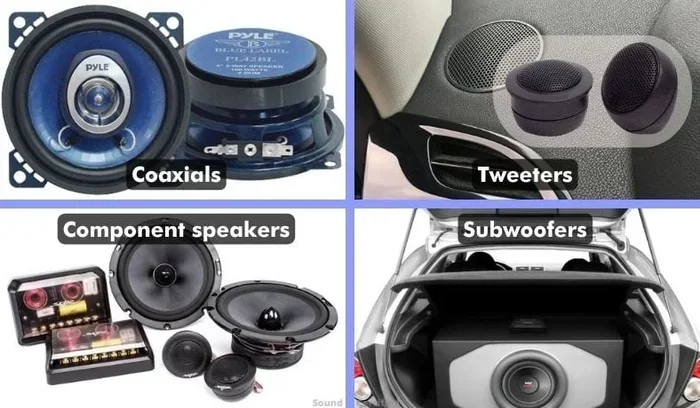
When people talk about types of car audio speakers, they usually mean three main categories. These are coaxial speakers, component speakers, and subwoofers. Each one handles a different part of the sound spectrum. Together, they create a full and balanced listening experience.
Coaxial speakers pack everything into one unit. The woofer, tweeter, and sometimes a midrange driver all sit in the same frame. This makes them easy to install. You just swap out the old unit and you are done. They work well for people who want a quick upgrade without extra wiring.
Component speakers split the drivers into separate pieces. You get a dedicated woofer, a separate tweeter, and often an external crossover. This setup gives you more control over where each sound comes from. You can place tweeters higher on the dashboard for better imaging. The result is clearer sound and better staging.
Subwoofers focus on the low end. They handle bass frequencies that smaller speakers struggle to reproduce. Adding a subwoofer makes music feel fuller and more immersive. It is especially useful for hip-hop, electronic, and rock genres. If you love feeling the beat, a subwoofer is a smart addition.
Some systems also use midrange speakers to handle the middle frequencies. These fill the gap between tweeters and woofers. They are common in higher-end setups. You can learn more about how mid range speakers car audio fit into a complete system by exploring dedicated guides on the topic.
Coaxial Speakers: The Easy Upgrade
What Makes Coaxial Speakers Popular
Coaxial speakers are the most common replacement for factory units. They combine multiple drivers into a single frame. This design saves space and simplifies installation. Most cars come with coaxial units from the factory, so swapping them feels familiar.

Visual guide about car audio speaker types
Image source: images.crutchfieldonline.com
These speakers work well for daily listening. They deliver decent highs, clear mids, and acceptable lows. They will not match the precision of a component system, but they offer great value. If you want better sound without a major overhaul, coaxial speakers are a solid choice.
Best Uses for Coaxial Speakers
You should consider coaxial speakers if you drive a daily commuter. They fit easily into standard door locations. They also work well in smaller vehicles where space is tight. Many people use them as a first step before adding more advanced gear.
Here are a few situations where they shine:
- You want a simple plug-and-play upgrade.
- You have a limited budget but still want better clarity.
- You do not plan to add a separate amplifier right away.
- You prefer a clean installation with minimal wiring changes.
Keep in mind that coaxial speakers still benefit from proper power. Even a basic aftermarket unit can sound better with clean signal flow. If you notice static noise from speakers in car systems, check your grounding and wiring first. Simple fixes often solve the problem before you blame the speakers.
Component Speakers: Precision and Clarity
How Component Speakers Work
Component speakers separate each driver into its own housing. The woofer handles low and mid frequencies. The tweeter takes care of high notes. An external crossover decides which frequencies go to each driver. This division of labor creates a more accurate soundstage.
Because the tweeter sits apart from the woofer, you can aim it directly at the listener. This improves imaging and detail. You hear instruments more clearly. Vocals sound more natural. The overall presentation feels more like a live performance.
When to Choose Component Speakers
Choose component speakers if sound quality is your top priority. They work best when you have the time and budget for a proper install. You may need to run new wires for the tweeters. You might also want to add a small amplifier to get the most out of them.
Consider this setup if:
- You enjoy critical listening and want detailed sound.
- You care about sound staging and imaging.
- You plan to build a full system with an amplifier.
- You want the flexibility to tune each driver separately.
Many enthusiasts pair component speakers with a dedicated amp to maximize performance. If you are wondering do I need an amplifier for my car speakers, the answer often depends on your goals. A good amp can unlock the full potential of high-quality components.
Subwoofers and Tweeters: Filling the Extremes
Why Subwoofers Matter
Small speakers struggle to move enough air for deep bass. That is where a subwoofer comes in. It is designed to handle low frequencies with ease. A well-chosen sub adds weight and impact to your music. It also frees up your main speakers to focus on mids and highs.
You do not need a giant box to get good bass. Many compact subs fit under seats or in small trunks. The key is matching the sub to your power source and enclosure. A properly tuned sub sounds tight and controlled, not boomy or messy.
Tweeters and High-Frequency Detail
Tweeters handle the highest notes in your system. They reproduce cymbals, string details, and vocal brightness. Without good tweeters, music can sound dull or muffled. That is why many component speakers include dedicated tweeter modules.
Placement matters a lot for tweeters. Higher mounting positions often create a better listening angle. You can hide them in sail panels, dash locations, or A-pillars. The goal is to point them toward your ears for the clearest high-end response.
If you are building a full system, think about how each driver supports the others. A balanced setup uses subwoofers for lows, midrange speakers for body, and tweeters for sparkle. This approach gives you a complete sound that feels natural and engaging.
Choosing the Right Speaker Size and Fit
Common Sizes Explained
Speaker sizes can feel confusing at first. The number usually refers to the diameter of the main driver. Common sizes include 6.5-inch, 6×9 speakers, 5.25-inch, and 6×8 formats. Each size fits different locations and serves different roles.
6.5-inch car speakers are the most common door speakers. They offer a good balance of bass and clarity. 6×9 speakers often go in rear decks or larger door openings. They provide more surface area, which can help with bass output. Smaller sizes like 5.25-inch units work well in compact doors or rear locations.
How to Measure and Match
Always check your factory openings before buying. A speaker that is too large will not fit properly. A speaker that is too small may leave gaps that affect sound. Use a tape measure and note the mounting depth as well. Some aftermarket units run deeper than factory speakers.
Here is a simple way to approach sizing:
- Measure the cutout diameter of your current speaker.
- Check the mounting depth in the door or dash.
- Compare those numbers with the new speaker specs.
- Look for adapters if the new size is slightly different.
If you are unsure about your measurements, you can review guides on how to measure car speakers to avoid fitment surprises. Proper sizing saves time and keeps your installation clean.
Power, Sensitivity, and Sound Quality
Understanding RMS Power
Power ratings tell you how much energy a speaker can handle. The most useful number is RMS power. This represents continuous power rather than a short peak. A speaker with a higher RMS rating can handle more volume without distortion.
Do not chase peak numbers alone. Peak ratings can look impressive but do not reflect everyday use. Focus on RMS and match it to your amplifier output. A balanced match keeps the system safe and sounding good.
Sensitivity and Efficiency
Sensitivity tells you how loud a speaker gets from a given amount of power. Higher sensitivity means the speaker plays louder with less power. This matters a lot if you are not using a dedicated amplifier. A sensitive speaker can sound great even with a modest head unit.
If you plan to add an amp, sensitivity becomes less critical. You will have enough power to drive less efficient speakers as well. Still, it helps to understand the number so you can compare options fairly.
Sound Quality and Frequency Response
Sound quality depends on more than power. Frequency response shows the range of notes a speaker can reproduce. A wider range usually means more detail. But numbers alone do not tell the whole story. Two speakers with similar specs can sound very different.
That is why listening matters. Play music you know well. Pay attention to vocals, bass tightness, and high-frequency smoothness. If a speaker sounds harsh or boomy, it may not suit your taste. Trust your ears as much as the spec sheet.
If you want to understand how power affects performance, you can read more about does wattage matter for car speakers in dedicated buying guides. The short version is that the right amount of clean power matters more than raw numbers.
Installation Tips and Common Mistakes
Keep the Install Clean and Simple
A good installation makes a huge difference. Secure mounting prevents vibration and rattles. Clean wiring reduces noise and protects your gear. Take your time and follow the instructions that come with your speakers.
Use proper connectors instead of bare wire twists. They create reliable connections and reduce resistance. Make sure your grounds are solid. A weak ground can cause all kinds of audio problems.
Avoid These Common Mistakes
Many people rush the install and regret it later. Here are some mistakes to avoid:
- Buying speakers that do not fit the cutout or depth.
- Ignoring impedance matching with the amplifier.
- Running wires near power cables without separation.
- Skipping sound deadening in doors.
- Turning the volume up too high during testing.
If your speakers start acting strange, check the basics first. For example, if you notice why are my car speakers crackling, look for loose connections or damaged voice coils. If one side goes silent, you may want to read about car speakers stopped working all sudden to troubleshoot step by step.
A little care during install prevents most headaches. Clean mounts, solid wiring, and proper tuning go a long way. Your speakers will last longer and sound better.
Frequently Asked Questions
What are the main types of car audio speakers?
The main types of car audio speakers are coaxial, component, and subwoofers. Coaxial units combine drivers in one frame for easy installation. Component systems separate drivers for better sound staging. Subwoofers handle deep bass for a fuller listening experience.
Do I need an amplifier for aftermarket car speakers?
You do not always need an amplifier, but it helps. If your speakers have higher power needs or you want more volume and clarity, an amp is a good idea. Many people ask do I need an amp for my car speakers, and the answer depends on your setup and goals.
What size speakers fit most cars?
6.5-inch car speakers fit many door locations, while 6×9 speakers often work in rear decks. The best size depends on your vehicle’s factory openings. Always measure cutout diameter and mounting depth before buying.
Are component speakers better than coaxial speakers?
Component speakers usually offer better imaging and detail because the drivers are separate. Coaxial speakers are easier to install and more affordable. The better choice depends on whether you value precision or convenience more.
How do I know if my speakers are underpowered or overpowered?
Underpowered speakers may sound weak or distorted at higher volumes. Overpowered speakers can handle more energy, but bad tuning can still cause damage. Match RMS power and sensitivity to your amplifier for the best results.
Why do my car speakers sound crackly or noisy?
Crackling often comes from loose connections, damaged drivers, or electrical interference. You can learn more about why are my car speakers crackling to troubleshoot the issue. Checking your wiring and grounds usually solves the problem.