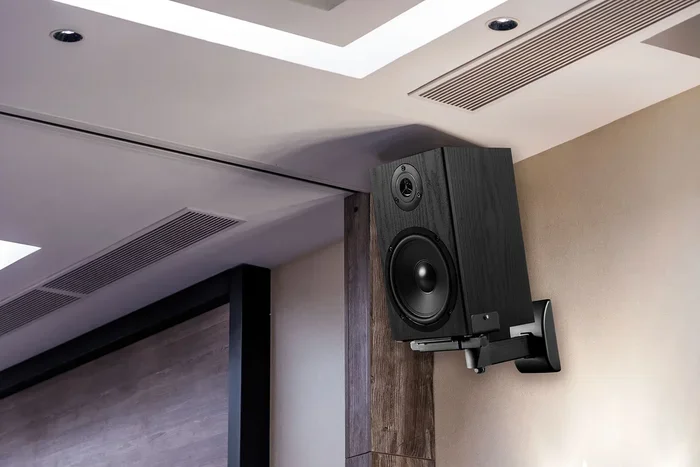
3 4 Ohm Speakers in Parallel

Connecting three 4 ohm speakers in parallel can give you more volume and better bass response, but it also changes the load your amplifier sees. This guide walks you through the math, wiring tips, and safety checks so you can enjoy louder sound without frying your gear.
Key Takeaways
- Impedance drops to 1.33 Ω: Parallel wiring of three 4 Ω speakers results in a low total impedance that many amps can’t handle.
- Amplifier rating matters: Only use an amp that can safely drive the resulting load or add a matching network.
- Wire gauge is crucial: Thicker gauge reduces resistance and heat, protecting both speakers and amp.
- Series‑parallel combos can help: Mixing series and parallel connections can raise the overall impedance to a safer level.
- Protection devices save money: Fuses, resistors, or a speaker selector prevent overload and speaker damage.
- Testing before final install: Measure voltage and current with a multimeter to confirm everything is within spec.
- Practical examples included: Real‑world wiring diagrams and step‑by‑step tips make the process easy.
📑 Table of Contents
- Introduction: Why You Might Want Three 4 Ohm Speakers in Parallel
- Understanding Impedance and What Parallel Means
- Will Your Amplifier Survive 1.33 Ω?
- Ways to Make Three 4 Ohm Speakers Work Together
- Wiring Guidelines: From Planning to Execution
- Safety Measures: Protect Your Gear
- Practical Applications and Real‑World Tips
- Conclusion: Get Bigger Sound Without Breaking Anything
Introduction: Why You Might Want Three 4 Ohm Speakers in Parallel
Imagine you have a small car audio system or a home theater sub‑woofer setup and you want more punch without buying a brand‑new amp. Adding extra speakers is a common trick. When those speakers are each 4 ohms, wiring them in parallel seems like the quickest way to get them all talking to the same source.
But there’s a catch. Parallel wiring lowers the total impedance, and if the amp isn’t ready for that, you could end up with distortion, overheating, or even a fried amp. This article breaks down the theory, the math, and the practical steps you need to safely run three 4 ohm speakers in parallel.
Understanding Impedance and What Parallel Means
What is Impedance?
Impedance (measured in ohms, Ω) is the speaker’s resistance to the flow of alternating current (AC). It’s not a fixed value like a resistor; it varies with frequency, but the rating (4 Ω, 8 Ω, etc.) gives you a useful average.

Visual guide about 3 4 Ohm Speakers in Parallel
Image source: xeducvinh.com.vn
Parallel Wiring Basics
When you connect loads in parallel, the voltage across each load stays the same, while the total current is the sum of the individual currents. The formula for total impedance (Z_total) of identical speakers in parallel is:
Z_total = Z_individual ÷ Number_of_speakers
So for three 4 Ω speakers:
Z_total = 4 Ω ÷ 3 ≈ 1.33 Ω
This low impedance is the heart of the challenge.
Will Your Amplifier Survive 1.33 Ω?
Check the Amplifier Specs
Most consumer amplifiers are rated for 4 Ω or 8 Ω loads. Some car amps can handle 2 Ω, but 1.33 Ω is rare. Look for a line in the manual that says “minimum load” or “stable down to X Ω.” If the amp only lists 4 Ω, you need a solution before hooking up the speakers.

Visual guide about 3 4 Ohm Speakers in Parallel
Image source: phuland.com.vn
Real‑World Example: Car Amp Rating
Suppose you have a 50 W RMS car amp rated for 4 Ω minimum. At 1.33 Ω, the amp would try to push roughly three times the current, quickly overheating the output transistors. The result is a hot amp, distortion, and possibly a blown fuse.
Ways to Make Three 4 Ohm Speakers Work Together
1. Use a Higher‑Power Amplifier
If you can upgrade to an amp that officially supports 1 Ω loads, the math works out cleanly. Look for “bridged” or “mono” car amps that list 1 Ω stability.
Visual guide about 3 4 Ohm Speakers in Parallel
Image source: vienkientrucquocgia.gov.vn
2. Add a Series‑Parallel Hybrid
Instead of wiring all three in parallel, you can put two speakers in series and then parallel that pair with the third. The math looks like this:
- Two speakers in series: 4 Ω + 4 Ω = 8 Ω
- Now parallel 8 Ω with the third 4 Ω: (8 Ω × 4 Ω) ÷ (8 Ω + 4 Ω) = 2.67 Ω
2.67 Ω is much safer for a typical 4 Ω amp.
3. Use an Impedance Matching Network
Passive networks—combinations of resistors, inductors, or transformers—can raise the effective load. A simple solution is a “speaker selector” with built‑in impedance matching. These devices automatically adjust the load so the amp sees a safe value.
4. Add a Series Resistor (Last Resort)
Placing a power resistor in series can increase the total impedance. For example, adding a 2 Ω, 5 W resistor to the 1.33 Ω parallel network brings the total to about 3.33 Ω. This wastes power as heat, so it’s not ideal but can be a quick fix for low‑power applications.
Wiring Guidelines: From Planning to Execution
Gather the Right Tools
- Wire cutter/stripper
- 20‑gauge (or thicker) speaker wire
- Soldering iron and heat‑shrink tubing (optional)
- Multimeter for checking continuity and impedance
- Fuse holder and appropriate fuse (e.g., 10 A for a 50 W amp)
Step‑by‑Step Wiring for Pure Parallel
- Turn off and disconnect power. Never work on a live amp.
- Measure speaker wire length. Keep runs short to reduce resistance.
- Connect the positive terminals of all three speakers together. Twist the positive leads and secure with solder or a crimp connector.
- Do the same with the negative terminals. Keep the positive and negative bundles separate.
- Run a single pair of wires from the amp’s output to the speaker bundle. This is the parallel “node.”
- Install a fuse on the positive lead near the amp. This protects against short circuits.
- Double‑check continuity. Use a multimeter to verify that each speaker sees the same voltage.
- Power up at low volume. Listen for distortion; if it appears, shut down immediately.
Wiring Diagram for Series‑Parallel Hybrid
Below is a simple text diagram. Imagine speakers A, B, and C.
Amp (+) ──┐
          │
          ├─[A (+)]──[A (–)]─┐
          │                  │
          └─[B (+)]──[B (–)]─┘───► Parallel node ──► Amp (–)
          │
          └─[C (+)]──[C (–)]──► (Series pair A+B in series, then parallel with C)
In practice, you wire A and B in series (connect A‑ negative to B‑ positive), then parallel that series pair with C as shown.
Safety Measures: Protect Your Gear
Why a Fuse Is a Must
A fuse limits the current that can flow if a short occurs. For a 50 W amp at 12 V, the maximum current is about 4.2 A. A 5 A or 10 A fuse is a good starting point.
Heat Management
Low impedance draws more current, which generates heat in the amp’s output transistors. Ensure the amp has adequate ventilation—add a fan or relocate it to a cooler spot if needed.
Testing Before Permanent Install
After wiring, use a multimeter to measure the total impedance across the speaker terminals. It should read close to 1.33 Ω for pure parallel or 2.67 Ω for the series‑parallel method. If the reading is far off, re‑check your connections.
Practical Applications and Real‑World Tips
Home Theater Sub‑Woofer Arrays
Many DIY home‑theater enthusiasts wire multiple sub‑woofers together for deeper bass. Using three 4 Ω sub‑woofers in parallel can give a single, powerful low‑frequency source, but only if the AV receiver can handle the low load. Check the receiver’s manual; many modern AVRs list a minimum of 2 Ω per channel.
Car Audio: Adding a Third Speaker to a Door Pair
If you already have two 4 Ω door speakers and want a third in the rear deck, a series‑parallel setup is the cleanest solution. It keeps the overall load near 2.7 Ω, which most car amps can drive without issue.
Outdoor PA Systems
Portable PA rigs often use multiple 4 Ω speakers for coverage. Using a speaker selector with built‑in impedance matching lets you switch speakers on and off without stressing the amp.
Link to Related Topics
For a deeper dive into wiring speakers in series, see our guide on 2 8 Ohm Speakers In Series. If you’re curious about how a 3‑way crossover can further improve sound quality, check out 3 Way Crossover For Speakers. And if you ever wonder why your speakers crackle, read Why Do My Speakers Crackle for troubleshooting tips.
Conclusion: Get Bigger Sound Without Breaking Anything
Running three 4 ohm speakers in parallel can give you a louder, richer sound, but the low impedance demands respect. By understanding the math, checking your amp’s capabilities, and using one of the safe wiring methods—pure parallel with a high‑current amp, series‑parallel hybrid, or an impedance‑matching selector—you can enjoy the benefits without risking damage.
Remember to use proper gauge wire, install a fuse, and test with a multimeter before you crank up the volume. With these steps, you’ll have a powerful speaker setup that’s both safe and satisfying.
Frequently Asked Questions
Can I connect three 4 ohm speakers in parallel to a regular home stereo?
Most home stereos are rated for 4‑8 Ω loads. Connecting three 4 Ω speakers in parallel drops the load to about 1.33 Ω, which most consumer amps cannot handle safely.
What happens if the amp overheats due to low impedance?
The amp may go into protection mode, produce distortion, or in worst cases, burn out the output transistors, leading to costly repairs.
Is a series‑parallel wiring method always better?
Series‑parallel raises the total impedance (e.g., to ~2.7 Ω) making it safer for typical amps, while still allowing you to use three speakers.
Do I need a special speaker wire gauge for this setup?
Yes. Use at least 20‑gauge wire for short runs; for longer runs or higher power, 16‑gauge is recommended to keep resistance low.
Can I use a resistor to fix the low impedance?
A power resistor can increase the total impedance, but it wastes power as heat and is generally less efficient than a series‑parallel or matching network.
How can I test the final impedance after wiring?
Disconnect the amp, then measure across the speaker terminals with a multimeter set to the resistance (Ω) range. You should see ~1.33 Ω for pure parallel or ~2.67 Ω for series‑parallel.