Are Usb 2 0 and 3 0 Ports the Same

USB 2.0 and USB 3.0 ports are not the same. They differ in speed, power delivery, and internal design. USB 3.0 ports offer much faster data transfer rates and better efficiency compared to older USB 2.0 ports. Knowing the difference helps you choose the right port for your devices and avoid slow transfers.
This is a comprehensive guide about Are Usb 2 0 And 3 0 Ports The Same.
Key Takeaways
- USB 2.0 and USB 3.0 are different: They have distinct speeds, connectors, and internal wiring.
- USB 3.0 is significantly faster: It offers up to 5 Gbps compared to USB 2.0’s 480 Mbps.
- USB 3.0 is backward compatible: You can plug a USB 2.0 device into a USB 3.0 port and it will work.
- Visual differences exist: USB 3.0 ports are often blue inside, while USB 2.0 ports are black or white.
- Power delivery differs: USB 3.0 provides more power, which means faster charging for some devices.
- Using the right port matters: Matching your device to the correct port improves performance and longevity.
[FEATURED_IMAGE_PLACEHOLDER]
Are USB 2.0 and 3.0 Ports the Same?
You plug things into USB ports every day. Flash drives, phones, keyboards, and external hard drives all rely on these simple connections. But here is the thing most people overlook: not all USB ports are created equal. USB 2.0 and USB 3.0 ports look similar on the outside, but they work very differently on the inside.
The short answer is no. USB 2.0 and 3.0 ports are not the same. They use different technology, offer different speeds, and deliver different amounts of power. Understanding these differences can save you a lot of frustration when your files take forever to copy or your device won’t charge properly. This guide breaks it all down in plain language so you can make smart choices about your devices.
Whether you are connecting an old printer or a brand-new external solid-state drive, knowing which port to use makes a big difference. Let us dive into what sets these two USB standards apart and why it matters for your everyday tech life.
What Is a USB Port and Why Does It Matter?
A USB port is a connection point on your computer or device that lets you plug in accessories. The word USB stands for Universal Serial Bus. It is a standard that has been around since the mid-1990s. Over the years, USB technology has improved a lot.
USB ports do two main jobs. First, they transfer data between devices. Second, they supply power to charge or run your gadgets. The version of the USB port determines how fast data moves and how much power flows through. This is exactly why USB 2.0 and USB 3.0 ports are not the same even though they share the same basic shape.
Think of it like a highway. A USB 2.0 port is a two-lane road. A USB 3.0 port is a five-lane highway. Both get you where you need to go, but the USB 3.0 port handles much more traffic at a much faster speed.
USB 2.0 Ports: What You Need to Know
USB 2.0 came out in the year 2000. For many years, it was the standard connection on almost every computer. It is also known as High-Speed USB. Even though it is older, you will still find USB 2.0 ports on plenty of devices today.
Speed and Performance
USB 2.0 has a maximum data transfer rate of 480 megabits per second, or Mbps. That sounds fast, but in real-world use, it is much slower. A typical USB 2.0 transfer moves data at around 25 to 30 megabytes per second. If you are copying a large folder of photos or a big video file, you will notice the wait time.
Here are some things to keep in mind about USB 2.0:
- Data transfer speed: Up to 480 Mbps (theoretical). Real-world speeds are usually around 25 to 30 MB/s.
- Power output: USB 2.0 provides up to 500 milliamps (mA) at 5 volts. That is 2.5 watts of power.
- Common uses: Keyboards, mice, basic flash drives, older printers, and simple peripherals.
- Connector types: USB Type-A and USB Type-B are the most common shapes you will see.
When USB 2.0 Still Makes Sense
Not everything needs fast data transfer. A keyboard or mouse sends tiny amounts of data. USB 2.0 handles that just fine. If you are using a simple device that does not move large files, a USB 2.0 port works perfectly well. The key is matching the port to the task.
USB 3.0 Ports: What Makes Them Different
USB 3.0 arrived in 2008 and brought a big upgrade. It is often called SuperSpeed USB because of the dramatic speed improvement. Most modern computers and laptops now include USB 3.0 or newer ports.
Speed and Performance
USB 3.0 can transfer data at up to 5 gigabits per second, or Gbps. That is more than ten times faster than USB 2.0. In real-world use, you can expect speeds around 300 to 400 megabytes per second. That is a huge difference when you are moving large files.
Here is what makes USB 3.0 stand out:
- Data transfer speed: Up to 5 Gbps (theoretical). Real-world speeds typically range from 300 to 400 MB/s.
- Power output: USB 3.0 provides up to 900 mA at 5 volts. That is 4.5 watts, nearly double USB 2.0.
- Bidirectional data flow: USB 3.0 can send and receive data at the same time. USB 2.0 can only do one at a time.
- Common uses: External hard drives, solid-state drives, flash drives, and devices that need fast file transfers.
Why the Extra Power Matters
The higher power output of USB 3.0 means some devices charge faster. It also means you can power devices that need more energy, like certain external hard drives without needing a separate power cable. This extra power makes USB 3.0 a better choice for storage devices and other power-hungry accessories.
USB 2.0 vs USB 3.0: Side-by-Side Comparison
Let us put the differences side by side so you can see exactly what sets them apart. This table covers the key specs of each USB standard.
| Feature | USB 2.0 | USB 3.0 |
|---|---|---|
| Max Data Speed | 480 Mbps | 5 Gbps |
| Real-World Speed | 25-30 MB/s | 300-400 MB/s |
| Power Output | 2.5 watts | 4.5 watts |
| Data Flow | One direction at a time | Simultaneous send and receive |
| Port Color (usually) | Black or white | Blue |
| Release Year | 2000 | 2008 |
| Backward Compatible | Yes (with USB 1.1) | Yes (with USB 2.0) |
The comparison makes it clear that USB 3.0 is the better choice for most tasks today. However, USB 2.0 still has its place for simple, low-bandwidth devices. The trick is knowing which one your device needs.
How to Tell USB 2.0 and 3.0 Ports Apart
It is actually pretty easy to tell the difference between a USB 2.0 and a USB 3.0 port. You do not need to be a tech expert. A few simple visual cues will help you identify them quickly.
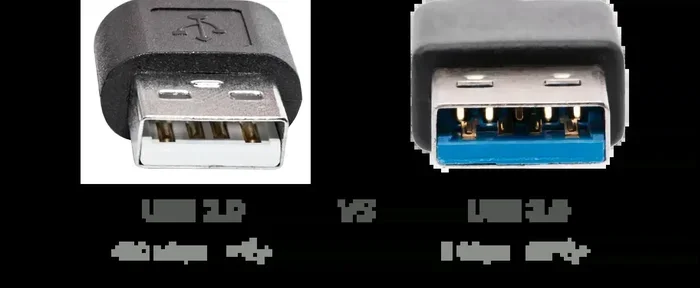
First, look at the color inside the port. USB 3.0 ports are usually blue on the inside. USB 2.0 ports are typically black or sometimes white. If you see blue, you are looking at a USB 3.0 port. If it is black or white, it is likely USB 2.0.
Second, check the markings near the port. Some computers have a small “SS” logo next to the port. “SS” stands for SuperSpeed, which means USB 3.0. If you see “SS,” you have found a USB 3.0 port.
Third, think about what your computer is. Most laptops made after 2012 include at least one USB 3.0 port. Desktop computers from the same era usually have a mix of both. If you have an older machine, it might only have USB 2.0 ports.
Can You Plug a USB 2.0 Device Into a USB 3.0 Port?
Yes, you can. USB 3.0 is backward compatible with USB 2.0 devices. This means if you plug a USB 2.0 flash drive into a USB 3.0 port, it will work. However, the transfer speed will be limited to USB 2.0 speeds. The port will not magically make your USB 2.0 device faster. It simply provides the connection.
The reverse is also true. You can plug a USB 3.0 device into a USB 2.0 port. It will work, but again, the speed will be limited to USB 2.0 levels. This backward compatibility is one of the best things about USB standards. You do not have to replace all your old devices when you upgrade your ports.
Common Mistakes People Make With USB Ports
Even though USB ports seem simple, people make mistakes all the time. Here are a few common ones to avoid.
Assuming All Ports Are the Same Speed
The biggest mistake is assuming every USB port on your computer is the same. Many computers have a mix of USB 2.0 and USB 3.0 ports. Plugging a fast external drive into a USB 2.0 port will give you slow speeds no matter how good the drive is. Always check which ports are USB 3.0 before you start a large file transfer.
Ignoring Cable Quality
A good USB port means nothing if your cable is low quality. Cheap or damaged cables can limit speeds and even cause connection issues. Use cables that match the USB standard you need. A USB 3.0 cable is required to get USB 3.0 speeds, even if you plug it into a USB 3.0 port.
Not Checking the Device Requirements
Before you buy an accessory, check what USB standard it needs. Some external drives specifically require USB 3.0 to reach their full speed. Plugging them into a USB 2.0 port will bottleneck the performance. Reading the specs before you buy saves you a lot of headaches.
Quick Tips for Getting the Best Performance From Your USB Ports
Want to get the most out of your USB ports? Follow these simple tips to improve your experience and keep your devices running smoothly.
- Always plug USB 3.0 devices into USB 3.0 ports. Look for the blue color or the “SS” marking to confirm.
- Use high-quality cables. Good cables ensure you get the full speed and power your port can deliver.
- Avoid daisy-chaining too many devices. Using a USB hub is fine, but too many devices on one port can slow things down.
- Keep your USB ports clean. Dust and debris can cause poor connections. A quick blow of air or a gentle brush helps.
- Update your drivers regularly. Outdated drivers can cause slow speeds and connection problems. Check your computer manufacturer’s website for updates.
- Consider an external enclosure or adapter. If you want to connect an M.2 NVMe SSD to your computer via USB, a quality adapter like an M.2 NVMe SSD to USB 3.1 adapter lets you take advantage of the faster USB connection. Similarly, an M.2 NVMe SSD enclosure adapter with USB 3.1 is a great way to turn an internal drive into a portable external drive with fast transfer speeds.
- Check your connection type. If you are using an M.2 NVMe SSD with a USB adapter, the M.2 NVMe SSD USB connection quality directly affects your transfer speeds, so always match the USB version to your drive’s capabilities.
These small habits add up over time. You will notice faster transfers, fewer connection drops, and longer device life when you treat your USB ports with a little care.
The Bottom Line
USB 2.0 and USB 3.0 ports are not the same. They differ in speed, power delivery, and internal design. USB 3.0 is faster, provides more power, and handles data in both directions at once. USB 2.0 is slower but still works fine for simple devices like keyboards and mice.
The good news is that both standards are backward compatible. You can mix and match USB 2.0 and USB 3.0 devices without any problems. The only catch is that the speed will always be limited to the slower standard in the connection.
Knowing the difference helps you make better choices. You will plug your devices into the right port, use the right cables, and get the best performance from your tech. Next time you reach for a USB port, take a second to check if it is USB 2.0 or USB 3.0. That small habit can save you a lot of waiting time.
Take a moment to look at your own computer right now. Count how many USB 2.0 and USB 3.0 ports you have. You might be surprised by what you find. Once you know, you can plan your setups and connections much more effectively. Happy connecting!
Frequently Asked Questions
Can I use a USB 2.0 device in a USB 3.0 port?
Yes, you can. USB 3.0 is backward compatible with USB 2.0 devices. The device will work, but the data transfer speed will be limited to USB 2.0 levels. The port simply provides the connection and does not boost the speed of older devices.
How can I tell if my port is USB 2.0 or 3.0?
Look at the color inside the port. USB 3.0 ports are usually blue on the inside, while USB 2.0 ports are black or white. You can also look for an “SS” (SuperSpeed) logo next to the port, which indicates USB 3.0.
Does USB 3.0 charge devices faster than USB 2.0?
Yes, USB 3.0 provides more power than USB 2.0. USB 2.0 delivers up to 2.5 watts, while USB 3.0 delivers up to 4.5 watts. This means USB 3.0 ports can charge compatible devices faster and power more demanding accessories.
Do I need a special cable for USB 3.0 speeds?
Yes, you need a USB 3.0 cable to achieve USB 3.0 transfer speeds. Even if you plug into a USB 3.0 port, a USB 2.0 cable will limit your speeds. Always check that both your port and cable support the standard you need.
Are USB 3.0 cables backwards compatible with USB 2.0 devices?
Yes, USB 3.0 cables work with USB 2.0 devices. They are designed to be compatible with both standards. However, the transfer speed will still be limited to USB 2.0 speeds when connected to a USB 2.0 device or port.
What happens if I plug a USB 3.0 device into a USB 2.0 port?
The device will work, but it will operate at USB 2.0 speeds. You will not get the faster transfer rates that USB 3.0 offers. This can be especially noticeable when transferring large files or using external storage drives.