Difference Between 4ohm and 8ohm Speakers

The difference between 4ohm and 8ohm speakers comes down to electrical impedance and how much power your amplifier needs to drive them. 4ohm speakers pull more current and can sound louder with less voltage, but they need a sturdy amplifier. 8ohm speakers are easier on your gear and work well in most home systems. Picking the right impedance keeps your audio clean and protects your equipment.
Choosing the right speakers can feel confusing when you see numbers like 4ohm and 8ohm. These numbers are not just random labels. They tell you how much electrical resistance the speaker offers to the audio signal. That resistance is called impedance. If you understand impedance, you can match your speakers and amplifier better. That means better sound, safer operation, and fewer headaches later.
In this guide, we will break down the difference between 4ohm and 8ohm speakers in simple terms. You will learn what impedance really means, why it matters, and how to choose the best option for your setup. Whether you are building a home audio system, upgrading car speakers, or just curious about audio gear, this article will help you make a smart choice.
Key Takeaways
- Impedance matters: 4ohm and 8ohm speakers handle power differently, which changes how your amplifier works.
- Power draw: 4ohm speakers draw more current, so they need an amp that can handle the load safely.
- Compatibility: Always match speaker impedance with your amplifier to avoid distortion or damage.
- Sound output: Lower impedance can give more volume, but sound quality depends on many factors, not just ohms.
- Home vs car: 8ohm speakers are common in home audio, while 4ohm speakers are often used in car audio systems.
- Wiring changes impedance: Connecting speakers in series or parallel changes total impedance, so plan your setup carefully.
- Check labels: Read speaker and amplifier specs before buying to make sure they work well together.
📑 Table of Contents
- What Does Speaker Impedance Really Mean?
- The Core Difference Between 4ohm and 8ohm Speakers
- How Amplifier Matching Works in Real Life
- Wiring, Multi-Speaker Setups, and Impedance Changes
- Home Audio vs Car Audio: Different Needs, Different Choices
- How to Choose the Right Speaker Impedance for You
- Common Mistakes to Avoid
- Expert Insights and Practical Takeaways
What Does Speaker Impedance Really Mean?
Speaker impedance is the resistance a speaker gives to the flow of audio signals from your amplifier. It is measured in ohms, which is why you see labels like 4ohm or 8ohm. This number helps your amplifier know how hard it must work. A lower ohm rating usually means the speaker allows more current to pass through. A higher ohm rating usually means the speaker resists more current.
Think of impedance like a water pipe. A wider pipe lets more water flow with less effort. A narrower pipe needs more pressure to move the same amount of water. In audio, the amplifier is the pump, and the speaker is the pipe. If the speaker has lower impedance, the amplifier must supply more current. If the speaker has higher impedance, the amplifier can run with less strain.
Impedance is not the same as power handling. Power handling tells you how much energy a speaker can take before it risks damage. Impedance tells you how the speaker interacts with the amplifier. Both matter, but they are not the same thing. That is why you should always look at the full specification sheet before buying speakers.
Why Impedance Affects Amplifier Performance
Your amplifier is designed to work best within a certain impedance range. If the speaker impedance is too low, the amplifier may push too much current. That can cause overheating, distortion, or even shutdown. If the speaker impedance is too high, the amplifier may not deliver its full power. The sound may feel weak or underpowered.
This is why the difference between 4ohm and 8ohm speakers matters so much. It is not just about volume. It is about how safely and efficiently your system runs. A good match gives you cleaner sound and more reliable performance. A poor match can lead to frustration and expensive problems.
Common Impedance Ratings You Will See
Most consumer speakers fall into a few common impedance ranges. You will often see 4ohm, 6ohm, and 8ohm ratings. Some specialty speakers may use other values, but these three are the most common. Each one suits different types of systems and amplifiers.
Here is a simple comparison to help you understand the basic tradeoffs:
| Impedance | Typical Use | Amplifier Demand | Common Benefit |
|---|---|---|---|
| 4ohm | Car audio, some home speakers | Higher current demand | Can produce more output with a strong amp |
| 6ohm | Some home theater speakers | Moderate demand | Balances output and compatibility |
| 8ohm | Home audio, general use | Lower current demand | Easier to drive, broad compatibility |
This table gives you a quick snapshot, but real-world performance depends on your amplifier, your room, and your listening habits. The best choice is the one that fits your full system, not just the speaker alone.
The Core Difference Between 4ohm and 8ohm Speakers
The biggest difference between 4ohm and 8ohm speakers is how they draw power from an amplifier. A 4ohm speaker presents less resistance, so it can pull more current. An 8ohm speaker presents more resistance, so it draws less current for the same voltage. That simple difference affects loudness, amplifier stress, and system design.
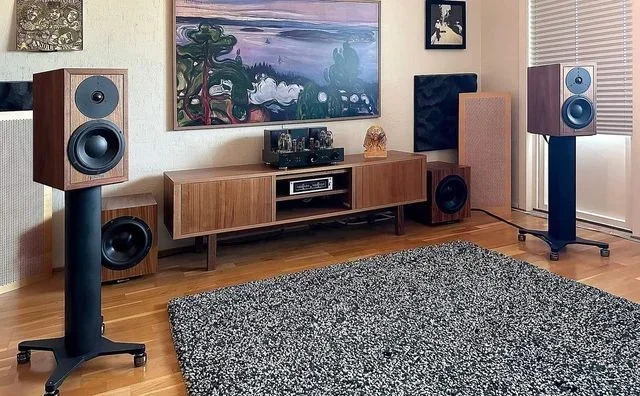
Visual guide about High fidelity speaker setup
Image source: i.pinimg.com
Many people assume lower impedance always means better sound. That is not true. Lower impedance can help a system produce more output, but only if the amplifier can handle it. If the amplifier is not built for low-impedance loads, the sound may distort or the amp may overheat. On the other hand, 8ohm speakers are often easier to pair with a wide range of amplifiers.
Power, Current, and Voltage in Simple Terms
Audio power depends on both voltage and current. Voltage is the push, and current is the flow. A 4ohm speaker allows more flow for a given push. That means an amplifier may deliver more power into 4ohm than into 8ohm, if the amp is designed for it. But more power does not automatically mean better sound quality.
An 8ohm speaker usually needs a different balance. It often runs well with amplifiers that provide steady voltage and stable output. This can make 8ohm speakers a safer choice for many home systems. They are widely used because they work comfortably with many receivers and integrated amplifiers.
Which One Is Louder?
This is one of the most common questions people ask. The short answer is that a 4ohm speaker can be louder in some setups, but not always. Loudness depends on speaker sensitivity too. Sensitivity tells you how efficiently a speaker turns power into sound. A highly sensitive 8ohm speaker can sound just as loud, or louder, than a less efficient 4ohm speaker.
So when comparing the difference between 4ohm and 8ohm speakers, do not look at impedance alone. Check sensitivity, amplifier capability, and your listening environment. A speaker that sounds great in one system may sound weak in another. The full picture matters more than a single number on the box.
When 4ohm Makes Sense
4ohm speakers are often chosen when the goal is maximum output from a powerful amplifier. They are common in car audio because vehicle systems are designed for that kind of demand. They can also be useful in larger rooms when you want strong performance from a capable amp. But they are not automatically the best choice for every setup.
If you use 4ohm speakers, make sure your amplifier supports low-impedance loads. Check the amplifier manual or spec sheet. Look for notes about 4ohm stability or minimum impedance ratings. This step helps you avoid strain on the amplifier and keeps your system running smoothly.
When 8ohm Makes Sense
8ohm speakers are a very common choice for home audio. They are often easier to drive and more forgiving with standard amplifiers. If you want a simple, reliable setup, 8ohm speakers are usually a safe starting point. They work well with many receivers, bookshelf systems, and home theater configurations.
If you are new to audio, 8ohm speakers can be less stressful to match. You do not need to worry as much about current demand. That makes them a practical choice for everyday listening, movies, and casual music use. Of course, you still need to check compatibility, but the margin for error is often wider.
How Amplifier Matching Works in Real Life
Matching speakers and amplifiers is one of the most important parts of building a good audio system. The difference between 4ohm and 8ohm speakers becomes especially important here. Your amplifier should be able to handle the speaker impedance without strain. If it cannot, you may hear clipping, overheating, or unstable performance.
A good match does more than prevent damage. It also helps your system sound its best. When an amplifier works within its comfortable range, it can deliver cleaner audio at different volumes. That means better bass control, clearer vocals, and more reliable performance during long listening sessions.
Checking Amplifier Specs Before You Buy
Before you buy speakers, look at your amplifier or receiver specifications. Find the impedance range it supports. Some amplifiers are fine with 8ohm and 6ohm loads but may not be ideal for 4ohm. Others are built to handle 4ohm safely. The manufacturer notes matter a lot here.
Also pay attention to power output ratings. These numbers can change depending on impedance. An amplifier may deliver one power level into 8ohm and a different level into 4ohm. That does not mean the 4ohm rating is always better. It just shows how the amplifier behaves under different loads.
Signs of a Poor Match
If your system is not well matched, you may notice a few warning signs. These can include:
- Distortion at higher volumes: The sound gets harsh or muddy when you turn it up.
- Amplifier overheating: The amp feels hot sooner than expected.
- Shutting down: The system turns off during heavy use.
- Weak bass response: The low end feels loose or underpowered.
- Uneven sound: Some tracks sound fine, while others sound strained.
If you notice these issues, revisit your speaker and amplifier pairing. Sometimes the fix is as simple as changing the speaker impedance or using a more suitable amplifier. Other times, you may need to adjust wiring or reduce the number of speakers on one channel.
Wiring, Multi-Speaker Setups, and Impedance Changes
Impedance can change when you connect more than one speaker to an amplifier. This is a key point many people miss. The difference between 4ohm and 8ohm speakers is not the only thing that affects your system. How you wire them also matters. Series and parallel wiring change the total load the amplifier sees.
In series wiring, speaker resistances add up. In parallel wiring, the total impedance drops. That means two 4ohm speakers wired in parallel can create a much lower load than expected. If your amplifier is not ready for that, problems can follow. So if you plan to connect multiple speakers, calculate the total impedance first.
Why Wiring Mistakes Happen
Wiring mistakes happen because people focus on the speakers and forget the overall load. They may connect several speakers to one channel without checking impedance. That can make the amplifier work harder than intended. It can also create uneven sound if the speakers are not matched well.
Another common issue is mixing speaker types on the same channel. Different speakers may have different impedance curves, sensitivity, or tonal character. That can make one speaker dominate the sound. For the best results, keep your setup as balanced as possible.
Practical Tips for Multi-Speaker Setups
If you are wiring more than one speaker, keep these tips in mind:
- Check total impedance: Make sure the combined load fits your amplifier’s range.
- Use the right wiring method: Series and parallel wiring give different results.
- Keep speakers similar: Use matching speakers when possible for cleaner sound.
- Avoid overloading one channel: Spread the load if your system allows it.
- Test at low volume first: Start gently and listen for stress or distortion.
If you want to learn more about safe wiring methods, you may find it helpful to read about wiring speakers in series and parallel. Understanding these basics can save you from common setup problems.
Home Audio vs Car Audio: Different Needs, Different Choices
The difference between 4ohm and 8ohm speakers also shows up when you compare home audio and car audio. These systems are built differently, so they often use different speaker standards. Home audio usually leans toward 8ohm because it works well with common amplifiers and receivers. Car audio often uses 4ohm speakers because vehicle systems are designed for that environment.
In a car, space is limited, power sources are different, and background noise is higher. That means car audio systems often need speakers that can work efficiently with the available amplifier setup. In a home, you usually have more flexibility and a quieter listening space. So the choice often comes down to convenience, amplifier design, and personal preference.
Why Car Systems Often Use 4ohm Speakers
Car audio systems are built around compact amplifiers and limited electrical resources. 4ohm speakers can help these systems produce strong output when paired with the right amplifier. They are a practical fit for many vehicle installations. That said, not every car system needs 4ohm speakers, and not every 4ohm speaker is right for every vehicle.
If you are upgrading car speakers, check whether your amplifier or head unit can handle the impedance. A mismatch can cause weak sound or unnecessary stress on the system. It is always better to verify first than to guess later.
Why Home Systems Often Prefer 8ohm Speakers
Home audio gear is often designed for broader compatibility. 8ohm speakers fit that goal nicely. They are easier to pair with many receivers and integrated amplifiers. They also tend to be less demanding, which makes them appealing for everyday use. If you want a straightforward home setup, 8ohm is often a comfortable choice.
That does not mean 8ohm is always superior. It simply means it is widely supported and easy to work with. If you already have an amplifier that handles 4ohm well, you may have more options. The best choice depends on your gear and your goals.
How to Choose the Right Speaker Impedance for You
Choosing between 4ohm and 8ohm speakers is not about picking a winner. It is about picking the right match for your system. Start by looking at your amplifier. Then think about how you listen. Finally, consider your room, your speakers, and your budget. The best setup is the one that works well as a whole.
If you want a simple path, 8ohm speakers are often the easiest to use in home audio. If you have a strong amplifier and want more output potential, 4ohm speakers may make sense. If you are unsure, check the amplifier manual and compare it with the speaker specifications. That small step can prevent big problems later.
Questions to Ask Before Buying
Before you buy, ask yourself a few simple questions:
- What impedance does my amplifier support?
- Do I need more output, or do I want easier compatibility?
- Will I connect one speaker per channel or multiple speakers?
- What is the speaker sensitivity?
- Do I plan to use this system for music, movies, or both?
These questions help you focus on what matters most. Impedance is important, but it is only one part of the puzzle. Sensitivity, amplifier strength, and your listening habits all play a role too.
A Simple Buying Checklist
Use this quick checklist when comparing options:
- Match impedance: Confirm the speaker load fits your amplifier.
- Check sensitivity: Look for efficient speakers if you want strong output.
- Verify power handling: Make sure the speaker can handle your amp’s output.
- Think about placement: Room size and speaker position affect sound.
- Plan for wiring: Decide how many speakers you will connect.
- Read reviews: Real-world feedback can reveal practical strengths and weaknesses.
If you are also comparing speaker designs, you might find it useful to explore the difference between component speakers and coaxial speakers. Different designs can change the sound and installation experience, even when impedance is the same.
Common Mistakes to Avoid
Even experienced buyers can make mistakes when dealing with speaker impedance. The difference between 4ohm and 8ohm speakers is easy to understand on paper, but real setups can be trickier. Avoid these common errors to keep your system safe and enjoyable.
Mistake 1: Assuming Lower Ohms Always Mean Better Performance
Lower impedance does not guarantee better sound. It only means the speaker draws current differently. Sound quality depends on many things, including speaker design, amplifier quality, room acoustics, and sensitivity. Always judge the whole system, not just one number.
Mistake 2: Ignoring Amplifier Limits
Some amplifiers are not meant for low-impedance loads. Using 4ohm speakers with an amplifier that cannot handle them may cause problems. Always check the amplifier’s minimum impedance rating and follow the manufacturer’s guidance.
Mistake 3: Wiring Speakers Without Checking Total Load
Multiple speakers can change the impedance your amplifier sees. If you connect them without checking the total load, you may create a stressful situation for the amp. Calculate the combined impedance before you finalize the wiring.
Mistake 4: Mixing Up Power Handling and Impedance
Power handling and impedance are related to different things. One tells you how much energy the speaker can handle. The other tells you how the speaker interacts with the amplifier. Confusing the two can lead to poor purchases and mismatched gear.
Mistake 5: Buying Based on Impedance Alone
Impedance is important, but it should not be the only factor. Think about sound quality, size, placement, sensitivity, and use case. A well-matched system usually sounds better than one chosen for a single specification.
Expert Insights and Practical Takeaways
If you want the shortest path to a good decision, keep this in mind: match your speaker impedance to your amplifier, and do not chase a single number. The difference between 4ohm and 8ohm speakers is real, but it is only one piece of the audio puzzle. A balanced setup usually gives the best results.
Also remember that speaker choice affects more than volume. It affects reliability, comfort of use, and how forgiving your system is when you turn things up. If you want a relaxed home setup, 8ohm speakers are often a smart starting point. If you have a capable amplifier and need more output potential, 4ohm speakers may be worth considering.
Finally, think about the long term. A system that is easy to drive will usually be more enjoyable over time. You do not want to worry about overheating, distortion, or constant adjustments. Good matching gives you more freedom to enjoy the music or movie without technical stress.
Key Takeaways
- Check amplifier compatibility first: The safest system is one that fits your amplifier’s impedance range.
- Look beyond ohms: Sensitivity, power handling, and speaker design all matter.
- Plan your wiring: Multiple speakers can change total impedance quickly.
- Choose based on use case: Home audio and car audio often have different needs.
- Start simple: If unsure, 8ohm speakers are often easier for general home use.
Final Thoughts
Understanding the difference between 4ohm and 8ohm speakers helps you build a system that sounds better and lasts longer. You do not need to become an electrical engineer to make a smart choice. You just need to know the basics, check your equipment, and choose what fits your listening goals. With the right match, your speakers can do what they do best: deliver clear, enjoyable sound.
Frequently Asked Questions
What is the main difference between 4ohm and 8ohm speakers?
The main difference between 4ohm and 8ohm speakers is how much electrical resistance they offer to the amplifier. A 4ohm speaker draws more current, while an 8ohm speaker draws less current for the same voltage. That affects amplifier load, compatibility, and how the system performs in real use.
Can I use 4ohm speakers with an 8ohm amplifier?
Sometimes you can, but only if the amplifier supports low-impedance loads. If the amplifier is not designed for 4ohm speakers, it may overheat or distort. Always check the amplifier specifications before connecting 4ohm speakers.
Are 4ohm speakers better than 8ohm speakers?
Not always. 4ohm speakers are not automatically better than 8ohm speakers. They can work well with powerful amplifiers, but sound quality depends on many factors, including sensitivity, design, and system matching. The best choice depends on your equipment and listening needs.
Why are 8ohm speakers so common in home audio?
8ohm speakers are common in home audio because they are easier to drive and work well with many amplifiers and receivers. They place less demand on the amplifier, which makes them a practical choice for everyday home listening.
Do 4ohm speakers sound louder than 8ohm speakers?
Not necessarily. A 4ohm speaker can produce more output in some systems, but loudness also depends on speaker sensitivity and amplifier power. A highly sensitive 8ohm speaker can sound just as loud or louder than a less efficient 4ohm speaker.
How do I know which speaker impedance is right for me?
Start by checking your amplifier’s supported impedance range, then consider how you listen and where the speakers will be used. If you want broad compatibility in a home setup, 8ohm is often a safe choice. If you have a strong amplifier and need more output potential, 4ohm may be worth considering.