Do Disposable Cameras Get Ruined in Airport Security

Wondering if airport scanners will trash your disposable camera? In most cases the film survives the security line, but high‑intensity X‑ray machines and rough handling can cause fogging or exposure. Follow our simple travel tricks to keep your snaps safe from start to finish.
Key Takeaways
- Standard X‑ray scanners are usually safe: Most commercial airport machines use low‑dose radiation that doesn’t ruin a fresh disposable camera.
- High‑energy scanners can fog film: Some international or cargo scanners emit stronger rays that may partially expose the film.
- Physical handling matters: Rough bag drops, pressure, and temperature swings are common culprits of ruined images.
- Use protective tricks: Carry the camera in a lead‑lined bag, request a hand‑inspection, or ship the film separately.
- Know your camera’s limits: Check the expiration date and how many exposures are left – old or heavily used film is more vulnerable.
- Plan ahead for development: Choose a lab that accepts travel‑exposed film and ask about any special handling.
- Travel with confidence: With a few easy steps you can enjoy the nostalgic charm of disposable cameras without fear of airport ruin.
📑 Table of Contents
- Introduction: The Nostalgia of Disposable Cameras Meets Modern Travel
- How Airport X‑Ray Machines Work (And Why They Usually Aren’t a Threat)
- Real‑World Experiences: Stories From Travelers
- Physical Risks Beyond X‑Rays
- Practical Tips to Protect Your Disposable Camera
- What Happens If Your Camera Does Get Ruined?
- Conclusion: Travel Smart, Snap Happy
Introduction: The Nostalgia of Disposable Cameras Meets Modern Travel
There’s something magical about snapping a picture with a disposable camera. You load it, point, click, and wait weeks for the prints to appear. The surprise of a perfectly exposed shot or a happy accident adds to the fun. But when you’re headed across borders, a common worry pops up: do disposable cameras get ruined in airport security?
Travelers love the low‑cost, low‑tech vibe of these cameras, yet airports use X‑ray machines, metal detectors, and sometimes even random bag checks. The question is whether those security steps can fog or expose the film before you even reach your destination. In this guide we’ll break down the science, share real‑world stories, and give you practical tips so you can travel with confidence.
How Airport X‑Ray Machines Work (And Why They Usually Aren’t a Threat)
What the scanner actually does
Most passenger‑screening X‑ray machines emit a low‑energy beam that creates a grayscale image of the bag’s contents. The radiation level is measured in millisieverts (mSv); a typical scanner uses about 0.1 mSv per pass – far less than a dental X‑ray.
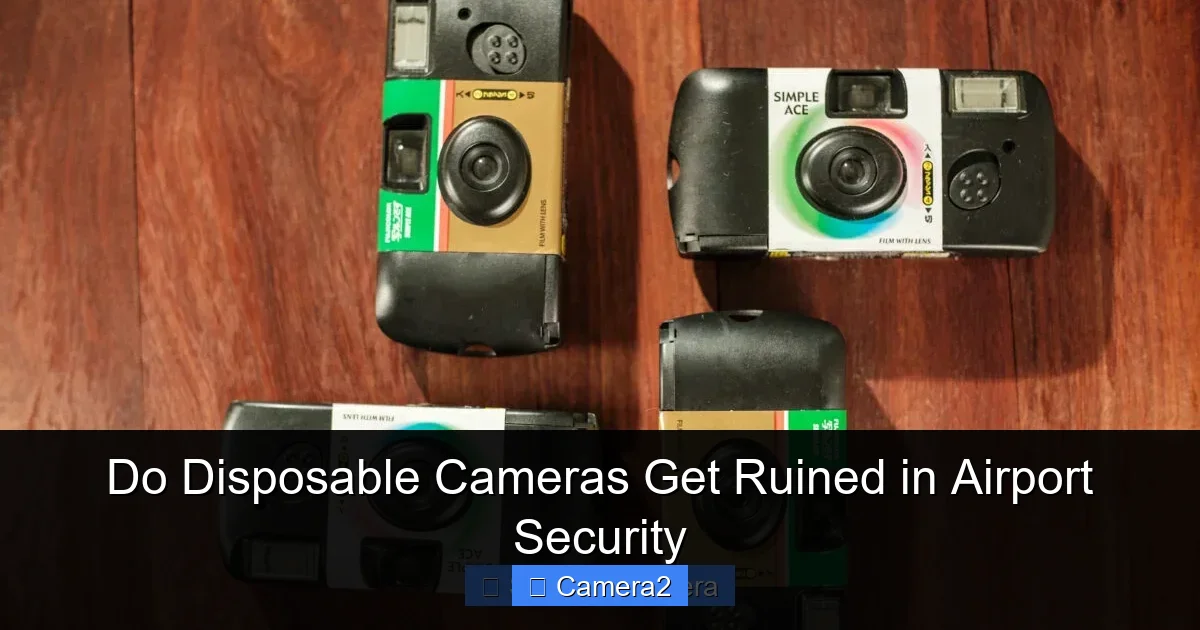
Visual guide about Do Disposable Cameras Get Ruined in Airport Security
Image source: techsynchron.com
Film’s sensitivity to X‑rays
Photographic film is made of silver halide crystals that react to light. X‑rays can also trigger this reaction, but only at higher doses. A fresh roll of 35 mm film needs roughly 10 mSv to show noticeable fogging. Since a single pass through a standard scanner is only 0.1 mSv, the risk is minimal.
International variations
Some countries use higher‑energy scanners for cargo or for security‑tight airports. Those machines can deliver 1 mSv or more per pass, which starts to approach the fog‑threshold for very sensitive film (ISO 800 or higher). If you’re traveling to regions with stricter security, the odds of a “ruined” camera rise slightly.
Real‑World Experiences: Stories From Travelers
Case study: The US‑to‑Europe flight
John, a photography hobbyist, packed three disposable cameras in his carry‑on for a two‑week European tour. After clearing security in New York, London, and Paris, he developed the film back home. Only one of the three showed mild fogging, and that camera had been placed at the bottom of a packed backpack, receiving extra pressure.
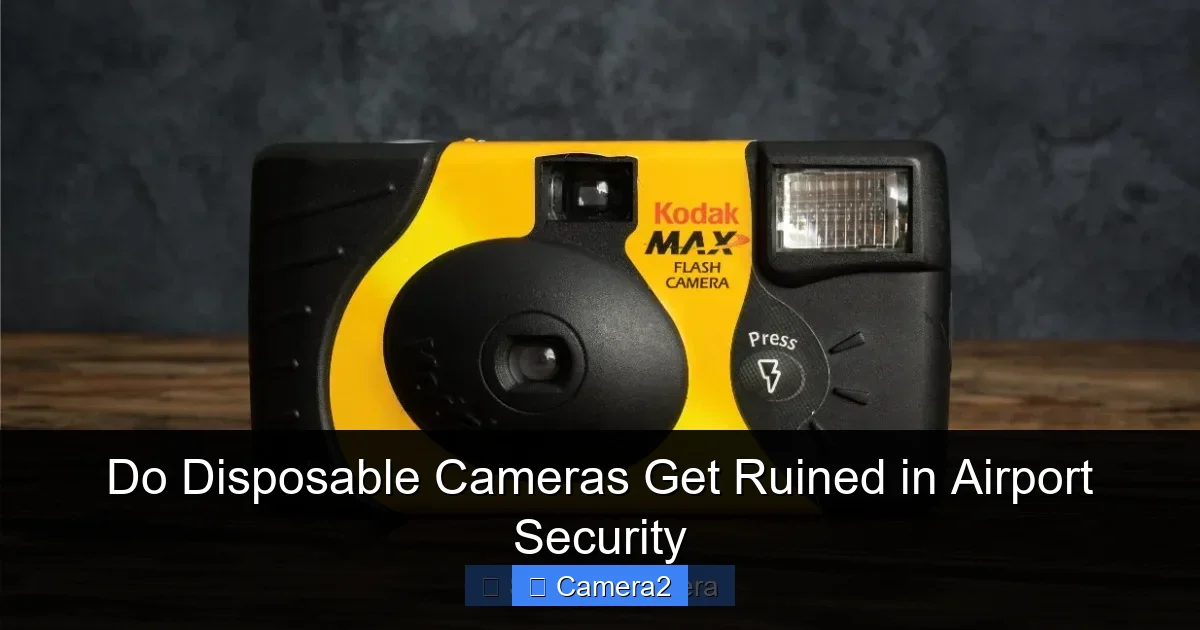
Visual guide about Do Disposable Cameras Get Ruined in Airport Security
Image source: techsynchron.com
Case study: The Asian cargo scanner
Maria shipped a batch of disposable cameras as checked luggage from Tokyo to Sydney. The airline used a high‑energy cargo scanner, and after development, two of the five cameras were completely blank. The airline confirmed that the scanner’s dose was higher than typical passenger equipment.
What these stories teach us
Hand‑carried cameras that go through standard passenger scanners are usually fine. Problems arise when cameras face high‑energy scanners or are squeezed under heavy luggage.
Physical Risks Beyond X‑Rays
Pressure and impact
Disposable cameras are built with a thin plastic shell. When a bag is tossed into the overhead bin or the camera is placed at the bottom of a suitcase, the internal film can shift, causing scratches or light leaks.

Visual guide about Do Disposable Cameras Get Ruined in Airport Security
Image source: techsynchron.com
Temperature extremes
Airport hold areas can get hot (up to 35 °C/95 °F) or cold (below 0 °C/32 °F). Extreme heat can accelerate chemical reactions in the film, leading to increased grain or color shifts. Cold can make the emulsion brittle.
Moisture
Condensation is a hidden danger. If you travel from a dry climate to a humid one and the camera is still in its sealed package, moisture can seep in and cause fogging.
Practical Tips to Protect Your Disposable Camera
Carry‑on vs. checked luggage
Always keep the camera in your carry‑on. This way you control how many times it passes through an X‑ray machine and you can request a hand inspection if you’re nervous.
Ask for a hand inspection
Security officers are used to requests for “film” or “photographic equipment.” Politely ask, “Could you please hand‑inspect this camera?” Most will oblige without issue.
Use a lead‑lined bag
Specialized film bags contain a thin layer of lead that blocks X‑ray exposure. They’re inexpensive and can be purchased online. Place the entire camera inside before you go through the scanner.
Pack smartly
- Put the camera in the middle of your bag, surrounded by soft clothes.
- Avoid placing heavy items on top of it.
- Keep it away from direct sunlight inside the cabin.
Mind the expiration date
Film degrades over time. A camera that’s past its expiration date is more vulnerable to any radiation or heat exposure. Check the date on the box or on the camera itself. For more on film lifespan, see our guide on how long disposable cameras last.
Consider shipping the film separately
If you’re traveling long‑haul with multiple cameras, you might ship the undeveloped film to your destination via a trusted courier. This eliminates the need to carry them through security altogether.
What Happens If Your Camera Does Get Ruined?
Partial fogging
If only a few frames are affected, you can still salvage the rest. Most labs will develop the entire roll and give you the usable prints.
Complete exposure
When the film is fully fogged, the negatives turn gray. Some labs offer “reversal” services to extract any faint images, but the results are limited.
Choosing a lab
Look for a lab that understands travel‑exposed film. They may adjust development times to compensate for temperature variations. Many online services have FAQs about “travel film” – a quick search can save you disappointment.
Conclusion: Travel Smart, Snap Happy
So, do disposable cameras get ruined in airport security? The short answer is: usually no, as long as you’re traveling with a standard passenger scanner and you protect the camera from physical stress. The longer answer involves understanding the type of scanner, being aware of temperature and pressure risks, and using a few simple tricks like hand inspections and lead‑lined bags.
Armed with this knowledge, you can enjoy the retro charm of disposable cameras on any trip – from a weekend city break to an intercontinental adventure. Pack wisely, ask politely, and let the film do what it does best: capture moments that last long after the flight lands.
Frequently Asked Questions
Will a single X‑ray scan at the security checkpoint damage a disposable camera?
In most cases, no. Standard passenger scanners use low‑dose X‑rays that are far below the level needed to fog film.
What should I do if I’m traveling to a country with high‑energy cargo scanners?
Consider shipping the undeveloped film ahead of time or placing the camera in a lead‑lined bag and requesting a hand inspection.
Can temperature changes in the airport affect my disposable camera?
Yes, extreme heat can increase grain and color shifts, while cold can make the film brittle. Keep the camera in a temperature‑stable part of your carry‑on.
How many pictures can I expect from a typical disposable camera?
Most disposable cameras hold 24–36 exposures. For exact numbers, see our article on how many pictures are in a disposable camera.
Do disposable cameras go bad if they sit on a shelf for years?
Film ages, and after the expiration date it becomes more sensitive to light, heat, and radiation. Read more about this in do disposable cameras go bad.
Is it worth bringing multiple disposable cameras on a long trip?
Yes, especially if you’re unsure about exposure risks. Having backups ensures you still get photos even if one roll gets partially ruined.