Fastest Gaming Monitors
Fastest gaming monitors deliver the lowest input lag and highest refresh rates, giving competitive players a critical edge in fast-paced games. These fastest gaming monitors feature refresh rates of 240Hz, 360Hz, or even higher, paired with ultra-fast response times of 1ms or less. Whether you’re chasing victory in FPS titles or enjoying smooth visuals in open-world games, a top-tier gaming monitor can transform your entire experience.
Key Takeaways
- Choose a 1ms response time to eliminate ghosting and enjoy crisp, blur-free gameplay.
- Prioritize high refresh rates like 240Hz or 360Hz for smoother motion in competitive games.
- Match your GPU capability to the monitor’s refresh rate to avoid wasting performance.
- Consider panel type carefully — IPS offers color accuracy, while TN delivers the fastest speeds.
- Check input lag specs before buying, as lower lag gives you a real competitive edge.
- Variable refresh rate technology like FreeSync or G-Sync prevents screen tearing during intense gaming sessions.
- Test real-world performance through reviews, since manufacturer specs don’t always reflect actual gaming experience.
📑 Table of Contents
- What Makes a Gaming Monitor Fast
- Top Fastest Gaming Monitors You Can Buy
- Key Features to Look for in Fast Gaming Monitors
- Fastest Gaming Monitors: FPS and Refresh Rate Explained
- Best Deals on Fast Gaming Monitors
- Common Mistakes When Buying Fast Gaming Monitors
- Final Verdict on the Fastest Gaming Monitors
What Makes a Gaming Monitor Fast
When we talk about the fastest gaming monitors, we are really talking about how quickly your screen can keep up with your hands and your brain. A fast monitor means less blur, less delay, and a much smoother experience during intense gameplay. Whether you are squad stacking in a shooter or exploring a vast open world, speed matters.
So what actually makes a monitor fast? It comes down to a few key specs. The refresh rate measures how many frames per second your screen can display. A 144Hz monitor shows 144 frames every second, while a 240Hz or 360Hz monitor pushes far beyond that. Then there is response time, which is how fast a pixel can change from one color to another. Lower numbers here mean less ghosting and motion blur.
Other factors include panel type, adaptive sync technology, and input lag. Together, these specs determine whether your monitor can truly keep up with modern GPUs and fast-paced games. Understanding these basics puts you ahead of most buyers.
Top Fastest Gaming Monitors You Can Buy
Let us get into the good stuff. Here are some of the fastest gaming monitors available right now. We looked at refresh rates, response times, panel tech, and real-world performance to narrow this list down.
Best Overall: High-Speed 27-Inch QD-OLED
If you want the absolute fastest experience with stunning visuals, a 27-inch QD-OLED monitor with a 240Hz or 360Hz refresh rate is hard to beat. These panels deliver near-instant pixel response, incredible contrast, and vibrant colors. They handle 4K gaming beautifully while keeping motion crystal clear.
The downside? Price. These are premium products. But if you have the budget and want the best of the best, this is the category to watch. Models from Samsung and LG lead this space right now.
Best for Competitive Players: 360Hz IPS Displays
Competitive players know that every millisecond counts. A 360Hz IPS monitor gives you the highest frame output with accurate colors and wide viewing angles. Brands like ASUS ROG, Alienware, and Acer Predator offer excellent options here.
These monitors are typically 24 to 27 inches and run at 1080p or 1440p resolution. That keeps your GPU from being overwhelmed, so you can push maximum frame rates consistently. If you play competitive gaming titles like Valorant or CS2, this is the sweet spot.
Best Budget Speed Pick: 144Hz to 165Hz Monitors
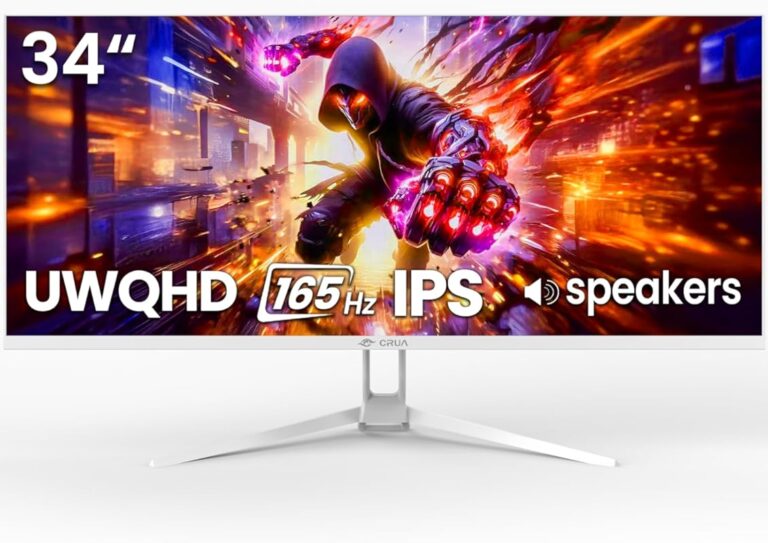
You do not need to spend a fortune to get a fast gaming monitor. Plenty of budget gaming monitors offer 144Hz or even 165Hz refresh rates at very reasonable prices. These are perfect for players who want a noticeable upgrade over a standard 60Hz display without breaking the bank.
Look for models with 1ms response time and FreeSync or G-Sync support. You can find great deals on gaming monitors under $500 that still deliver smooth, responsive gameplay.
Key Features to Look for in Fast Gaming Monitors
Not all fast monitors are created equal. Before you buy, make sure you know what features actually matter for your setup.
Refresh Rate and Frame Output
The refresh rate is the headline number, but it only works if your graphics card can push enough frames. Here is a quick breakdown:
- 144Hz: Great for most gamers. Easy to reach with a mid-range GPU.
- 165Hz to 240Hz: Ideal for competitive players with a strong GPU.
- 360Hz: Maximum speed. Requires a top-tier graphics card for best results.
Matching your monitor to your GPU is critical. A 360Hz screen is useless if your card can only average 120 frames in-game.
Response Time and Motion Clarity
Response time tells you how fast pixels switch. Look for 1ms GtG (gray-to-gray) or faster. Faster response means less motion blur and cleaner motion during fast sequences.
Be careful of marketing claims though. Some brands list “1ms” as a peak number that does not reflect real-world performance. Check reviews for actual measured response times.
Adaptive Sync Technology
Adaptive sync is a must-have. It matches your monitor’s refresh rate to your GPU’s frame output in real time. This eliminates screen tearing and stuttering.
Two main options exist:
- NVIDIA G-Sync: Excellent performance, but requires compatible NVIDIA cards and sometimes a hardware module.
- AMD FreeSync: Works with AMD cards and many modern NVIDIA cards too. More widely supported and often included at no extra cost.
Panel Type Matters
Different panel types bring different strengths to the table. Here is a quick comparison:
| Panel Type | Speed | Color Accuracy | Best For |
|---|---|---|---|
| TN | Fastest | Decent | Competitive gaming |
| IPS | Very Fast | Excellent | Mixed gaming and content |
| VA | Moderate | Great contrast | Immersive single-player |
| QD-OLED | Extremely Fast | Outstanding | Premium all-around |
TN panels used to dominate the speed category, but modern IPS and OLED panels have caught up and even surpassed them in many cases. Today, QD-OLED leads the pack for both speed and picture quality.
Fastest Gaming Monitors: FPS and Refresh Rate Explained
One of the most common questions we get is about the relationship between frame rate (FPS) and monitor refresh rate. Let us clear that up simply.
Your game runs at a certain frame rate, measured in FPS. Your monitor displays at a certain refresh rate, measured in Hz. For the smoothest experience, you want these two numbers to be as close as possible.
Here is an example. If your GPU pushes 200 FPS in a game, but your monitor only runs at 144Hz, you are missing 56 frames per second. That is wasted performance. On the flip side, if your monitor runs at 360Hz but your GPU only delivers 150 FPS, you are paying for speed you cannot use.
For the best results, pair your fast gaming monitor with a GPU that can comfortably hit or exceed the monitor’s maximum refresh rate in your favorite titles. This is where checking best gaming monitors for FPS can help you find models designed specifically for high frame output.
How to Test Your Setup
Want to know if your current setup is holding you back? Try these steps:
- Run a benchmark or demanding game at your target resolution.
- Check your average FPS using an overlay like GeForce Experience or AMD Software.
- Compare your FPS to your monitor’s refresh rate.
- If FPS is well below refresh rate, consider lowering settings or upgrading your GPU.
This simple check ensures you are actually using the speed your monitor offers.
Best Deals on Fast Gaming Monitors
Speed does not have to mean overpriced. There are excellent fast gaming monitors at every price tier. Here are some practical tips for finding the best value.
Where to Shop
Major retailers like Best Buy, Amazon, and Newegg run frequent sales on monitors. If you are hunting for a deal, checking gaming monitors under $500 can lead you to some surprisingly fast options. Retailers also clear out older stock when new models launch, which creates opportunities for buyers.
Timing Your Purchase
Monitor prices tend to drop around major shopping events like Black Friday, Prime Day, and back-to-school season. Setting price alerts on sites like Honey or CamelCamelCamel helps you catch the lowest price.
Quick Tips for Getting the Best Deal
- Compare prices across at least three retailers before buying.
- Check for open-box or refurbished options at Best Buy or manufacturer outlets.
- Do not ignore previous-generation models. A last-year’s 240Hz monitor often outperforms this year’s 165Hz model at a lower price.
- Look for bundles that include a GPU or accessories.
Common Mistakes When Buying Fast Gaming Monitors
Even experienced buyers make mistakes. Here are a few we see often.
Chasing the highest refresh rate without checking GPU capability. As we discussed, a 360Hz monitor is only as fast as your system allows. Make sure your hardware can keep up before spending extra on top-tier refresh rates.
Ignoring response time claims. Marketing materials often show the best-case scenario. Real-world response times can be higher. Look for trusted reviews that measure actual performance.
Overlooking cable and port requirements. High refresh rates at high resolutions need the right cables. A DisplayPort 1.4 connection is often required for 1440p at 240Hz or higher. Make sure your GPU and monitor support the needed bandwidth.
Forgetting about ergonomic setup. A super fast monitor does not help if it is not positioned correctly. Adjust height, tilt, and distance for comfortable long gaming sessions.
Final Verdict on the Fastest Gaming Monitors
Choosing the fastest gaming monitor comes down to understanding your needs, your budget, and your hardware. For pure speed, 360Hz IPS or QD-OLED panels lead the market. For competitive players, 240Hz to 360Hz at 1080p or 1440p hits the sweet spot. For budget-conscious gamers, 144Hz to 165Hz monitors still deliver a huge upgrade over 60Hz.
Remember to match your monitor with a capable GPU, use adaptive sync, and pay attention to real-world reviews rather than marketing numbers. Speed is exciting, but it means nothing if the rest of the experience does not support it.
The gaming monitor market moves fast, with new models launching every few months. Stay informed, watch for sales, and do not be afraid to invest in quality. A great monitor can transform how you play, and the right fast gaming monitor can give you the edge you have been looking for. Take your time, do the research, and enjoy the upgrade.
Frequently Asked Questions
What Makes a Gaming Monitor Fast?
A fast gaming monitor is defined by its high refresh rate and low response time. The fastest gaming monitors offer refresh rates of 240Hz, 360Hz, or even higher, which means the screen updates more times per second for smoother motion. A low response time, typically 1ms, ensures that pixels change color quickly, reducing blur and ghosting during fast-paced gameplay.
What Is the Fastest Refresh Rate Available for Gaming Monitors?
The fastest refresh rate currently available for consumer gaming monitors is 500Hz, with several brands pushing the boundaries of speed. Most top-tier fastest gaming monitors on the market today offer 360Hz or 240Hz, which is already more than enough for competitive esports gaming. Higher refresh rates translate to smoother visuals, giving players a real edge in fast-paced shooters and racing games.
Are 360Hz Monitors Worth the Price?
For competitive gamers who play titles like Valorant, CS2, or Apex Legends, a 360Hz monitor can provide a noticeable advantage in spotting enemies faster. However, you will also need a powerful GPU to actually push frames at those high rates, so the investment goes beyond just the monitor. If you are a casual gamer, a 144Hz or 240Hz panel will still deliver an excellent experience at a much lower cost.
Do the Fastest Gaming Monitors Require a Powerful PC?
Yes, to truly take advantage of the fastest gaming monitors, you need a graphics card capable of rendering high frame rates. A monitor with a 360Hz refresh rate is pointless if your PC can only push 100 frames per second. Pairing a high-refresh monitor with a strong GPU like an RTX 4080 or RTX 4090 ensures you are getting every bit of performance out of your setup.
What Is Response Time and Why Does It Matter?
Response time measures how quickly a pixel can transition from one color to another, usually measured in milliseconds. The fastest gaming monitors feature a 1ms response time, which minimizes motion blur and ghosting during intense gaming sessions. A low response time is especially important in competitive shooters where every millisecond counts and quick visual clarity can mean the difference between winning and losing.
What Is the Difference Between 240Hz and 360Hz Monitors?
The main difference is the number of frames per second the monitor can display, with 360Hz showing 360 frames per second compared to 240 for a 240Hz panel. While the jump from 144Hz to 240Hz is very noticeable, the difference between 240Hz and 360Hz is more subtle and best appreciated by professional or competitive gamers. The fastest gaming monitors at 360Hz also tend to come with premium features like NVIDIA Reflex support and advanced panel technologies for the best overall experience.