Good Frequency Response for Speakers
Good frequency response for speakers defines how accurately your audio gear reproduces sounds across the full range of human hearing. When you understand this spec, you can pick gear that delivers clear vocals, tight bass, and crisp highs without harsh distortion. This guide breaks down the numbers, explains why flat response matters, and shows you how to match speakers to your room, music, and budget.
If you have ever compared two pairs of speakers and wondered why one sounds dull while the other feels sharp, the answer often lives in the frequency response. This spec tells you how a speaker handles different pitches, from the lowest rumble to the highest sparkle. When you know how to read it, you can shop with confidence and avoid gear that colors your music in ways you do not want.
Many buyers focus on wattage or brand names, yet the real story often sits in the graph. A well-designed speaker can sound balanced at moderate volume and still stay clear when the beat drops. In this guide, we will walk through what the numbers mean, what to look for in a chart, and how to choose the right sound for your space. You will also learn why room acoustics and placement can matter just as much as the hardware itself.
By the end, you will understand how to judge good frequency response for speakers in a way that fits your listening habits. Whether you stream playlists, mix tracks, or build a home theater, the same core ideas apply. Let us start with the basics and build from there.
Key Takeaways
- Human hearing range: Most adults hear from 20 Hz to 20 kHz, which sets the target for good frequency response for speakers.
- Flat is not always fun: A neutral curve gives accurate sound, but many listeners prefer a mild bass or treble lift for excitement.
- Room changes everything: Walls, floors, and furniture boost or cancel certain frequencies, so placement matters as much as the spec sheet.
- Size affects low end: Larger drivers and enclosures usually move more air, which helps with deep bass and overall output.
- Amplifiers matter: Proper power and impedance matching keep speakers controlled, especially during loud, dynamic passages.
- Measurements beat marketing: Frequency response graphs and independent tests reveal more than bold claims on a box.
- Match the gear to the job: Studio monitoring, home theater, and casual listening each call for different response goals.
📑 Table of Contents
- What Is Frequency Response and Why It Matters
- The Ideal Range: What Numbers Actually Matter
- Flat vs Tuned: Choosing the Right Curve for You
- How to Read a Frequency Response Graph
- Room, Placement, and Real-World Sound
- Matching Speakers to Your Use Case
- Power, Sensitivity, and Amplifier Matching
- Common Myths About Speaker Frequency Response
- Practical Buying Checklist
- Comparison Snapshot: Different Speaker Goals
- Conclusion
What Is Frequency Response and Why It Matters
Frequency response describes how a speaker reproduces different pitches across the audible spectrum. Think of it as a report card for bass, mids, and highs. A speaker with a smooth curve tends to sound even, while a spiky curve can make certain notes stand out too much. This matters because music, movies, and games all rely on a balanced presentation to feel natural and engaging.
The human ear typically hears from about 20 Hz to 20 kHz, though age and hearing health can narrow that range over time. A speaker that covers this range well can deliver deep bass, clear speech, and detailed cymbals without sounding strained. That is why people search for good frequency response for speakers before buying anything from desktop monitors to full home systems.
It helps to separate two ideas: range and balance. Range tells you the lowest and highest notes a speaker can reach. Balance tells you how even those notes sound at normal listening levels. A speaker might reach very low bass but sound boomy, or it might extend high but sound harsh. Both range and balance shape the final experience.
Key Terms You Should Know
Here are a few simple terms that come up often when reading spec sheets and reviews:
- Hz (Hertz): One cycle per second. Lower numbers mean lower pitches.
- kHz (Kilohertz): One thousand cycles per second. Higher numbers mean higher pitches.
- Flat response: A curve that stays even across frequencies, often used as a reference for accuracy.
- Tilt or curve: A gentle rise or fall in certain bands, which can make sound warmer or brighter.
- Roll-off: The point where output starts to drop, often shown as a decibel level per octave.
These terms give you a common language when comparing models. You do not need to become an engineer, but knowing the basics helps you read reviews with a sharper eye.
The Ideal Range: What Numbers Actually Matter
A common question is whether a speaker must hit 20 Hz to 20 kHz to sound good. The short answer is no, not always. What matters more is how the speaker behaves in the range you actually use. For most listeners, the sweet spot sits between roughly 40 Hz and 16 kHz for enjoyable music and clear dialogue. Deep sub-bass below 40 Hz can add impact, but it is not essential for every setup.
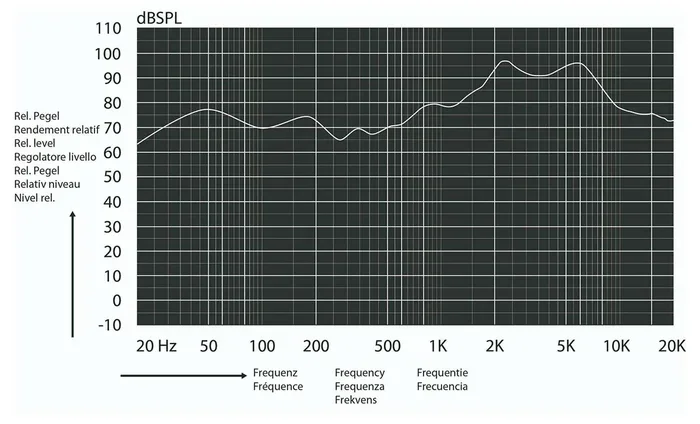
Visual guide about high quality speaker frequency response
Image source: soundlabsgroup.com.au
Good frequency response for speakers depends on the listening goal. If you want accurate monitoring for editing, a flatter curve with tight control is ideal. If you want fun home listening, a slight bass lift and a smooth treble can feel more exciting. If you watch movies, clear dialogue in the midrange and controlled low end help scenes feel immersive without muddiness.
Low Frequencies and Bass Performance
Bass is where many listeners feel the energy of a track. A speaker that starts to roll off around 50 Hz can still sound full for casual listening, especially in a small room. If you enjoy electronic music, hip-hop, or action movies, you may want extension closer to 40 Hz or lower. Keep in mind that very low bass often needs more air movement, so driver size and enclosure design play a big role.
Midrange Clarity for Vocals and Instruments
The midrange carries most of what we hear every day, including voices, guitars, and many keyboard sounds. A smooth midrange helps lyrics stay intelligible and keeps instruments from sounding thin or boxy. If a speaker dips too much in this region, vocals can recede. If it peaks too much, speech can sound nasal. Balanced mids usually make content easier to enjoy for longer sessions.
High Frequencies and Detail Retrieval
Highs add air, texture, and sparkle. Good extension into the upper range helps you hear drumstick clicks, string noise, and subtle room details. That said, overly bright highs can cause fatigue, especially on sensitive gear. A gentle, controlled treble usually feels more natural than a sharp peak that makes cymbals sound splattery.
Flat vs Tuned: Choosing the Right Curve for You
Flat response is often treated as the gold standard, but real-world listening is more personal. A perfectly flat speaker can reveal flaws in poorly mixed tracks, which is great for critical listening and editing. For relaxed listening, many people prefer a slightly tuned curve that adds warmth or excitement. Neither approach is wrong. The best choice depends on how you listen and what you value.
When people ask about good frequency response for speakers, they often want a simple rule. A useful rule is this: aim for smoothness first, then decide on a tilt. A smooth curve with a small bass lift or a mild treble rise can sound lively without becoming harsh. Sharp peaks or deep dips are usually the ones to watch out for, because they can create uneven sound and listener fatigue.
When Accuracy Wins
Accuracy matters when you need to trust what you hear. Content creators, editors, and audiophiles often prefer speakers that stay neutral so they can judge mixes or hear details without coloration. In these cases, a well-measured curve with low distortion and consistent off-axis response is a strong advantage. You want to hear the recording, not the speaker.
When Flavor Wins
Flavor matters when you want enjoyment first. A little extra bass can make pop and dance music feel punchier. A slight treble lift can make acoustic tracks feel more open. Many consumer speakers are tuned this way on purpose. If you listen casually, a tuned curve may keep you happier than a strictly neutral one.
How to Read a Frequency Response Graph
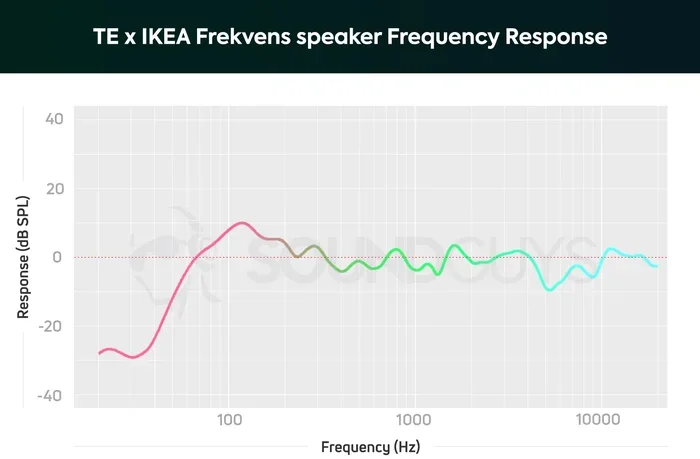
Graphs can look intimidating, but they are actually simple once you know what to check. The horizontal axis shows frequency from low to high. The vertical axis shows output level in decibels. A line that stays within a narrow band suggests even performance. A line that jumps around suggests uneven tonality. The goal is not perfection. The goal is balance and control.
It also helps to look at the conditions behind the graph. Some measurements are taken in anechoic chambers, which remove room effects. Others include room gain or near-field listening. A graph without context can mislead you. Always check whether the curve represents on-axis listening, a specific distance, or a smoothed average.
What to Look For
- Smooth regions: Gentle slopes usually sound natural and easy to live with.
- Sharp peaks: These can make certain notes stick out and cause harshness.
- Deep dips: These can make parts of the spectrum disappear, creating a hollow sound.
- Roll-off shape: A gradual drop often sounds better than an abrupt cliff.
- Consistency across angles: Good off-axis performance keeps the sound stable when you move around.
If you want a deeper dive into how these numbers translate to real sound, you can read more in our guide on what is good frequency response for speakers. It breaks down the same concepts in a practical, buyer-friendly way.
Room, Placement, and Real-World Sound
Even the best speaker can sound uneven in a bad room. Hard walls, bare floors, and large glass surfaces can bounce sound around and create bumps in the bass or brightness in the highs. Soft furniture, rugs, and curtains can calm those reflections. Placement also changes the result a lot, especially for low frequencies.
A speaker placed too close to a wall often gains bass because the boundary reinforces low notes. That can be useful if you want more fullness, but it can also make the sound boomy if the speaker is already strong in the low end. Moving a speaker away from corners and aiming it toward the listening spot often improves clarity and stereo imaging. Small adjustments can make a surprising difference.
Quick Placement Tips
- Start with the speakers forming an even triangle with your listening position.
- Keep tweeters near ear height for the most direct high-frequency path.
- Try small moves left, right, forward, and back, then listen for balance.
- Use rugs or soft surfaces to tame harsh reflections if the room feels bright.
- If bass feels muddy, pull the speakers away from walls and re-test.
If your setup includes a subwoofer, the interaction between main speakers and the sub matters too. Crossing over at the right point and phasing the sub correctly can smooth the transition between mid-bass and deep bass. For more practical ideas on building a balanced system, see our article on 5.1.4 speakers with good bass.
Matching Speakers to Your Use Case
Different jobs call for different sound goals. A desktop monitor for editing should stay honest and detailed. A set of bookshelf speakers for casual listening can lean a little warmer. A home theater setup needs clear dialogue, controlled bass, and enough output for movie scenes. Knowing your main use case makes the search much easier.
Good frequency response for speakers is not one universal curve. It is a fit between the speaker, the room, and the way you listen. If you mostly stream playlists in a bedroom, you may value smooth mids and easy bass more than extreme extension. If you mix music, you may care more about neutrality and consistent off-axis behavior. If you build a gaming rig, you may want clear highs for footsteps and a tight low end for impact.
Desktop and PC Listening
For computer use, near-field listening often works best. You do not need huge output if you sit close. Clear mids help with podcasts and calls, while controlled highs keep long sessions comfortable. If you want budget-friendly options, check our roundup of best cheap speakers for PC. For a more complete setup, our list of best desktop speakers for PC can help you compare styles and sound goals.
Home Theater and Immersive Playback
Movies and games benefit from a wide soundstage and clean dialogue. A balanced midrange keeps voices intelligible, while a well-integrated sub adds weight without overwhelming the scene. If you are planning a surround layout, you may also want to think about height effects and speaker placement. Our piece on wall mounted speakers for home theater covers one practical mounting approach for tighter spaces.
Car Audio and Mobile Setups
Vehicle audio is a special challenge because cabins are small, reflective, and full of hard surfaces. A good setup often combines careful speaker selection, proper placement, and enough clean power. If you are wondering whether extra amplification makes sense, read do I need an amplifier for my car speakers for a straightforward explanation. For off-road builds, our guide on good speakers for Jeep Wrangler can help you think through durability and sound in a rugged environment.
Power, Sensitivity, and Amplifier Matching
Frequency response tells you about tonal balance, but it does not tell the whole story. Sensitivity tells you how loudly a speaker can play for a given amount of power. Impedance tells you how much load the speaker places on an amplifier. These factors affect how easily a speaker stays controlled when the music gets loud. A speaker can have a nice curve on paper and still sound strained if it is underpowered or poorly matched.
Many people ask whether they need an amplifier at all. The answer depends on your source, your speaker sensitivity, and how loud you want to go. Some active speakers include built-in amplification designed for their drivers, which can simplify setup. Others benefit from a separate amp that provides clean headroom. For a clear overview, see do you need an amplifier for speakers.
Quick Matching Checklist
- Check the speaker sensitivity and aim for enough headroom for your room size.
- Confirm the amplifier can handle the speaker impedance safely.
- Watch for clipping, which can add distortion and stress the system.
- If you add a sub, make sure the main speakers and sub work together smoothly.
- Keep cable runs and connections clean to avoid noise and signal loss.
Common Myths About Speaker Frequency Response
There is a lot of confusion around frequency response, and myths can lead to bad purchases. One common myth is that wider numbers always mean better sound. Another is that a perfectly flat line guarantees a perfect listening experience. A third is that more bass is always better. In reality, balance, clarity, and room interaction usually matter more than chasing the widest spec range.
It also helps to remember that measurements are only one part of the picture. Distortion, directivity, build quality, and listening preference all shape the final result. A speaker with modest extension can still sound excellent if it is well-built and well-tuned. A speaker with impressive numbers can still disappoint if it is harsh or boomy in normal use.
Expert Insight
The best way to judge a speaker is to combine measurements with listening. Use the graph to spot obvious problems, then trust your ears in your own space. If possible, test speakers at a realistic volume and with music you know well. That approach is far more reliable than chasing a single number on a box.
Practical Buying Checklist
Before you buy, run through a short checklist so you compare apples to apples. This helps you focus on what actually affects your day-to-day listening.
- Define your main use case: music, movies, gaming, editing, or mixed use.
- Decide whether you want neutral accuracy or a more tuned, fun sound.
- Check the frequency range, but pay more attention to smoothness than extremes.
- Think about room size, surfaces, and where the speakers will sit.
- Confirm sensitivity and amplifier needs if you are building a separate system.
- Read independent measurements or detailed reviews when available.
- Listen in person if you can, using music you know well.
If you are comparing several models, it can help to line up their strengths side by side. A simple comparison table makes the tradeoffs easier to see.
Comparison Snapshot: Different Speaker Goals
The table below shows how different listening goals often line up with different response priorities. These are general patterns, not strict rules.
- Critical listening: Smooth, neutral curve, tight control, consistent off-axis response.
- Casual music: Mild bass lift, smooth mids, comfortable treble, easy to enjoy.
- Home theater: Clear dialogue, controlled low end, good output, stable soundstage.
- Gaming: Clear highs for detail, punchy but tight bass, low distortion at moderate volume.
- Small desktop room: Balanced near-field sound, less reliance on extreme bass, comfortable highs.
This snapshot can help you narrow the field before you dig into specific models. Once you know your goal, the right curve becomes much easier to identify.
Conclusion
Good frequency response for speakers is less about chasing the widest numbers and more about finding a smooth, balanced sound that fits your room and your listening habits. A speaker that covers the important range well, stays controlled, and suits your preferences will usually feel better than one that simply boasts impressive specs. Use measurements as a guide, but let your ears and your space have the final say.
Start by defining how you listen, then look for a curve that matches that goal. Pay attention to placement, room treatment, and amplifier matching, because these factors can improve even an average speaker. With a little care, you can build a setup that sounds clear, enjoyable, and reliable for the long haul.
Frequently Asked Questions
What frequency range is considered good for most speakers?
For most listeners, a range near 40 Hz to 16 kHz is very practical, with extension below 40 Hz adding extra bass impact. The exact target depends on your music, room size, and whether you use a subwoofer.
Does a flatter frequency response always sound better?
Not always. A flatter curve is great for accuracy, but many people enjoy a slightly tuned curve with a little more bass or treble for a more exciting sound. The best choice depends on your listening goals.
Can small speakers sound good in the bass region?
Yes, but with limits. Small speakers can still sound full if they are well-tuned and placed wisely, though they usually cannot move as much deep bass as larger designs. A subwoofer can help fill in the lowest notes.
How much does room placement change frequency response?
A lot. Walls, corners, floors, and furniture can boost or cancel certain frequencies, especially in the bass. Even small placement changes can improve clarity and balance.
Should I care more about frequency response or sensitivity?
Both matter. Frequency response affects tonal balance, while sensitivity affects how easily the speaker gets loud with a given amount of power. A balanced system needs both a good curve and enough clean power.
What is the easiest way to judge speakers before buying?
Listen with music you know at a normal volume, and pay attention to bass smoothness, vocal clarity, and treble comfort. If possible, combine that listening test with measurements or detailed reviews for a fuller picture.