How Small Can a Camera Be
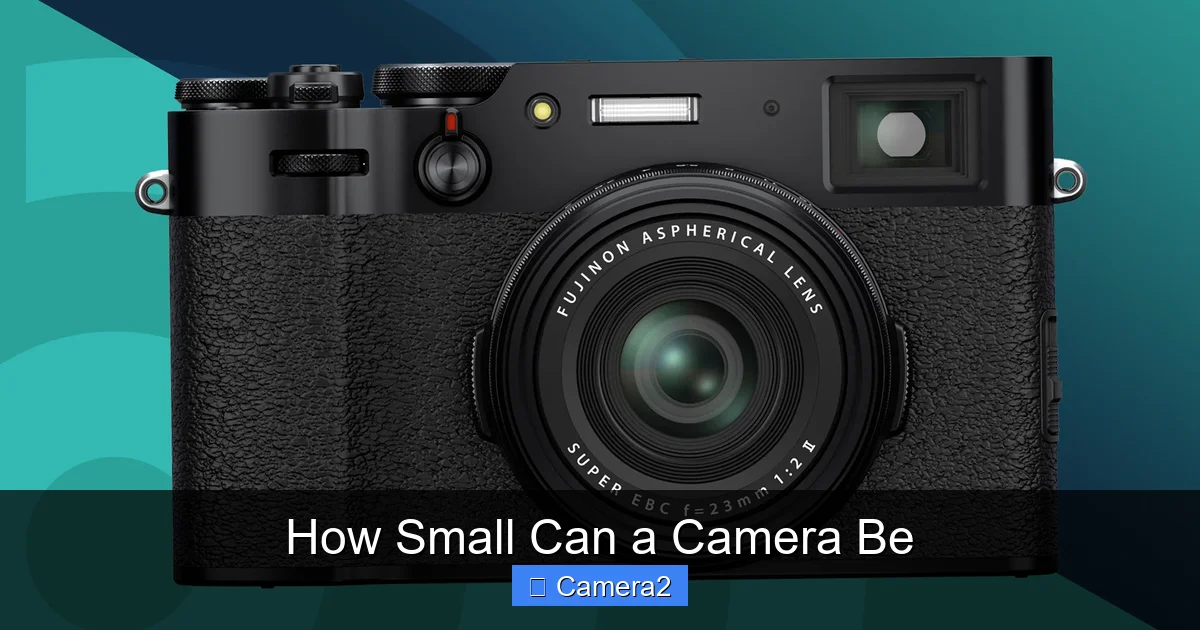
Ever wondered how tiny a camera can get? This guide breaks down the science, the tech, and the real‑world gadgets that push the boundaries of size. From micro‑cameras that fit on a fingertip to wearable lenses, we show you what’s possible and how to choose the right tiny shooter for your needs.
Key Takeaways
- Physical limits: Lens aperture, sensor size, and optics set the smallest practical camera dimensions.
- Micro‑camera tech: MEMS sensors, CMOS chips, and nanolens arrays enable cameras under 1 mm³.
- Use cases: Wearables, medical imaging, drones, and IoT devices benefit from ultra‑small cameras.
- Trade‑offs: Smaller size often means lower image quality, reduced battery life, and limited controls.
- Future trends: AI‑enhanced processing and advanced materials promise even tinier, smarter cameras.
- Buying tips: Match size to purpose—pocket cams for casual snaps, micro‑cams for hidden or specialized tasks.
- Legal note: Tiny cameras can raise privacy concerns; know the rules in your area.
📑 Table of Contents
- Introduction: Why Size Matters in Photography
- 1. The Physical Limits of Miniature Cameras
- 2. Current Tiny Camera Technologies
- 3. Real‑World Applications of Ultra‑Small Cameras
- 4. Trade‑Offs When Going Tiny
- 5. Future Trends: Making Cameras Even Smaller
- Conclusion: The Sweet Spot of Miniaturization
- Practical Tips for Choosing a Tiny Camera
Introduction: Why Size Matters in Photography
When you think of a camera, you probably picture a bulky DSLR or a smartphone that fits in your hand. But the question that’s buzzing in labs and on Kickstarter pages is simple: how small can a camera be? The answer isn’t just a fun fact; it shapes everything from wearable tech to medical diagnostics.
Miniaturization matters for three big reasons. First, smaller cameras are easier to hide, which is handy for security or wildlife photography. Second, they free up space on devices that already have a lot of hardware, like smart glasses or drones. Third, reducing size often cuts cost, making imaging accessible to more people.
1. The Physical Limits of Miniature Cameras
1.1 Lens Aperture and Focal Length
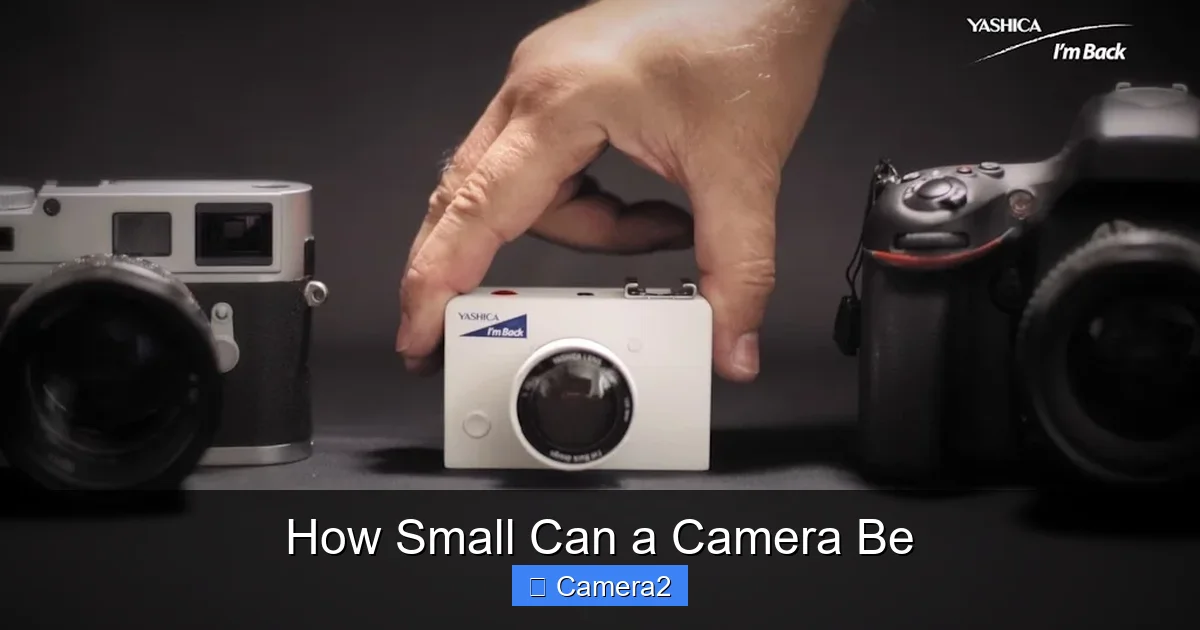
The lens is the heart of any camera. Light has to pass through an opening (the aperture) and be focused onto a sensor. As you shrink a lens, the aperture gets smaller, which reduces the amount of light that reaches the sensor. Less light means more noise and lower image quality.
Visual guide about How Small Can a Camera Be
Image source: photorumors.com
Engineers combat this by using aspherical elements and exotic glass that bend light more efficiently. However, there’s a practical floor: a lens smaller than about 0.5 mm in diameter struggles to focus light sharply enough for recognizable images.
1.2 Sensor Size and Pixel Pitch
Modern sensors are made from CMOS technology. The tiniest commercial CMOS sensors are around 0.3 mm × 0.3 mm, containing roughly 200 × 200 pixels. Each pixel (pixel pitch) can be as small as 1 µm, but packing them tighter creates crosstalk and reduces dynamic range.
Researchers have demonstrated sub‑micron pixel sensors in labs, but those are not yet mass‑produced. So, for now, the sweet spot for “how small can a camera be” sits at a sensor size of about 0.5 mm square for usable image quality.
1.3 Supporting Electronics
Beyond lens and sensor, a camera needs a processor, memory, power source, and connectors. Advances in System‑on‑Chip (SoC) design have integrated image signal processing (ISP) directly onto the sensor die, shaving off millimeters of board space. Battery technology, especially thin‑film lithium, now fits into a few hundred microns, keeping the whole package lean.
2. Current Tiny Camera Technologies
2.1 MEMS and Micro‑Optics
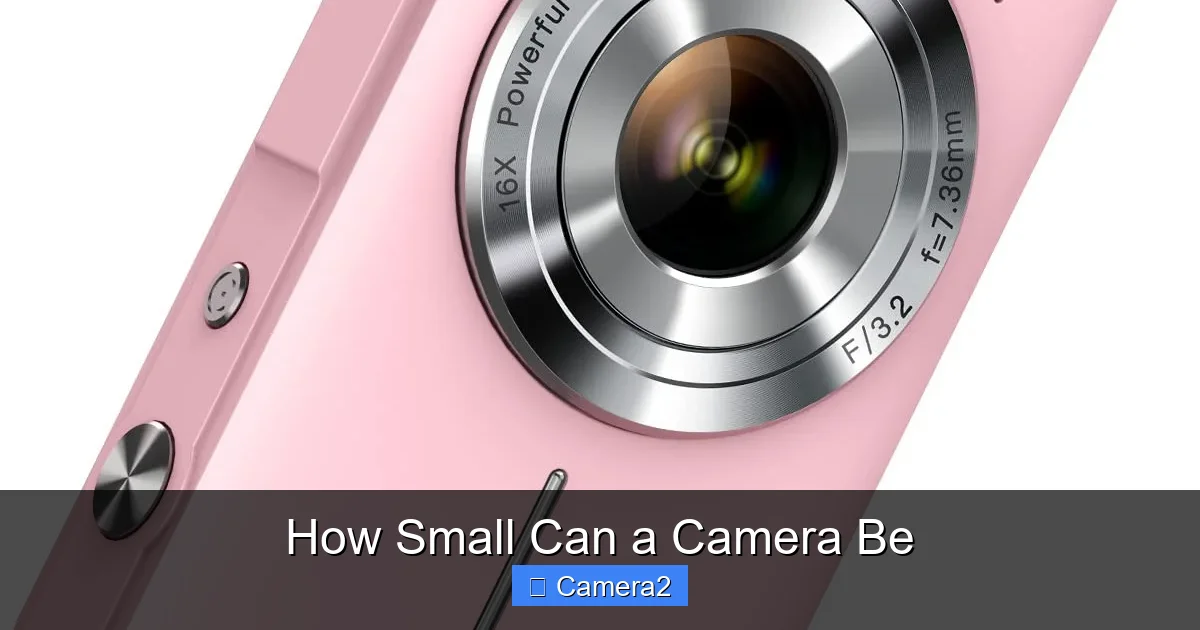
Micro‑Electro‑Mechanical Systems (MEMS) allow tiny moving parts, such as adjustable lenses or shutters, to be fabricated on silicon wafers. Companies like OmniVision and Sony produce MEMS‑based camera modules that are under 5 mm × 5 mm × 3 mm—small enough to sit on a fingertip.
Visual guide about How Small Can a Camera Be
Image source: m.media-amazon.com
2.2 Nanolens Arrays
Scientists are experimenting with nanolens arrays—clusters of microscopic lenses that collectively focus light onto a sensor. These arrays can be printed directly onto the sensor surface, eliminating the need for a separate lens barrel. The result? Cameras that are less than 1 mm³ in volume.
2.3 Spy‑Cam and Wearable Examples
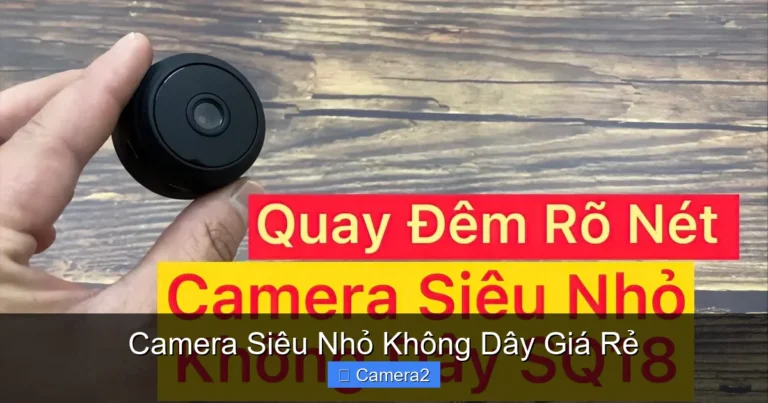
Commercial “spy” cameras often claim dimensions like 4 mm × 4 mm × 2 mm. While they sacrifice low‑light performance, they prove that how small can a camera be is already being answered for niche markets. Wearable lenses, such as those in smart glasses, typically use 2–3 mm modules that balance size with acceptable video quality.
2.4 Medical and Industrial Micro‑Cameras
Endoscopes and inspection cameras can be as thin as 0.8 mm in diameter, allowing doctors to view inside the body or engineers to look inside machinery. These devices often use fiber‑optic illumination combined with a tiny CMOS sensor, showcasing the extreme end of miniaturization.
3. Real‑World Applications of Ultra‑Small Cameras
3.1 Drones and UAVs
Weight matters in unmanned aerial vehicles. Replacing a 12‑gram gimbal camera with a 3‑gram micro‑camera can add minutes of flight time. Companies like DJI now offer “nano” camera options for indoor inspection drones.
Visual guide about How Small Can a Camera Be
Image source: m.media-amazon.com
3.2 Internet of Things (IoT)
Smart home devices—doorbells, refrigerators, and even light switches—are adding tiny cameras for security and AI analysis. A 1‑mm camera can fit behind a smoke detector, providing visual monitoring without altering the device’s look.
3.3 Wearables and Augmented Reality
AR glasses need cameras that are barely visible. The latest prototypes use 2‑mm modules that capture the world in real time, feeding data to on‑board AI for overlaying information.
3.4 Entertainment and Sports
Action cameras attached to helmets or surfboards benefit from being low‑profile. A camera the size of a button can survive impacts while still delivering 1080p video at 60 fps.
4. Trade‑Offs When Going Tiny
4.1 Image Quality
Smaller sensors collect fewer photons, leading to higher noise, especially in low light. Expect a drop in dynamic range and color depth compared to larger modules.
4.2 Battery Life
Miniature batteries hold less charge. Many sub‑5 mm cameras run for only 30–60 minutes of continuous video. Designers often rely on external power sources or intermittent recording to stretch usage.
4.3 Lens Flexibility
Fixed‑focus lenses dominate the tiny camera market. Zoom or variable aperture is rare because moving parts add bulk. If you need flexibility, you might have to accept a slightly larger package.
4.4 Connectivity
Wireless modules (Wi‑Fi, Bluetooth) add size and power draw. Some ultra‑small cameras use wired connections or low‑energy protocols like BLE to stay within size constraints.
5. Future Trends: Making Cameras Even Smaller
5.1 AI‑Powered Image Enhancement
Software can compensate for hardware limits. On‑device AI can denoise, upscale, and correct colors, making a 0.5 mm sensor look like a larger one. As AI chips shrink, this synergy will push the “how small can a camera be” boundary further.
5.2 Advanced Materials
Graphene and other 2‑D materials promise ultra‑thin photodetectors that could be integrated directly onto lenses. This could eliminate the need for a separate sensor layer.
5.3 Integrated Photonics
Silicon photonics may allow light to be guided and processed on the same chip that houses the sensor, reducing the need for bulky optics.
5.4 Modular Designs
Future devices might use interchangeable micro‑camera modules, letting you upgrade the sensor without redesigning the whole product.
Conclusion: The Sweet Spot of Miniaturization
So, how small can a camera be? In today’s market, functional cameras can be as tiny as a grain of rice—about 1 mm³—while still delivering recognizable video. Pushing below that threshold is possible in labs, but commercial products haven’t yet mastered the balance of image quality, power, and cost.
If you’re looking for a tiny camera, consider the purpose first. For casual pocket use, a 5 mm “pinhole” style phone attachment works great. For specialized tasks like medical inspection or hidden surveillance, sub‑millimeter modules are available, though they may require external power and accept lower image fidelity.
Keep an eye on AI‑enhanced processing and new materials; they will keep shrinking the answer to how small can a camera be while improving what those tiny eyes can see.
Practical Tips for Choosing a Tiny Camera
- Define the environment: Low‑light settings demand larger sensors; bright indoor or outdoor use can tolerate smaller ones.
- Check power options: Battery‑free models can be powered via USB or external packs.
- Mind the legal side: Hidden cameras can run afoul of privacy laws—read up on local regulations.
- Look for AI features: Built‑in denoising can make a tiny sensor perform better.
- Read reviews: For example, learn how many pictures you can expect from a disposable camera before buying a cheap mini‑cam; see How Many Pictures Can You Take With A Disposable Camera for perspective on image limits.
Frequently Asked Questions
What is the smallest commercially available camera?
The smallest mass‑produced cameras are under 1 mm³, often marketed as “spy” or “nano” cameras. They typically capture low‑resolution video but are fully functional.
Can a camera this small record high‑definition video?
Some 2–3 mm modules can record 1080p at 30 fps, but they rely on strong lighting and may have limited battery life.
Are tiny cameras safe to use in medical procedures?
Yes. Endoscopic cameras as thin as 0.8 mm are FDA‑approved for internal examinations, offering clear images for doctors.
Do tiny cameras need special lenses?
They usually use fixed‑focus aspheric lenses or nanolens arrays that are printed directly onto the sensor, eliminating bulky lens barrels.
How do I power a sub‑millimeter camera?
Options include thin‑film lithium batteries, external power via a cable, or energy harvesting methods like solar cells—see Can You Use A Camera Solar Charger To Charge Battery for more ideas.
Will privacy laws affect my use of a tiny camera?
Yes. Many regions have strict rules on hidden recording. Always verify local regulations before installing a miniature camera in public or private spaces.