Is Usb 2 0 Fast Enough
Is USB 2.0 fast enough? The answer depends on what you are doing. USB 2.0 has a max speed of 480 Mbps, which works fine for basic tasks. But for large file transfers or external SSDs, it falls short. Let us explore when USB 2.0 is enough and when you need faster options.
You plug in a USB device and wait. And wait. Is USB 2.0 fast enough for what you need? This is a question many people still ask today. USB 2.0 has been around for over two decades. It helped build the modern USB ecosystem. But technology has moved on fast.
The short answer is: it depends. For some tasks, USB 2.0 works perfectly. For others, it will slow you down a lot. In this guide, we will break it all down. You will learn the real speeds, what works, and when to upgrade.
Key Takeaways
- USB 2.0 maxes out at 480 Mbps: This is enough for simple tasks like keyboard input and mouse clicks.
- Large file transfers suffer: Moving gigabytes of data on USB 2.0 takes a long time.
- External drives need more speed: Modern SSDs are way faster than USB 2.0 can handle.
- USB 3.0 and newer are affordable: Upgrading is easy and budget-friendly.
- Check your device compatibility: Not all ports support faster speeds.
- Real-world speeds are lower: Even USB 2.0 rarely hits its theoretical max.
📑 Table of Contents
- What Is USB 2.0 and How Fast Is It?
- Is USB 2.0 Fast Enough for Everyday Use?
- Is USB 2.0 Fast Enough for Storage and External Drives?
- USB 2.0 vs Newer USB Versions: Speed Comparison
- When Is USB 2.0 Not Fast Enough?
- How to Get Faster Speeds: Upgrading Your Setup
- Is USB 2.0 Still Useful Today?
- Conclusion
What Is USB 2.0 and How Fast Is It?
USB 2.0 came out in April 2000. It replaced the older USB 1.1 standard. At the time, 480 Mbps felt incredibly fast. Today, it feels very slow by comparison. But the spec still matters for older devices.
The official name is USB 2.0 High Speed. It supports data transfer rates up to 480 megabits per second. That equals about 60 megabytes per second in theory. In real life, you often get 30 to 40 MB/s. Several factors affect actual performance:
- Cable quality: Cheap cables limit speed.
- Device type: Flash drives vs. hard drives behave differently.
- Port version: A USB 2.0 port on a USB 3.0 board still runs at USB 2.0 speed.
- Operating system overhead: Background tasks use bandwidth too.
- File size and quantity: Thousands of small files transfer slower than one big file.
So is USB 2.0 fast enough? For basic input devices, yes. For storage and media, probably not. Let us dig deeper.
Is USB 2.0 Fast Enough for Everyday Use?
Most people use USB ports every day without thinking about speed. Let us look at common tasks and see how USB 2.0 handles them.
Keyboards, Mice, and Peripherals
For keyboards and mice, speed does not matter much. These devices send tiny amounts of data. A keystroke is a few bytes. USB 2.0 handles this with zero lag. You will never notice a speed issue here.
Webcams and Headsets
Webcams work fine on USB 2.0. A 1080p webcam uses about 5 to 10 Mbps. That is well within USB 2.0 limits. Headsets with microphones also work perfectly. The audio stream is small and steady.
Printing and Scanning
Printers and scanners use moderate data. A scanned document is a few megabytes. USB 2.0 handles this easily. Even printing photos at moderate resolution works without delays.
Flash Drives for Small Files
Using a USB 2.0 flash drive for documents and small files is fine. You can move Word files, PDFs, and spreadsheets quickly. But try moving a 5 GB video file. That is where things get painful.
Quick Tip: If you only use USB for small files and input devices, USB 2.0 is still good enough. Do not rush to upgrade just for basic tasks.
Is USB 2.0 Fast Enough for Storage and External Drives?
This is where USB 2.0 starts to struggle. Modern storage devices are built for speed. USB 2.0 cannot keep up.
External Hard Drives
A standard external hard drive writes at 50 to 100 MB/s. USB 2.0 caps out around 35 to 40 MB/s. This means your drive runs at half speed or worse. Backing up files takes much longer than it should.
External SSDs
External SSDs are even more bottlenecked. A typical portable SSD writes at 500 MB/s or more. On USB 2.0, it is stuck at 40 MB/s. That is over ten times slower. You are paying for speed you cannot use.
Many people buy an M 2 Nvme Ssd Usb enclosure expecting fast speeds. But if they plug it into a USB 2.0 port, the SSD cannot reach its full potential. The USB 2.0 connection becomes the weakest link.
Video and Photo Transfers
Photographers and videographers feel this pain the most. A 4K video clip can be 10 GB or more. On USB 2.0, transferring a 10 GB file takes over four minutes. On USB 3.0, it takes about 30 seconds. That is a huge difference when you are working on a deadline.
If you store projects on an external drive, USB 2.0 will slow your workflow. You will spend more time waiting and less time creating.
Gaming
Can you play games from a USB 2.0 external drive? Technically yes. But load times will be much longer. Game installations are often 50 GB or more. Waiting hours for a download over USB 2.0 is frustrating.
Many gamers use an M 2 Nvme Ssd To Usb 3 1 Adapter to connect NVMe drives externally. This gives them fast speeds for gaming on the go. USB 2.0 simply cannot compete with this setup.
USB 2.0 vs Newer USB Versions: Speed Comparison
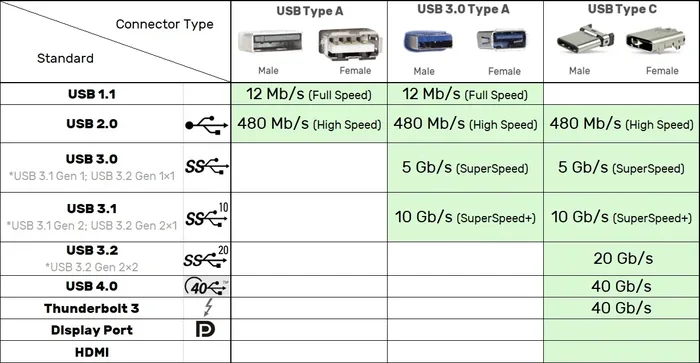
Let us put things in perspective. Here is how USB versions compare:
| USB Version | Max Speed | Real-World Speed | Best For |
|---|---|---|---|
| USB 2.0 | 480 Mbps | 30-40 MB/s | Keyboards, mice, small files |
| USB 3.0 | 5 Gbps | 300-400 MB/s | External drives, backups |
| USB 3.1 Gen 2 | 10 Gbps | 600-900 MB/s | Large file transfers |
| USB 3.2 Gen 2×2 | 20 Gbps | 1.5-2 GB/s | Professional workflows |
| USB4 | 40 Gbps | 2-3 GB/s | Video editing, RAID setups |
The gap between USB 2.0 and USB 3.0 is massive. USB 3.0 is over ten times faster than USB 2.0. Even USB 3.1 is more than twenty times faster. If you are still using USB 2.0 for storage, you are missing out.
One common mistake is assuming all USB ports are the same. A USB 3.0 port looks identical to a USB 2.0 port. Check your device manual or look for the blue insert inside the port. Blue means USB 3.0 or newer.
Some people use an M 2 Nvme Ssd Enclosure Adapter Usb 3 1 to get the best of both worlds. You can connect a fast NVMe drive through USB 3.1 and enjoy real speed. This setup costs less than a traditional external hard drive enclosure and delivers much better performance.
When Is USB 2.0 Not Fast Enough?
Here are clear signs that USB 2.0 is holding you back:
- File transfers take forever: If copying files feels painfully slow, USB 2.0 is likely the cause.
- You work with video or large photos: Professional media files are too large for USB 2.0.
- Your external SSD runs at snail pace: An NVMe drive on USB 2.0 is like putting a sports car in first gear.
- You game from external drives: Long load times ruin the experience.
- You back up large amounts of data: Backing up 100 GB on USB 2.0 can take hours.
- Your workflow feels bottlenecked: If you wait more than you work, it is time to upgrade.
Even simple tasks like syncing a phone backup can take all night on USB 2.0. Modern phones have large storage capacities. A full backup of a 128 GB phone over USB 2.0 takes hours. The same backup on USB 3.0 takes minutes.
Expert Insight: Many users do not realize their USB 2.0 port is the problem. They blame the device or the cable. Before buying a new drive, check your port version first. A simple upgrade to a USB 3.0 port can transform your experience.
How to Get Faster Speeds: Upgrading Your Setup
If USB 2.0 is not enough for you, upgrading is easier than you think. Here are practical steps to get faster speeds.
Step 1: Check Your Ports
Look at your computer or laptop. Identify which ports are USB 2.0 and which are USB 3.0 or newer. USB 3.0 ports often have a blue color inside. USB 2.0 ports are usually black or white. If you are unsure, check your device specifications online.
Step 2: Use the Right Cable
Not all USB cables are equal. A USB 2.0 cable cannot deliver USB 3.0 speeds even if you plug it into a USB 3.0 port. Make sure your cable supports the speed you need. Look for cables rated for USB 3.0 or higher.
Step 3: Upgrade Your Adapter or Enclosure
If you use an external drive, the adapter or enclosure matters. A USB 2.0 enclosure will cap your drive speed. Switch to a USB 3.0 or USB 3.1 enclosure for much better performance. For NVMe drives, a dedicated M 2 Nvme Ssd To Pcie 4 0 Adapter Card can deliver full speed when used with a compatible port.
Step 4: Consider a USB Hub with USB 3.0
If you run out of ports, get a USB hub. But not all hubs are equal. Choose a hub that supports USB 3.0 or USB 3.1. A cheap USB 2.0 hub will not improve your speeds at all.
Step 5: Use Direct Connections When Possible
Avoid daisy-chaining devices through multiple hubs. Each connection adds potential bottlenecks. Plug drives directly into your computer whenever possible for the best speeds.
Quick Tip: If your laptop only has USB 2.0 ports, consider a USB 3.0 PCIe card for desktops. These are affordable and add fast ports in minutes.
Is USB 2.0 Still Useful Today?
USB 2.0 is not dead. Many devices still use it. Some printers, scanners, and industrial equipment only support USB 2.0. For these devices, USB 2.0 works perfectly fine.
USB 2.0 also has one big advantage: compatibility. Almost every device made in the last 20 years supports it. You can plug in almost any old USB device and it will work. That universality is a real strength.
But for storage and data-heavy tasks, USB 2.0 is simply outdated. The M 2 Nvme Pcie 3 0 Ssd and M 2 Nvme Pcie 4 0 Ssd categories show how far storage technology has come. These drives offer incredible speeds that USB 2.0 cannot deliver.
The best approach is to use USB 2.0 for what it does well and upgrade for everything else. Keep USB 2.0 for peripherals and basic tasks. Use USB 3.0 or newer for storage, backups, and media work.
Common Mistake: Do not assume a faster drive will fix slow transfers. If your port is USB 2.0, no drive speed matters. The port is the bottleneck. Fix the port first, then enjoy the drive speed.
Conclusion
So, is USB 2.0 fast enough? The honest answer is: for some things yes, for many things no. USB 2.0 handles keyboards, mice, webcams, and small files without any problem. But for storage, backups, video work, and gaming, it is too slow.
The good news is that upgrading is simple and affordable. A USB 3.0 cable or port can make a world of difference. You do not need to spend a lot of money to get much faster speeds.
Know your needs. If you only do basic tasks, USB 2.0 is fine. If you work with large files or external drives, make the switch to USB 3.0 or newer. Your future self will thank you every time you copy a file in seconds instead of minutes.
Take a look at your setup today. Check your ports and cables. Small changes can lead to big improvements in your daily workflow.
Frequently Asked Questions
Can I use USB 2.0 for an external SSD?
Yes, you can physically connect an external SSD to a USB 2.0 port. But the SSD will run at USB 2.0 speeds, which is much slower than the drive can handle. You will not get the full performance of your NVMe or SATA SSD on a USB 2.0 connection.
How long does it take to transfer 10 GB on USB 2.0?
At real-world USB 2.0 speeds of 30 to 40 MB/s, transferring 10 GB takes about 4 to 5 minutes. On USB 3.0, the same transfer takes about 30 seconds. The difference is huge and affects productivity significantly.
Is USB 2.0 fast enough for video editing?
No, USB 2.0 is not suitable for video editing workflows. Video files are large and need fast read and write speeds. USB 2.0 will cause lag, slow imports, and long export times. Use USB 3.0 or USB-C for video editing tasks.
What is the maximum speed of USB 2.0?
The maximum theoretical speed of USB 2.0 is 480 Mbps, which equals 60 MB/s. In practice, real-world speeds are usually 30 to 40 MB/s due to overhead and cable quality. This is much slower than USB 3.0 and newer versions.
How do I know if my port is USB 2.0 or USB 3.0?
Look at the color inside the port. USB 2.0 ports are usually black or white inside. USB 3.0 ports have a blue insert or color. You can also check your device specifications in the system settings or manufacturer website to confirm the port version.
Do I need to upgrade if I only use USB for small files?
No, you do not need to upgrade if you only transfer small files like documents and spreadsheets. USB 2.0 handles these tasks quickly and without issues. Only upgrade if you work with large files, external drives, or media content regularly.