Qsc 3 Way Powered Speakers
QSC 3 Way Powered Speakers combine professional‑grade sound quality with plug‑and‑play simplicity. Whether you’re running a small club or a large conference hall, these units deliver clean highs, rich mids, and deep lows without the need for external amplifiers. Read on for a friendly, step‑by‑step guide to choosing, installing, and getting the most out of your QSC system.
Key Takeaways
- All‑in‑one power: Built‑in amplifiers remove the need for separate amp racks, saving space and setup time.
- True 3‑way design: Separate drivers for lows, mids, and highs ensure each frequency band is reproduced accurately.
- Scalable architecture: You can link multiple QSC speakers for larger venues without losing performance.
- Intelligent DSP: Onboard processing optimizes crossover points, limiting, and EQ for flawless sound.
- Robust construction: Heavy‑duty cabinets and reinforced grilles stand up to touring and live‑event wear.
- Wireless options: QSC offers cordless solutions that keep your stage clutter‑free. Learn more about cordless for powered QSC speakers.
- Easy maintenance: Simple rear‑panel access makes troubleshooting and upgrades a breeze.
📑 Table of Contents
- Introduction: Why QSC 3 Way Powered Speakers Matter
- What Makes a “3‑Way” Speaker Different?
- Key Features of QSC 3 Way Powered Speakers
- Choosing the Right QSC Model for Your Venue
- Installation Tips: Getting the Best Sound Quickly
- Maintenance and Troubleshooting
- Real‑World Example: Setting Up a QSC System for a Community Theater
- Conclusion: Is a QSC 3 Way Powered Speaker Right for You?
Introduction: Why QSC 3 Way Powered Speakers Matter
Imagine walking into a venue where the music feels alive, every instrument clear, every vocal present, and the bass thumps without rattling the walls. That feeling is what QSC aims to deliver with its 3 Way Powered Speakers. Unlike traditional passive speakers that need an external amp, a crossover, and a lot of wiring, QSC’s powered units pack everything inside a single, rugged enclosure.
In today’s fast‑paced live‑sound world, time is money. Technicians appreciate gear that sets up quickly, stays reliable, and scales smoothly from a small bar to a stadium. QSC’s 3‑way design also means the low‑frequency driver, midrange driver, and tweeter each get their own dedicated power and signal path, resulting in cleaner sound and less distortion.
What Makes a “3‑Way” Speaker Different?
Separate Drivers for Each Frequency Band
A 3‑way speaker uses three distinct drivers: a woofer for bass, a mid‑range driver for vocals and guitars, and a tweeter for cymbals and high‑frequency detail. This separation allows each driver to work within its optimal range, reducing strain and improving overall fidelity.
Built‑In Crossover and DSP
The crossover divides the audio signal so that only the appropriate frequencies reach each driver. QSC’s digital signal processing (DSP) fine‑tunes these crossover points, adds protection limiting, and can even apply room‑correction EQ with a few button presses.
Power Amplification Inside the Cabinet
Each driver gets its own dedicated amplifier channel. This “bi‑amp” (or “tri‑amp”) approach ensures that the low frequencies receive enough power without muddying the mids and highs. The result is a tighter, more controlled sound that translates well in both small clubs and large halls.
Key Features of QSC 3 Way Powered Speakers
High Power Output and Efficiency
Most QSC 3‑way models deliver between 500 W and 1500 W RMS per cabinet, depending on the series. The efficient Class‑D amplifiers keep heat low and weight manageable, making them ideal for touring rigs.
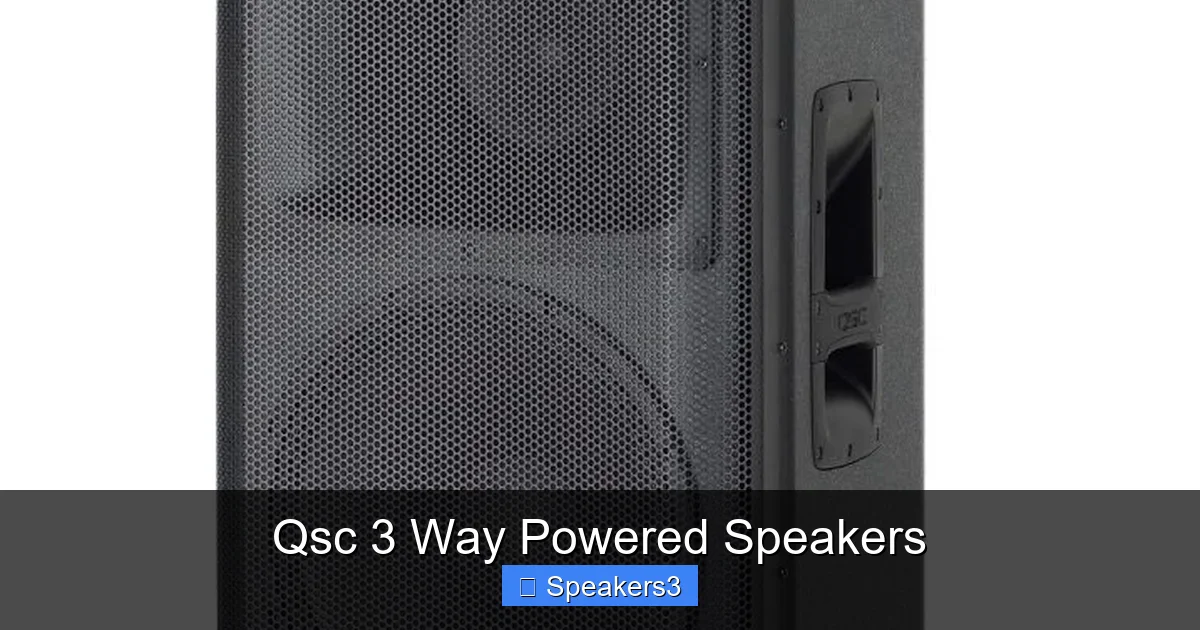
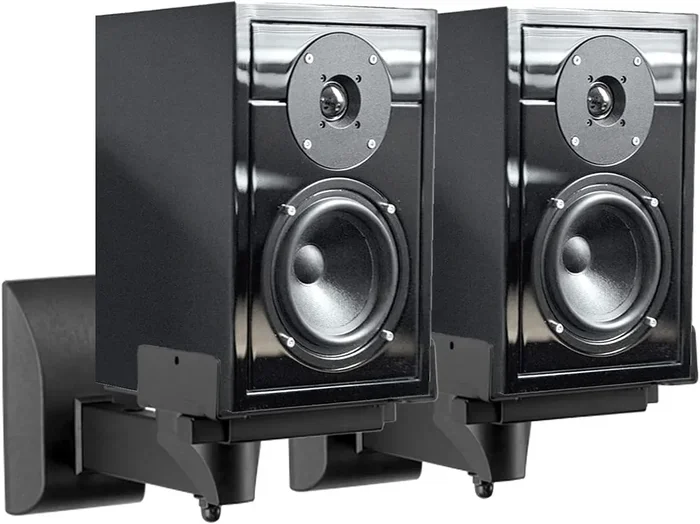
Visual guide about Qsc 3 Way Powered Speakers
Image source: cf1.zzounds.com
Robust Build Quality
The cabinets are built from high‑density plywood with reinforced corners. Grilles are made of steel mesh that resists impact while still allowing airflow for cooling. Many models also feature removable front panels for easy driver replacement.
Connectivity Options
Inputs include XLR, 1/4‑inch TRS, and RCA, often with a built‑in DI for direct connection to a mixing console. Some units also sport Ethernet ports for QSC’s Q‑Control network, letting you adjust DSP settings from a laptop or tablet.
Scalability and Linking
You can daisy‑chain multiple speakers using XLR or proprietary linking ports. This creates a single, cohesive sound system without needing a separate crossover or external amp.
Wireless Integration
QSC offers optional wireless modules that let you send audio to the speakers without a cable run. This is perfect for stage setups where you want to keep the floor clear. Read our guide on cordless solutions for powered QSC speakers for installation tips.
Choosing the Right QSC Model for Your Venue
Small Clubs and Bars
For venues under 2,000 sq ft, the QSC K8.2 or K10.2 are excellent choices. Their 8‑inch and 10‑inch woofers provide enough low‑end punch while staying compact enough to fit on narrow stage risers.
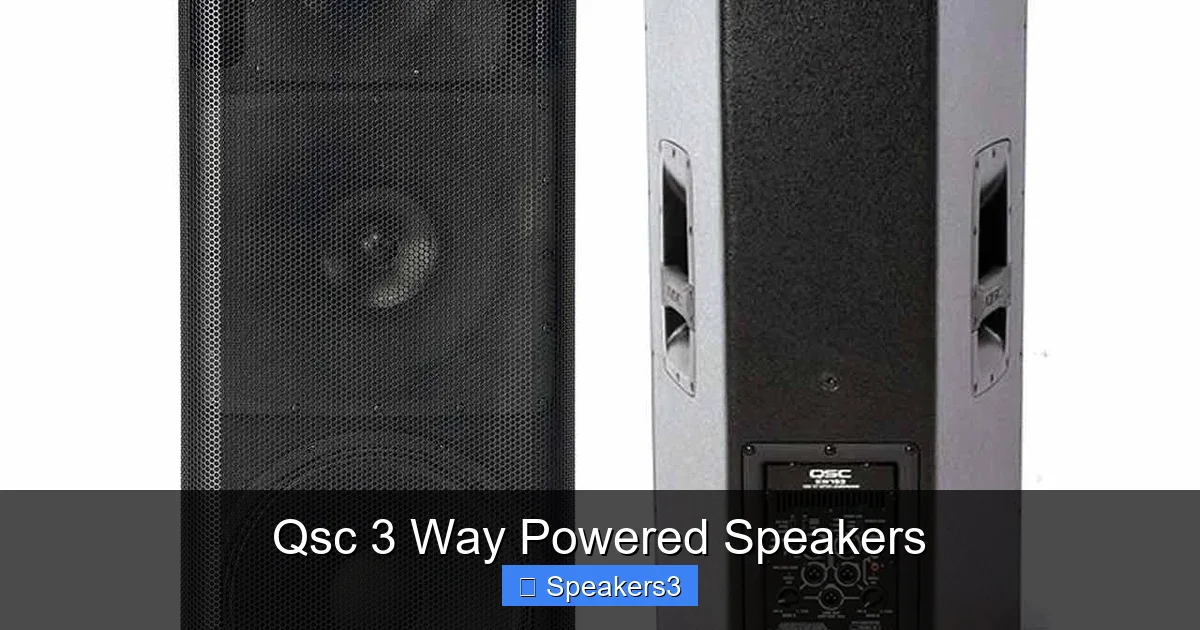
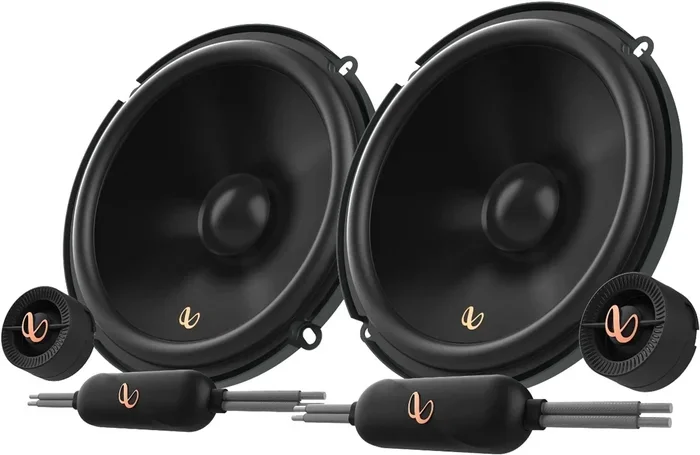
Visual guide about Qsc 3 Way Powered Speakers
Image source: cdn.shopify.com
Mid‑Size Theaters and Houses of Worship
The K12.2 or KW152 models deliver 12‑inch woofers and higher power handling, making them suitable for spaces that need both clarity and volume. Pair two of these on each side of the stage for balanced coverage.
Large Concert Halls and Outdoor Events
When you need to fill a stadium or festival field, look at the QSC PLD4.2 or PLD8.2 line array elements. These units are designed for high SPL (sound pressure level) and can be stacked vertically for uniform dispersion.
Matching Speakers to Crossover Settings
Even though QSC handles crossovers internally, understanding the basics helps you fine‑tune the system. A good rule of thumb is to set the low‑mid crossover around 250 Hz and the mid‑high crossover around 3 kHz. For more detailed guidance, check out our article on 3 Way Crossover For Speakers.
Installation Tips: Getting the Best Sound Quickly
Placement and Angle
Place the speakers at ear level for the main listening area. Tilt the tweeters slightly upward so the high frequencies reach the audience’s ears without harshness.
Securing the Cabinets
Use sturdy speaker stands or wall mounts. For large models, consider a rigging system that distributes weight evenly. The Speaker Stands For Large Speakers guide offers product recommendations.
Running Cables Efficiently
Keep power and signal cables separate to avoid hum. Use high‑quality XLR cables for balanced connections and keep the run length under 25 meters to maintain signal integrity.
DSP Calibration
Run a quick auto‑EQ using QSC’s Q‑Control software. The software measures room response with a microphone and applies corrective EQ. Save the preset and recall it for each event.
Testing Before the Show
Always do a line‑check: play a pink noise burst and sweep through the frequency range. Listen for any rattles, distortion, or dead spots. Adjust placement or DSP settings as needed.
Maintenance and Troubleshooting
Regular Cleaning
Dust can clog the cooling vents. Use a soft brush or compressed air to clean the grille and rear panel every few months.
Checking Connections
Loose XLR pins are a common cause of intermittent sound. Verify that each connector clicks firmly into place.
Diagnosing Common Issues
- No sound from one driver: Use the “mute” button on the front panel to isolate each driver. If the mid‑range is silent, check the amp channel indicator.
- Crackling or popping: This often points to a bad cable or a failing power supply. Replace the suspect cable first.
- Overheating: Ensure ventilation space around the cabinet. Clean the internal fan if it’s clogged.
Real‑World Example: Setting Up a QSC System for a Community Theater
A local theater needed a flexible sound system for plays, concerts, and movies. They chose four QSC K12.2 speakers for the main left and right channels and two QSC KW152 units for surround effects. Using the built‑in DSP, they created two presets: one for speech (flat EQ, lower SPL) and one for music (boosted lows, higher SPL). The wireless module allowed the stage manager to adjust levels from a tablet without stepping onto the stage. After the first performance, audience members commented on the “clear vocals and deep bass,” proving the system’s success.
Conclusion: Is a QSC 3 Way Powered Speaker Right for You?
If you value high‑quality sound, easy setup, and scalability, QSC’s 3‑way powered speakers are a solid investment. Their integrated amplifiers, intelligent DSP, and rugged design make them suitable for a wide range of applications—from small bars to large arenas. By following the placement, wiring, and calibration tips in this guide, you’ll unlock the full potential of your QSC system and deliver an unforgettable listening experience to every audience member.
Frequently Asked Questions
What does “3‑way” mean in a speaker?
“3‑way” refers to a speaker that uses three separate drivers—woofer, midrange, and tweeter—each handling a specific portion of the audio spectrum for clearer, more accurate sound.
Do QSC 3 Way Powered Speakers need an external amplifier?
No. These speakers have built‑in Class‑D amplifiers for each driver, so you only need a power source and an audio input.
Can I link multiple QSC powered speakers together?
Yes. QSC provides linking ports that let you daisy‑chain several cabinets, creating a unified system without extra crossovers.
Are the QSC speakers compatible with wireless audio solutions?
Absolutely. QSC offers optional wireless modules, and you can also use third‑party wireless transmitters as long as they support balanced XLR output.
How do I protect my speakers from overload?
The built‑in DSP includes limiters that automatically reduce gain when the input signal exceeds safe levels, protecting the drivers from damage.
Do I need a special crossover when using QSC 3 Way Powered Speakers?
No external crossover is required because the internal DSP handles all crossover functions. However, understanding crossover points can help you fine‑tune the system for your room.