The Impact of Ai on Saas
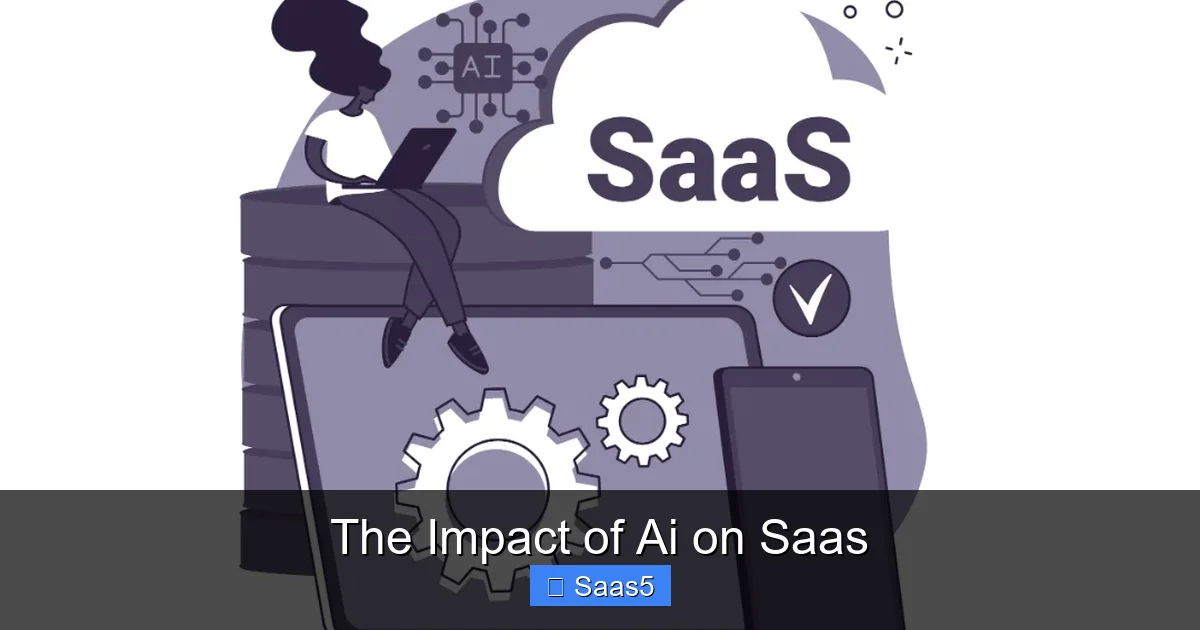
AI is not just an add-on for SaaS; it’s becoming the core engine driving its next evolution. This transformation moves software from a passive tool to an active, intelligent partner. We’re seeing a shift from generic dashboards to predictive insights, from manual workflows to autonomous operations, and from one-size-fits-all pricing to dynamic, value-based models. The result is unprecedented efficiency, deeper customer relationships, and entirely new categories of software-defined services.
Remember the early days of SaaS? We were thrilled just to access software from a web browser, no installation required. The value proposition was clear: lower costs, easier updates, and scalability. But the software itself was often just a digital version of its on-premise ancestor—a static tool waiting for your commands. That era is ending. A new, intelligent force is rewriting the rules, and its name is Artificial Intelligence. The impact of AI on SaaS isn’t a minor feature update; it’s a complete paradigm shift, turning passive applications into proactive, cognitive business partners. This isn’t about adding a chatbot to a help desk. This is about rebuilding the very foundation of how software understands, predicts, and acts.
Let’s be clear: when we talk about AI in SaaS, we’re primarily discussing Machine Learning (ML) and its more advanced subset, Generative AI. These technologies ingest vast amounts of data—your business data, your customers’ data, behavioral data—and learn patterns, make predictions, and even create new content. The cloud-native, data-rich nature of SaaS makes it the perfect breeding ground for this intelligence. The marriage of ubiquitous data delivery (SaaS) with ubiquitous data intelligence (AI) is catalyzing a revolution. We are moving from a world of Software-as-a-Service to Intelligence-as-a-Service. This article will dive deep into the tangible, transformative ways AI is reshaping every layer of the SaaS landscape.
Key Takeaways
- AI is the New UI/UX: Natural language interfaces (chat, voice) are replacing complex menus, making SaaS tools accessible to everyone and drastically reducing training time.
- From Reactive to Predictive: SaaS platforms now forecast customer churn, identify upsell opportunities, and preempt system failures before they happen, shifting from reporting to foresight.
- Hyper-Personalization at Scale: AI tailors user experiences, content, and feature recommendations in real-time for each individual, moving beyond basic segmentation.
- Automation of Cognitive Tasks: Beyond simple automation, AI now handles judgment-based work like customer support triage, content creation, and data analysis, freeing human teams for strategic work.
- Pricing and Packaging Revolution: Usage-based, outcome-based, and dynamic pricing models, powered by AI tracking of value delivered, are challenging traditional per-seat subscriptions.
- The Data Moat Deepens: A company’s proprietary data, when fed into its AI models, creates a powerful competitive moat that is incredibly difficult for newcomers to replicate.
- New Security & Compliance Paradigm: AI is a double-edged sword, enabling advanced threat detection for SaaS providers while also creating new vulnerabilities and regulatory challenges (e.g., data bias, privacy).
📑 Table of Contents
- 1. The User Experience Revolution: From Clicks to Conversations
- 2. The Intelligence Layer: Predictive Analytics and Proactive Insights
- 3. Hyper-Personalization and Dynamic Adaptation
- 4. The Automation of Cognitive Workflows
- 5. The Pricing Tsunami: From Seats to Value
- 6. The Security and Ethical Minefield
- 7. The Future is Agentic: Autonomous SaaS Ecosystems
- Conclusion: The Intelligent Imperative
1. The User Experience Revolution: From Clicks to Conversations
The most visible impact of AI on SaaS is the complete overhaul of the user interface and experience. For decades, we navigated SaaS through menus, dashboards, and forms. AI is tearing up that map and replacing it with a simple, universal interface: conversation.
The Death of the 50-Click Journey
Think about a complex task in a traditional SaaS. To create a sales forecast in an old CRM, you might export data, manipulate it in a spreadsheet, and re-import it. Now, you can simply ask: “Show me the projected revenue for Q4 from our enterprise segment, factoring in the new pricing changes.” An AI-powered agent understands the intent, queries the database, applies the business logic, and presents a visual. This is natural language as the new UI. Tools like Microsoft 365 Copilot, Salesforce Einstein GPT, and countless others are embedding this capability directly into workflows. The barrier to entry for using powerful software is plummeting. A new hire can be productive in minutes, not weeks.
Generative UI: Software That Builds Itself
The next frontier is Generative UI. Instead of you navigating to a pre-built report, you describe what you need, and the AI generates the exact dashboard, chart, or form on the fly. Need a custom report comparing marketing campaign ROI against support ticket volume for a specific region last quarter? Describe it, and it appears. This puts unprecedented analytical power in the hands of every employee, democratizing data science. Platforms like Retool and Bubble are already experimenting with AI that generates entire application interfaces from text prompts, hinting at a future where custom SaaS tools are created in real-time to solve immediate problems.
Practical Tip for SaaS Builders:
- Don’t just bolt on a chat widget. Integrate an AI agent that has deep, contextual awareness of the user’s current workspace, permissions, and recent activity.
- Focus on action-oriented queries. The AI shouldn’t just find data; it should perform the next logical action (e.g., “Schedule a follow-up email to these leads”).
- Implement a robust feedback loop where users can correct the AI’s output, making the system smarter with every interaction.
2. The Intelligence Layer: Predictive Analytics and Proactive Insights
The classic SaaS dashboard showed you what happened. It was a rear-view mirror. AI-powered SaaS shows you what is happening and what will happen. This shift from descriptive to predictive and prescriptive analytics is where the bulk of AI’s ROI is currently being realized.
Visual guide about The Impact of Ai on Saas
Image source: csmsummit.com
Predicting Churn Before It Happens
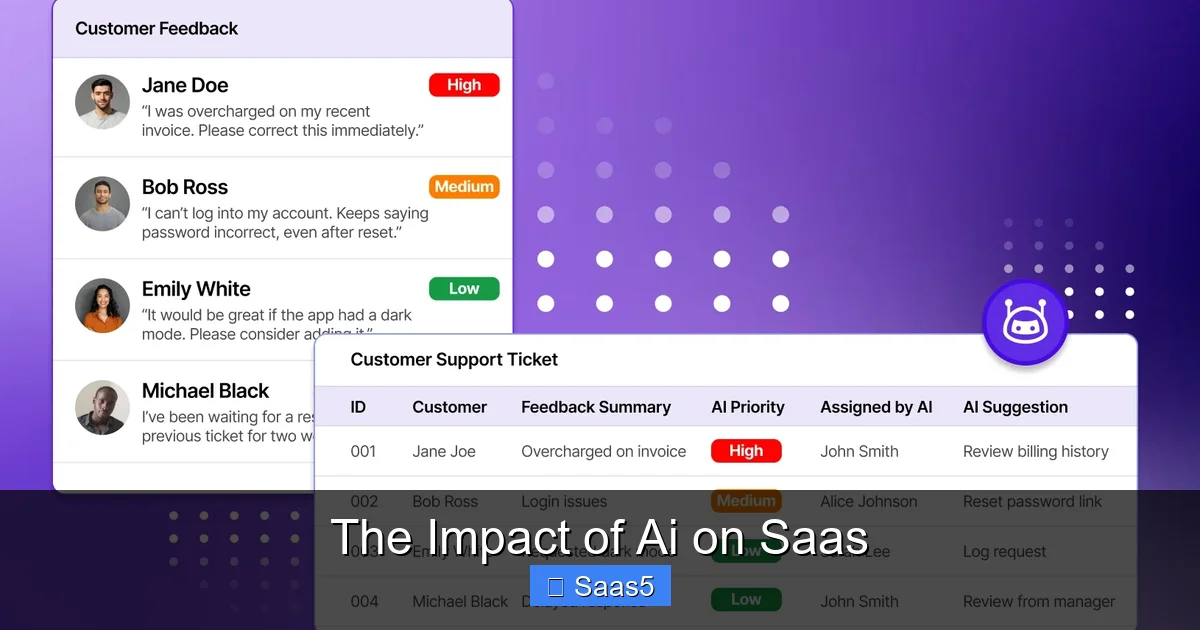
One of the most powerful applications is customer health scoring. Traditional SaaS looked at usage metrics (logins, feature clicks). AI analyzes the quality of that usage. Did a key user recently struggle with a core workflow? Has their communication tone in support tickets become negative? Is their usage pattern diverging from successful cohort paths? By correlating thousands of behavioral data points with historical churn data, ML models can flag at-risk customers with 80%+ accuracy weeks or even months before they cancel. This allows customer success teams to intervene proactively with targeted help, saving massive revenue. Companies like Gainsight and Totango have built entire product categories around this AI-driven capability.
Prescriptive Recommendations and Next-Best-Action
Predicting a problem is good. Telling you exactly how to solve it is better. This is the “prescriptive” layer. In a sales CRM, AI doesn’t just flag a deal as likely to stall; it recommends the specific content to send, the optimal time to call, and even suggests a discount threshold based on the deal’s unique characteristics and historical win patterns for similar deals. In marketing SaaS, it might recommend, “Shift 15% of your budget from Channel X to Channel Y because the AI model predicts a 2.3x higher ROAS for your target demographic.” This moves the SaaS tool from an observer to an advisor.
Practical Example:
- Zendesk: Uses AI to predict ticket resolution times and automatically route complex issues to the most qualified agent, improving efficiency and customer satisfaction.
- HubSpot: Its AI tools analyze contact behavior to predict which leads are sales-ready and recommend the most effective next steps for engagement.
3. Hyper-Personalization and Dynamic Adaptation
Personalization in SaaS used to mean “Hello, [First Name].” AI enables true one-to-one personalization at scale, adapting the software itself to the individual user’s role, skill level, and context.
Visual guide about The Impact of Ai on Saas
Image source: markovate.com
Adaptive User Interfaces
Imagine a project management tool that looks completely different for a junior developer versus a project manager. For the developer, it might surface their current sprint tasks, recent code commits, and blockages. For the PM, it highlights team velocity, milestone burndown, and resource allocation risks. The AI learns from how each user interacts with the tool and rearranges menus, highlights relevant features, and even changes default settings to optimize their workflow. This reduces cognitive load and dramatically increases adoption and proficiency.
Personalized Content and Onboarding
Onboarding is no longer a fixed video tutorial. AI analyzes a new user’s profile (job title, company size) and their initial clicks to generate a custom onboarding path. If a user immediately goes to the “Reporting” section, the AI prioritizes showing them reporting features. It can also generate personalized help articles or video snippets on the fly. Content creation within SaaS is being transformed by Generative AI, allowing users to draft marketing emails, product descriptions, or social posts directly within the platform, tailored to their brand voice and audience.
Case Study: Netflix’s SaaS Influence
While not a B2B SaaS, Netflix’s personalization engine is the gold standard. Its recommendation algorithm, a form of AI, is responsible for ~80% of viewer engagement. B2B SaaS is now adopting this mindset. Instead of recommending shows, it recommends the next feature to try, the next document to read, or the next customer to call, all based on a probabilistic model of what will deliver the most value to that specific user.
4. The Automation of Cognitive Workflows
Robotic Process Automation (RPA) automated rules-based, repetitive tasks. AI Automation (often called Intelligent Automation) automates tasks that require judgment, understanding, and adaptation. This is where SaaS is eating into knowledge work.
Visual guide about The Impact of Ai on Saas
Image source: cdn.prod.website-files.com
Beyond Buttons: AI Agents That Execute Tasks
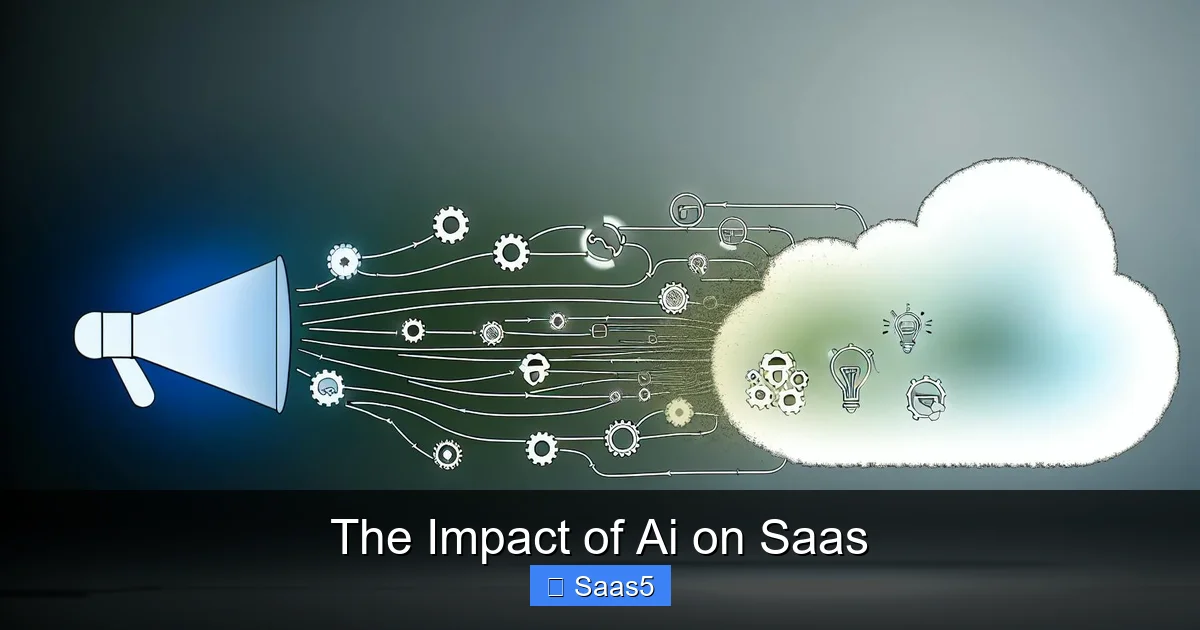
We’re moving past simple “if-this-then-that” automations. AI agents within SaaS can understand unstructured input (an email, a meeting transcript, a support ticket), extract key information, make a decision based on learned policies, and execute a series of actions across multiple systems. An “AI SDR” in a sales SaaS can research a lead, draft a personalized outreach email, log the activity in the CRM, and schedule a follow-up task—all without human intervention. An AI agent in an accounting SaaS can review invoices, match them to POs, flag anomalies, and initiate payments for approved ones.
Supercharging Existing Roles
This isn’t about replacing jobs; it’s about augmenting them. A financial analyst using a BI tool like Tableau or Power BI can now ask, “What drove the unexpected drop in Southeast Asian sales last month?” The AI analyzes all relevant data—shipment logs, local marketing campaigns, competitor activity scraped from the web, and even macroeconomic indicators—to surface potential root causes and visualize them. The analyst’s role shifts from data-gathering and chart-building to hypothesis validation and strategic storytelling.
Examples in Action:
- Intercom & Drift: Their AI chatbots handle complex customer queries, book meetings, and qualify leads 24/7, only escalating to humans when necessary.
- Grammarly Business: Goes beyond spell-check to suggest tone adjustments, clarity improvements, and even brand-compliant phrasing in all company communications.
- UiPath & Automation Anywhere: While RPA companies, they are aggressively integrating AI to handle document understanding (reading invoices, contracts) and process exceptions that previously required human review.
5. The Pricing Tsunami: From Seats to Value
SaaS pricing has long been dominated by the “per-seat, per-month” model. AI is fracturing this model, leading to pricing that directly correlates with the value and outcomes the software delivers.
Usage-Based and Consumption Pricing
This is the most straightforward shift. Instead of paying for 50 licenses whether you use them or not, you pay for what you consume. This is common in infrastructure (AWS) but is moving up the stack. AI APIs (like OpenAI, Anthropic) charge per token. A marketing SaaS might charge per generated marketing asset. A design tool like Canva now has “AI credits” for advanced features. This model is fairer for customers and aligns revenue directly with product engagement. However, it creates revenue volatility for the SaaS provider, requiring sophisticated financial forecasting.
Outcome-Based Pricing
This is the holy grail. The price is tied to a measurable business outcome. A recruiting SaaS might charge per successful hire. A sales enablement tool might take a percentage of the increased deal size it helps generate. An SEO SaaS might charge based on the organic traffic growth it delivers. This model requires extreme trust, flawless attribution, and often, deep integration into the customer’s core systems. It turns the vendor into a true partner with aligned incentives. Companies like Pave (for sales compensation) and Gong (which can tie deal analytics to revenue) are exploring these models.
AI-Powered Dynamic Pricing
SaaS providers themselves can use AI to optimize their own pricing. ML models can analyze customer data, market conditions, and competitor moves to recommend personalized discounts or package upgrades for specific customer segments, maximizing lifetime value. This creates a complex, fluid pricing landscape where the “list price” is just a starting point.
Consideration for Buyers:
As a SaaS buyer, scrutinize these new models. Ask: “How is ‘usage’ defined? What are the overage costs? How is ‘outcome’ measured, and who audits it?” What looks cheaper on the surface (pay-as-you-go) can become wildly expensive if not monitored.
6. The Security and Ethical Minefield
AI introduces profound new challenges for SaaS security, compliance, and ethics. The very data that fuels AI’s intelligence is its greatest vulnerability and responsibility.
New Attack Surfaces
AI models themselves can be attacked. “Data poisoning” involves feeding malicious data into a training set to skew outcomes. “Prompt injection” can trick an AI into revealing sensitive data or performing unauthorized actions. “Model stealing” involves reverse-engineering an AI model by querying it extensively. SaaS providers must now secure not just their databases and APIs, but their entire AI pipeline—from training data ingestion to model deployment and inference endpoints.
Data Privacy and Sovereignty
AI requires massive, diverse datasets. This raises critical questions: Where is customer data being processed for model training? Is it being used to improve public models (like OpenAI’s) that other companies benefit from? Regulations like GDPR and the emerging EU AI Act impose strict rules on data processing and automated decision-making. SaaS companies must be transparent about data usage, offer opt-outs for AI training, and potentially offer “private AI” instances that run on a customer’s own isolated cloud environment.
The Bias Problem
An AI model is only as good as its data. If a hiring SaaS’s AI is trained on historical data from a company with a bias towards a certain demographic, the AI will perpetuate and even scale that bias. This creates legal and reputational risks. SaaS vendors must implement rigorous bias testing, use diverse training datasets, and provide explainability for AI-driven decisions (“Why was this candidate rejected?”). The “black box” problem is unacceptable in regulated industries.
Practical Steps for SaaS Companies:
- Adopt a “Privacy by Design” and “Security by Design” approach specifically for AI systems.
- Implement robust data governance and lineage tracking for all data used in AI models.
- Provide users with explainability and the ability to override AI recommendations.
- Conduct regular third-party audits for bias and security in AI models.
7. The Future is Agentic: Autonomous SaaS Ecosystems
We are at the dawn of the “agentic” era. The next step beyond AI assistants is AI agents—systems that can pursue complex goals with limited human supervision, using tools, reasoning, and memory. For SaaS, this means moving from a single application with AI features to an ecosystem of specialized AI agents that collaborate autonomously to manage business processes.
Imagine a scenario: A sales agent detects a high-value, at-risk customer. It doesn’t just alert a human. It autonomously triggers a customer success agent to draft a personalized retention offer. That agent then tasks a legal agent to review the offer against the contract, a finance agent to check budget availability, and a marketing agent to generate a custom case study to reinforce value. All agents communicate, negotiate within predefined guardrails, and execute the plan—from drafting the email to scheduling the executive call—with human approval only needed at the final, high-stakes step. This is the vision of autonomous business operations, powered by a network of AI agents working across a suite of integrated SaaS applications.
This future demands new architectural patterns: true interoperability via APIs and AI-orchestration layers, standardized agent communication protocols, and “sovereign” data ownership where an agent can act on your behalf across different SaaS platforms without locking you into one vendor’s ecosystem. Companies like Cognition AI and Devin AI are building the first wave of these generalist agents, and B2B SaaS platforms are rapidly creating APIs and environments for them to operate.
Conclusion: The Intelligent Imperative
The impact of AI on SaaS is not a forecast; it is a present-day transformation accelerating at an exponential rate. The SaaS companies that will thrive in the next decade are those that embrace AI not as a bolt-on feature, but as the central pillar of their product philosophy. They will build software that learns, predicts, and acts. They will design for conversation, not just configuration. They will price for value, not just volume. They will navigate the ethical and security complexities with transparency and rigor.
For users and buyers, this means a new era of unparalleled power and efficiency, but also a new responsibility to understand what the AI is doing with your data and how it’s influencing decisions. The “service” in Software-as-a-Service is evolving. It is no longer just about hosting and maintenance. The new service is intelligence. The new promise is not just access to software, but access to an ever-learning, ever-adapting cognitive partner. The companies that deliver on that promise will define the future of work. The rest will become digital relics, a reminder of a time when software waited patiently for a click, instead of thoughtfully anticipating a need.
Frequently Asked Questions
Will AI make traditional SaaS products obsolete?
Not obsolete, but they will be profoundly transformed. Products that fail to integrate meaningful AI—especially predictive and generative capabilities—will quickly seem archaic, like a smartphone without internet. The core value will shift from static functionality to dynamic intelligence.
Is implementing AI in a SaaS product prohibitively expensive?
The barrier to entry has dropped dramatically thanks to cloud AI APIs (like from OpenAI, Google, Anthropic) and open-source models. The significant cost is no longer just in building the model, but in curating high-quality, proprietary training data and building robust, secure integration and management layers around it.
How does AI impact SaaS security and data privacy?
It’s a double-edged sword. AI enhances security with advanced threat detection and anomaly analysis. However, it creates new risks: data poisoning of models, prompt injection attacks, and the potential for sensitive data to be used in training. SaaS providers must implement AI-specific security protocols and be transparent about data usage.
Will AI automation in SaaS lead to massive job losses?
It will lead to significant job *transformation*. Repetitive cognitive tasks (data entry, basic analysis, template content creation) will be automated. However, this creates demand for new roles: AI trainers, prompt engineers, AI ethics officers, and professionals who focus on higher-level strategy, creativity, and oversight of AI systems.
Can small SaaS startups compete with giants like Salesforce or Microsoft in AI?
Absolutely. The advantage now lies in specialized data and focused use cases. A small startup with exclusive access to a niche industry’s data can build a vastly more accurate and valuable AI model for that vertical than a giant with generic data. Agility and deep domain focus are key competitive advantages.
What’s the single biggest challenge for SaaS companies adopting AI?
Beyond technical hurdles, the biggest challenge is product-market fit for AI features. It’s easy to add a chatbot. It’s hard to design an AI feature that solves a core, painful job-to-be-done for the user in a reliable, trustworthy way. Many AI features end up as gimmicks because they don’t integrate deeply enough into real workflows to deliver consistent value.