What Are the Advantages Disadvantages of High Low Method Accounting
The advantages disadvantages of high low method accounting make it one of the most debated topics in cost accounting. This high low method is a simple technique used to split mixed costs into fixed and variable parts. It relies on just two data points: the highest and lowest activity levels. Many accountants prefer it because it is fast and easy to understand. However, it has notable limitations that can affect accuracy.
The advantages disadvantages of high low method accounting are essential to understand for anyone involved in cost estimation. Whether you are a small business owner, a student studying cost accounting, or a finance professional, knowing when and how to use this method can save you time and money. In this guide, we will break down everything you need to know about the high low method. We will cover how it works, its benefits, its drawbacks, and when it makes the most sense to use it.
Cost estimation is a core part of financial planning. Businesses need to understand their costs before setting prices, creating budgets, or making production decisions. The high low method offers a straightforward way to separate mixed costs into their fixed and variable components. But like any tool, it comes with tradeoffs. Let us dive into the details.
Key Takeaways
- Simple and Fast: The high low method requires minimal data and can be calculated quickly without advanced tools.
- Useful for Budgeting: It helps businesses estimate fixed and variable costs for financial planning and budgeting.
- Limited Accuracy: Using only two data points can ignore important outliers and trends in your data.
- Best for Stable Conditions: This accounting technique works best when activity levels remain relatively consistent over time.
- Not Ideal for Complex Cost Structures: Businesses with many cost drivers may need more advanced methods like regression analysis.
- Great for Beginners: It is an excellent starting point for those learning cost accounting concepts.
📑 Table of Contents
What Is the High Low Method in Accounting?
The high low method is an accounting technique used to split mixed costs into fixed and variable parts. Mixed costs contain both a fixed component and a variable component. For example, a utility bill might have a base charge that stays the same each month, plus a variable charge based on usage. The high low method uses the highest and lowest activity levels from a dataset to estimate these two components.
This method belongs to the broader field of cost accounting. It is one of the simplest approaches to cost estimation. Unlike more complex methods, it does not require specialized software or advanced statistical knowledge. Anyone with basic spreadsheet skills can apply it. This simplicity is one of the main reasons it remains popular among small businesses and students alike.
The high low method works by looking at two specific data points. You take the total cost at the highest activity level and the total cost at the lowest activity level. Then you calculate the variable cost per unit and the total fixed cost. The result gives you a simple formula you can use to predict future costs at different activity levels.
How Does Cost Behavior Relate to This Method?
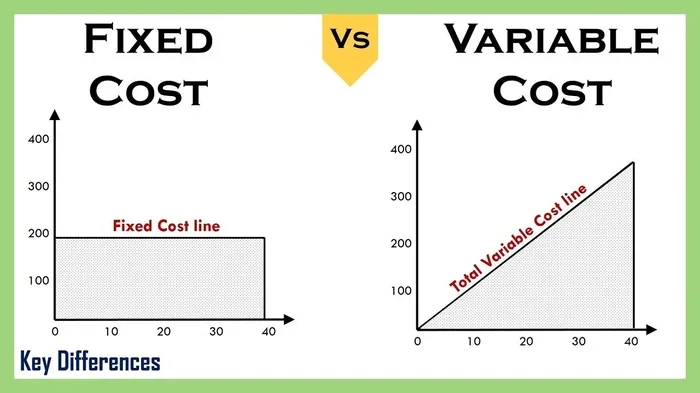
Understanding cost behavior is key to using the high low method effectively. Cost behavior refers to how costs change as production volume or activity levels change. Fixed costs stay the same regardless of activity. Variable costs change in direct proportion to activity. Semi-variable costs have both fixed and variable elements. The high low method helps you identify and separate these components so you can better understand your cost driver and how it affects your bottom line.
How the High Low Method Works in Practice
Let us walk through a practical example. Imagine you run a small manufacturing company. You have monthly data on production volume and total utility costs. You want to estimate how much of your utility cost is fixed and how much varies with production.
First, you identify the month with the highest production volume and the month with the lowest production volume. You then look at the total costs for those two months. Using a simple formula, you calculate the variable cost per unit of production. Once you have that, you can determine the fixed cost component. The resulting formula lets you estimate total costs at any production level within your relevant range.
The formula is straightforward:
- Variable Cost Per Unit = (Cost at High Activity – Cost at Low Activity) / (High Activity Units – Low Activity Units)
- Fixed Cost = Total Cost at High Activity – (Variable Cost Per Unit x High Activity Units)
These calculations are easy to perform in a spreadsheet. You do not need specialized data analysis software. This accessibility makes the high low method a popular choice for quick cost estimation tasks.
A Quick Example to Illustrate
Suppose your highest production month was 10,000 units with a total cost of $50,000. Your lowest production month was 4,000 units with a total cost of $32,000. The variable cost per unit would be ($50,000 – $32,000) / (10,000 – 4,000) = $3 per unit. The fixed cost would be $50,000 – ($3 x 10,000) = $20,000. Now you have a formula: Total Cost = $20,000 + ($3 x Units Produced). This simple formula can guide your budgeting and pricing decisions.
Key Advantages of the High Low Method
The advantages disadvantages of high low method accounting are well documented. Let us start with the benefits. Understanding why this method is popular helps you decide if it fits your needs.
1. Simplicity and Ease of Use
The biggest advantage of the high low method is its simplicity. You do not need advanced mathematical skills or expensive software. A basic calculator or spreadsheet is all you need. This makes it accessible to business owners, managers, and students who are just learning about cost accounting. The straightforward calculations mean you can get results in minutes, not hours.
2. Quick Cost Estimation
When you need fast cost estimation, the high low method delivers. Unlike more complex techniques like regression analysis, it does not require large datasets or statistical tools. You can apply it to any set of cost data with just two points. This speed makes it ideal for quick decisions, such as setting a budget or evaluating a new product line.
3. Helpful for Budgeting and Financial Planning
The high low method provides a clear breakdown of fixed and variable costs. This breakdown is invaluable for financial planning and budgeting. When you know your fixed costs, you understand your baseline expenses. When you know your variable costs per unit, you can forecast how costs will change with production levels. This clarity supports better decision-making across your organization.
4. Useful for Small Businesses
Small businesses often lack the resources for complex cost analysis. The high low method gives them a practical way to understand their cost behavior without hiring a team of analysts. It is especially useful for businesses that need to set prices, control costs, or prepare budgets quickly. Many small business owners rely on this technique as their primary tool for splitting costs into meaningful categories.
Many modern businesses also use SaaS platforms to manage their accounting and financial planning. If you want to learn more about the advantages and disadvantages of SaaS for your business, that article covers the full picture of cloud-based tools.
Notable Disadvantages of the High Low Method
While the high low method has clear benefits, it also has significant drawbacks. Understanding these limitations is just as important as knowing the advantages.
1. Ignores Most of Your Data
The most critical flaw of the high low method is that it only uses two data points. It ignores all the other months or observations in your dataset. This means any unusual spikes or dips in those two specific months can significantly skew your results. If your highest activity month happened to have an unusual cost spike, your entire estimate could be way off. This is a major weakness in data analysis.
2. Less Accurate Than Other Methods
Because it relies on just two points, the high low method is generally less accurate than methods like regression analysis or the least squares method. Those approaches consider all data points and provide a better fit line. The high low method can produce estimates that are far from reality, especially when your data has a lot of variability. For businesses that need precise cost information, this inaccuracy can be problematic.
3. Assumes Linear Cost Behavior
The high low method assumes that costs behave in a perfectly linear fashion. In reality, costs often follow curved or step patterns. For example, you might need to hire a new supervisor once production crosses a certain threshold, creating a step change in costs. The high low method cannot capture these nuances. It oversimplifies the relationship between activity and cost, which can lead to poor decisions.
4. Does Not Account for Outliers
Outliers are data points that are significantly different from the rest of your dataset. The high low method has no mechanism to identify or handle outliers. If your highest or lowest activity point is an outlier, it will distort your entire cost estimate. Other methods, such as scatter plot analysis, allow you to identify and exclude outliers before calculating your cost formula.
When creating financial presentations or budget proposals, many professionals use a mockup to visualize their data and plans before sharing them with stakeholders. A mockup helps ensure your cost estimates are presented clearly and professionally.
High Low Method vs Other Cost Estimation Approaches
Understanding how the high low method compares to other approaches helps you choose the right tool for your situation. Let us look at the key alternatives.
High Low Method vs Regression Analysis
Regression analysis is a more sophisticated cost estimation technique. It considers all data points, not just the highest and lowest. This makes it more accurate and reliable. However, it requires statistical software and a solid understanding of statistics. The high low method wins on simplicity, while regression analysis wins on accuracy.
High Low Method vs Scatter Graph Method
The scatter graph method plots all data points on a chart and draws a line of best fit by visual judgment. It is more accurate than the high low method because it considers all data. It also helps identify outliers. However, it is more subjective and time-consuming. The high low method is faster but less visually informative.
High Low Method vs Least Squares Regression
Least squares regression is the most mathematically rigorous approach. It minimizes the sum of squared errors across all data points. It provides the most accurate cost estimates but requires the most computational effort. For most small businesses, the high low method offers a good balance of simplicity and usefulness.
Industry experts often discuss these tradeoffs. At recent accounting conferences, the speakers talked about how choosing the right cost estimation method depends on your business size, data quality, and decision needs. You can read more about what the speakers are talking about in these discussions.
When Is the High Low Method Most Useful?
Knowing when to use the high low method is just as important as understanding how it works. Here are the situations where it shines.
- Quick Budget Estimates: When you need a fast cost estimate for budgeting purposes, the high low method is hard to beat.
- Small Businesses: Companies with limited resources and simple cost structures benefit greatly from this straightforward approach.
- Educational Purposes: It is an excellent teaching tool for students learning about cost accounting and cost behavior.
- Stable Operations: When your production levels and cost patterns remain fairly consistent, the high low method produces reasonably reliable results.
- Initial Analysis: It serves as a good starting point before applying more complex methods to refine your estimates.
However, avoid using the high low method when your data has extreme variability, frequent outliers, or non-linear cost patterns. In those cases, regression analysis or other advanced techniques will give you much better results.
Quick Tips for Getting Better Results
- Always review your highest and lowest data points for anomalies before calculating.
- Use the high low method as a starting point, then refine with more advanced techniques if needed.
- Compare your results with actual costs to check for accuracy.
- Keep your data within a relevant range where cost behavior is expected to remain linear.
- Document your assumptions so others can understand and validate your estimates.
Common Mistakes to Avoid
Even with a simple method like the high low method, mistakes can happen. Here are the most common ones:
- Choosing the Wrong Data Points: Make sure your highest and lowest points truly represent the extremes of your activity levels, not just random months with unusual costs.
- Ignoring Seasonality: If your business has seasonal patterns, the highest and lowest points might reflect seasonal effects rather than true cost behavior.
- Applying It to Complex Cost Structures: Businesses with many different cost drivers should not rely solely on the high low method. Use it alongside other techniques for a fuller picture.
- Forgetting to Check for Outliers: Always inspect your data for outliers before applying the method. One unusual data point can throw off your entire estimate.
- Assuming Perfect Linearity: Remember that real-world costs rarely follow a perfectly straight line. Use the high low method as an approximation, not an exact science.
Conclusion
The advantages disadvantages of high low method accounting highlight a tool that is simple, fast, and accessible but limited in accuracy and scope. The high low method remains a valuable technique in cost accounting for quick estimates, budgeting, and initial cost analysis. Its simplicity makes it ideal for small businesses, students, and anyone who needs fast results without complex tools.
However, its limitations are real. It ignores most of your data, cannot handle outliers, and assumes linear cost behavior. For businesses that need precise cost information or have complex cost structures, more advanced methods like regression analysis are better suited. The key is to understand what the high low method can and cannot do, and to use it appropriately within its strengths.
By combining the simplicity of the high low method with the insights from more advanced techniques, you can build a robust cost estimation framework for your business. Start simple, refine as needed, and always validate your estimates against actual results. This approach will serve you well in any financial planning or budgeting effort.
Frequently Asked Questions
What is the high low method in accounting?
The high low method is a simple accounting technique used to split mixed costs into fixed and variable components. It uses the highest and lowest activity levels from a dataset to estimate these two cost parts. The method provides a quick way to understand cost behavior without complex tools.
When should you use the high low method?
You should use the high low method when you need fast cost estimates, have limited data, or are working with a small business that has a relatively stable cost structure. It is also great for learning basic cost accounting concepts and for initial budget planning before applying more detailed analysis.
What are the main disadvantages of the high low method?
The main disadvantages include ignoring most of your data, being less accurate than regression analysis, assuming linear cost behavior, and being sensitive to outliers. Because it only uses two data points, unusual spikes or dips in those months can significantly distort your cost estimates and lead to poor decisions.
How does the high low method compare to regression analysis?
The high low method is much simpler and faster but less accurate. Regression analysis considers all data points and provides a statistically rigorous estimate of fixed and variable costs. Regression analysis requires more technical knowledge and software, while the high low method can be done with a basic calculator.
Can the high low method be used for any type of cost?
The high low method works best with mixed costs that have both fixed and variable components. It is not ideal for costs that follow non-linear patterns or have multiple cost drivers. For complex cost structures, you should consider using regression analysis or other advanced cost estimation techniques alongside the high low method.
Is the high low method still relevant in modern accounting?
Yes, the high low method remains relevant, especially for small businesses, educational purposes, and quick estimates. While modern accounting software offers advanced tools, the simplicity and accessibility of the high low method ensure it continues to be taught and used in practice. Many professionals start with this method before moving to more sophisticated approaches.