What Are the Uses of a Supercomputer
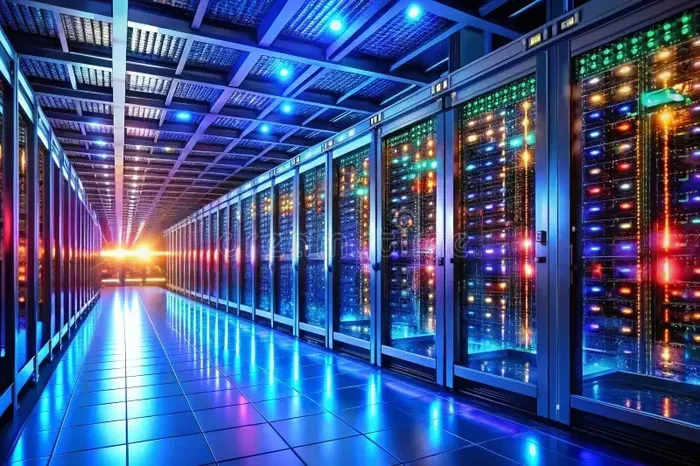
A supercomputer is a massive machine designed to handle incredibly complex calculations that regular computers simply cannot manage. From predicting hurricanes and discovering new drugs to training artificial intelligence and modeling the universe, supercomputers power some of humanity’s most important work. Understanding what they do helps us appreciate just how much they shape our daily lives and future.
A supercomputer is not just a really fast laptop. It is an entirely different beast. When we talk about supercomputers, we are referring to machines built to solve problems so complex that thousands of regular computers working together still could not keep up. These systems sit at the top of the high-performance computing world, and they drive progress across nearly every major industry on the planet.
You might wonder why anyone needs a machine this powerful. The answer is simple: some problems are just too big, too detailed, or too time-sensitive for ordinary computers. Whether it is simulating the behavior of molecules to find a new cancer drug or modeling the entire Earth’s climate system, supercomputing makes the impossible possible. In this article, we will explore the many supercomputing applications that shape our world today.
The speed of a supercomputer is measured in processing speed that goes far beyond what you see in consumer devices. While a typical laptop might operate in gigaflops, supercomputers work in petaflops and even exaflops. That means trillions and quadrillions of calculations per second. This raw computational power is what makes them so valuable for tasks that involve enormous datasets and intricate simulations.
Key Takeaways
- Scientific breakthroughs: Supercomputers simulate complex experiments that would take years to run in real life.
- Weather and climate prediction: They process massive amounts of atmospheric data to forecast storms and long-term climate trends.
- Medical discoveries: Drug development and genomic research rely heavily on supercomputing power.
- AI and machine learning: Training advanced AI models requires the enormous processing capacity only supercomputers provide.
- Financial modeling: Banks and institutions use them for risk analysis, fraud detection, and market simulations.
- Aerospace and defense: Supercomputers help design aircraft, simulate nuclear tests, and support space missions.
- Massive scale: These machines use thousands of processors working together in parallel to solve problems no single computer can handle.
📑 Table of Contents
- What Exactly Is a Supercomputer?
- Scientific Research and Space Exploration
- Weather Forecasting and Climate Modeling
- Healthcare and Medical Breakthroughs
- Artificial Intelligence and Machine Learning
- Financial Services and Big Data Analytics
- Other Notable Uses of Supercomputers
- How Supercomputers Compare to Regular Computers
- Common Mistakes People Make When Thinking About Supercomputers
- Expert Insights on the Future of Supercomputing
- Conclusion
What Exactly Is a Supercomputer?
A supercomputer is a system that combines thousands or even millions of processors to work on a single problem at the same time. This approach is called parallel processing. Instead of one brain trying to solve everything, imagine a million brains all working on different pieces of the same puzzle. That is essentially what happens inside these machines.
These systems are housed in data centers that consume enormous amounts of electricity and require advanced cooling systems. The largest supercomputers in the world take up entire buildings. They use specialized computing clusters where each node contributes its own share of power. The result is a machine that can crunch numbers at speeds that redefine what is possible in science and technology.
Supercomputers are not just about speed. They are also about memory and storage. The biggest NVMe SSD drives available still pale in comparison to the storage arrays these machines use. They need to hold vast amounts of data while running simulations that could last for days or even weeks without interruption.
Scientific Research and Space Exploration
One of the most important supercomputing applications is in scientific research. Scientists use these machines to simulate experiments that would be too expensive, dangerous, or simply impossible to run in a real laboratory. From physics to biology, supercomputers have become essential tools for discovery.
Simulating the Universe and Fundamental Physics
Physicists use supercomputers to model the behavior of subatomic particles, simulate black holes, and study the origins of the cosmos. Programs like those run at CERN rely on massive computational power to process collision data from particle accelerators. Without supercomputers, researchers would have no way to analyze the sheer volume of data produced by experiments like the Large Hadron Collider.
Modeling Space Missions and Satellite Design
Aerospace engineers depend on supercomputers to design spacecraft and simulate re-entry trajectories. NASA and other space agencies use these systems to test designs virtually before building expensive prototypes. The computing clusters inside these machines allow engineers to run thousands of simulations in the time it would take to build a single physical model. This saves money, reduces risk, and accelerates the pace of innovation.
Weather Forecasting and Climate Modeling
When you check the weather app on your phone, you are benefiting from supercomputers thousands of miles away. Weather forecasting is one of the most well-known supercomputing applications, and for good reason. Predicting the weather requires processing enormous amounts of data from satellites, ocean buoys, weather stations, and radar systems all at once.
How Supercomputers Predict the Weather
Meteorologists feed real-time atmospheric data into supercomputers, which then run complex mathematical models to predict what will happen next. These models account for temperature, humidity, wind speed, air pressure, and countless other variables. The more processing power available, the more detailed and accurate the forecast becomes.
Modern weather prediction would be impossible without high-performance computing. A regular computer would take weeks to process the data that a supercomputer handles in minutes. This speed is critical when a hurricane or tornado is approaching and forecasters need to issue timely warnings.
Long-Term Climate Modeling
Beyond daily weather, supercomputers also help scientists understand long-term climate trends. Climate models simulate decades or even centuries of atmospheric and oceanic behavior. These simulations help researchers predict how global temperatures might change, how sea levels could rise, and how extreme weather events might shift in frequency. The insights from these models directly influence global policy decisions.
Healthcare and Medical Breakthroughs
The healthcare industry has been transformed by supercomputers. From discovering new medicines to understanding the human genome, these machines are accelerating medical progress at an incredible pace.
Drug Discovery and Development
Developing a new drug traditionally takes over a decade and costs billions of dollars. Supercomputers are changing that. Scientists use them to simulate how different molecules interact with proteins in the human body. These scientific simulations can identify promising drug candidates in a fraction of the time it would take through traditional trial and error.
During the COVID-19 pandemic, researchers used high-performance computing to screen millions of chemical compounds and identify potential treatments faster than ever before. This kind of speed can mean the difference between a timely response to a global health crisis and a slow, reactive one.
Genomic Research and Personalized Medicine
The human genome contains roughly three billion base pairs. Analyzing this data requires immense computational power. Supercomputers process genetic information to identify mutations, predict disease risks, and develop personalized treatment plans. This field, known as genomic medicine, is one of the most exciting frontiers in modern healthcare.
Artificial Intelligence and Machine Learning
Artificial intelligence is one of the fastest-growing fields in technology, and supercomputers are the engines that power it. Training advanced AI models requires processing staggering amounts of data through complex machine learning models. A regular computer would need years to complete what a supercomputer can do in days or even hours.
Training Large Language Models
Models like GPT and other large language models are trained on datasets containing trillions of words. This training process demands massive processing speed and memory. Supercomputers provide the necessary infrastructure by distributing the workload across thousands of GPUs and CPUs simultaneously. Without them, the AI revolution we are experiencing today would not be possible.
Computer Vision and Autonomous Systems
AI systems that can recognize images, understand speech, and drive cars also rely on supercomputing power. These systems need to process millions of data points in real time. Training the neural networks behind autonomous vehicles, facial recognition, and medical imaging all happens on high-performance computing clusters.
If you are curious about how computing power compares between different types of machines, you might want to read about what is the ram of a laptop and how it affects everyday performance. While laptop RAM helps your device run smoothly, a supercomputer uses vastly more memory distributed across thousands of nodes to handle its enormous workloads.
Financial Services and Big Data Analytics
The financial world runs on data, and supercomputers are the backbone of modern finance. Banks, investment firms, and insurance companies all rely on high-performance computing to make sense of massive datasets and manage risk.
Risk Analysis and Market Simulations
Financial institutions use supercomputers to simulate market conditions and assess risk. These simulations can model thousands of economic scenarios in seconds, helping traders and analysts make better decisions. The computational power of a supercomputer allows firms to process real-time market data and respond to changes faster than any human could.
Fraud Detection and Security
Detecting fraudulent transactions in real time requires analyzing patterns across millions of data points. Supercomputers run algorithms that flag suspicious activity almost instantly. This protects consumers and financial institutions from billions of dollars in losses each year. The speed and accuracy of these systems depend entirely on the processing speed of the underlying computing clusters.
For those interested in how computing infrastructure supports business operations, understanding what is a reasonable cost of sales for a saas product can provide useful context. While SaaS companies do not always use supercomputers directly, the same principles of high-performance computing scale down to the cloud services they rely on.
Other Notable Uses of Supercomputers
The reach of supercomputers extends into many other fields that might surprise you. Here are a few more areas where these powerful machines make a real difference.
- Energy exploration: Oil and gas companies use supercomputers to model underground reservoirs and optimize drilling operations. These simulations save millions of dollars and reduce environmental impact.
- Automotive design: Car manufacturers run crash simulations and aerodynamic tests on supercomputers before building physical prototypes. This speeds up the design process and improves vehicle safety.
- Agricultural research: Scientists model crop yields, soil conditions, and weather patterns to develop more resilient and productive farming strategies.
- Nuclear research: Supercomputers simulate nuclear reactions, helping researchers study energy production and ensure the safety of existing nuclear facilities without conducting live tests.
How Supercomputers Compare to Regular Computers
It can be hard to grasp just how different a supercomputer is from the device you are using right now. A regular laptop, even a powerful one, operates on a completely different scale. The RAM in a laptop helps it run apps and browse the web smoothly, but it is nothing compared to the terabytes of memory inside a supercomputer. If you want to learn more about how RAM impacts performance, you can check out what does the ram do in a laptop for a helpful explanation.
Where a laptop might have 8 to 16 gigabytes of RAM, a supercomputer has petabytes. Where a laptop has a few processor cores, a supercomputer has hundreds of thousands. The difference is not just one of degree but of kind. Supercomputers solve problems that are fundamentally beyond the reach of any personal computer.
For those curious about how all this computing power connects to everyday devices, it is worth noting that the laptops with a lot of ram available today are designed to give users a taste of what high-performance computing feels like, even on a smaller scale. These machines show how important memory and processing power are for handling demanding tasks.
Common Mistakes People Make When Thinking About Supercomputers
There are a few misconceptions about supercomputers that are worth clearing up. First, many people assume that supercomputers are just really fast laptops. In reality, they are completely different architectures designed for specific types of workloads. Second, some believe that supercomputers are only used by governments and large corporations. While these are major users, universities, hospitals, and research institutions also rely on them daily.
Another common mistake is underestimating the role of software. Supercomputers are only as effective as the programs running on them. Writing code that can efficiently distribute work across thousands of processors is a specialized skill. Without the right software, even the most powerful machine will sit idle.
Expert Insights on the Future of Supercomputing
The future of supercomputing is incredibly exciting. Experts predict that the next generation of machines will push into the era of exascale computing, performing a billion billion calculations per second. This level of power will unlock new possibilities in every field, from personalized medicine to climate engineering.
Some researchers are also exploring how supercomputers could work alongside quantum computing. While quantum computers excel at certain types of problems, high-performance computing systems will remain essential for the vast majority of scientific and industrial applications. The two technologies are likely to complement each other rather than compete.
One thing is clear: as our world becomes more data-driven, the demand for computational power will only grow. Supercomputers will continue to be at the forefront of innovation, helping us solve the biggest challenges facing humanity.
Conclusion
The uses of a supercomputer are vast, varied, and deeply impactful. From predicting the weather and discovering life-saving drugs to training the next generation of AI and exploring the depths of space, these machines are truly the workhorses of modern science and industry. They represent the absolute peak of computational power and high-performance computing.
Understanding what supercomputers do helps us appreciate the invisible infrastructure that supports so much of modern life. The next time you check a weather forecast, take a new medicine, or use an AI-powered tool, remember that a supercomputer played a role in making that possible. As technology continues to advance, the importance of these extraordinary machines will only grow, and their potential to transform our world is far from exhausted.
Frequently Asked Questions
What is the main purpose of a supercomputer?
The main purpose of a supercomputer is to perform incredibly complex calculations and simulations that regular computers cannot handle. These machines are used for tasks like weather forecasting, scientific research, drug discovery, and AI training. They process massive datasets and run models that require enormous computational power and processing speed.
How is a supercomputer different from a regular computer?
A supercomputer combines thousands or millions of processors to work together through parallel processing, while a regular computer uses a single or few processors. Supercomputers also have vastly more memory, storage, and specialized cooling systems. The difference in scale is enormous, with supercomputers operating at speeds measured in petaflops or exaflops.
Can supercomputers be used for everyday tasks?
Technically yes, but it would be a waste of their capabilities. Supercomputers are designed for specialized high-performance computing tasks that require massive computational power. Everyday tasks like browsing the web or watching videos are far better suited for regular computers or laptops with adequate RAM.
What industries rely most on supercomputers?
The industries that rely most on supercomputers include scientific research, healthcare, weather services, aerospace, finance, and energy. Each of these fields uses supercomputing applications to run simulations, analyze data, and make predictions that would otherwise be impossible. High-performance computing has become essential infrastructure for modern innovation.
How much does a supercomputer cost?
A supercomputer can cost anywhere from tens of millions to hundreds of millions of dollars. The price depends on the scale of the system, the number of processors, memory capacity, and cooling infrastructure. Maintenance and electricity costs also add significantly to the total expense over the machine’s lifetime.
Will supercomputers eventually be replaced by quantum computers?
Most experts believe that supercomputers and quantum computers will work together rather than replace each other. Quantum computers excel at specific types of problems, but supercomputers remain essential for the vast majority of current applications. The two technologies complement each other and are likely to coexist as computing continues to evolve.