What Is a Buffer in Electronics
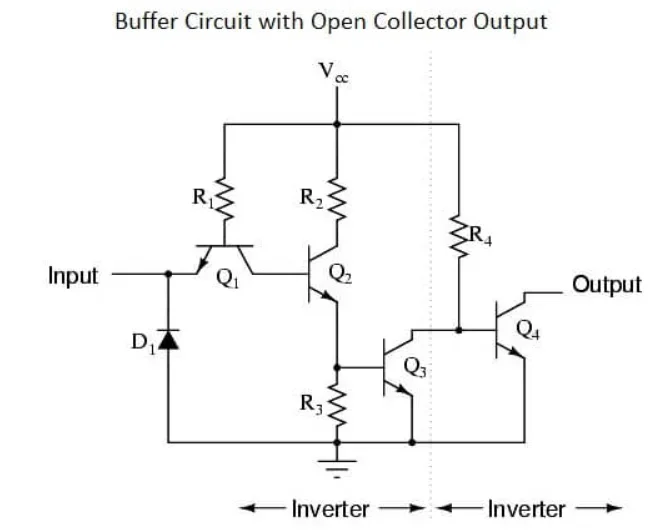
A buffer in electronics is a circuit that isolates one part of an electronic system from another while passing signals cleanly between them. Buffers protect sensitive components, improve signal strength, and prevent signal loss or distortion in devices you use every day. This guide breaks down how buffers work, the types you will encounter, and why they are essential in modern electronic design.
This is a comprehensive guide about What Is A Buffer In Electronics.
Key Takeaways
- Signal Isolation: A buffer keeps the source and load separated so one does not affect the other.
- Impedance Matching: Buffers adjust resistance levels so signals travel efficiently between different circuit stages.
- Multiple Types Exist: Voltage buffers, current buffers, logic buffers, and operational amplifier buffers each serve unique roles.
- Everyday Applications: Buffers are found in computers, audio gear, cameras, sensors, and communication devices.
- Signal Integrity: Using a buffer helps maintain clean, undistorted signals across long traces or between components.
- Beginner Friendly: Understanding buffers is a great first step into learning how electronic circuits work.
[FEATURED_IMAGE_PLACEHOLDER]
Electronics can feel overwhelming. There are resistors, capacitors, transistors, and dozens of other parts that all seem to do different jobs. But one component that often confuses beginners is the buffer. What exactly does a buffer in electronics do? Why is it so important? And where do you find it in the devices you use every day?
Think of a buffer like a helpful middleman. It stands between two parts of a circuit and makes sure they can work together without causing problems for each other. Without buffers, many of the electronic devices you rely on would struggle to function properly. Signals would get weak, components could interfere with one another, and entire systems could fail.
In this article, we will walk through everything you need to know about electronic buffers. We will cover how they work, the different types available, real-world applications, and practical tips for understanding them. Whether you are a student, a hobbyist, or just someone curious about how gadgets work, this guide has you covered.
What Is a Buffer in Electronics?
A buffer in electronics is a circuit or device that sits between two parts of an electronic system. Its main job is to transfer a signal from one stage to the next without changing the signal itself. At the same time, it prevents the two stages from interfering with each other.
The word “buffer” comes from the idea of cushioning or protecting. Just like a bumper on a car absorbs impact, an electronic buffer absorbs the electrical differences between two parts of a circuit. It makes sure the source side does not get loaded down by the device connected to the other end.
Here is a simple way to think about it. Imagine you are trying to have a conversation in a noisy room. If you shout directly at someone far away, your voice gets weaker and harder to understand. But if you use a microphone and a speaker, the signal gets boosted and stays clear. A buffer circuit works in a similar way. It takes the weak or sensitive signal and passes it along cleanly to the next part of the system.
Why Do Electronic Circuits Need Buffers?
Every electronic circuit has a source and a load. The source creates a signal, and the load receives it. The problem is that the load can sometimes pull energy from the source and change the signal. This is called loading effect, and it can cause all kinds of issues.
A buffer solves this problem by presenting a high input impedance to the source and a low output impedance to the load. This means the source barely has to work to send the signal, and the load gets a strong, clean version of it.
Some key reasons circuits need buffers include:
- Preventing signal distortion caused by loading effects.
- Maintaining signal strength over long circuit paths.
- Isolating sensitive components from heavy current draws.
- Matching impedance between different stages of a circuit.
- Allowing one circuit to drive multiple loads without degrading the signal.
How Does a Buffer Work?
To understand how a buffer circuit works, you need to know two important concepts: impedance and gain. Impedance is a measure of how much a circuit resists the flow of electrical current. Gain refers to how much a circuit amplifies or reduces a signal.
A good electronic buffer has high input impedance and low output impedance. The high input impedance means it does not draw much current from the source. The low output impedance means it can deliver current to the load without the signal dropping.
Most buffers also have a gain of one. This means the output signal is the same strength as the input signal. The buffer does not amplify the signal. It simply passes it through while protecting the source. This is why buffers are sometimes called unity gain amplifiers.
The signal integrity stays intact because the buffer does not alter the shape, frequency, or amplitude of the original signal. It just makes sure the signal reaches its destination cleanly and reliably.
The Role of Impedance Matching
Impedance matching is one of the most important jobs a buffer performs. When the output impedance of one circuit does not match the input impedance of the next, signal loss occurs. Some energy reflects back, and the signal becomes weaker or distorted.
A buffer bridges this gap. It takes a high-impedance source and presents a low-impedance output. This smooth transition ensures maximum power transfer and minimal signal reflection. In audio systems, for example, impedance matching is critical for maintaining sound quality.
Types of Buffers in Electronics
Not all buffers are the same. Different applications require different types of buffering. Here are the most common types you will encounter in electronic circuits.
Voltage Buffer
A voltage buffer is the simplest type. It passes the input voltage to the output without any change. The voltage stays the same, but the buffer provides more current capability at the output. This type is also known as a unity gain amplifier because the gain is exactly one.
Voltage buffers are commonly used in signal conditioning circuits. They isolate a sensitive sensor from the rest of the circuit so the sensor is not affected by the current demands of downstream components.
Current Buffer
A current buffer does the opposite of a voltage buffer. It passes the input current to the output while isolating the voltage levels. This type is useful when you need to drive a low-impedance load without affecting the source circuit.
Current buffers are often found in power amplifier stages and in driving heavy loads like motors or speakers.
Logic Buffer
A logic buffer is used in digital circuits. It passes digital signals, like ones and zeros, from one part of a circuit to another. Logic buffers are common in microcontroller systems, where a small chip needs to drive multiple components or long wire runs.
Some logic buffers also include tri-state capabilities. A tri-state buffer can output a high signal, a low signal, or a high-impedance state where it effectively disconnects from the circuit. This is useful for bus systems where multiple devices share the same data line.
Operational Amplifier Buffer
An operational amplifier, or op-amp, can be configured as a buffer. This is called a voltage follower configuration. The op-amp takes the input signal and produces an identical signal at the output. It is one of the most versatile and widely used buffer designs in electronics.
Op-amp buffers offer excellent input impedance and very low output impedance. This makes them ideal for use in audio equipment, measurement instruments, and communication systems.
Active vs. Passive Buffers
Buffers can be classified as active or passive. An active buffer uses powered components like transistors or op-amps. It requires an external power source to operate. A passive buffer uses only passive components like resistors and capacitors. Passive buffers do not need power but are limited in what they can do.
Most modern applications use active buffers because they offer better performance, higher input impedance, and lower output impedance. However, passive buffers still have their place in simple circuits where power efficiency is a priority.
Where Are Buffers Used in Real Devices?
Buffers are everywhere in modern electronics. You probably use devices with buffers every single day without even realizing it. Let us look at some common applications.
Computers and Memory Systems
Inside your computer, buffers play a critical role in data handling. When your computer processes information, it needs to temporarily hold data while it moves between different components. This is where data buffers come in. They act as temporary storage that smooths out the flow of information.
The RAM in your laptop is a great example of how buffering works in practice. Random Access Memory stores data temporarily so the processor can access it quickly. If you want to learn more about how RAM functions in your device, check out our guide on what the RAM in a laptop does and why it matters for performance.
Without proper buffering, your computer would slow down significantly as it struggled to manage data transfers between the processor, storage, and memory.
Audio Equipment
If you have ever used headphones, speakers, or a microphone, you have benefited from audio buffers. Audio signals are often very weak and sensitive. A buffer amplifier ensures that the audio signal stays clean as it moves from the source, like a phone or music player, to the speaker or headphone driver.
In professional audio setups, signal integrity is everything. Engineers use buffers at every stage of the signal chain to prevent noise, distortion, and loss of quality. The result is the clear, rich sound you expect from good audio gear.
Cameras and Imaging Sensors
Digital cameras, including those in smartphones, use buffers to handle image data. When you take a photo, the camera sensor captures a huge amount of information very quickly. A data buffer temporarily holds this information while the camera processes and saves it to storage.
Without a buffer, the camera would lag or drop frames. The buffer gives the processor time to catch up without losing any data. This is especially important in video recording, where the camera captures dozens of frames every second.
Communication Systems
In communication devices, buffers help manage the flow of data between different components. Whether it is a Wi-Fi router, a Bluetooth device, or a cellular modem, buffers ensure that data packets are transmitted smoothly without collisions or loss.
Buffers in communication systems also help with signal propagation. They boost weak signals and ensure they can travel long distances without degrading. This is why your phone can maintain a connection even when you are far from a cell tower.
Sensor Circuits
Sensors in electronic devices produce very small signals. These signals need to be passed to processing circuits without being weakened or distorted. A buffer provides the isolation needed to keep sensor signals clean and accurate.
From temperature sensors in your thermostat to motion sensors in security cameras, buffers help ensure that the data collected is reliable and useful.
Common Mistakes When Using Buffers
Even experienced electronics enthusiasts make mistakes with buffers. Here are some common errors to avoid.
- Choosing the wrong buffer type. Not every buffer works for every application. A voltage buffer is not the same as a current buffer. Make sure you pick the right one for your circuit.
- Ignoring power supply requirements. Active buffers need power. Always check the voltage and current ratings before connecting a buffer to your circuit.
- Overlooking impedance values. If you do not match impedances properly, your buffer will not perform as expected. Always check the input and output impedance specifications.
- Placing the buffer in the wrong location. A buffer should be placed between the source and the load. Putting it after the load defeats its purpose entirely.
- Assuming all buffers are the same. Different buffer ICs have different performance characteristics. Always read the datasheet and understand what your specific buffer can handle.
Buffer vs. Amplifier: What Is the Difference?
People often confuse buffers with amplifiers, but they serve different purposes. An amplifier increases the strength of a signal. A buffer passes the signal through unchanged while providing isolation and impedance matching.
Think of it this way. An amplifier makes your voice louder. A buffer makes sure your voice reaches the listener clearly without the room noise interfering. Both are useful, but they do different jobs.
In some cases, a buffer and an amplifier can be combined in a single circuit. For example, an op-amp can be configured as a buffer or as an amplifier depending on how the feedback resistors are arranged.
Quick Tips for Understanding Buffers
Here are some practical tips to help you get comfortable with the concept of electronic buffers.
- Start with the voltage follower. The op-amp voltage follower is the simplest buffer circuit. Build one on a breadboard and observe how the output matches the input perfectly.
- Use a multimeter. Measure the input and output voltages of a buffer circuit. You will see that they are the same, confirming the unity gain behavior.
- Observe the loading effect. Connect a load directly to a source and watch the signal drop. Then add a buffer between them and see how the signal stays strong.
- Read datasheets. Look up common buffer ICs like the LM741 or TL072. Understanding their specifications will build your practical knowledge.
- Experiment with tri-state buffers. These are great for learning about digital logic and bus systems in microcontroller projects.
The more you work with buffers in real circuits, the more natural the concept becomes. Start simple and gradually explore more complex buffer designs as your confidence grows.
Expert Insights on Buffer Design
Experienced electronics engineers emphasize a few key principles when designing with buffer circuits. First, always consider the bandwidth of your buffer. A buffer that works well at low frequencies may struggle at high frequencies. Second, pay attention to the slew rate, which determines how quickly the buffer can respond to rapid changes in the input signal.
Another important insight is to always simulate your circuit before building it. Tools like SPICE simulators allow you to test how a buffer will behave under different conditions. This saves time and prevents costly mistakes on physical prototypes.
Finally, keep signal propagation in mind. In high-speed digital circuits, even small delays in signal travel can cause problems. Choosing a buffer with low propagation delay is essential for maintaining timing accuracy in fast systems.
Conclusion
A buffer in electronics is a simple yet powerful concept. It isolates, protects, and passes signals between different parts of a circuit without changing them. From the RAM in your computer to the audio gear in your home, buffers are working behind the scenes to keep your devices running smoothly.
Understanding how buffers work gives you a stronger foundation in electronics. You will start to see them everywhere once you know what to look for. Whether you are building your first circuit on a breadboard or designing complex systems, knowing when and how to use a buffer circuit is a valuable skill.
If you want to dive deeper into how electronic components work together, explore our article on what RAM is good for in a laptop to see buffering in action within real-world computing systems. The more you learn, the more you will appreciate the elegant simplicity of a well-designed buffer.
Start experimenting today. Build a simple voltage follower, test it with a multimeter, and watch the magic of signal isolation in action. Buffers may be small, but their impact on modern electronics is enormous.
Frequently Asked Questions
What is the main purpose of a buffer in electronics?
The main purpose of a buffer in electronics is to isolate one part of a circuit from another while passing signals cleanly between them. It prevents the loading effect, maintains signal integrity, and ensures that the source and load do not interfere with each other.
How is a buffer different from an amplifier?
An amplifier increases the strength of a signal, while a buffer passes the signal through unchanged. A buffer provides isolation and impedance matching without altering the signal amplitude. Some op-amps can function as either, depending on the circuit configuration.
What is a unity gain buffer?
A unity gain buffer is a buffer circuit where the output voltage exactly matches the input voltage. The gain is one, meaning no amplification occurs. The op-amp voltage follower is the most common example of a unity gain configuration used as a buffer amplifier.
Where are buffers commonly found in everyday devices?
Buffers are found in computers, audio equipment, cameras, communication devices, and sensor circuits. In computers, RAM modules act as data buffers. In audio gear, buffer amplifiers keep signals clean between stages. In cameras, buffers temporarily hold image data during processing.
Can a buffer improve signal quality?
Yes, a buffer can significantly improve signal quality by preventing signal loss, reducing distortion, and isolating sensitive components from heavy loads. It ensures that the signal reaching the destination is as clean and strong as the original, which is especially important in audio systems and measurement instruments.
Do I need a passive or active buffer for my project?
It depends on your application. An active buffer uses powered components and offers better performance with higher input impedance and lower output impedance. A passive buffer uses only resistors and capacitors and does not require power. For most modern projects, an active buffer is the better choice for reliable signal handling.