What Is Rdna2 Compute Unit Architecture
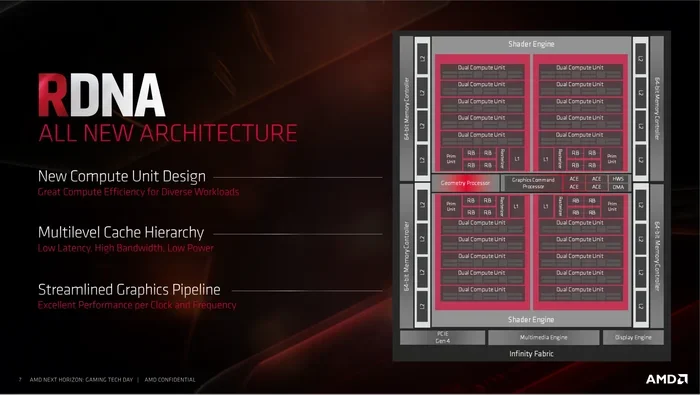
RDNA2 compute unit architecture is AMD’s next-generation GPU design that dramatically improves gaming and graphics performance in laptops. Each compute unit packs more processing power, ray tracing support, and better energy efficiency than previous generations. Understanding this architecture helps you choose the right laptop GPU for your needs.
RDNA2 compute unit architecture represents a massive leap forward in GPU design from AMD. If you have been shopping for a laptop and noticed the term “RDNA2” on spec sheets, you might wonder what it actually means. The compute unit is the fundamental building block inside every AMD graphics chip. Understanding how RDNA2 redesigns this unit gives you real insight into why modern laptops can deliver such impressive performance in such thin packages.
In this article, we will break down the RDNA2 compute unit architecture in simple terms. You will learn what makes it different, why it matters for your laptop, and how it impacts everyday use. Whether you are a gamer, a student, or a creative professional, this knowledge helps you make smarter buying decisions. Let us dive into the details of RDNA2 compute unit architecture and see what makes it tick.
Key Takeaways
- RDNA2 CU Basics: The compute unit is the core building block of AMD’s RDNA2 GPU architecture, handling all graphics and compute tasks.
- Ray Tracing Support: RDNA2 introduced hardware-accelerated ray tracing to the laptop GPU market for the first time.
- Infinity Cache: A new high-speed cache layer reduces memory bottlenecks and improves bandwidth efficiency.
- Power Efficiency: RDNA2 delivers significantly better performance per watt compared to the original RDNA architecture.
- Laptop Impact: RDNA2 enables thin and light laptops to deliver desktop-class gaming and content creation performance.
- Scalability: The architecture scales from entry-level to high-end GPUs, powering everything from budget laptops to premium gaming machines.
📑 Table of Contents
What Is RDNA2 Compute Unit Architecture?
RDNA2 stands for Radeon DNA Generation 2. It is AMD’s second generation of GPU architecture designed for both desktops and laptops. At its heart lies the compute unit, often called a CU. Each compute unit is a small processor cluster that handles graphics calculations, shading, and parallel workloads. Think of it as a tiny factory inside your GPU that processes visual data every single frame.
The RDNA2 compute unit architecture refined every part of the CU. AMD increased the number of stream processors, improved cache hierarchy, and added dedicated ray tracing hardware. These changes work together to deliver more frames per second and better power efficiency. For laptop users, this means you get stronger graphics performance without draining your battery or overheating your device.
How a Compute Unit Works
A single compute unit contains several key components that work in harmony. Each CU includes stream processors that handle mathematical calculations for rendering graphics. It also has texture mapping units that apply surfaces and details to 3D objects. Render output units handle the final pixel output to your display. Together, these components form a complete graphics processing pipeline.
In RDNA1, each compute unit had 64 stream processors. RDNA2 kept this base number but improved how those processors are organized and fed with data. The internal structure became more efficient, reducing wasted cycles and boosting throughput. This means every compute unit in an RDNA2 GPU does more work per clock cycle than its predecessor.
Key Features of RDNA2 Compute Units
RDNA2 introduced several groundbreaking features that set it apart from the original RDNA architecture. Each feature plays a specific role in improving performance, efficiency, and visual quality. Let us explore the most important ones in detail.
Ray Tracing Acceleration
One of the biggest upgrades in RDNA2 is hardware-accelerated ray tracing. Ray tracing simulates how light bounces off surfaces in a virtual environment. This creates incredibly realistic shadows, reflections, and lighting effects. Previous GPU architectures handled ray tracing through software, which was slow and resource-heavy. RDNA2 added dedicated ray tracing cores inside each compute unit.
For laptop users, this means you can enjoy ray tracing effects in supported games without completely tanking your frame rate. The dedicated hardware takes over the heavy lifting, leaving your stream processors free to handle other tasks. This is a game-changer for laptop GPU performance and brings console-quality visuals to portable machines.
Infinity Cache
Infinity Cache is another major innovation in RDNA2. It is a large, ultra-fast cache layer that sits between the compute units and the GPU memory. Cache stores frequently accessed data close to the processors so they do not have to wait for slower main memory. Infinity Cache dramatically reduces latency and increases effective bandwidth.
For laptops, Infinity Cache is especially valuable. It allows AMD to use less physical memory while still delivering excellent performance. This helps keep laptop designs thin and lightweight without sacrificing graphical power. The cache also improves power efficiency because the GPU spends less time accessing energy-hungry memory modules.
Improved Power Efficiency
RDNA2 was designed with power efficiency as a top priority. AMD refined the process node to 7nm, which allows more transistors to fit in a smaller space while consuming less power. Each compute unit operates more efficiently, delivering higher performance per watt. This is critical for laptops where battery life and thermal management are always a concern.
When you compare an RDNA2 laptop GPU to an older generation, the difference in power consumption is noticeable. You get more frames per second while drawing less power from your battery. This efficiency also means cooler operation, which keeps your laptop quiet during intensive tasks like gaming or video editing.
Enhanced Shader Engines
RDNA2 doubled the number of shader engines compared to RDNA1. A shader engine is a group of compute units that work together on complex graphical tasks. More shader engines mean better parallel processing capability. This directly translates to smoother gameplay and faster rendering times in creative applications.
Each shader engine in RDNA2 handles a portion of the workload independently. This parallel approach allows the GPU to tackle many tasks simultaneously. For content creators using laptops, this means faster video rendering, smoother 3D modeling, and quicker photo editing workflows.
RDNA2 vs. Previous Generations
Understanding the improvements in RDNA2 becomes easier when you compare it to older architectures. RDNA1 laid the foundation, but RDNA2 built on it with significant upgrades across every metric.
Compared to RDNA1, RDNA2 compute units offer roughly 50 percent better performance at the same power level. The addition of ray tracing cores and Infinity Cache were the biggest differentiators. RDNA1 relied on software-based ray tracing, which consumed significant compute resources. RDNA2 offloads this work to dedicated hardware, freeing up the rest of the GPU.
When you look at how what gpu is the ryzen 7 5700g equivalent to, you see that RDNA2 GPUs in integrated graphics form factor deliver competitive performance that was previously only available in discrete mobile GPUs. The architecture improvements make integrated solutions far more capable for everyday tasks and light gaming.
RDNA2 vs. Competitor Architectures
RDNA2 competes directly with NVIDIA’s Turing and Ampere architectures. Each has its strengths. RDNA2 stands out for its Infinity Cache, which provides excellent bandwidth efficiency. NVIDIA’s architectures tend to excel in raw rasterization performance and software ecosystem support through CUDA. However, RDNA2’s ray tracing implementation and power efficiency make it a strong contender in the laptop space.
The real-world difference often comes down to specific laptop implementations. Thermal design, power limits, and cooling solutions all affect how an RDNA2 GPU performs in a thin and light notebook. This is why checking a laptop’s cooling system is just as important as looking at the GPU chip itself.
Why RDNA2 Matters for Laptops
Laptop design always involves trade-offs between performance, battery life, and portability. RDNA2 compute unit architecture helps strike a better balance across all three areas. The improved efficiency means manufacturers can pack powerful graphics into thinner chassis without creating excessive heat or noise.
For students and professionals, RDNA2-powered laptops handle multitasking with ease. You can run multiple applications, browse with many tabs open, and still have GPU headroom for casual gaming or creative work. The architecture’s efficiency also means longer battery life during everyday tasks like web browsing, document editing, and video streaming.
Gamers benefit even more from RDNA2 in laptops. The architecture supports modern gaming features like ray tracing and variable rate shading. These technologies improve visual quality while maintaining playable frame rates. Even a mid-range RDNA2 laptop GPU can deliver smooth 1080p gaming in most titles at high settings. If you want to keep your laptop GPU temperature in check during long gaming sessions, RDNA2’s efficiency design helps a lot.
RDNA2 in Current Laptop Lineups
Many major laptop manufacturers now offer RDNA2-powered models across different price ranges. AMD’s own Ryzen mobile processors often come with integrated RDNA2 graphics. Standalone RDNA2 laptop GPUs are also available from partners like ASUS, Lenovo, HP, and Dell. This wide availability means you can find an RDNA2 laptop that fits almost any budget and use case.
When shopping for a laptop, look for RDNA2 in the specifications to ensure you are getting modern graphics architecture. The performance gains over older generations are substantial and will make your laptop feel more responsive and capable for years to come.
Common Mistakes When Choosing an RDNA2 Laptop
Not all RDNA2 laptops are created equal. Different manufacturers implement the architecture with varying power limits and cooling solutions. Here are some common mistakes to avoid when buying an RDNA2 laptop.
- Ignoring TGP (Total Graphics Power): TGP determines how much power the GPU is allowed to use. A higher TGP means better performance but also more heat and power draw. Always check this spec before buying.
- Overlooking Cooling Design: Even the best RDNA2 GPU will throttle if the laptop has poor cooling. Look for laptops with robust heat pipe systems and multiple fans.
- Confusing Integrated and Discrete RDNA2: Some laptops use RDNA2 for integrated graphics while others use it for discrete GPUs. Discrete RDNA2 GPUs are significantly more powerful. Make sure you know which type you are getting.
- Neglecting RAM Compatibility: Your laptop’s RAM affects overall system performance. If you are upgrading or buying used, check how to know what ram is compatible with my laptop to ensure optimal performance with your RDNA2 GPU.
Final Thoughts
RDNA2 compute unit architecture is a landmark achievement in GPU design. It brings ray tracing, Infinity Cache, and remarkable power efficiency to laptops of all sizes. The compute unit at its core has been refined to deliver more performance per clock, per watt, and per square millimeter than ever before. Whether you are gaming, creating content, or just working through your daily tasks, an RDNA2-powered laptop gives you a significant performance advantage.
When you invest in a laptop with RDNA2 graphics, you are investing in longevity and capability. The architecture supports modern gaming features, professional workloads, and everyday computing with ease. It is one of the best investments you can make for your laptop’s lifespan and performance over the coming years.
Take the time to understand the RDNA2 specifications when you shop. Look at TGP values, cooling solutions, and overall build quality. With the right RDNA2 laptop, you get a powerful, efficient, and versatile machine that handles everything from casual browsing to demanding creative projects with confidence.
Frequently Asked Questions
What does RDNA2 stand for?
RDNA2 stands for Radeon DNA Generation 2. It is AMD’s second generation of graphics processing unit architecture, designed to deliver improved performance, efficiency, and features compared to the original RDNA generation.
How many compute units are in an RDNA2 GPU?
The number of compute units varies by the specific GPU model. Lower-end RDNA2 laptop GPUs may have around 12 to 16 compute units, while higher-end models can feature 40 or more. Each compute unit contains stream processors, texture mapping units, and ray tracing cores.
Is RDNA2 good for gaming on a laptop?
Yes, RDNA2 is excellent for laptop gaming. It supports hardware-accelerated ray tracing, variable rate shading, and Infinity Cache, all of which improve gaming performance and visual quality. You can enjoy smooth gameplay at 1080p and even 1440p on many RDNA2 laptop models.
What is the difference between RDNA1 and RDNA2 compute units?
RDNA2 compute units are more efficient and powerful than RDNA1. The key upgrades include dedicated ray tracing hardware, a larger Infinity Cache, improved power efficiency, and doubled shader engines. These changes result in roughly 50 percent better performance at the same power level.
Can I find RDNA2 in budget laptops?
Yes, RDNA2 is available across a wide range of price points. AMD’s integrated RDNA2 graphics come in many budget-friendly Ryzen mobile processors. Discrete RDNA2 laptop GPUs are also available at various price levels, making the architecture accessible to most buyers.
Does RDNA2 support PCIe Gen 4?
Yes, RDNA2 supports PCIe Gen 4, which provides faster data transfer between the GPU and the rest of the system. This is particularly beneficial for discrete RDNA2 laptop GPUs where bandwidth can impact overall performance in demanding applications.
=== CONCLUSION ===
RDNA2 compute unit architecture is a defining advancement in mobile GPU technology. It brings together ray tracing, Infinity Cache, and exceptional power efficiency in a design that fits perfectly inside modern laptops. The compute unit at the core of every RDNA2 GPU has been carefully engineered to maximize performance while minimizing power consumption and heat output.
Whether you are a gamer looking for smooth frame rates, a student who needs reliable performance for schoolwork, or a creative professional who relies on GPU acceleration, RDNA2 delivers. Understanding this architecture empowers you to choose the right laptop with confidence. Keep these insights in mind during your next purchase, and you will find an RDNA2 laptop that serves you well for many years to come.