What Is the Difference Between Nikon Nikkor Camera Lenses
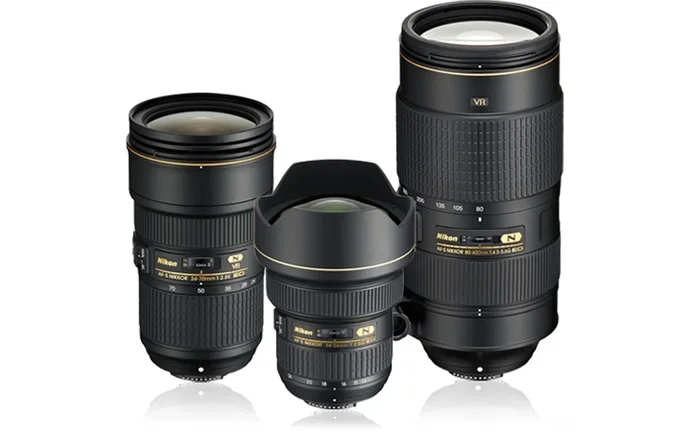
Nikon Nikkor lenses come in several types, each designed for different shooting styles and camera bodies. Understanding the differences between DX and FX lenses, prime vs zoom options, and F-mount variations helps you make informed buying decisions. Whether you are a beginner or a pro, knowing your Nikkor lens options unlocks better creativity and image quality.
Photography is all about capturing light, and the lens you choose shapes how that light reaches your sensor. Nikon Nikkor lenses have been around since 1946, and the lineup has grown into one of the most extensive collections in the industry. Whether you shoot landscapes, portraits, or sports, there is a Nikkor lens built for the job.
But with so many options, the differences can feel overwhelming. What separates a DX lens from an FX lens? Why do some Nikkors have “AF-S” while others say “G” or “E”? This guide breaks it all down in plain language. By the end, you will know exactly which Nikon lens fits your camera and your creative goals.
We will cover mount types, focal lengths, aperture differences, and lens generations. We will also compare prime and zoom lenses so you understand the trade-offs. If you have ever stood in front of a wall of Nikkor lenses and felt lost, this article is for you.
Key Takeaways
- DX vs FX Lenses: DX lenses are built for APS-C sensor cameras, while FX lenses work full-frame sensors for higher image quality.
- Prime vs Zoom: Prime lenses offer sharper images and wider apertures, while zoom lenses provide versatility and convenience.
- Mount Compatibility: Nikon uses the F-mount, and older lenses may not work seamlessly with newer camera bodies without adapters.
- Lens Coatings Matter: Nano Crystal Coat and other Nikon coatings reduce flare and ghosting for clearer photos.
- Autofocus vs Manual Focus: AF-S and AF-P lenses have built-in motors, while older lenses require manual focus or camera body motor assistance.
- Budget Options Exist: Nikon offers affordable Nikkor lenses that still deliver excellent performance for everyday photography.
📑 Table of Contents
Understanding the Nikon F-Mount System
The Nikon F-mount is the backbone of every Nikon interchangeable lens camera. Introduced in 1959, it is one of the longest-running lens mounts in photography history. Nearly every Nikon lens, from the earliest Nikkors to the latest Z-mount adapters, shares this connection.
What Makes the F-Mount Special
The F-mount uses a bayonet-style attachment that locks the lens securely to the camera body. The flange focal distance, which is the distance from the mount to the sensor, sits at 46.5mm. This standardized distance means Nikon has maintained backward compatibility for decades. Many lenses made in the 1970s and 1980s still work on modern Nikon DSLRs.
However, not all F-mount lenses are equal. Older manual-focus lenses lack autofocus motors. They can still mount on newer bodies, but the camera body drives the focus instead of the lens itself. This setup works, but it is slower and less accurate than built-in lens motors.
F-Mount Lens Designations You Should Know
Nikon uses a series of letters and numbers to label its lenses. Here are the most common designations you will encounter:
- AF: Autofocus lens that requires a camera body with a focus motor.
- AF-D: Autofocus lens that also communicates distance information to the camera.
- AF-S: Lens has a built-in silent wave motor for fast, quiet autofocus.
- AF-P: Uses a stepping motor, even quieter and smoother than AF-S, ideal for video.
- G-type: Has no aperture ring; the camera controls aperture electronically.
- E-type: Electromagnetic aperture control, found in newer lenses for faster aperture changes.
These labels matter because they determine which cameras your lens works with. An AF lens from the 1990s may not autofocus on a modern entry-level DSLR. Always check compatibility before buying.
DX vs FX: The Sensor Divide
One of the biggest decisions in Nikon photography is choosing between DX and FX formats. This choice directly affects which Nikkor lenses you should buy.
What Is a DX Lens
DX lenses are designed for Nikon cameras with APS-C sensors. These cameras have a smaller sensor, which means the lens image circle only needs to cover a smaller area. DX lenses are generally lighter, more compact, and more affordable than their FX counterparts.
Popular DX lenses include the Nikon AF-P DX NIKKOR 18-55mm f/3.5-5.6G VR and the Nikon NIKKOR Z DX 50mm f/1.8. These lenses are perfect for beginners and travel photographers who want a lightweight setup without sacrificing image quality.
What Is an FX Lens
FX lenses are built for full-frame Nikon cameras. They cover a larger image circle, which means the entire sensor gets light. FX lenses generally produce sharper images with better low-light performance and less noise at higher ISO settings.
Common FX lenses include the Nikon NIKKOR 24-70mm f/2.8E ED VR and the Nikon AF-S NIKKOR 85mm f/1.4G. These are workhorses for professionals who need top-tier image quality and versatility.
Can You Mix DX and FX Lenses
Yes, you can mount a DX lens on an FX camera. The camera automatically crops the sensor to match the smaller image circle. However, you lose some of the resolution and wide-angle coverage of the full-frame sensor. Mounting an FX lens on a DX camera works too, but the lens is larger and heavier than necessary for the smaller sensor.
If you plan to upgrade from a DX body to an FX body in the future, investing in FX lenses now makes sense. Otherwise, DX lenses offer excellent value and performance for APS-C shooters.
Prime vs Zoom: Choosing Your Lens Type
One of the first choices you will make when buying a Nikon Nikkor lens is between prime and zoom. Each type has distinct advantages and trade-offs.
What Is a Prime Lens
A prime lens has a fixed focal length. You cannot zoom in or out. Instead, you move your feet to frame the shot. Prime lenses typically have wider maximum apertures, which means they let in more light and create a beautiful background blur, known as bokeh.
Popular Nikon prime lenses include the AF-S NIKKOR 50mm f/1.8G and the AF-S NIKKOR 35mm f/1.4G. These lenses are sharp, fast, and often more affordable than zoom lenses at similar quality levels.
What Is a Zoom Lens
A zoom lens covers a range of focal lengths. You can go from wide-angle to telephoto without changing lenses. Zoom lenses are incredibly convenient for travel, events, and everyday shooting where you cannot carry multiple lenses.
Popular Nikon zoom lenses include the AF-S NIKKOR 24-120mm f/4G VR and the AF-P NIKKOR 70-300mm f/4.5-6.3G ED VR. These lenses cover a wide range of subjects, from landscapes to distant wildlife.
Which Should You Choose
If you prioritize image quality, low-light performance, and shallow depth of field, go with a prime lens. If you value convenience and versatility, a zoom lens is the better choice. Many photographers own both and switch between them depending on the shoot.
Lens Generations and Technology
Nikon has been refining its lens technology for over 75 years. Understanding the different generations helps you evaluate older lenses versus modern ones.
The Early Nikkor Years
The original Nikkor lenses were developed for Nikon cameras starting in 1946. These early lenses used simple designs and lacked modern coatings. They are still valued by vintage lens enthusiasts for their unique character and rendering.
Ai and Ai-S Era
The AI (Automatic Indexing) and AI-S (Automatic Indexing Shutter) lenses appeared in the late 1970s and 1980s. These lenses introduced automatic aperture coupling and shutter speed communication. Many AI and AI-S lenses are still highly regarded for their build quality and optical performance.
Modern AF and AF-S Lenses
Modern Nikon lenses feature advanced coatings like Nano Crystal Coat and Super Integrated Coating. These coatings reduce flare, ghosting, and chromatic aberration. AF-S lenses include ultrasonic focus motors, and AF-P lenses use stepping motors for smooth, silent focusing. These technologies make modern Nikkors faster, quieter, and sharper than ever before.
Z-Mount Lenses: The Future
In 2018, Nikon introduced the Z-mount, a larger-diameter mount with a shorter flange distance. Z-mount lenses offer superior optical performance and faster autofocus. While Z-mount is technically a different system, Nikon offers FTZ adapters that let you use F-mount lenses on Z cameras. If you are buying new lenses today, the Z-mount is the direction Nikon is heading.
Key Lens Features That Matter
Beyond mount type and focal length, several lens features directly impact your shooting experience. Here are the most important ones to consider.
Vibration Reduction (VR)
VR is Nikon’s image stabilization technology. It compensates for hand shake, allowing you to shoot at slower shutter speeds without blur. VR is especially useful in low-light situations and when using long telephoto lenses. Not all Nikkors have VR, so check the lens name if stabilization matters to you.
Lens Coatings
Nikon applies multiple lens coatings to improve image quality. The Nano Crystal Coat reduces internal reflections that cause flare and ghosting. Super Integrated Coating balances color across the frame and minimizes chromatic aberration. These coatings are especially important when shooting into bright light or using wide-angle lenses.
Aperture and Low-Light Performance
The maximum aperture of a lens determines how much light it lets in. Lenses with wider apertures, like f/1.4 or f/1.8, perform better in low light and create shallower depth of field. Lenses with narrower apertures, like f/4 or f/5.6, are smaller and lighter but may struggle in dim conditions.
ED and Aspherical Elements
Nikon uses Extra-low Dispersion (ED) glass to reduce chromatic aberration, which appears as color fringing around high-contrast edges. Aspherical lens elements correct distortion and improve sharpness, especially in wide-angle and zoom lenses. These technologies are found in higher-end Nikkors and make a noticeable difference in image quality.
Common Mistakes When Buying Nikkor Lenses
Even experienced photographers sometimes make lens-buying mistakes. Here are a few to avoid.
- Ignoring mount compatibility: Always confirm that the lens mount matches your camera body. F-mount lenses do not directly fit Z-mount cameras without an adapter.
- Buying DX lenses for FX bodies without understanding the crop: You lose resolution and wide-angle coverage when using DX lenses on full-frame bodies.
- Overlooking used lens condition: Buy from reputable sellers and check for fungus, scratches, and smooth focus ring operation.
- Chasing aperture numbers alone: A lens with a wide aperture is not always better. Consider sharpness, weight, size, and price as well.
- Forgetting about filters and hoods: A hard case for camera lenses and a proper lens hood protect your investment and improve image quality.
Taking a moment to research before buying saves money and frustration. Read reviews, watch comparison videos, and if possible, test lenses in person before committing.
How to Choose the Right Nikkor Lens for You
Choosing the right lens depends on what you shoot most often. Here are some practical recommendations based on common photography genres.
- Portraits: A prime lens like the AF-S NIKKOR 85mm f/1.4G or AF-S NIKKOR 50mm f/1.8G delivers beautiful background blur and sharp subject separation.
- Landscape: A wide-angle zoom like the AF-S NIKKOR 16-35mm f/4G ED VR captures sweeping scenes with excellent sharpness across the frame.
- Wildlife and Sports: A telephoto zoom like the AF-S NIKKOR 200-500mm f/5.6E ED VR brings distant subjects close with impressive reach.
- Travel and Everyday: A versatile zoom like the AF-P NIKKOR 24-200mm f/4-6.3G ED VR covers a wide range without changing lenses.
- Street Photography: A compact prime like the AF-P NIKKOR 35mm f/1.8G ED keeps your setup lightweight and discreet.
Start with one or two lenses that match your primary shooting style. You can always expand your collection as your skills and interests grow. The beauty of the Nikon system is its flexibility and the sheer number of excellent lenses available.
For those interested in protecting their gear, investing in proper camera lens storage and cases keeps your Nikkors safe during transport and storage. A well-maintained lens performs reliably for decades.
Conclusion
The difference between Nikon Nikkor camera lenses comes down to mount type, sensor format, focal length, aperture, and lens technology. Whether you choose a DX or FX lens, a prime or zoom, an older manual focus or a modern AF-P design, each lens serves a specific purpose. Understanding these differences empowers you to pick the right tool for every shot.
Nikon’s F-mount legacy and the newer Z-mount system both offer incredible lens options. From affordable kit lenses to professional-grade super telephotos, the Nikkor lineup covers every budget and skill level. Take your time, do your research, and invest in lenses that match how you shoot. The right lens transforms not just your images, but your entire photography experience.
Frequently Asked Questions
What does “Nikkor” mean in Nikon lens names?
Nikkor is the brand name Nikon uses for its camera lenses. The name dates back to 1946 when Nikon first started producing lenses. All Nikon-made lenses for interchangeable camera bodies carry the Nikkor name on the lens barrel.
Can I use an old manual-focus Nikkor lens on a modern Nikon DSLR?
Yes, most manual-focus Nikkor lenses mount and work on modern Nikon DSLRs. However, autofocus will not be available since the lens lacks a built-in motor. The camera body will drive focus manually, which is slower than using an AF-S or AF-P lens.
What is the difference between AF-S and AF-P Nikkor lenses?
AF-S lenses use a silent wave motor for fast autofocus, while AF-P lenses use a stepping motor that is even quieter and smoother. AF-P lenses are especially good for video recording because the focus transitions are seamless and nearly silent.
Do I need FX lenses if I shoot on a DX camera?
No, DX lenses work perfectly on DX cameras and are more compact and affordable. FX lenses on a DX camera work but are larger and heavier. You only need FX lenses if you plan to upgrade to a full-frame Nikon body in the future.
What is the best Nikkor lens for beginners?
The AF-P NIKKOR 18-55mm f/3.5-5.6G VR is a popular kit lens that covers a versatile focal range. It is lightweight, affordable, and includes vibration reduction. For portraits, the 50mm f/1.8G is an excellent and budget-friendly first prime lens.
How do I protect my Nikon Nikkor lenses from damage?
Use a lens hood to prevent scratches and flare, attach a UV or clear filter for front-element protection, and store lenses in a padded case or bag. Avoid extreme temperatures and humidity, and always cap your lenses when not in use.