Speaker Stands for Large Speakers
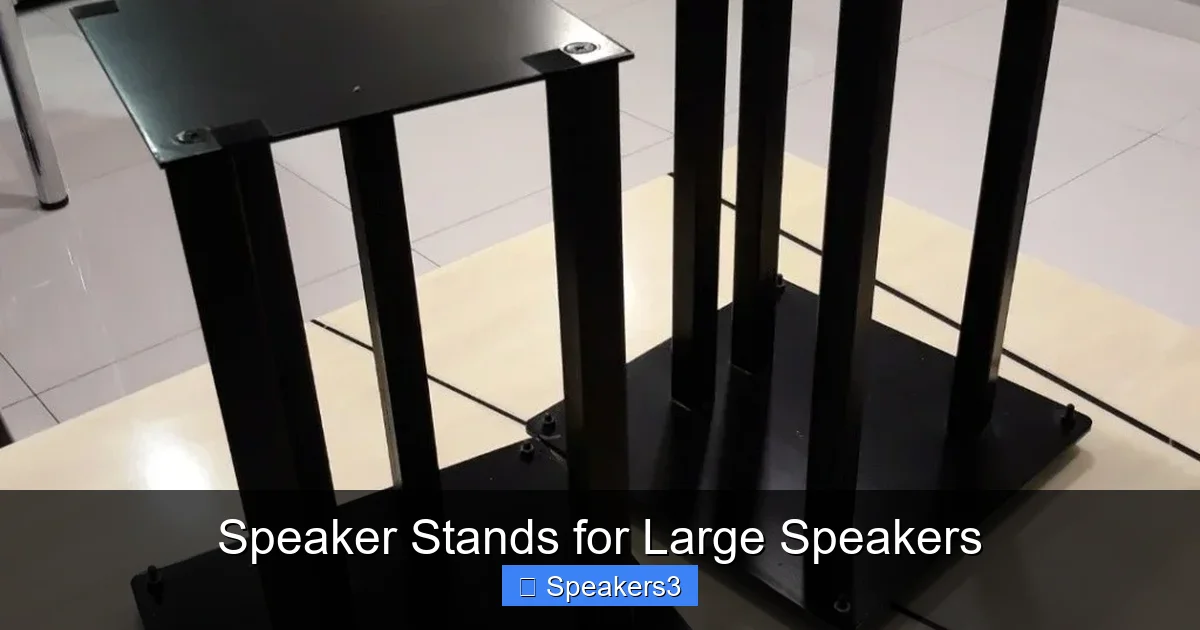
Speaker stands for large speakers are not just accessories; they are essential audio tools. The right stand dramatically improves sound quality by positioning speakers correctly and decoupling them from floor vibrations. It ensures stability and safety for heavy, powerful speakers, protecting both your investment and your room. Choosing involves considering weight capacity, height adjustability, construction material, and vibration damping features to perfectly match your specific speakers and listening environment.
You’ve spent weeks, maybe months, researching and saving for the perfect pair of large speakers. You’ve agonized over driver configurations, amplifier pairings, and room acoustics. But when the boxes finally arrive, you simply place them on the floor or on a cheap, wobbly side table. It’s a common shortcut that sabotages thousands of dollars worth of audio potential. The foundation your large speakers sit on is as critical as the speakers themselves. This is where dedicated speaker stands for large speakers enter the picture, transforming from an afterthought into a non-negotiable component of your high-fidelity system.
Forget the generic, one-size-fits-all stands you might have seen. Large speakers—whether we’re talking massive floor-standing towers with 12-inch woofers or substantial, dense bookshelf monitors—present unique challenges. They exert significant downward force, have a high center of gravity, and generate powerful low-frequency energy that can make lightweight structures vibrate uncontrollably. A proper stand is an engineering solution designed to meet these challenges head-on. It’s about safety, sound quality, and getting the absolute most from your gear. This guide will walk you through everything you need to know, from the physics of why stands matter to the precise specifications you should demand when shopping for the perfect speaker stands for large speakers.
Key Takeaways
- Stability & Safety First: Large speakers are heavy and can be top-heavy. A stand with a wide, heavy base and appropriate weight rating prevents dangerous tipping, protecting your equipment and household.
- Optimal Height is Critical: The ideal tweeter height is typically at or slightly above ear level when seated. Adjustable stands allow you to fine-tune this for the best stereo imaging and a cohesive soundstage.
- Material & Construction Matter: Dense, heavy materials like steel, solid wood, or thick MDF provide mass to resist movement. Avoid flimsy, hollow constructions that will resonate and degrade sound.
- Isolation vs. Coupling: Some stands use spikes to couple with a solid floor for tighter bass, while others use pads or isolators to decouple from floor vibrations. The best choice depends on your floor type (concrete vs. wood joist).
- Weight Capacity Exceeds Speaker Weight: Always choose a stand with a weight capacity significantly higher (by 25-50%) than your speaker’s actual weight for a secure, non-resonant foundation.
- Consider Cable Management & Aesthetics: Look for stands with built-in cable channels for a clean setup. The stand should also complement your speaker’s design and your room’s decor, as it becomes a permanent fixture.
- One-Size-Does-Not-Fit-All: “Large” is subjective. A floor-standing tower and a large bookshelf speaker have different needs. Match the stand’s footprint, top plate size, and weight class precisely to your specific model.
📑 Table of Contents
The “Why”: How a Stand Transforms Your Sound
Before diving into what to buy, let’s understand the profound sonic impact a quality stand provides. It’s not just about getting the speakers off the ground. It’s about controlling energy.
Decoupling: Stopping the Floor from Stealing Your Bass
Your speakers produce sound by moving air. The larger the driver, the more air it moves, especially in the bass region. When a powerful 10-inch or 12-inch woofer fires, it creates a powerful physical reaction—the speaker cabinet wants to jump backward (Newton’s third law). If that cabinet is sitting directly on a solid floor, that energy is transmitted into the floor structure, causing the floor itself to vibrate. These vibrations travel through your room’s construction, exciting resonances in walls and furniture, and can even feed back into the speaker itself through the very floor it’s sitting on, creating a muddy, indistinct low end.
A well-designed speaker stand for large speakers acts as an energy manager. Its primary job is isolation. Through the use of heavy, dense materials and specialized feet (like sorbothane pucks, rubber isolators, or even carefully tuned mass-loaded spikes), the stand absorbs and dissipates this vibrational energy before it reaches your floor. The result? A tighter, faster, and more articulate bass response. Notes have definition and decay naturally instead of blending into a boomy, one-note rumble. You’ll hear new layers in your music, the distinct pluck of a bass string, the body of a kick drum.
Positioning: Tweeter Height and the Soundstage
Human hearing is most sensitive to high frequencies. The tweeter’s position relative to your ears is paramount for accurate imaging—the ability to pinpoint the exact location of instruments in a virtual soundstage. If your tweeters are too low, you’ll be listening to them from above, which can make the soundstage feel collapsed and veiled, with highs seeming to come from inside your head rather than from “speakers” in the room. If they’re too high, you’re listening from below, which can make the sound overly bright and harsh.
The generally accepted ideal is to have the tweeter axis (the center of the tweeter) at the exact height of your ears when you’re in your normal listening position. For most people in a standard chair, this is between 36 and 42 inches from the floor. Many large bookshelf speakers are only 20-24 inches tall. Without a stand, they are hopelessly misaligned. A speaker stand for large speakers provides the necessary height to achieve this crucial alignment, unlocking a wide, deep, and precisely focused soundstage where vocals and instruments appear with realistic height and width.
Stability: The Non-Negotiable Safety Factor
This is the most straightforward, yet most critical, reason. A large floor-standing speaker can easily weigh 60, 80, or even 100+ pounds. A substantial bookshelf speaker with a dense MDF cabinet can be 40-50 pounds. These are not objects you want tipping over. A top-heavy speaker on a narrow, lightweight stand is an accident waiting to happen—a bump from a pet, a child, or even a strong bass note can cause a catastrophic fall, destroying the speaker and anything in its path.
A proper speaker stand for large speakers is built like a small piece of furniture. It features a wide, heavy base (often filled with sand or shot for extra mass) and a sturdy, thick upright post. The top plate is sized to fully support the speaker’s footprint, with sometimes a lip or securing mechanism to prevent sliding. This creates a low center of gravity, making the entire assembly incredibly stable and safe, even in a busy household.
Key Features to Demand: What Makes a Stand “For Large Speakers”
Not all stands are created equal. The category “large speakers” demands specific engineering. Here are the features you should scrutinize.
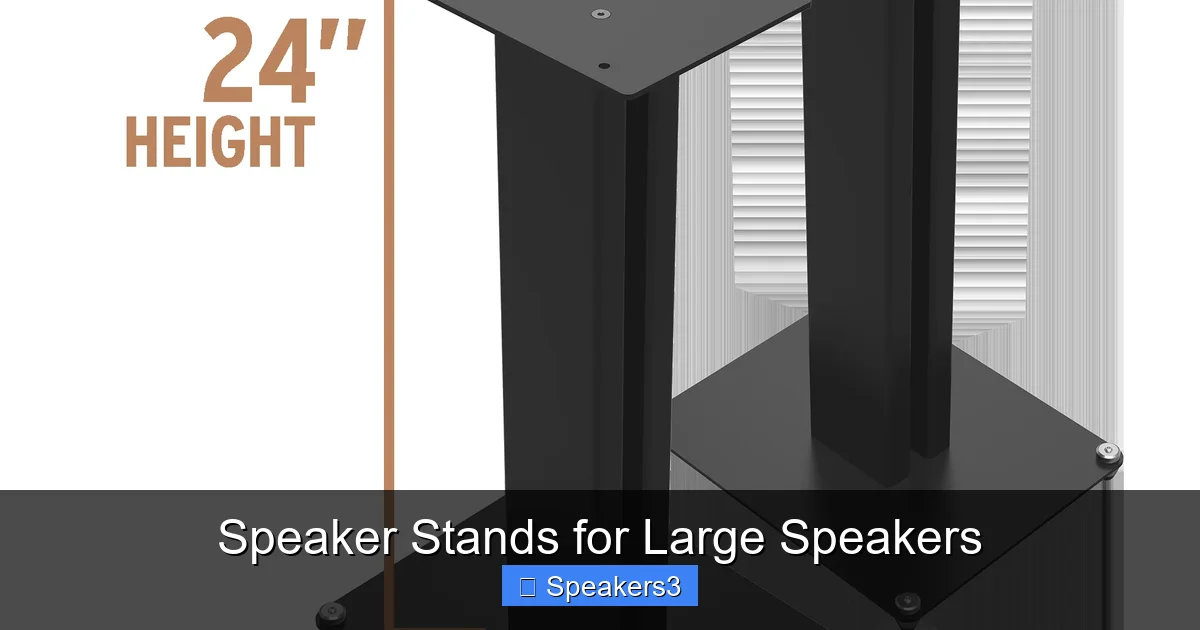
Visual guide about Speaker Stands for Large Speakers
Image source: d2um2qdswy1tb0.cloudfront.net
Weight Capacity: The Golden Rule
This is the first specification to check, and it’s non-negotiable. The stand’s maximum weight capacity must be at least 25-50% higher than the actual weight of your speaker. If your speakers weigh 50 lbs each, you need a stand rated for at least 65-75 lbs. This safety margin accounts for dynamic forces (sudden bass impacts), ensures the stand itself doesn’t flex under load, and guarantees long-term stability. Never max out a stand’s rating. A stand rated for 100 lbs under a 95 lb speaker will be stressed and resonant; the same stand under a 60 lb speaker will be rigid and inert.
Construction Material: Mass is Your Friend
The goal is to make the stand as acoustically “dead” as possible. You want it to be so massive that it doesn’t vibrate or ring at any audible frequency.
- Steel: The gold standard. Thick-gauge steel tubing or plates provide immense density and rigidity. Often used in professional studio stands. Very heavy, very stable.
- Solid Hardwood (Maple, Oak, Beech): Excellent choice. Dense and naturally damped. Provides a warm, high-end aesthetic. Look for thick, solid construction, not veneered particleboard.
- High-Density MDF (Medium-Density Fiberboard): A great engineered wood option. When thick (1.5″+) and well-braced, it’s dense, cheap, and can be made into very effective, mass-loaded stands. It must be properly braced internally to prevent panel resonance.
- What to AVOID: Thin aluminum tubing, hollow plastic, thin particleboard, or lightweight steel that flexes. These will act as a sounding board, adding their own resonant frequencies to your sound.
Base Design: The Foundation of Stability
The base must be wide enough to prevent tipping. A good rule of thumb: the base should be at least as wide as the speaker is deep, and preferably wider. Many high-end stands use a triangular or rectangular base that is significantly wider than the speaker’s footprint. Some large-stand bases are designed to be filled with sand or lead shot through a plug, adding crucial mass and lowering the center of gravity. This is a highly desirable feature for very heavy speakers.
Top Plate Size and Security
The top platform must be at least as large as the speaker’s bottom footprint. If your speaker has a 12″ x 16″ base, your stand’s top plate should be 12″ x 16″ or larger. An undersized top plate is a stability hazard. Some stands feature a raised lip or edge around the top plate to prevent the speaker from sliding off. Others have holes for bolting the speaker down (common in pro audio). For home use, a flat, non-slip surface with a slightly textured finish or included rubber pads is ideal.
Height Adjustment and Options
Fixed-height stands are simpler and often more rigid. However, for fine-tuning tweeter height, a stand with some adjustability is invaluable. This can come in several forms:
- Threaded Column: The upright post has threaded sections, and two clamp rings allow you to set the height and lock it. Very secure.
- Pin-Lock or Pop-Post: Uses spring-loaded pins that engage holes in the post. Quick but can be less rigid if not perfectly engaged.
- Fixed Height with Spikes/Shims: Some stands offer a fixed height but include different height spikes or isolators for the base, offering minor adjustment and floor coupling options.
Vibration Control: Feet and Isolation
This is where sonic magic happens. The interface between the stand and the floor is critical.
- Spikes: Concentrate the speaker’s weight onto a tiny point, ideally piercing through carpet to contact a solid subfloor (concrete or plywood). They “couple” the stand to the floor, making the entire system (stand+speaker) act as a single, massive object that resists movement. Excellent for concrete slabs. Can damage hardwood floors.
- Pucks/Isolators (Sorbothane, etc.): These “decouple” the stand from the floor. They absorb vibrational energy and prevent it from traveling into the floor structure. Ideal for wooden joist floors where coupling would excite floor resonances. They also protect hardwood floors.
- Rubber Feet: Basic damping. Better than nothing, but not as effective as purpose-built isolators or properly used spikes.
Many premium stands offer both options or sell accessory kits. Your floor type is the deciding factor here.
Types of Speaker Stands for Large Speakers
The market segments stands by intended use. Understanding these categories helps you target your search.
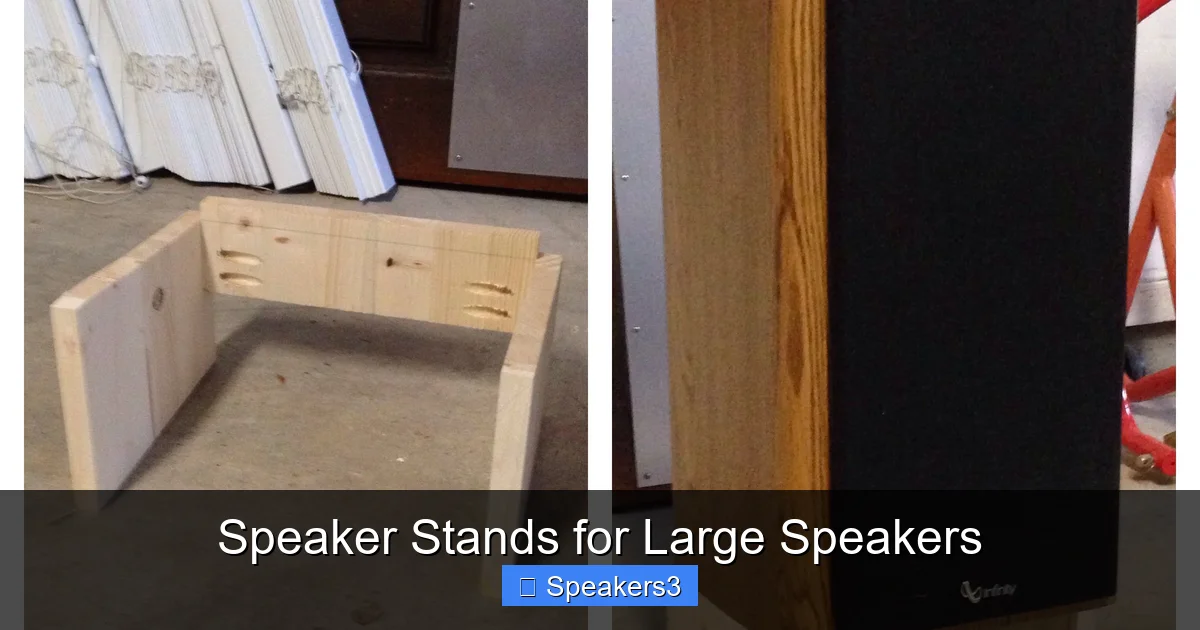
Visual guide about Speaker Stands for Large Speakers
Image source: theboiledpeanuts.com
Heavy-Duty Studio/Pro Audio Stands
These are the workhorses. Think brands like K&M, On-Stage, and Universal. They are built like tanks from steel, often with a triangular base, a weighted center column, and a top plate with holes for optional speaker mounting bolts. They prioritize absolute rigidity, stability, and adjustability. Weight capacities are often 150 lbs+ per stand. They are typically less concerned with aesthetics and more with function. Perfect for large, heavy bookshelf monitors in a dedicated listening room or studio. They are the safest, most no-compromise choice for very heavy speakers.
High-End Audiophile Stands
This is where art meets science. Brands like IsoAcoustics, Solid Tech, and Finite Elemente focus on sophisticated isolation principles. IsoAcoustics stands, for example, use a patented isolator system that provides both lateral and vertical isolation, effectively allowing the speaker to float. These stands are often engineered to have specific resonant frequencies outside the audible range. They use a combination of dense, damped materials (like MDF) and sophisticated polymer isolators. They are typically more expensive but offer a level of clarity and bass definition that is transformative. They often have a sleek, minimalist design that blends into high-end systems.
Furniture-Grade / Designer Stands
For the living room. These stands prioritize beautiful craftsmanship—solid hardwoods, exquisite finishes, elegant profiles—while still providing substantial support. Brands like Salamander Designs, Bowers & Wilkins (for their own speakers), and many custom cabinet makers fall here. They are designed to look like fine furniture, often with shelves for media storage. They must be evaluated carefully for their actual acoustic performance; some are more about looks. Ensure any furniture-grade stand has a sufficiently heavy, rigid construction and a top plate that matches your speaker’s size. They are ideal when the system is in a shared space and aesthetics are paramount.
DIY and Platform Solutions
For the intrepid tinkerer, building your own stand from thick, dense hardwood or laminated MDF can yield outstanding results. The key is mass and stability. A simple, heavy rectangular block with a top platform and splayed legs can be incredibly effective. Similarly, heavy, dense speaker platforms (like the Auralex Acoustics LENPAD or IsoAcoustics GAIA footers) can be placed under speakers on existing furniture or the floor to provide isolation and mass-loading without a full upright stand. This is a good path for very large floor-standing towers that are stable on their own but need vibration control.
How to Choose the Right Stand for YOUR Large Speakers
With all this information, how do you make the final decision? Follow this step-by-step checklist.
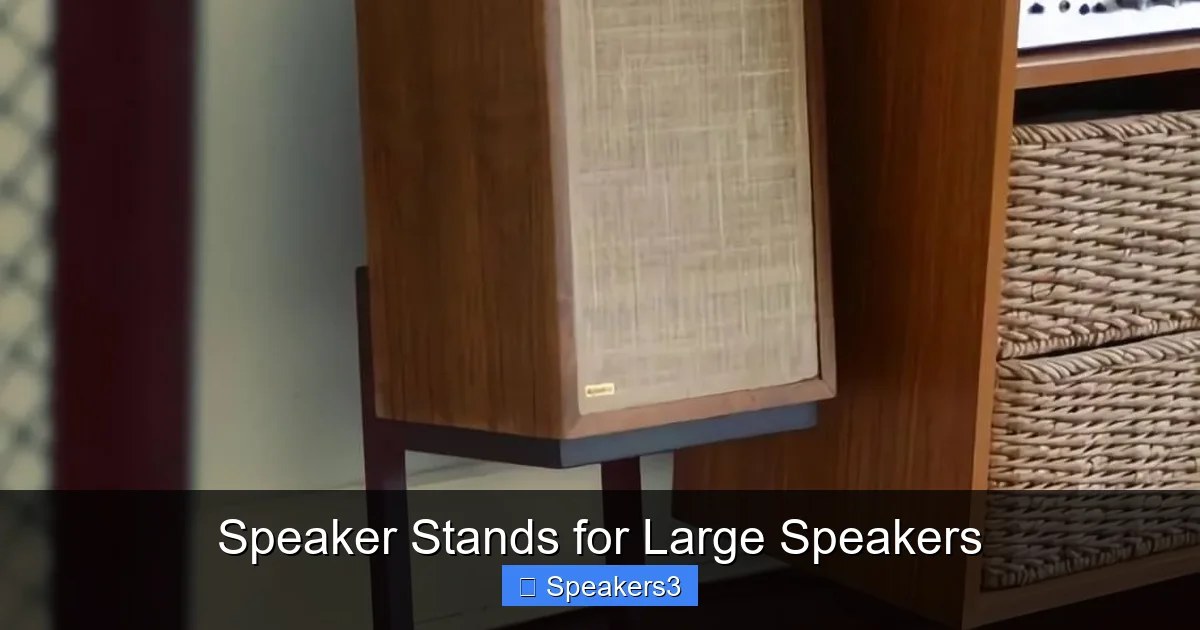
Visual guide about Speaker Stands for Large Speakers
Image source: foter.com
Step 1: Know Your Speaker’s Specs Cold
Find the official specifications for your speaker. You must know:
- Weight: Exact weight in pounds/kilograms.
- Dimensions: Height, width, and depth of the base/footprint. This is critical for top plate size.
- Tweeter Height: Where is the tweeter located from the bottom of the cabinet? This, plus your seated ear height, will determine how much height you need from the stand.
Example: Your speaker weighs 48 lbs, has a base of 12″ x 15″, and the tweeter is 18″ from the bottom. Your seated ear height is 40″. You need a stand that lifts the tweeter to ~40″. So, stand height should be approximately 40″ – 18″ = 22″. But you must also account for any speaker feet or isolation pads you might add. Your target stand height is roughly 22-24″.
Step 2: Assess Your Room and Floor
What is your floor made of?
- Concrete Slab (Basement, Apartment): You are in a great position. Concrete is massive and doesn’t resonate much. You can use spikes to couple the stand firmly to the floor, creating a single, ultra-stable mass. Isolation may be less critical but can still tighten the bass further.
- Wood Joist (Most Homes): This is the tricky one. Wood floors resonate and can create “boomy” bass. Coupling with spikes will often make this worse by exciting the floor’s natural modes. Decoupling is usually the superior strategy here. Use isolators (sorbothane pucks, rubber) between the stand base and the floor. A heavy, well-damped stand (filled with sand) also helps.
- Carpet: Spikes are designed to pierce carpet to reach the subfloor. If you have thick, plush carpet, ensure your spikes are long enough. If you have area rugs on hardwood, you’ll likely use isolators on the hardwood.
Step 3: Match the Stand’s Specs
Now, start shopping with these numbers in hand.
- Weight Capacity: > 125% of your speaker’s weight.
- Top Plate: Must be equal to or larger than your speaker’s base footprint.
- Height: Must achieve your calculated tweeter height. Consider stands with some adjustment if you’re unsure.
- Base Size: Should be wide. Look for a base footprint that is at least as wide as the speaker is deep, and preferably 1.5x wider.
- Construction: Steel, solid wood, or thick, braced MDF. Check if the base/column can be filled.
Step 4: Consider Aesthetics and Practicality
Will it fit in your space? Measure the area. Does the color/finish match your room? Does it have cable management (a hole or channel in the post)? These are important for long-term satisfaction.
Setup Tips for Perfect Performance
You’ve bought the perfect stand. Now, install it correctly.
The Toe-In and Listening Triangle
Once on their stands, position your speakers. Form an equilateral triangle between the two speakers and your primary listening chair. Angle (toe-in) the speakers so they point directly at your ears, or slightly past each other for a wider soundstage. This is a starting point—experiment by moving the stands a few inches at a time.
Leveling is Everything
Use a small bubble level on the top plate of each stand. Ensure it is perfectly level front-to-back and side-to-side. An unlevel stand means one speaker is effectively tilted, causing imaging shifts and an unbalanced frequency response.
Secure the Speaker
For very heavy speakers, especially on carpet, it’s wise to use double-sided carpet tape or small non-slip pads between the speaker base and the stand top plate. This prevents any lateral movement from bass energy or accidental bumps. Never bolt a speaker to a stand unless the stand and speaker are explicitly designed for it (common in pro audio). Home speakers rarely have mounting points.
Fill the Base (If Applicable)
If your stand has a fill port, use dry sand or lead shot (lead is more dense but requires safety handling). Fill it completely. This adds significant mass, lowering the center of gravity and making the stand even more resistant to vibration. Seal the port tightly.
Cable Management
Run speaker wires neatly along the stand’s post, using clips or the built-in channel. Keep them away from the power amplifier to avoid interference. A clean wire run looks professional and is safer.
Conclusion: The Foundation of Fidelity
The pursuit of great sound is a chain of components, from the source to the amplifier to the speakers. But the final link in that chain is the interface between your speakers and your room. Speaker stands for large speakers are the unsung heroes of high-fidelity audio. They are not decorative afterthoughts but fundamental acoustic tools that unlock the true potential of your investment. They provide the stability that gives you peace of mind, the height that creates a breathtaking soundstage, and the isolation that reveals deep, textured bass you never knew was in your recordings.
Spending 10-20% of your speaker’s cost on a proper stand is a wise allocation of budget. It’s a one-time purchase that will serve your system for decades. When you hear the newfound clarity, the tightened bass, and the immersive imaging that a quality stand provides, you’ll understand. The music doesn’t just get louder; it gets realer. It stops sounding like it’s coming from boxes in the corner and starts sounding like a live performance in your room. That transformation begins with the right foundation. Choose wisely, install carefully, and prepare to hear your music all over again.
Frequently Asked Questions
Can I use a stand meant for small bookshelf speakers for my large speakers?
No. This is dangerous and sonically detrimental. Stands for small speakers have lower weight capacities, smaller top plates, and narrower bases. They will be unstable under the weight and size of a large speaker, risking a tip-over. They also lack the mass to effectively isolate a powerful speaker, allowing vibrations to muddy your sound. Always use a stand rated for your specific speaker’s weight and footprint.
Should I choose spikes or rubber isolators for my stand’s feet?
It depends entirely on your floor type. For concrete slab floors, spikes are ideal as they couple the stand to the massive floor, creating a single, stable unit. For wooden joist floors (most common in houses), rubber isolators or sorbothane pucks are usually better because they decouple the stand, preventing floor vibrations from being excited and causing boomy bass. Many premium stands offer both options as accessories.
Is a heavy, filled stand always better than a lighter one with good isolators?
Generally, yes. Mass is a primary factor in resisting vibration. A very heavy, well-damped stand (filled with sand) provides a stable, inert platform that works well in most situations. Sophisticated isolators on a lighter stand can be very effective, especially on resonant wood floors, but they cannot fully overcome the inherent instability of a lightweight structure under a heavy, dynamic load. The best solution is often a combination: a heavy, dense stand equipped with high-quality isolators.
How important is exact tweeter height alignment?
Very important. The tweeter’s position relative to your ears is the single biggest factor affecting stereo imaging and high-frequency clarity. If the tweeter is significantly off-axis (too high or too low), the soundstage will feel collapsed, and highs will be dull or overly sharp. A stand that positions the tweeter at or near ear level (typically 36-42″ from the floor) is essential for optimal performance. Use a stand with adjustability if your room’s seating height varies.
Can I build my own effective speaker stand for large speakers?
Absolutely. The principles are simple: use dense, non-resonant material (thick MDF, solid hardwood, steel), create a wide, heavy base, and ensure a rigid connection to a top plate large enough for your speaker. A simple but effective DIY design is a rectangular base with splayed legs made from 2x4s or steel, filled with sand, supporting a thick, braced MDF top. Many audiophiles have built exceptional stands this way. Just prioritize mass and stability over aesthetics.
My speakers are already heavy and stable on the floor. Do I still need a stand?
Yes, almost certainly. Even if a floor-standing speaker is stable, it is still coupled directly to your floor, transmitting vibrations that smear bass and affect clarity. A stand with isolation properties will decouple it, improving bass definition and overall transparency. Furthermore, unless your tweeters are already at ear height, you are missing out on proper imaging. A stand provides the necessary height adjustment to optimize your listening position.