What Are Three Ways to Charge an Object
Charging an object is simpler than most people think. There are three ways to charge an object: friction, conduction, and induction. Each method moves electrons from one material to another in a unique way. You encounter these methods every day, from rubbing a balloon on your hair to touching a doorknob and feeling a spark. Understanding these basics helps you grasp how static electricity powers countless technologies around you.
Have you ever rubbed a balloon against your sweater and watched it stick to a wall? Or walked across a carpet and then touched a metal doorknob, feeling a tiny zap? These are everyday examples of three ways to charge an object. Understanding how objects gain and lose electrical charge is one of the most fundamental concepts in physics and technology.
Charging an object might sound like something only scientists do in labs. But the truth is, you experience it all the time. The three methods, friction, conduction, and induction, explain how electrons move between materials. Each method works differently, but they all rely on the same basic idea: electrons can transfer from one object to another. In this article, we will break down each method in simple terms, explore how they work, and look at real-world examples you can try at home.
Key Takeaways
- Friction charging happens when two materials rub together and transfer electrons.
- Conduction charging requires direct contact between a charged and neutral object.
- Induction charging works without any physical contact, using only an electric field.
- All three methods involve the movement of electrons, not protons.
- Understanding these methods helps explain everyday static electricity phenomena.
- Each method produces different results in terms of charge type and magnitude.
- Practical applications range from photocopiers to electrostatic precipitators.
📑 Table of Contents
Understanding Electric Charge
What Is Electric Charge?
Electric charge is a basic property of matter, just like mass or volume. Everything around you is made of atoms, and atoms contain tiny particles called protons and electrons. Protons carry a positive charge, and electrons carry a negative charge. When an object has equal numbers of protons and electrons, it is neutral, meaning it has no net charge.
But when you add or remove electrons, the object becomes charged. If it gains extra electrons, it becomes negatively charged. If it loses electrons, it becomes positively charged. This balance of charges is the foundation of all three charging methods we will explore below.
Positive and Negative Charges
Here is a simple rule to remember. Like charges repel each other, and opposite charges attract. Two negatively charged objects push each other away. Two positively charged objects do the same. But a negatively charged object and a positively charged object pull toward each other. This attraction and repulsion drive every charging method we will discuss. It also explains why charged objects behave the way they do in everyday life.
Charge is measured in coulombs, named after the scientist Charles-Augustin de Coulomb. The electrostatic force between two charges depends on how much charge each object carries and how far apart they are. This relationship is known as Coulomb’s law, and it plays a big role in understanding how charging works.
Three Ways to Charge an Object
The core of our topic centers on three ways to charge an object. Each method transfers electrons in a different way. Let us look at each one in detail.
Charging by Friction
Charging by friction is the most common and intuitive method. It happens when you rub two different materials together. The friction causes electrons to move from one material to the other. The material that gains electrons becomes negatively charged, and the material that loses electrons becomes positively charged.
This process is also called the triboelectric effect. Different materials have different tendencies to gain or lose electrons. For example, glass rubbed with silk loses electrons and becomes positively charged. Rubber rubbed with fur gains electrons and becomes negatively charged. The triboelectric series is a list that ranks materials by how easily they gain or lose electrons through friction.
You can try this at home. Take a balloon and rub it against your hair for about ten seconds. The balloon will gain electrons from your hair, becoming negatively charged. Your hair, having lost electrons, becomes positively charged. Now hold the balloon near a wall, and it will stick. The charged balloon induces a slight charge separation in the wall, creating enough attraction to hold it up.
Charging by friction works best with insulators, materials that do not let electrons flow freely. If you try to charge a metal rod by rubbing it, the electrons will quickly spread out or flow to your hand, and the charge will not stay. This is why friction charging is most effective with materials like rubber, glass, and plastic.
Charging by Conduction
Charging by conduction, also called charging by contact, happens when a charged object touches a neutral object. The direct contact allows electrons to flow from one object to the other until the charges balance out. Unlike friction, conduction does not require rubbing. It only requires touching.
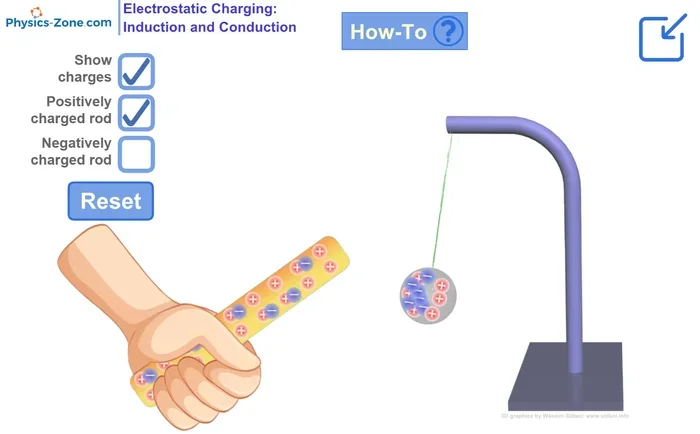
Here is how it works. Imagine you have a negatively charged rod. When you touch this rod to a neutral metal sphere, some of the extra electrons on the rod will flow onto the sphere. Both the rod and the sphere will now carry a negative charge, though the sphere will have less charge than the rod originally had. The key point is that both objects end up with the same type of charge.
Conduction relies on the fact that some materials are conductors, meaning electrons can move through them easily. Metals are excellent conductors. This is why metal spheres, wires, and plates are commonly used in conduction experiments. Insulators, on the other hand, do not allow electrons to move freely, so conduction does not work well with them.
A practical example of charging by conduction is touching a Van de Graaff generator. The generator builds up a large charge on its metal dome. When you touch the dome, electrons flow from the dome onto your body, and your hair stands on end because each strand carries the same negative charge and repels the others.
Charging by Induction
Charging by induction is the most fascinating of the three methods because it does not require any physical contact. Instead, it uses an electric field to rearrange charges within an object. This method is widely used in technology, from wireless charging pads to electrostatic painting equipment.
Here is how induction works step by step. First, bring a charged object near a neutral conductor, but do not touch it. The electric field from the charged object will push or pull the electrons in the conductor. This creates a charge separation, with one side of the conductor becoming positive and the other becoming negative. Next, while the charged object is still nearby, ground the conductor by connecting it to the earth with a wire. Electrons will flow to or from the ground to balance the charge. Finally, remove the ground wire, and then remove the charged object. The conductor is now left with a net charge opposite to the charging object.
Let us look at a concrete example. Bring a negatively charged rod near a neutral metal sphere. The electrons in the sphere are repelled to the far side, leaving the near side positively charged. Now touch the far side of the sphere with your finger, which acts as a ground. Electrons will flow out of the sphere and into your body. Remove your finger, then remove the rod. The sphere is now left with a positive charge, even though it never touched the rod.
Charging by induction is especially useful because it allows you to charge objects without wearing them down. Friction and conduction both involve direct interaction that can damage delicate materials. Induction avoids this problem entirely, making it ideal for sensitive electronic components.
Comparing the Three Methods
Each of the three ways to charge an object has unique characteristics. The table below compares them across several important factors.
| Feature | Charging by Friction | Charging by Conduction | Charging by Induction |
|---|---|---|---|
| Requires Contact | Yes, rubbing | Yes, touching | No |
| Charge Type on Object | Opposite to rubbing partner | Same as charging object | Opposite to charging object |
| Electron Transfer | Between two rubbed materials | From charged to neutral object | Via ground connection |
| Works Best With | Insulators | Conductors | Conductors |
| Charge Magnitude | Usually small | Moderate to large | Moderate |
| Permanent or Temporary | Permanent (for insulators) | Permanent | Permanent (after grounding) |
| Common Examples | Balloon and hair, rubbing a comb | Touching a Van de Graaff dome | Electrostatic painting, wireless charging |
As you can see, the three methods differ in how much contact they need, what type of charge they produce, and which materials they work best with. Friction is simple and accessible but produces small charges. Conduction transfers more charge but requires direct contact. Induction is the most versatile method, especially for delicate or sensitive materials.
Real-World Applications
Everyday Examples of Static Charging
The three ways to charge an object are not just textbook concepts. They show up in everyday life more than you might think. When you pull a polyester shirt out of a dryer, the friction between the fabrics charges the shirt. When you walk across a carpet and touch a metal object, conduction transfers the charge from your hand to the metal. When a photocopier uses a charged drum to attract toner, it relies on induction.
Even nature uses these methods. Lightning is a massive example of charge separation through friction inside clouds. Ice crystals and water droplets collide and transfer electrons, creating huge electrical potential differences. When the charge becomes too great, it discharges as lightning.
How Charging Affects Electronic Devices
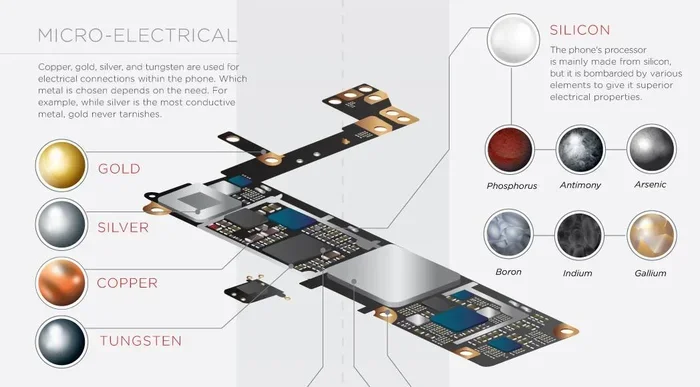
Understanding how objects become charged matters a lot in the tech world. Static electricity can damage sensitive electronic components like microchips and circuit boards. Workers in electronics manufacturing often wear anti-static wrist straps to prevent accidental charging by conduction or friction.
In audio equipment, electrical charge buildup can cause interference. For instance, when static electricity builds up around speaker wires or audio cables, it can create noise and distortion. What causes speakers to crackle is a question many audiologists and tech enthusiasts ask, and static charge buildup is one of the common culprits behind that frustrating sound. Keeping your audio equipment grounded helps prevent these issues.
If you have ever experienced a sudden loss of sound from your speakers after moving them or rubbing them against a surface, the charge buildup may have affected the internal components. In some cases, how to know if your speakers are blown involves checking for electrical damage caused by static discharge. A sudden electrostatic discharge can blow the delicate voice coil or cone inside a speaker, rendering it unusable. Knowing how to check for this damage can save you from unnecessary replacements.
Charging in Modern Technology
Induction charging is at the heart of modern wireless technology. Wireless charging pads for smartphones use electromagnetic induction to transfer energy without cables. The pad creates an alternating magnetic field, which induces a current in the coil inside your phone. This is the same principle as charging by induction, just applied at a much higher frequency and with much more precision.
Industrial applications also rely heavily on these principles. Electrostatic precipitators use charged plates to remove dust particles from factory smokestacks. Inkjet printers charge tiny droplets of ink and direct them onto paper with precision. Even spray painting cars uses induction charging to ensure the paint wraps evenly around the metal body.
For those who want to enjoy music without static interference, are monitor speakers good for listening to music is a common question, and the answer is yes, especially when they are properly grounded and shielded from electrostatic interference. Monitor speakers are designed to reproduce sound accurately, and minimizing charge buildup helps them perform at their best.
Quick Tips and Common Mistakes
Here are some practical tips to keep in mind when exploring these charging methods.
- Always work in dry conditions. Humidity allows charges to dissipate quickly, making it harder to observe static effects.
- Use an electroscope to detect charge. This simple device shows whether an object is charged and roughly how much charge it carries.
- Ground yourself before handling sensitive electronics. Touch a metal surface to discharge any static buildup on your body.
- Do not confuse charging by friction with charging by conduction. Friction requires rubbing; conduction requires only touching.
- Remember that induction produces the opposite charge. The charged object and the induced object always end up with opposite charges.
Common mistakes include assuming all three methods work the same way. They do not. Friction transfers electrons through rubbing, conduction transfers them through contact, and induction rearranges them through an electric field and grounding. Another common mistake is forgetting that only electrons move, not protons. Protons are locked inside the nucleus and do not transfer between objects during any of these charging methods.
Expert Insights
Physicists emphasize that the three ways to charge an object all boil down to one thing: electron transfer. Whether you rub two materials, touch a charged object to a neutral one, or use an electric field to rearrange charges, the underlying mechanism is the same. Electrons move from areas of higher energy to areas of lower energy until equilibrium is reached.
Engineers apply these principles daily. In semiconductor manufacturing, controlling electrostatic discharge is critical. A single spark as small as a few volts can destroy a transistor that is only a few nanometers wide. Understanding how charging works allows engineers to design better protection systems and more reliable devices.
Educators also stress the importance of hands-on experimentation. Simple demonstrations, like rubbing a balloon on your hair or using a Van de Graaff generator, make abstract concepts tangible. These experiments help students build intuition about electric fields, charge separation, and the behavior of conductors and insulators.
Conclusion
The three ways to charge an object friction, conduction, and induction form the foundation of our understanding of static electricity. Each method offers a unique approach to moving electrons between materials. Friction uses rubbing, conduction uses direct contact, and induction uses electric fields and grounding. Together, these methods explain everything from the spark you feel on a dry day to the wireless charging pad on your desk.
By understanding how objects become charged, you gain insight into the invisible forces that shape our technological world. Whether you are a student learning physics for the first time, a tech enthusiast curious about how devices work, or a professional working with sensitive electronics, these three methods are essential knowledge. Start experimenting, ask questions, and let the world of electric charge make more sense to you every day.
Frequently Asked Questions
What is the easiest way to demonstrate charging by friction at home?
Rub a balloon against your hair for about ten seconds and then hold it near a wall. The balloon will stick due to the static charge it gained from friction. This simple experiment shows how electrons transfer between materials through rubbing.
Can you charge an object without touching it?
Yes, you can. Charging by induction allows you to charge a conductor without any physical contact. By bringing a charged object near the conductor and then grounding it, you can rearrange the electrons and leave the object with a net charge.
Why do insulators hold a charge better than conductors?
Insulators do not allow electrons to flow freely through them. When you charge an insulator by friction, the extra electrons stay in the spot where they were deposited. In conductors, electrons move easily and will quickly spread out or flow away, making it harder to maintain a localized charge.
What happens when you ground a charged object?
Grounding provides a path for excess electrons to flow into the earth. When you touch a charged conductor, the extra electrons move through your body and into the ground, neutralizing the object. This is a key step in the induction charging process.
Is static electricity dangerous?
Small static shocks are harmless and just a minor annoyance. However, large electrostatic discharges can damage sensitive electronics or ignite flammable gases. In industrial settings, proper grounding and anti-static measures are essential for safety.
How does wireless charging relate to induction?
Wireless charging pads use electromagnetic induction, the same principle as charging by induction. The pad creates a changing magnetic field that induces a current in the receiver coil inside your device, transferring energy without any physical connection.
=== META TITLE ===
Three Ways to Charge an Object Explained in Detail
=== URL SLUG ===
/three-ways-to-charge-an-object
=== SEO TITLE ===
What Are Three Ways to Charge an Object