Are Monitor Speakers Good for Listening to Music
Are monitor speakers good for listening to music? The short answer is yes, but with important caveats. Studio monitors deliver highly accurate sound reproduction that reveals every detail in your tracks. However, their flat frequency response can sound less exciting than consumer speakers tuned for boosted bass and bright highs. If you value true audio fidelity and want to hear music exactly as it was mixed, monitor speakers make an excellent choice for dedicated listening.
If you have ever walked into a recording studio, you have probably noticed those distinctive rectangular boxes sitting on sturdy stands. Those are monitor speakers, also called studio monitors. They look different from the flashy home speakers you see at electronics stores. Many music lovers wonder whether these professional-grade speakers can actually enhance their daily listening experience. The answer depends on what you want from your audio setup and how you plan to use it.
Monitor speakers were built for a specific purpose. Audio engineers use them to hear recordings with complete honesty. They do not add extra bass, crisp highs, or any other sonic flavor. This neutral sound signature helps producers catch mistakes and balance tracks properly. For music fans, this same honesty can be a gift or a surprise, depending on your expectations. Some listeners love the clarity. Others miss the fun, colored sound of consumer audio gear.
In this guide, we will break down everything you need to know. You will learn how studio monitors differ from regular speakers. We will explore the benefits, the drawbacks, and the best ways to set them up. By the end, you will know whether these accurate speakers belong in your home listening room.
Key Takeaways
- Accurate Sound Reproduction: Monitor speakers prioritize neutrality over coloration, giving you a true representation of the original recording.
- Flat Frequency Response: The flat sound profile means less bass boost and fewer exaggerated highs, which some listeners find less engaging at first.
- Room Acoustics Matter: Poor room setup can ruin the studio monitor performance, so proper placement and acoustic treatment are essential.
- Not All Monitors Are Equal: Near-field monitors work best for small spaces, while larger active studio speakers suit bigger listening environments.
- Mixing vs. Enjoyment: Monitors excel at critical listening and audio production, but casual listeners may prefer consumer speakers with more sonic character.
- Budget Considerations: Entry-level studio monitor speakers offer great value, but high-end models deliver professional audio quality that justifies the investment.
- Pairing With Amplification: Many monitors are powered speakers with built-in amps, while passive models require external amplification for optimal results.
📑 Table of Contents
- What Makes Monitor Speakers Different From Regular Speakers?
- The Benefits of Using Monitor Speakers for Music Enjoyment
- The Drawbacks and Limitations You Should Know
- How to Choose the Right Monitor Speakers for Your Setup
- Practical Tips for Getting the Best Sound From Monitors
- Final Thoughts on Monitor Speakers for Music Listening
What Makes Monitor Speakers Different From Regular Speakers?
The biggest difference between monitor speakers and consumer speakers comes down to design philosophy. Regular home speakers are often tuned to sound pleasing. Manufacturers boost certain frequencies to make music feel more exciting. A little extra bass or sparkling treble can make pop songs hit harder. That approach works great for casual listening. It is also why many people fall in love with their first pair of bookshelf speakers.
Studio monitors take the opposite route. They aim for a flat frequency response. This means the speaker tries to reproduce every frequency at roughly the same volume. No frequency gets special treatment. The goal is truth, not flair. When you listen through professional audio speakers, you hear the recording as it exists. You hear the good parts and the imperfect parts.
This design choice affects the entire listening experience. Consumer speakers often hide small recording flaws behind a warm, forgiving sound. Monitor speakers expose those flaws. A poorly mixed track may sound thin or harsh. A well-recorded album, however, can sound stunningly clear. You hear every instrument, every vocal layer, and every subtle detail. That level of audio accuracy is exactly why engineers trust these speakers in the studio.
Another key difference is build quality. Active studio monitors usually include built-in amplifiers matched carefully to the drivers. This tight integration reduces distortion and improves control. Many consumer speakers rely on generic amplification or external receivers that may not optimize performance. The result is often cleaner bass response and tighter midrange from a good set of powered speakers.
Size also plays a role. Near-field monitors are designed for close listening distances. They focus on delivering clear sound in a small sweet spot. Larger studio reference monitors can move more air and fill bigger rooms. Choosing the right size matters because a speaker that is too big for your space can create booming bass and muddy imaging.
How Flat Frequency Response Affects Music Listening
A flat frequency response is both the greatest strength and the most common complaint about monitor speakers. Flat does not mean boring. It means honest. The speaker does not add a bass boost at 100 hertz or a treble lift at 8 kilohertz. What you hear comes from the recording itself.
For some listeners, this honesty feels refreshing. You start noticing details you never caught before. The breath of a vocalist. The decay of a cymbal. The subtle layering in a complex mix. Critical listening becomes more rewarding because the speaker stops hiding anything. If you enjoy analyzing music or comparing different pressings and versions, accurate speakers give you a reliable reference point.
For other listeners, the lack of tonal coloring feels dull at first. Many popular albums are mixed with consumer playback in mind. They expect a little extra low-end punch. They expect bright highs that cut through. When you play those tracks on flat-response speakers, the sound may seem less dramatic. This is not a flaw in the monitors. It is a mismatch between your expectations and the speaker’s design.
The good news is that your ears adapt. After a few weeks of listening, many people start appreciating the clarity. You begin to hear why certain albums sound better than others. You also start noticing when a track is simply poorly produced. That awareness can make music appreciation deeper and more thoughtful.
Active vs Passive Monitors for Home Listening
When shopping for studio monitor speakers, you will encounter two main types. Active monitors have built-in amplifiers. Passive monitors need an external amplifier or receiver. Both can sound excellent, but they suit different setups and different listeners.
Active monitors are the most popular choice for home listeners and small studios. They are simple to use. You plug them in, connect your source, and start listening. The amplifier inside is designed specifically for that speaker. This matching reduces guesswork and often improves efficiency. Many powered speakers also include useful features like volume control, input selection, and sometimes even basic tone adjustments.
Passive monitors offer more flexibility in other ways. You can choose your own amplifier and tailor the system to your taste. A warm amplifier can soften a bright monitor. A powerful amp can push larger passive speakers harder. This modularity appeals to audiophiles who enjoy building and fine-tuning a system over time. It also means more boxes, more cables, and more decisions.
For most people asking are monitor speakers good for listening to music, active models are the easier and safer starting point. They reduce complexity and usually deliver consistent performance right away. If you already own a quality amplifier and enjoy system building, passive monitors can be a rewarding path.
The Benefits of Using Monitor Speakers for Music Enjoyment
There are several reasons why monitor speakers can be a fantastic choice for music lovers. The advantages go beyond technical specs. They affect how you hear, feel, and connect with music every day.
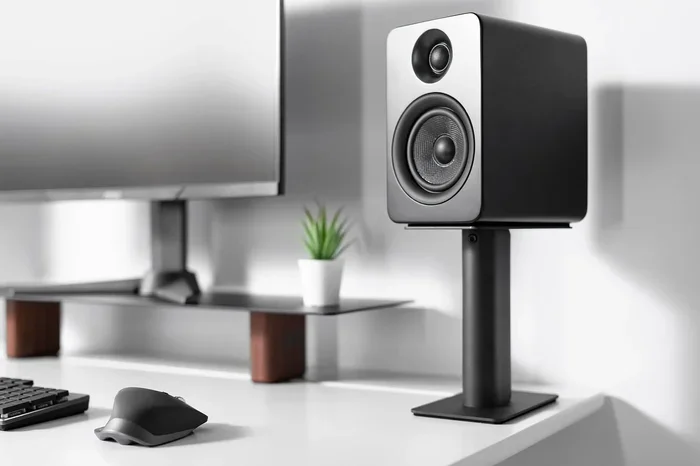
Visual guide about Studio monitor speakers on desk
Image source: i.pinimg.com
First, you get detailed sound reproduction. Good monitors reveal layers in a mix that colored speakers may blur together. You hear the difference between a live drum recording and a sampled beat. You notice when a guitarist uses a brighter pickup or when a vocalist doubles a line for emphasis. This level of detail can make familiar songs feel new again.
Second, monitors offer reliable stereo imaging. A well-designed pair of studio monitors places sounds in a stable soundstage. You can tell when a instrument sits left, right, center, or somewhere in between. This spatial clarity makes listening more immersive. It also helps you appreciate the artistic decisions behind a recording.
Third, these speakers are often built for accuracy at low to moderate volumes. Many consumer speakers only sound good when turned up. Near-field monitors are engineered to remain clear and balanced even at quieter levels. That is useful if you listen while working, reading, or relaxing late at night. You do not need to blast the room to hear the important details.
Fourth, professional audio speakers tend to age well in terms of sound character. Because they avoid heavy tonal coloring, they do not drift toward a specific flavor that may feel dated later. A neutral speaker often remains useful as your tastes change. You can enjoy jazz one hour, rock the next, and electronic music after that without the speaker forcing a single sonic personality onto everything.
Finally, monitors can improve your overall listening habits. When you hear music accurately, you become more aware of quality. You may start choosing better recordings, better streaming settings, or better source files. That ripple effect can make your entire audio setup feel more satisfying.
Better Detail and Clarity in Everyday Listening
One of the most noticeable benefits of monitor speakers is everyday clarity. You do not need to be a producer to appreciate hearing a snare drum strike with realistic weight or hearing a bass line stay clean instead of turning muddy. Clear mids and controlled highs make lyrics easier to understand. Instrument separation becomes more natural. The music feels less crowded.
This clarity is especially valuable for complex genres. Jazz, classical, folk, and layered indie productions all benefit from accurate sound reproduction. These styles often rely on subtle dynamics and delicate textures. A speaker that smoothes everything out can flatten those nuances. A good monitor preserves them.
Even in heavier music, clarity matters. A tight bass drum and a defined guitar tone can make a track feel more powerful, not less. The key is that the speaker is revealing the recording, not adding its own personality. If the recording is strong, the result can be incredibly engaging.
Why Audiophiles and Producers Both Love Monitors
It is not just producers who appreciate studio monitors. Many serious music listeners choose them because they want a trustworthy reference. Audiophiles often spend a lot of time comparing equipment. They want to know whether a sound is coming from the recording or from the speaker. Monitor speakers reduce that uncertainty.
Producers love these speakers because they help them make decisions. They need to hear problems early. They need consistent performance from session to session. That same consistency benefits home listeners who want a dependable sound. When a speaker behaves predictably, you can focus on the music instead of wondering whether the speaker is coloring it.
There is also a practical overlap. Some people use the same pair of active studio monitors for both production and enjoyment. That setup works well when the listener values honesty over hype. It is a practical choice for small rooms, home offices, and multipurpose spaces.
The Drawbacks and Limitations You Should Know
No speaker is perfect for every person and every room. Monitor speakers have real limitations, and it helps to understand them before buying. Knowing the drawbacks upfront prevents disappointment later.
The most common issue is the neutral sound signature. If you are used to consumer speakers with boosted bass and polished treble, monitors can feel stark. Some tracks will sound less exciting. That does not mean the speakers are bad. It means they are doing exactly what they were designed to do. Still, the adjustment period can be real.
Room problems can also hurt performance. Studio monitors are sensitive to reflections, corners, and hard surfaces. Place them poorly, and the bass can build up in some spots while disappearing in others. The result is uneven sound and frustrated listening. A great pair of monitors in a bad room can sound worse than a decent pair of speakers in a well-set-up space.
Another limitation is the listening distance. Many near-field monitors are meant for close range. If you sit too far away, the sound may lose impact and focus. Larger monitors can handle more distance, but they also demand more room space and often more amplification. Matching speaker size to room size matters a lot.
Dynamic range is another thing to consider. Some monitors are very accurate but not especially lively at low power. If you want big, room-filling energy from small speakers, you may feel restricted. That is why some listeners pair monitors with a separate amplifier or choose models with generous headroom.
Lastly, there is the price and expectation gap. A budget monitor can sound great for its price, but it may not satisfy someone chasing a high-end audiophile experience. On the other hand, spending a lot on professional audio speakers does not automatically solve room issues or guarantee a fun listening experience. The best results come from matching the right speaker to the right listener and the right space.
When Monitor Speakers May Not Be the Best Choice
There are situations where monitor speakers are not the ideal pick. If your main goal is casual background music with a warm, relaxed tone, a consumer bookshelf speaker or a well-tuned home system may be more enjoyable. If you love heavy bass impact and do not want to think about placement, monitors may feel too controlled or too lean.
They are also less forgiving in untreated rooms. If your listening space has lots of hard walls, glass, and open flooring, reflections can smear the sound. In that case, a speaker with a smoother off-axis response or a more forgiving tuning might be easier to live with.
Budget is another factor. If you are just starting out and want something simple and fun, a pair of affordable consumer speakers may deliver more immediate satisfaction. Monitors reward careful setup and attentive listening. If you want plug-and-play excitement, they may not be the fastest route.
Room Setup and Placement Challenges
Placement is one of the biggest secrets behind good monitor speaker performance. Even excellent speakers can sound off if they sit in the wrong spot. The goal is to create a balanced listening position with clear direct sound and manageable reflections.
A few basic rules help a lot. Keep the speakers away from corners unless you intentionally want more bass buildup. Form an equal-sided triangle between your head and the two speakers. Keep the tweeters near ear level when seated. Use sturdy stands or a solid desk, because flimsy surfaces can vibrate and blur the sound.
Bass response is the trickiest part. Low frequencies build up in room modes, which means some spots get too much bass and others get too little. Moving the speakers even a little can change the bass dramatically. If your monitors sound boomy, try pulling them away from the wall. If they sound thin, try moving them slightly closer, but watch for harshness.
Simple acoustic improvements also help. Rugs, curtains, bookshelves, and soft furniture can reduce harsh reflections. You do not need a full professional treatment to notice a difference. A more controlled room lets the accurate speakers do their best work.
How to Choose the Right Monitor Speakers for Your Setup
Choosing the right studio monitors starts with honesty about your room, your listening habits, and your budget. The best speaker is not always the most expensive one. It is the one that fits your situation and sounds right to your ears.
Start with size. If you listen in a small room or at a desk, near-field monitors are usually the smartest choice. They are designed for shorter listening distances and tighter spaces. If your room is larger and you want more presence, look for larger drivers and higher output capability. Bigger is not automatically better. It is only better if the speaker can use the space well.
Next, think about powered versus passive. Most home listeners are happier with powered speakers because they are simple and integrated. If you already have an amplifier and enjoy customizing your chain, passive monitors can make sense. Either way, make sure the amplifier or built-in power section has enough headroom for your room size.
Pay attention to the sound profile as well. Some monitors are very neutral. Others lean slightly warm or slightly bright. A tiny tonal tilt can make a speaker more enjoyable without sacrificing too much accuracy. If possible, listen before buying. If not, read reviews that describe real listening experience, not just measurements.
Connectivity matters too. Check the inputs you need. Some monitors offer balanced connections, which can help reduce noise in longer runs. Others include simple analog inputs that are easy to use with phones, laptops, and portable devices. If you plan to connect multiple sources, look for convenient input options and a clean setup path.
Do not forget the stands and cables. Good placement often matters more than a small upgrade in speaker price. A solid stand, proper isolation, and decent cables can improve clarity and stability. These details are easy to overlook, but they make a real difference in daily listening.
Key Features to Look For
When comparing monitor speakers, focus on the features that affect real-world use. Built-in volume control is handy. Input flexibility is useful. A reliable build quality matters if you plan to keep the speakers for years. Low distortion and controlled bass are also worth prioritizing because they affect how clean the music sounds at different volumes.
If you care about late-night listening, look for models that stay clear at lower levels. If you want to play music loudly now and then, make sure the speakers have enough headroom. If your room is bright and reflective, a speaker with smooth off-axis behavior may be easier to live with. The right features depend on how you listen, not just on spec sheets.
Budget Options vs Premium Models
Budget studio monitor speakers can be surprisingly capable. They often give you the core benefits of accurate sound without demanding a huge investment. For many listeners, an entry-level pair is enough to hear the difference between colored and neutral playback. That alone can be a worthwhile upgrade.
Premium models usually offer better refinement. They may have tighter bass, lower distortion, and more controlled imaging. They can also handle more power and more demanding rooms. The improvement is often real, but it is not always dramatic enough to justify the price jump for casual listening. The best choice depends on how much you value fine detail and how often you listen critically.
A practical approach is to buy the best monitors you can afford while leaving room for proper setup. A midrange pair in a well-treated space often outperforms a top-tier pair in a problematic room. Smart spending usually beats chasing the highest number on a price tag.
Practical Tips for Getting the Best Sound From Monitors
Once you have your monitor speakers, a few simple habits can make them sound much better. You do not need to be a technical expert. You just need to pay attention to placement, source quality, and listening volume.
Set up the speakers symmetrically. Keep the left and right channels balanced relative to your listening position. Make sure the tweeters aim toward your ears. Use stable supports so the speakers do not rattle or smear the bass. If you place them on a desk, consider isolation pads or stands to reduce vibration.
Mind your source. A great speaker cannot rescue a poor-quality file or a weak stream. If you want to hear what accurate speakers can do, use the best practical source you have. Higher-quality downloads, good streaming settings, and clean analog connections all help. The improvement is often subtle, but it adds up.
Listen at different volumes. Monitors often reveal their best balance at moderate levels. Very low volume can hide some bass detail. Very high volume can expose distortion and fatigue your ears. Find a comfortable range where the music feels clear and natural. That is usually the sweet spot for everyday enjoyment.
Give your ears time to adapt. If the sound feels too plain at first, keep listening. Many people grow to love the transparency after a short adjustment period. Try comparing the same track on different speakers if you can. The contrast often teaches you more than any spec sheet ever could.
If your room allows it, experiment with small placement changes. Move the speakers a few inches and listen again. Adjust toe-in slightly. Notice how the bass and imaging change. Small tweaks can produce surprisingly big improvements. This hands-on process is part of what makes monitor speakers so rewarding once they are dialed in.
Placement and Calibration Basics
Good placement starts with the room, not the speaker. Identify the listening spot first. Then position the speakers around that spot in a balanced way. Keep them away from strong reflections where possible. If the bass feels uneven, move the speakers and retest before reaching for any EQ fixes.
Basic calibration can also help. Set the monitors to a sensible reference level. If your speakers include room correction or high-pass filtering, use those tools carefully. They can reduce problems, but too much processing can smear detail. The goal is cleaner sound, not a heavily altered sound.
If you want to go further, measure or listen for bass buildup near walls and corners. Small movements often help more than big ones. The more you learn how your room behaves, the easier it becomes to get consistent, enjoyable results from studio monitors.
Best Genres and Listening Habits for Monitors
Some genres shine especially bright through monitor speakers. Acoustic music, jazz, classical, vocal-driven pop, and detailed indie recordings often benefit from the clear mids and honest imaging. These styles reward listeners who want to hear performance nuances and production choices.
Electronic music and modern pop can also sound excellent, but the experience depends on the mix. Well-produced tracks reveal impressive depth and separation. Poorly balanced tracks may feel less exciting because the monitors are not adding extra low-end hype. That reaction is useful information, not a failure of the speakers.
Your listening habits matter too. If you sit down and focus on albums, monitors can be deeply satisfying. If you mostly want background sound while doing chores, a more colored speaker may feel easier to live with. Both approaches are valid. The right speaker matches the way you actually listen.
Final Thoughts on Monitor Speakers for Music Listening
So, are monitor speakers good for listening to music? They are excellent if you value clarity, detail, and honest sound. They are especially rewarding when you want to hear what a recording really contains. They can make familiar music feel fresh and help you notice details you missed before.
They are not the best fit for everyone. If you want a fun, bass-forward, easygoing sound with minimal setup, consumer speakers may suit you better. If your room is untreated and your main goal is casual listening, monitors may demand more effort than you want to give. The right choice depends on your priorities.
For many music lovers, monitor speakers strike a great balance between accuracy and enjoyment. They bring you closer to the music without dressing it up. With thoughtful placement and realistic expectations, they can turn a regular listening session into a more engaging experience. If you care about true audio fidelity and want speakers that respect the recording, monitors are absolutely worth considering.
Frequently Asked Questions
Are monitor speakers better than regular speakers for music?
They are better if you want accurate sound and detailed clarity. Regular speakers often sound more exciting because they boost certain frequencies, while monitors aim for a neutral presentation.
Can I use studio monitors as normal speakers at home?
Yes, you can. Many people use studio monitors for daily music listening. They work best when you set them up properly and understand that they will sound more honest than colored consumer speakers.
Do monitor speakers need an amplifier?
Many monitors are powered speakers with built-in amplifiers, so they do not need a separate amp. Passive monitors do require an external amplifier to work properly.
Why do monitor speakers sound boring to some people?
They can sound less exciting because they do not add extra bass or treble boost. That neutral tuning reveals the recording as it is, which may feel less dramatic if you are used to consumer speaker coloring.
What is the best placement for monitor speakers in a room?
Place them at ear level, form a balanced triangle with your listening position, and keep them away from strong reflections and corners. Good placement improves imaging and makes the bass more even.
Are expensive monitor speakers worth it for casual listening?
Not always. Premium monitors can offer better refinement, but a midrange pair in a good setup often gives most listeners the biggest satisfaction. Room setup and source quality matter just as much as price.