Audio Technica Speakers for Record Player

Audio Technica speakers for record player setups deliver crisp, warm sound that brings your vinyl collection to life. Choosing the right speakers matters because turntables need clear mids and rich bass to match analog recordings. This guide walks you through pairing, placement, and simple setup tips so you can enjoy authentic listening every day.
Vinyl records bring a warm, natural sound that many listeners still love. If you are building a listening setup around an Audio Technica turntable, the right speakers make a huge difference. Good speakers reveal the details in your favorite albums without coloring the sound too much. They also make daily listening feel smooth and enjoyable instead of harsh or muddy.
Many people start with a turntable and then wonder which speakers will work best. The answer depends on your room, your budget, and how you like to listen. Some listeners want a simple plug-and-play setup. Others want a more flexible system with an external amplifier. Either way, understanding the basics helps you avoid common mistakes and get better sound from day one.
In this guide, we will look at how to choose speakers for an Audio Technica record player, what features matter most, and how to set everything up for clear, balanced playback. You will also find practical tips on placement, wiring, and listening tests so you can make a confident choice.
Key Takeaways
- Match your turntable output to speaker input: Most Audio Technica turntables need proper amplification or powered speakers to sound their best.
- Choose speakers that fit your room size: Small desktop speakers work for casual listening, while larger bookshelf models fill bigger spaces with richer sound.
- Use quality speaker wire and proper placement: Keep speakers at ear level and angle them toward your listening spot for clearer stereo imaging.
- Consider active vs passive options: Powered speakers simplify setup, while passive models give you more flexibility with external amplifiers.
- Protect your vinyl playback chain: Clean records, stable platter speed, and balanced volume levels help preserve both your collection and your speakers.
- Test before you commit: Listen to familiar tracks at your normal volume to judge clarity, bass response, and overall tone.
- Keep your setup simple and balanced: A well-matched turntable, speakers, and placement often sound better than expensive mismatched gear.
📑 Table of Contents
- Choosing the Right Speakers for an Audio Technica Record Player
- Understanding Audio Technica Turntable Outputs
- How to Connect Speakers to a Record Player
- Sound Quality, Tone, and Vinyl Playback
- Budget, Room, and Long-Term Setup Choices
- Final Setup Checklist Before You Play
- Common Mistakes to Avoid
- Expert Insights for Better Results
- Key Takeaways for Your Setup
Choosing the Right Speakers for an Audio Technica Record Player
The first step is understanding what your turntable actually needs. Many Audio Technica models output a low-level signal that needs amplification before it reaches speakers. Some models include built-in phono preamps, while others do not. If your turntable has a built-in preamp, you can often connect it to powered speakers or an amplifier with a line-level input. If it does not, you may need an external phono stage first.
When shopping for speakers, think about how you listen. Do you play records in a small bedroom or a larger living room? Do you want background music or full-focus listening sessions? These questions matter because speaker size, power handling, and sound signature all affect the final result. A compact powered speaker pair may be perfect for a desk setup, while larger bookshelf speakers can create a richer stereo image in a wider space.
It also helps to think about your long-term goals. If you plan to add more audio gear later, choose a setup that leaves room for growth. For example, passive speakers paired with a good amplifier can give you more flexibility over time. If you want the simplest path, powered speakers often make setup faster and easier.
Powered Speakers vs Passive Speakers
Powered speakers have built-in amplifiers, so you do not need a separate amp to drive them. This makes them a popular choice for turntable setups that already include a phono preamp. They are usually easy to connect and can deliver consistent sound without much hassle. Many listeners appreciate the clean look and straightforward setup.
Passive speakers do not have built-in amplifiers. They need an external amplifier or receiver to work properly. This setup can feel more involved, but it offers more flexibility. You can choose an amplifier that matches your listening style and upgrade pieces separately later. Passive speakers also work well when you want to build a custom audio chain over time.
Why Speaker Matching Matters
Turntables and speakers work together as part of a larger playback chain. If one part is weak or mismatched, the whole system can sound off. For example, overly bright speakers may exaggerate surface noise, while muddy speakers can blur vocal detail. A balanced speaker helps preserve the natural character of vinyl playback.
You should also think about impedance, sensitivity, and power handling if you choose passive speakers. These terms sound technical, but the basic idea is simple. Speakers need the right amplifier support to perform well. When the pieces fit together, your records sound fuller and more controlled.
Understanding Audio Technica Turntable Outputs
Before connecting speakers, check what your Audio Technica turntable can output. Some models offer both phono and line outputs, while others provide one or the other. A phono output carries a weaker signal that usually needs a phono preamp. A line output is already amplified to a standard level and can connect more directly to powered speakers or an amplifier.
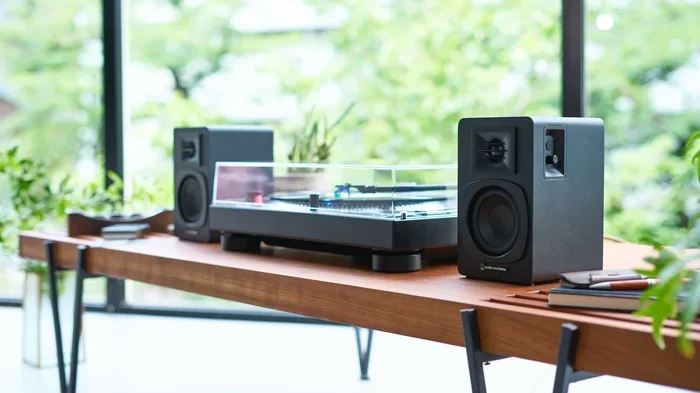
Visual guide about audio technica turntable speakers
Image source: cdn.mos.cms.futurecdn.net
If your turntable has a built-in preamp, you can often switch it on or off depending on your setup. That flexibility is helpful because it lets you use the same turntable with different gear. If your model does not include a preamp, you will likely need one before the signal reaches your speakers. This step is important because skipping it can lead to very low volume or thin sound.
Built-In Preamps and External Preamps
A built-in preamp keeps things simple. You can connect the turntable to many powered speakers or amplifiers without extra boxes. That said, some listeners prefer an external phono stage because it can offer more control and a different sound character. External preamps also make upgrades easier if you want to change one part of the chain later.
An external phono stage can be a good choice if you want a more dedicated signal path. It may also help if your turntable does not include a preamp. Either way, the goal is the same: give your speakers a clean, properly leveled signal so they can do their best work.
Signal Quality and Clean Connections
Good sound starts with clean connections. Loose cables, dirty inputs, or poor grounding can introduce hum or weak signal transfer. Make sure your cables fit firmly and that your turntable is set up on a stable surface. If your system has a ground wire, connect it properly according to the manufacturer instructions.
It is also wise to keep your audio chain free from unnecessary interference. Keep signal cables away from power cords when possible. Use quality connections that fit your gear without forcing incompatible plugs. Small details like these often improve clarity more than people expect.
How to Connect Speakers to a Record Player
Connection depends on the type of speakers and the output of your turntable. If you use powered speakers, you usually connect the turntable output to the speaker input. If your turntable has a line output, that connection is straightforward. If it only has a phono output, you may need a preamp before the speakers.
If you use passive speakers, you connect an amplifier or receiver between the turntable and the speakers. The amplifier receives the audio signal and powers the speakers. This setup usually involves more steps, but it can deliver excellent results when everything is matched well.
For a simple setup, many people follow this order: turntable, phono preamp if needed, amplifier if needed, and then speakers. Each part should match the next one in terms of input and output levels. When the chain is logical, setup becomes much easier.
Placement and Speaker Positioning
Speaker placement changes the sound more than many listeners expect. If speakers sit too close to a wall, bass can become boomy. If they sit too far apart, the stereo image may feel loose. A good starting point is to place the speakers at a reasonable distance from each other and angle them slightly toward your listening position.
Height matters too. Try to keep the tweeters near ear level when you are seated. That helps you hear details more naturally. If your speakers sit on a shelf or desk, make sure the surface is solid and does not vibrate. Stable placement often improves clarity and keeps the sound focused.
Room Size and Listening Distance
Small rooms do not always need large speakers. In fact, oversized speakers can overwhelm a tight space and make the sound less pleasant. For a bedroom or office, moderate-sized speakers often work best. In a larger room, you may want speakers that can move more air and fill the space without straining.
Listening distance also matters. If you sit close to the speakers, you may notice more detail and a tighter stereo image. If you sit farther away, you may want speakers with enough output to stay clear at that distance. Think about where you usually sit and choose speakers that fit that space well.
Sound Quality, Tone, and Vinyl Playback
Vinyl playback has a distinct character. Many listeners enjoy the smooth mids, the natural texture, and the sense of presence that records can create. The right speakers should support that character without adding harshness or excessive coloration. Clear vocals, controlled bass, and honest treble usually make records more enjoyable.
It helps to listen for balance rather than just loudness. A speaker that sounds impressive at high volume may not be the best choice for relaxed daily listening. Look for a setup that stays clear at normal listening levels and does not become fatiguing over time. Comfort matters because you will likely spend a lot of time with your favorite albums.
Bass, Mids, and Treble in Context
Bass gives music weight and rhythm. Mids carry vocals and most instruments. Treble adds air and detail. A good speaker balance lets each part sit where it belongs. If the bass is too strong, it can blur the rest of the music. If the treble is too sharp, it can make long listening sessions tiring.
For vinyl, many listeners prefer a smooth, well-rounded presentation. That does not mean dull sound. It means a speaker that reproduces records in a way that feels natural and engaging. When the tonal balance is right, familiar tracks often feel fresh again.
Avoiding Common Sound Problems
One common issue is too much bass from poor placement. Another is harsh treble caused by reflective surfaces or speakers that are too bright for the room. A third is weak sound because of a missing preamp or mismatched connections. These problems are often fixable with small adjustments.
Try moving the speakers a few inches and listening again. Try changing the angle slightly. Try checking your cable connections and input settings. Simple changes can make a surprising difference, especially with vinyl setups where the signal chain matters so much.
Budget, Room, and Long-Term Setup Choices
Your budget should cover more than just speakers. A good turntable setup may also involve a preamp, cables, stands, or an amplifier. It is smart to think about the whole system before buying one piece. That approach helps you avoid spending too much on speakers while leaving the rest of the chain underpowered or incomplete.
Room conditions also affect value. A speaker that works beautifully in one space may not suit another. If your room is small and quiet, a compact setup may be enough. If your room is open and lively, you may need speakers that can handle more space and still sound controlled. Matching gear to the room is one of the easiest ways to improve satisfaction.
Future-Proofing Your Setup
If you think you may add gear later, choose components that leave room for upgrades. For example, passive speakers can work with different amplifiers over time. Good cables and solid stands can also support future changes. A flexible setup makes it easier to improve sound without replacing everything at once.
Even if you want a simple system now, it helps to buy dependable gear that can stay part of your setup for a long time. Quality connections, stable construction, and sensible specifications often matter more than flashy features. A practical setup usually ages better than one built around short-lived trends.
Quick Tips for Better Vinyl Sound
- Use a stable surface for your turntable and speakers.
- Keep speakers at a reasonable distance from walls and corners.
- Match your turntable output to the correct input on your speakers or amplifier.
- Use clean, secure cables and avoid loose connections.
- Start with moderate volume and adjust gradually.
- Listen to familiar records when testing new speakers.
- Clean your records regularly to reduce noise and improve clarity.
Final Setup Checklist Before You Play
Before you drop the needle, it helps to run through a short checklist. Confirm that your turntable is set up correctly and that the speed is stable. Check that your speakers are connected to the right inputs. Make sure any preamp or amplifier settings match your gear. Then place the speakers in a sensible position for your room.
Once everything is connected, play a record you know well. Listen for clarity, balance, and comfort. If something feels off, adjust one thing at a time instead of changing everything at once. That makes it easier to find what actually improved the sound.
A good listening setup should feel natural. You should be able to enjoy the music without constantly tweaking the system. When your turntable, speakers, and room work together, vinyl becomes more relaxing and more rewarding.
Common Mistakes to Avoid
One common mistake is buying speakers without checking the turntable output first. Another is placing speakers too close to a wall and wondering why the bass feels muddy. Some listeners also forget about cables and inputs, then struggle with weak or noisy sound. These issues are easy to prevent with a little planning.
Another mistake is chasing loudness instead of balance. Vinyl often sounds best when the system is tuned for clarity and comfort. If your setup feels tiring or distorted, the solution may be placement, matching, or volume control rather than more power.
Finally, do not ignore the room. Even excellent speakers can sound disappointing in a poor listening environment. Small changes in placement, surface stability, and listening distance can improve the experience a lot.
Expert Insights for Better Results
Experienced listeners usually recommend starting simple. Choose a turntable output setup that matches your speakers, then refine placement before buying more gear. That approach keeps the system understandable and makes problems easier to spot.
It also helps to think of vinyl as a chain. The record, stylus, turntable, preamp, amplifier, cables, and speakers all affect the final sound. Improving one weak link often helps more than adding a fancy part that does not solve the real issue.
When in doubt, trust your ears. Specifications matter, but your listening experience matters more. If a setup sounds clear, balanced, and enjoyable with the records you actually play, it is doing its job well.
Key Takeaways for Your Setup
- Understand your turntable output before buying speakers.
- Choose powered or passive speakers based on simplicity or flexibility.
- Place speakers carefully for clearer sound and better stereo imaging.
- Use the right cables and connections to keep the signal clean.
- Test with familiar records before making final decisions.
- Balance your budget across the whole audio chain, not just speakers.
- Make small adjustments first when something sounds off.
If you want a dependable listening experience, focus on matching, placement, and clarity. A well-chosen speaker pair can make your Audio Technica record player sound fuller, smoother, and more enjoyable. Take your time, listen carefully, and build a setup that fits the way you actually listen.
Frequently Asked Questions
Do Audio Technica turntables need special speakers?
No, they do not need special speakers, but they do need speakers that match the turntable output. Many Audio Technica turntables work well with powered speakers or with passive speakers paired with the right amplifier and phono stage if needed.
Can I connect an Audio Technica record player directly to speakers?
Sometimes yes, but it depends on the turntable output and the speaker input. If your turntable has a line output or built-in preamp, you may connect it directly to powered speakers. If it only has a phono output, you usually need a phono preamp first.
What is the best speaker type for vinyl playback?
The best speaker type depends on your room and listening habits. Powered speakers are easier to set up, while passive speakers offer more flexibility with amplifiers. For many listeners, a balanced bookshelf speaker or compact powered speaker works well for home vinyl listening.
Why do my speakers sound muddy with my turntable?
Muddy sound often comes from poor placement, too much bass reinforcement, or a mismatched signal chain. Moving the speakers away from walls, checking your preamp settings, and using cleaner connections can often improve clarity.
Do I need an amplifier for my speakers if I use a turntable?
It depends on your speakers. Powered speakers include their own amplification, so they do not need a separate amplifier. Passive speakers do need an external amplifier or receiver to play properly.
How should I place speakers for the best record player sound?
Place the speakers at a comfortable distance from each other and angle them slightly toward your listening spot. Keep them on a stable surface and avoid putting them too close to walls if the bass becomes overwhelming. Ear-level placement usually improves detail and balance.