Top 10 Best Monitors for Editing Photos: Expert Picks
Choosing the right monitor for photo editing is one of the most critical decisions a photographer or visual artist can make. Your screen is your window to your work, and if that window is tinted, blurry, or inaccurate, you’ll constantly fight against incorrect colors, poor contrast, and details that simply don’t match reality. A great photo editing monitor isn’t just a display; it’s a calibrated tool that ensures what you see is what you get, saving you endless hours of frustration and rework. The best models offer exceptional color accuracy, wide color gamuts covering sRGB, Adobe RGB, or DCI-P3, high resolution for crisp details, and features like hardware calibration and factory pre-sets. Let’s cut through the noise and find the perfect display for your creative workflow.
Quick Product Comparison
Our Top 10 Best Monitors For Editing Photos Reviews – Expert Tested & Recommended
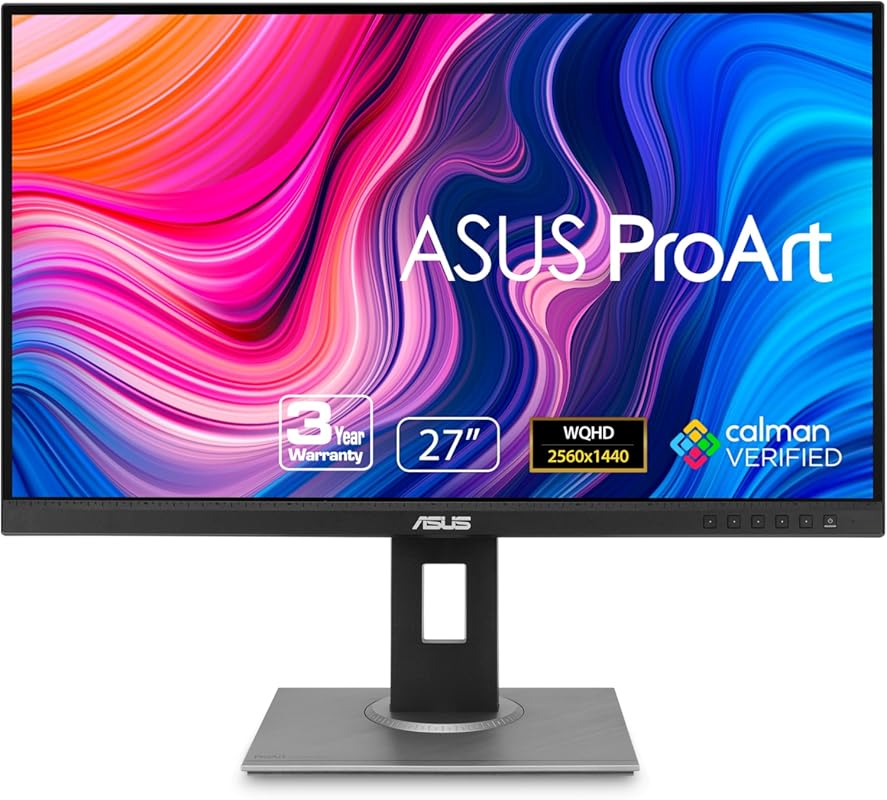
1. ASUS ProArt Display PA278QV
The ASUS ProArt PA278QV is a workhorse monitor that gets the fundamentals of color-critical work exactly right. This 27-inch WQHD (2560×1440) display offers a fantastic balance of sharpness and performance, covering 100% of the sRGB and Rec. 709 color spaces. Its real magic lies in the factory calibration, verified by Calman, guaranteeing a Delta E value of less than 2—which means colors are incredibly accurate right out of the box. The IPS panel provides wide 178-degree viewing angles, so colors stay consistent even if you’re not looking dead-on. It’s built for professionals with a fully ergonomic stand that offers height, swivel, pivot, and tilt adjustments.
Key Features That Stand Out
- ✓ Factory Calibrated Accuracy: Calman Verified with Delta E < 2 for trustworthy, out-of-the-box color.
- ✓ Wide Color Gamut: 100% coverage of sRGB and Rec. 709 for standard digital workflows.
- ✓ Ergonomic Flexibility: Full-motion stand with pivot, swivel, height, and tilt adjustments.
- ✓ Excellent Connectivity: Includes DisplayPort, HDMI, and USB hub ports for a clean workspace.
Why We Recommend It
For most photographers starting out or working in sRGB-based environments (web, social media, general print), the PA278QV is the absolute sweet spot. It delivers professional-grade color accuracy without the premium price tag of a 4K or wide-gamut display. The WQHD resolution is a significant step up from 1080p, giving you more screen real estate and sharper details for editing, and the proven reliability of the ProArt line means it’s a tool you can count on for years.
Best For
Enthusiast and professional photographers who primarily work in sRGB, photo editors needing a reliable, color-accurate secondary display, and anyone wanting a professional monitor without the 4K price tag.
Pros and Cons
Pros:
- Exceptional color accuracy (ΔE<2) guaranteed via factory calibration.
- Excellent, versatile ergonomic stand that adjusts to any posture.
- Strong value proposition with pro features at a mid-range price.
- Good selection of ports including USB hub for peripheral connectivity.
Cons:
- Does not support wider gamuts like Adobe RGB or DCI-P3.
- No HDR support, which is expected at this price point.
- On-screen menu controls can be a bit clunky to navigate.
Customer Reviews
Customer Review: “This monitor is a fantastic value for the money. The color accuracy is spot-on right after unboxing. I compared it to my older Dell Ultrasharp and the ASUS was noticeably better out of the box. The stand is incredibly sturdy and adjustable in every direction. For photo editing, this is a perfect choice. The 27-inch size at WQHD is the ideal balance for me.”
Customer Review: “I use this for photo editing and some light video work. The factory calibration report that comes in the box is a nice touch. Colors are vibrant and accurate. The only minor complaint is that the OSD buttons are on the back and are a bit finicky to use, but once set up, you don’t need to touch them often. Highly recommended for the price.”
2. LG 27US500-W Ultrafine Monitor
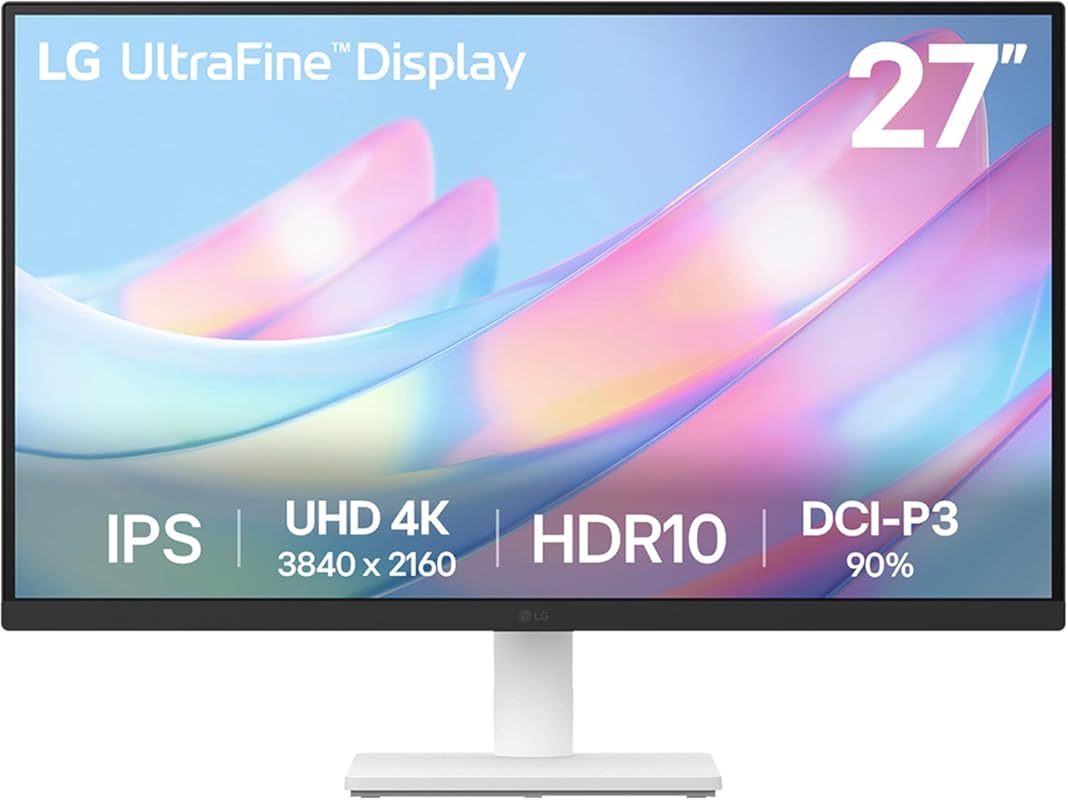
The LG 27US500-W Ultrafine is a stunning 4K monitor that brings breathtaking detail and clarity to your photo editing workflow. With a resolution of 3840 x 2160, you’ll see every nuance in your high-megapixel images. It supports HDR10 and covers up to 90% of the DCI-P3 color gamut, delivering a wider and more vibrant color spectrum than standard sRGB. The borderless design maximizes screen real estate, and LG’s OnScreen Control software makes it easy to split your workspace. While its stand only tilts, the picture quality is so exceptional that it’s worth considering a VESA mount for full ergonomic adjustment.
Key Features That Stand Out
- ✓ Sharp 4K UHD Resolution: Four times the detail of 1080p for pixel-peeping edits.
- ✓ HDR10 & Wide DCI-P3 Gamut: Supports HDR content and covers 90% DCI-P3 for richer colors.
- ✓ Borderless Design: Nearly bezel-free screen for a more immersive, modern look.
- ✓ OnScreen Control Software: Conveniently adjust settings and split your screen with your mouse.
Why We Recommend It
This is our top pick for editors who need maximum detail and are ready to step into wider color spaces. The 4K resolution is a game-changer for working with large, high-resolution files from modern cameras. The DCI-P3 coverage is excellent for photographers who also edit video or want their photos to pop with more saturated, cinematic colors. It offers a premium viewing experience at a price that feels like a steal for a 4K HDR display.
Best For
Professional and advanced hobbyist photographers working with high-resolution files, videographers needing a color-accurate 4K reference monitor, and anyone who wants a future-proof display with HDR capabilities.
Pros and Cons
Pros:
- Incredibly sharp 4K resolution perfect for detail-oriented work.
- Excellent HDR10 support and wide 90% DCI-P3 color gamut.
- Sleek, modern borderless design with thin bezels.
- Very good out-of-the-box color accuracy for the price.
Cons:
- Stand only offers tilt adjustment; height and swivel require a VESA mount.
- True HDR performance is limited by its brightness (typical for this price).
- Menu system and HDR setup can be slightly unintuitive for first-time users.
Customer Reviews
Customer Review: “I’ve been using the LG 27US500-W Ultrafine Monitor for a few weeks now, and it’s been fantastic. The 4K UHD resolution is incredibly sharp—text looks crisp, and colors are vibrant without being oversaturated. Out of the box, color accuracy was already very good, but after a quick calibration, it looked even better. The 27-inch screen size is the sweet spot for productivity—large enough for split-screen multitasking without taking up too much desk space. I mainly use it for photo editing, web browsing, and occasional Netflix, and everything looks clean and smooth. The IPS panel gives great viewing angles too, so there’s no color shifting when I move around. Build quality is solid and minimalistic, with thin bezels and a clean white finish that looks great on my desk. The stand is a little basic—only tilt adjustment, no height or swivel—but that’s easily solved with a VESA mount. Connectivity is straightforward with HDMI and DisplayPort options, and it works flawlessly with both my MacBook and PC.”
Customer Review: “I didn’t rate this for gaming because I don’t have a video card to drive a 4K monitor at a good speed yet, but for everything else, it looks brilliant for the money. I’m a working stiff these days, so I don’t have the free time I’d like to have to play around and get everything set up just so, and I found that there are little hurdles and speed bumps along the way with these newer displays if you want to actually USE all of the fancy marketing buzzwords like HDR or Freesync or G-Sync or high frame rates or FALD (full array local dimming). I haven’t gotten those all figured out just yet and the documentation and user interface aren’t quite intuitive if you’ve never had to set those up and get them actually enabled and working correctly in real life before. They’re not just ‘plug it in and bask in the full glory’ easy yet– you have to make sure you have the right combinations of hardware, cables, drivers, and settings between all the devices and peripherals to take full advantage of those newer features. But 4K crystal clear beautiful brilliance does pretty much work right out of the box, and at this price, even just that is worth having. It takes very little adjusting to get very realistic colors compared to my old calibrated Dell setup. I didn’t even have to delve into the color calibration tool in Windows to get it fairly close to what I prefer in my lighting environment and get my pictures to look almost exactly like they looked in real life when I originally took the pictures. I don’t even feel bad quite yet about not pulling out a hardware calibration tool. So while I haven’t put together all of those pieces in a way that lets me enjoy all the features and functionality of this monitor yet, I am already satisfied with my purchase even if I never take the time to make it all work at peak performance. This is a pretty darn good buy. I’ve even considered picking up another one or two to replace my old 1080P monitor and at least one of my work monitors at the office because of the price to performance ratio. The only reason I haven’t is because I may get my work to buy one or two for me for that, and at home I’m planning to buy one of the top of the line 4K G-Sync quantum dot monitors as my main/gaming monitor once I’ve upgraded my rig to push 4K really well, and it seems silly to me to buy a perfectly good monitor to only use for a few months. These are too good to waste and I don’t have room on my desk for a triple monitor setup, unfortunately, or it’d be a no-brainer.”
3. CRUA 24.5-inch Gaming Monitor
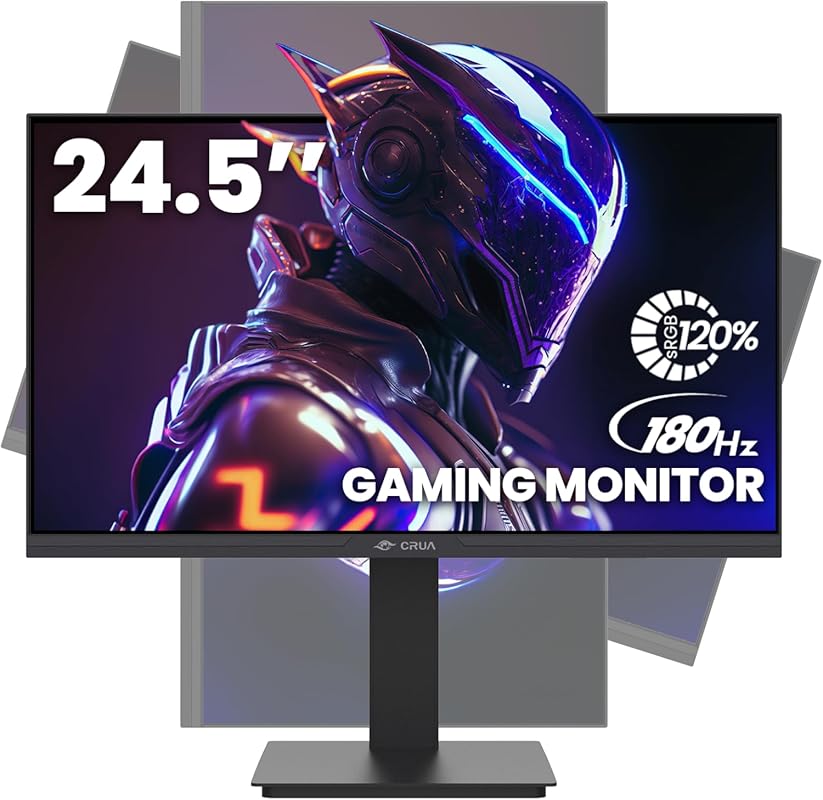
For photographers on a tight budget, the CRUA 24.5-inch monitor delivers surprising value. It’s primarily a gaming display, but its specification sheet includes features that photo editors can appreciate: it boasts 120% sRGB color space coverage and an IPS panel for consistent viewing angles. The 165Hz/180Hz refresh rate and FreeSync are bonuses for smooth scrolling. The standout feature is its incredibly flexible ergonomic stand, offering height, swivel, pivot, and tilt adjustments—something often missing from budget monitors. It’s a no-frills, high-performance panel that gets the job done without breaking the bank.
Key Features That Stand Out
- ✓ Excellent Value: Packs high refresh rate and good color gamut into a very affordable package.
- ✓ 120% sRGB Coverage: Surpasses the standard sRGB gamut for more vibrant colors.
- ✓ Superb Ergonomic Stand: Full range of motion (height, swivel, pivot, tilt) at this price point.
- ✓ Fast IPS Panel: 3ms response time and FreeSync for tear-free, smooth visuals.
Why We Recommend It
Not every photographer needs a $1,000 professional-grade monitor. The CRUA proves you can get a capable, large-screen IPS display with good color coverage and fantastic ergonomics for well under $200. It’s the perfect “starter” or secondary monitor for someone editing for web use (sRGB) who wants more screen real estate than a basic 1080p panel and needs the flexibility to adjust their viewing angle. Just remember, it’s not factory-calibrated for absolute color-critical work.
Best For
Beginner photo editors, students, or budget-conscious creators working primarily in sRGB for web and social media. Also great for anyone needing a flexible, adjustable secondary monitor for reference or messaging.
Pros and Cons
Pros:
- Unbeatable price for a 24.5-inch IPS monitor with 120% sRGB.
- Stand offers full ergonomic adjustment (height, swivel, pivot, tilt).
- High refresh rate (165Hz) makes scrolling and general use very smooth.
- Includes both HDMI and DisplayPort inputs.
Cons:
- No factory calibration; out-of-box color accuracy is not guaranteed (ΔE not specified).
- Limited to 1080p resolution, so less sharp than WQHD or 4K for detailed work.
- Build quality and materials are basic compared to pro-grade monitors.
- Gaming-focused features (high refresh rate) are unnecessary for pure photo editing.
Customer Reviews
Customer Review: “Impressive features for the money. Crisp image, fast refresh, good color reproduction. The adjustable height and angle/tilt capabilities are handy and it is very stable. The screen surface has slight undulations but it is unnoticable in normal use. There are no flaws, pixel issues nor bright spots. It has an extensive adjustment capability via a joy stick/switch on the back of the panel.”
Customer Review: “We run The Northeast GA Weather Center and we needed a few new Monitors that were reliable and provided us more screen space. The CRUA 24.5″ monitor ended up being our final choice. The price was fantastic and played a big part of our decision to purchase. The monitor is very sturdy and well built. It came packaged very well. The quality of the monitors imagery is fantastic and is just as good as our name brand high dollar monitors. If you are a gamer this monitor is a fantastic choice as we also use it for this purpose. It has an amazing refresh rate and 4k and UHD videos and images come through in great detail. We will be purchasing several more of these monitors.”
4. ASUS ProArt Display PA279CRV
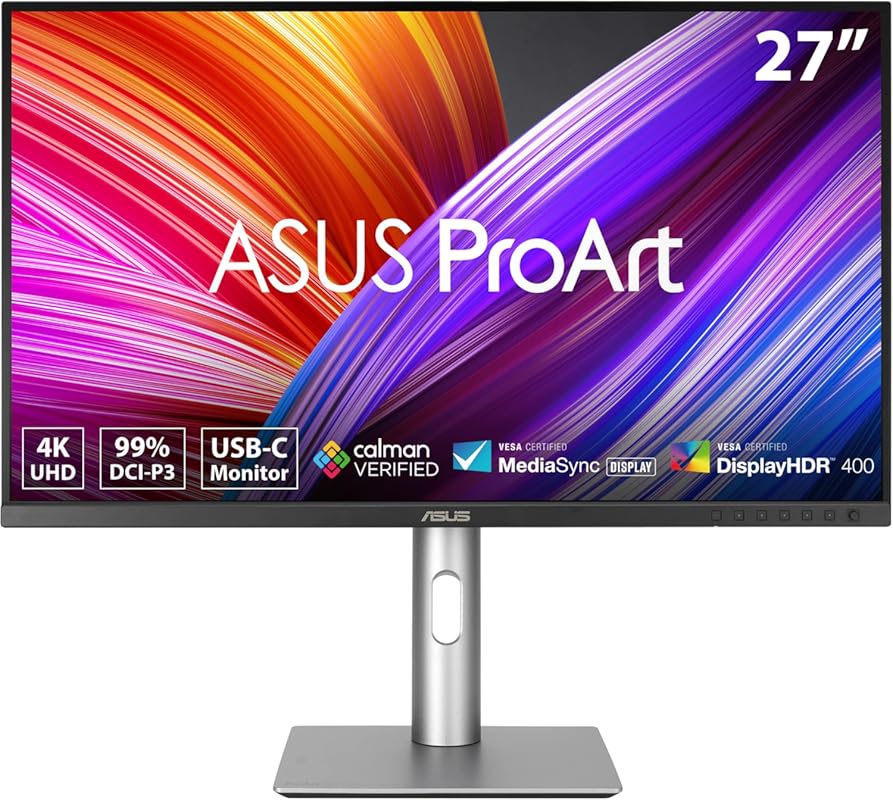
The ASUS ProArt PA279CRV is a flagship 4K monitor designed for the most demanding color-critical applications. It combines a stunning 3840 x 2160 IPS panel with exceptional color performance, covering 99% of both the DCI-P3 and Adobe RGB color spaces. Like all ProArt displays, it’s Calman Verified and factory-calibrated to a Delta E of less than 2. The inclusion of a USB-C port with 96W Power Delivery is a major perk for laptop users, allowing you to power your computer and transmit video with a single cable. It also supports daisy-chaining multiple monitors via USB-C, making it a champion for multi-monitor setups.
Key Features That Stand Out
- ✓ Ultimate Color Gamut: 99% DCI-P3 and 99% Adobe RGB coverage for professional print and video.
- ✓ 4K Resolution with HDR: Incredible detail and HDR10 support for a dynamic range boost.
- ✓ 96W USB-C Power Delivery: Charge and connect modern laptops with a single cable.
- ✓ Daisy-Chaining Support: Connect multiple monitors in a chain via USB-C for a clean desk.
Why We Recommend It
If your work demands the absolute widest color gamut and the highest resolution, the PA279CRV is arguably the best value in its class. It essentially gives you the color performance of monitors costing significantly more, in a versatile 27-inch package. The 96W USB-C is a lifesaver for MacBook Pro or high-power laptop users, and the daisy-chaining is perfect for building a multi-monitor editing suite without a jungle of cables. It’s a no-compromise tool for professionals.
Best For
Professional photographers doing high-end print work (requiring Adobe RGB), videographers, color graders, and anyone with a modern laptop (like a MacBook Pro) who wants a single-cable, high-power solution.
Pros and Cons
Pros:
- Stunning 99% Adobe RGB and DCI-P3 color gamut coverage.
- Factory-calibrated (ΔE<2) and Calman Verified for trustworthy accuracy.
- Powerful 96W USB-C port simplifies laptop connectivity and charging.
- 4K resolution and HDR10 support for exceptional detail and dynamic range.
- Supports USB-C daisy-chaining for multi-monitor setups.
Cons:
- Premium price reflects its professional capabilities.
- Stand is good but not as fully ergonomic as some other ProArt models (no pivot?).
- HDR performance is good but not at the level of high-end HDR1000 monitors.
Customer Reviews
Customer Review: “Excellent monitor. I do semi professional video and picture editing and I must say that I did not realize what I was missing by not having this monitor all these years. It is a great size. It doesnt feel overwhelming to view up close for hours on end. Im not a big fan of the button control, but thats honestly for any monitor. I prefer a remote. The picture is great for editing video and pics. You really see the true color saturations. This can be used as a gaming monitor as well, but its better suited for editing. It looks great for games of course, but dont expect any high refresh rates for call of duty. This monitor is only 60hz, which is all you need for editing. The control button menu is good and easy to navigate. The brightness is good and you have many different temps to choose from. I didnt adjust anything and left it all factory out of the box. I really cant find much wrong with this monitor. it suits my needs perfectly. Good buy!”
Customer Review: “I have been using this monitor for a bout a year. I calibrated it with a Datacolor Spyder X2. I use it for photo editing and general computer use. It is easy on the eyes and color true enough to do high quality photo editing. I gave it a five. It deserves a 10!”
5. ASUS ProArt Display PA278CV
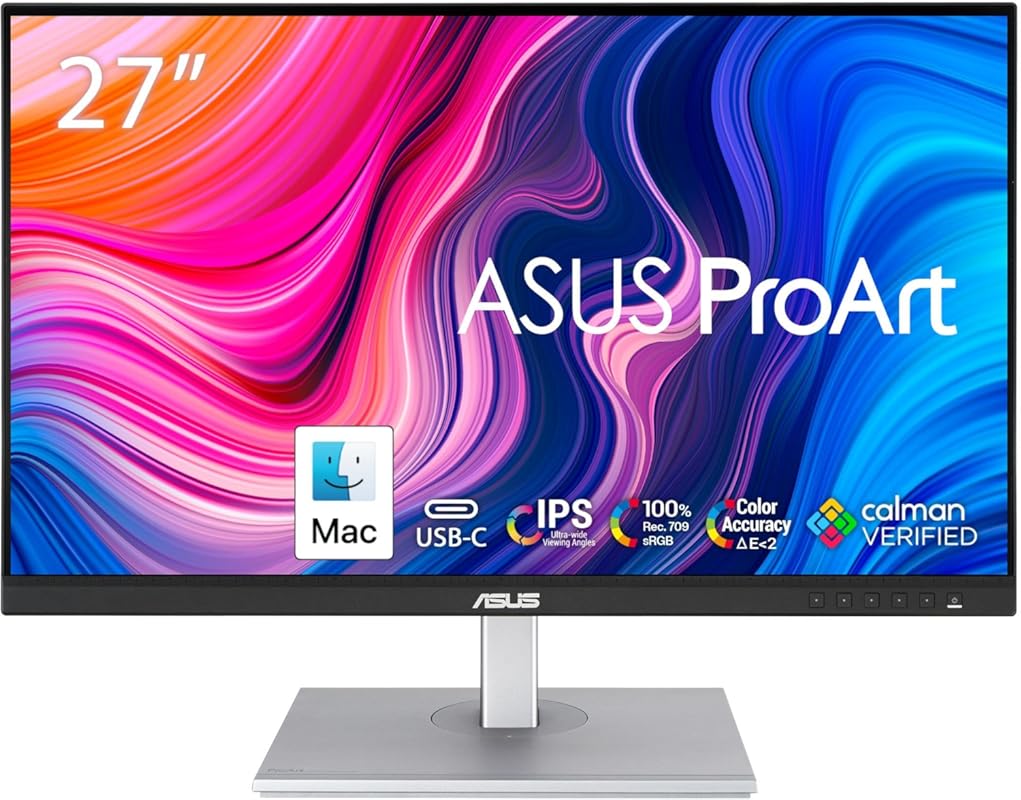
The ASUS ProArt PA278CV is the close sibling to our top pick (PA278QV), but it adds crucial modern connectivity: a USB-C port with 65W Power Delivery. This 27-inch WQHD monitor shares the same fantastic 100% sRGB/Rec.709 coverage and Calman Verified factory calibration (ΔE<2) as its sibling. The USB-C port means you can connect and power a compatible laptop with a single cable, drastically reducing desk clutter. It also supports daisy-chaining, allowing you to connect multiple ProArt monitors in a chain. The ergonomic stand is similarly excellent, offering full height, swivel, pivot, and tilt adjustments.
Key Features That Stand Out
- ✓ USB-C with 65W Power Delivery: Single-cable solution for video, data, and laptop charging.
- ✓ Daisy-Chaining Support: Connect multiple monitors via USB-C for a tidy multi-display setup.
- ✓ Pro-Grade Color Accuracy: 100% sRGB/Rec.709, Calman Verified, ΔE<2 out of the box.
- ✓ Full Ergonomic Stand: Height, swivel, pivot, and tilt adjustments for comfortable viewing.
Why We Recommend It
If the PA278QV is the value king, the PA278CV is the connectivity king for the WQHD ProArt line. For anyone using a modern ultrabook or MacBook, the 65W USB-C port is a game-changer. It eliminates the need for a separate laptop charger and creates a much cleaner desk. The color accuracy remains top-tier for sRGB work. It’s the logical upgrade for the photographer who wants professional calibration and the convenience of modern single-cable laptop integration.
Best For
Photographers using modern USB-C laptops (MacBooks, Dell XPS, etc.) who want a single-cable docking solution, multi-monitor users wanting daisy-chain capability, and anyone who loved the PA278QV but needs USB-C.
Pros and Cons
Pros:
- Excellent 100% sRGB color accuracy with factory calibration (ΔE<2).
- Very convenient 65W USB-C port for single-cable laptop connection and charging.
- Supports USB-C daisy-chaining for clean multi-monitor setups.
- Outstanding, fully ergonomic stand with pivot, swivel, height, and tilt.
Cons:
- Still limited to sRGB/Rec.709, not suitable for Adobe RGB print work.
- No 4K resolution; WQHD is great but less sharp than 4K for extreme pixel-peeping.
- Typically costs a bit more than the PA278QV for the USB-C feature.
- On-screen menu navigation can be unintuitive.
Customer Reviews
Customer Review: “We are so very pleased with this product that we purchased 2 of them! We have a 2019 MacBook Pro and a 2020 MacBook Air and this monitor provides greater picture quality at a very affordable price. We had previously ordered the a Dell 32″ curved monitor that did not provide the clarity of the ASUS and tried a 4K 32″ Dell that had good sharpness, but it would randomly go black because of incompatibility with our older MacBooks (not even work on the Air model). The ASUS product looks great, has USB-C so we can now power and communicate with our Macs using a single cord, the sharpness and brightness of the picture is amazing, and the numerous features are incredible. We are so thankful for being able to purchase these on Amazon!”
Customer Review: “Seems like an excellent monitor. While setting up the base, and looking for a way to adjust the height, this only happens when the rather heavy monitor is attached to the base. Nice design. When connecting the monitor to your pc with any cable other rather than HDMI, the image will not appear on screen. You’ll need to go into the monitor buttons on the front right bottom of the unit and change the input to your cable type. The default input is HDMI.”
6. ASUS ProArt PA248QV Monitor
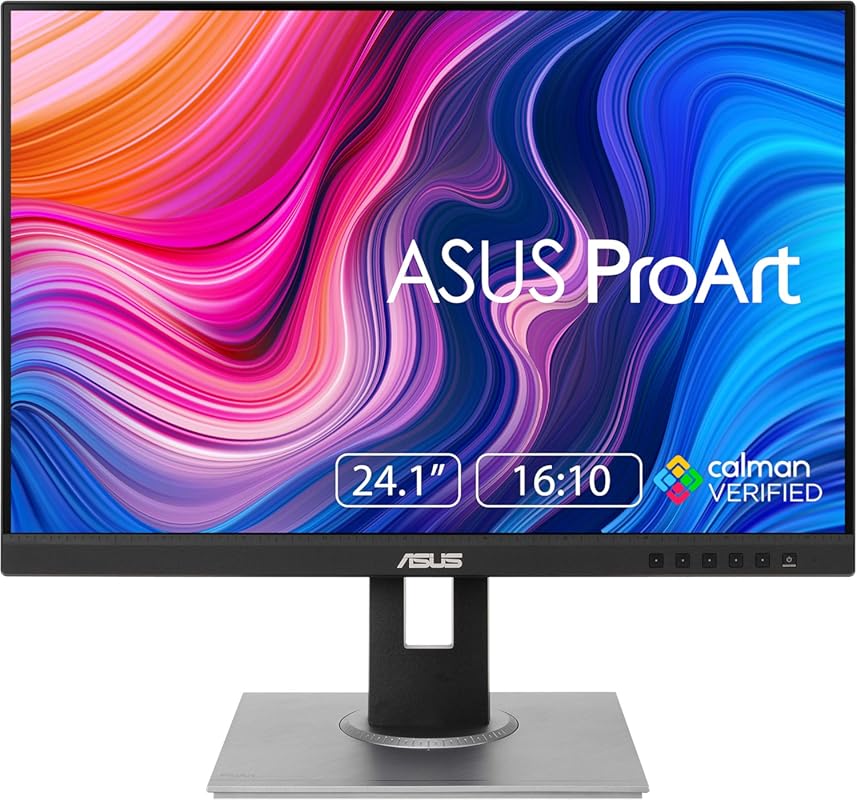
The ASUS ProArt PA248QV is the compact, professional-grade sibling in the ProArt lineup. This 24-inch monitor uses a 16:10 aspect ratio WUXGA (1920×1200) panel, giving you a bit more vertical screen real estate than a standard 16:9 1080p display. It maintains the ProArt promise with 100% sRGB/Rec.709 coverage and a Calman Verified factory calibration ensuring Delta E < 2 color accuracy. The IPS panel provides consistent colors from wide angles. Its ergonomic stand is fully adjustable, which is a huge plus for a monitor in this size category. It's an excellent choice when desk space is at a premium but you refuse to compromise on color fidelity.
Key Features That Stand Out
- ✓ 16:10 Aspect Ratio: More vertical space than 16:9, great for scrolling and tool palettes.
- ✓ Professional Color Accuracy: Calman Verified, ΔE<2, 100% sRGB/Rec.709 coverage.
- ✓ Compact & Space-Saving: 24-inch size fits perfectly in smaller desks or as a secondary monitor.
- ✓ Fully Ergonomic Stand: Height, swivel, pivot, and tilt adjustments in a small form factor.
Why We Recommend It
Not everyone has room for a 27-inch behemoth. The PA248QV proves you can get true pro-level color accuracy in a smaller, more manageable package. The 16:10 ratio is a subtle but wonderful productivity boost, showing more of your timeline or code without scrolling. It’s the ideal primary monitor for a photographer with a compact workstation or a superb secondary reference display that won’t dominate your desk.
Best For
Photographers with limited desk space, users wanting a high-accuracy secondary monitor, and anyone who prefers the extra vertical real estate of a 16:10 display for editing.
Pros and Cons
Pros:
- True professional color accuracy (ΔE<2) in a compact 24-inch size.
- Useful 16:10 aspect ratio provides more vertical screen space than 16:9.
- Excellent, fully adjustable ergonomic stand.
- Strong value for a calibrated ProArt monitor.
Cons:
- Lower native resolution (1920×1200) means less detail than 27-inch WQHD or 4K.
- No USB-C port; connectivity is via DisplayPort and HDMI only.
- Smaller screen may feel cramped if you’re used to 27″+ monitors.
- Does not cover wider gamuts like Adobe RGB.
Customer Reviews
Customer Review: “Perfect for my small desk. The color accuracy is as advertised—I used a SpyderX and it was incredibly close to the factory specs. The 16:10 screen is a joy for photo editing, giving me just enough extra height to see my tool palettes without hiding them. The stand is solid and moves easily. For the price, you can’t beat a factory-calibrated monitor from a brand like ASUS.”
Customer Review: “I bought this as a second monitor for my laptop to use for photo editing. It was a night and day difference compared to my old TN panel. Colors pop, and everything is sharp. Setup was easy, and the menu is straightforward once you find the buttons. The pivot function is great for editing portrait photos. Highly recommend for anyone needing accurate color on a budget or with space constraints.”
7. InnoView Portable Monitor 15.6 Inch
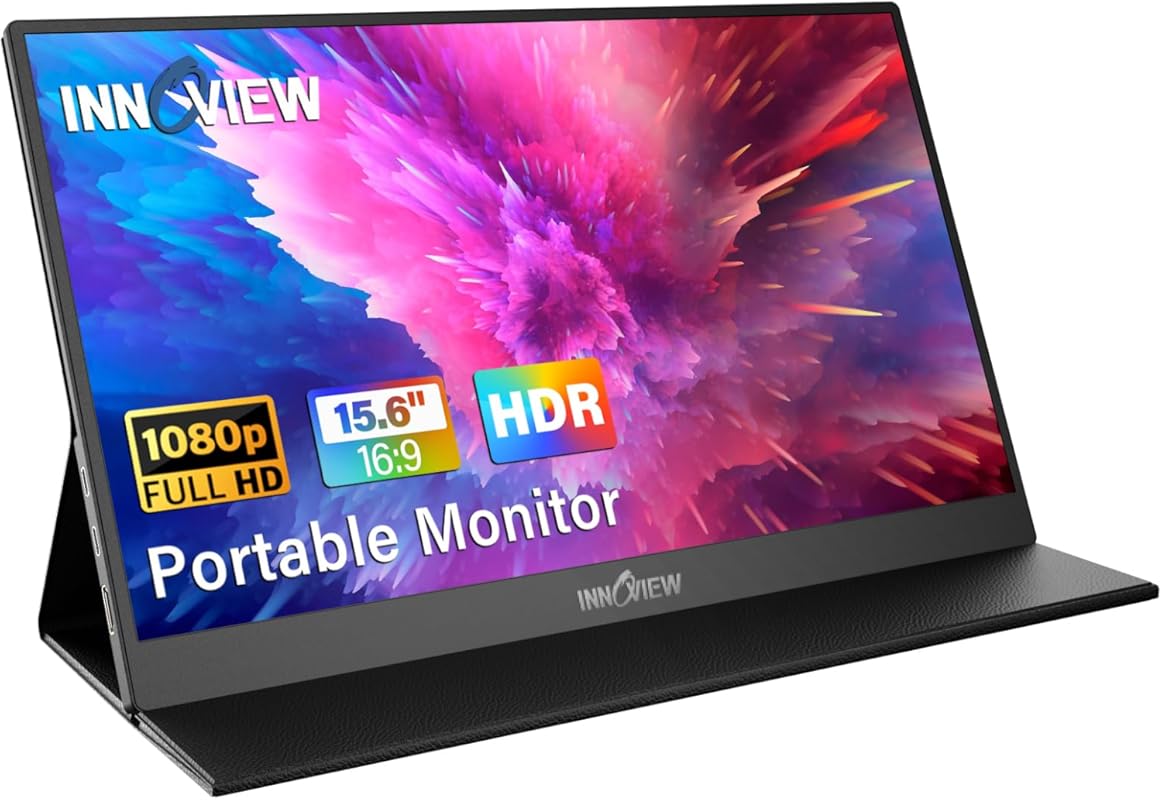
The InnoView 15.6-inch Portable Monitor is a travel-friendly solution for photographers who need a second screen on the go. It’s a plug-and-play 1080p IPS display that connects via USB-C or HDMI, making it compatible with laptops, phones, and even gaming consoles. It’s incredibly thin and light, often weighing under 1.5 lbs, and usually comes with a protective case that doubles as a stand. While it’s not a color-critical tool (no wide gamut or factory calibration claims), its IPS panel provides decent colors and viewing angles for casual editing, reviewing images on location, or extending your laptop screen for better multitasking while traveling.
Key Features That Stand Out
- ✓ Ultra-Portable Design: Thin, light, and often includes a protective/stand case.
- ✓ Plug-and-Play USB-C: Single cable for power and video from compatible devices.
- ✓ Versatile Connectivity: Works with laptops, phones (with USB-C), and HDMI sources.
- ✓ Built-in Speakers: Convenient for media consumption without external speakers.
Why We Recommend It
This isn’t a primary editing monitor, but it’s an indispensable tool for the mobile photographer. Imagine being able to review and cull your photos on a larger, better screen than your laptop’s while on a shoot or in a hotel room. It’s also perfect for creating a temporary dual-monitor setup at a client’s office or a coffee shop. For its niche, it’s exceptionally useful and affordable.
Best For
Traveling photographers, remote workers, students, or anyone who needs a lightweight second screen for on-the-go productivity and casual photo review.
Pros and Cons
Pros:
- Extremely portable and lightweight design.
- Simple USB-C single-cable connection (power + video) with many devices.
- Very affordable for a secondary screen.
- Often includes a useful protective case that acts as a stand.
Cons:
- Not color-critical; no wide gamut or factory calibration for accurate editing.
- 1080p resolution on 15.6 inches is decent but not super sharp (PPI is lower).
- Build quality is plastic and less robust than a desktop monitor.
- Brightness and contrast are modest; not suitable for HDR or dark room work.
Customer Reviews
Customer Review: “At first I wasn’t sure how it would be given the size of monitors I am accustomed to in the office. However, this is the perfect second monitor while traveling. Compact and light. Very clear screen and easy adjustment settings on the side. The only this I would have done differently is to purchase the touch screen model. I will do that next time. It was super simple to setup and connect. Allows me to be more productive with a second screen.”
Customer Review: “I’m honestly impressed with this. I don’t know what I was thinking would be bad about it, but for the price point I was expecting to be dissatisfied with some aspect of this monitor. Nope! Well. I opted for the version with the case and that annoyed the hell out of me right away and I removed it and set it aside. That’s personal preference though. The particular use case I have for this little monitor is a solution to a dilemma presented by limited desk space. I have a 49″ ultrawide monitor in the center and some bookshelf speakers on either side. This essentially takes up all 71 available inches and leaves no room for a secondary monitor, even in portrait mode. I removed the case and placed the monitor on a tablet stand that I then set on-top of a bookshelf speaker to the right of my main monitor. This allows me to enjoy my music and also have another monitor that I can dedicate to Roon, Discord, or YouTube. If I decide I want to use it for work, I can simply move it on-top of the left speaker and connect it to my work laptop. The beauty of portability! Color, refresh, etc is all perfectly fine by my standards. No important work will be taking place on this monitor and nothing looks obviously off as far as colors anyway. I will say that the plastic frame has come lose at the top multiple times already, but this is where the case was velcroed (on the back) and I know I was a little rough in removing it (good velcro!). I just snap it back in and its fine, it’s not like it is broken. Overall I’m pretty stoked I found a solution to my desk space issue.”
8. 27 Inch 4K 70Hz Monitor
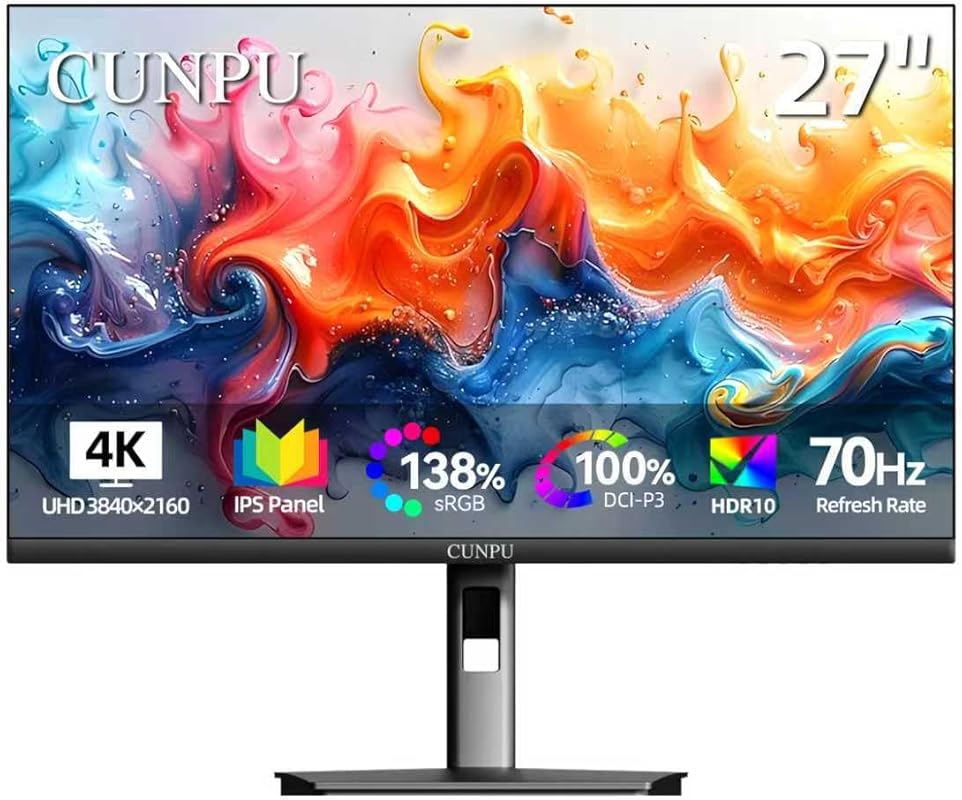
This 27-inch 4K monitor from CUNPU (often rebranded) is a budget-conscious entry into ultra-high-definition. It offers a 4K IPS panel with a claimed Delta E < 2 for color accuracy and 100% DCI-P3 coverage, which are impressive specs for its price bracket. It includes features like Picture-by-Picture (PBP) for dual-source viewing and Adaptive-Sync for smoother visuals. The ultra-slim bezels give it a modern look. While it may not have the brand prestige or the absolute finest tuning of the ProArt or LG models, it delivers on the core promise of 4K detail and wide color gamut for photographers wanting to explore high-resolution editing without the premium cost.
Key Features That Stand Out
- ✓ Affordable 4K Resolution: Get four times the pixels of 1080p at a competitive price.
- ✓ Wide 100% DCI-P3 Gamut: Covers a broader color spectrum than sRGB for more vibrant images.
- ✓ Claimed ΔE<2 Accuracy: Advertises professional-level color fidelity out of the box.
- ✓ Useful Multi-Input Features: PBP/PIP allows you to view two computer sources simultaneously.
Why We Recommend It
This is the go-to recommendation for the photographer who wants to experience 4K editing and wide color gamuts but has a budget that doesn’t stretch to the established brands. It’s a calculated risk—you might need to do a bit more manual calibration to hit those ΔE<2 claims—but the hardware potential is there. The 4K resolution is transformative for seeing fine details in your photos, and the DCI-P3 coverage adds punch to your colors. It's a fantastic "specs-per-dollar" monitor.
Best For
Budget-focused photographers and videographers craving 4K resolution and wide color gamut, students, or as a high-performance secondary monitor where absolute brand trust is secondary to raw specs.
Pros and Cons
Pros:
- Excellent value proposition offering 4K resolution and 100% DCI-P3.
- Factory claims of ΔE<2 color accuracy, which is often true after calibration.
- Ultra-slim bezels provide a modern, immersive viewing experience.
- Useful PBP/PIP functionality for working with multiple video sources.
Cons:
- Brand is less established; long-term reliability and support are unknowns.
- Out-of-box color accuracy may not match the ΔE<2 claim without user calibration.
- Stand is basic and often non-adjustable beyond tilt; a VESA mount is recommended.
- HDR performance is entry-level and not a major selling point.
Customer Reviews
Customer Review: “I’m not going to ding the monitor for this, because it’s a new computer, and I’m not sure if it’s the computer or monitor… When I selected HDR, the picture got very light and washed out looking. Used the Windows HDR calibration app, and it didn’t help. On the other hand, the colors in SDR mode were vibrant and clear. Looking at a few photos, (I have over a TB of pix and haven’t yet transferred them) I’m seeing some details that I don’t see on my current monitor, and that one was never a slouch. The picture has good uniformity and I haven’t seen any back-light bleed, but that was in a brightly lit room. It may be different when actually placed in my home office. No stuck or dead pixels, either. Beyond that, it’s all minutia… the stand is cheap but adequate if all you need is to hold it in place. In this price range, you won’t find better. It did come with some screws and standoffs, presumably for an external VESA stand. Nothing in the instructions on how to mount it, though. The instructions were kind of worthless, in fact. The control syntax works, if a bit uninspired. It came with a cable; Display Port, not HDMI. 😒 A monitor in this price range is probably going to be used with a bottom feeder computer, and mine doesn’t have Display Port. One weird but inconsequential quirk that I can’t tell if from the monitor or the computer; I set the screen saver to 13 minutes and didn’t think to set the monitor time out (the default setting is 10 minutes) and it went into some kind of diagnostic screen. It never did enter the screen saver or go to sleep. After resetting the screen saver to less than 10 minutes, it worked normally. This one is being paired with my first new computer since Windows XP. I’ve upgraded over the years, but never a new-from-the-ground-up build. The specific hardware requirements in Windows 11 meant that my current system is at a dead end. While I’m uncomfortable letting the grandkids play their online games and videos on the same system with all of my personal data, doing it on a system that doesn’t have a supported OS is not at all acceptable. So my current system will be wiped of sensitive data once I finish backing up the pictures et al. The issues that I’ve been experiencing are probably from the computer, not the monitor, but I felt it worth reporting just in case. A good monitor at a great price.”
Customer Review: “Ok, this monitor is legit! Trust me, I’ve been around them for over 30 years. This weird name brand monitor has so many features that others do not! 1. Built in speakers that get really loud. 2. The monitor rotates vertically and has easy height adjustment and tilt movements. 3. It’s 4K so the picture is beautiful. The buttons for the settings are on the bottom right hand side. I had to play with them to get the hang of it, but you can adjust the image in many different ways. (Contrast, brightness, saturation, voice volume, picture mode, and more)! – It does not have toggle on the back that breaks, like some Dell monitors do! 4. This unit has a USB port and HDMI (x2) which is great for Roku or a Firestick, as well as a DisplayPort which offers higher resolution than HDMI, and an auxiliary port if you want to hard wire headphones, speakers, or anything else that plugs into a 3.5mm jack. 5. The circle on the back of the monitor lights up with colors when it’s turned on, and looks totally rad (if the back is not facing a wall). 6. Extremely easy to assemble, but be careful with the screen! If you’re opting for a webcam and microphone, they would pair perfectly with this monitor. For the price, this CUNPU an EXCELLENT choice! (Even though the brand’s name sounds like a kindergartner learning to say the word, “computer”). My pictures do not do the monitor justice! A+++”
9. ASUS VA279HG Eye Care Monitor
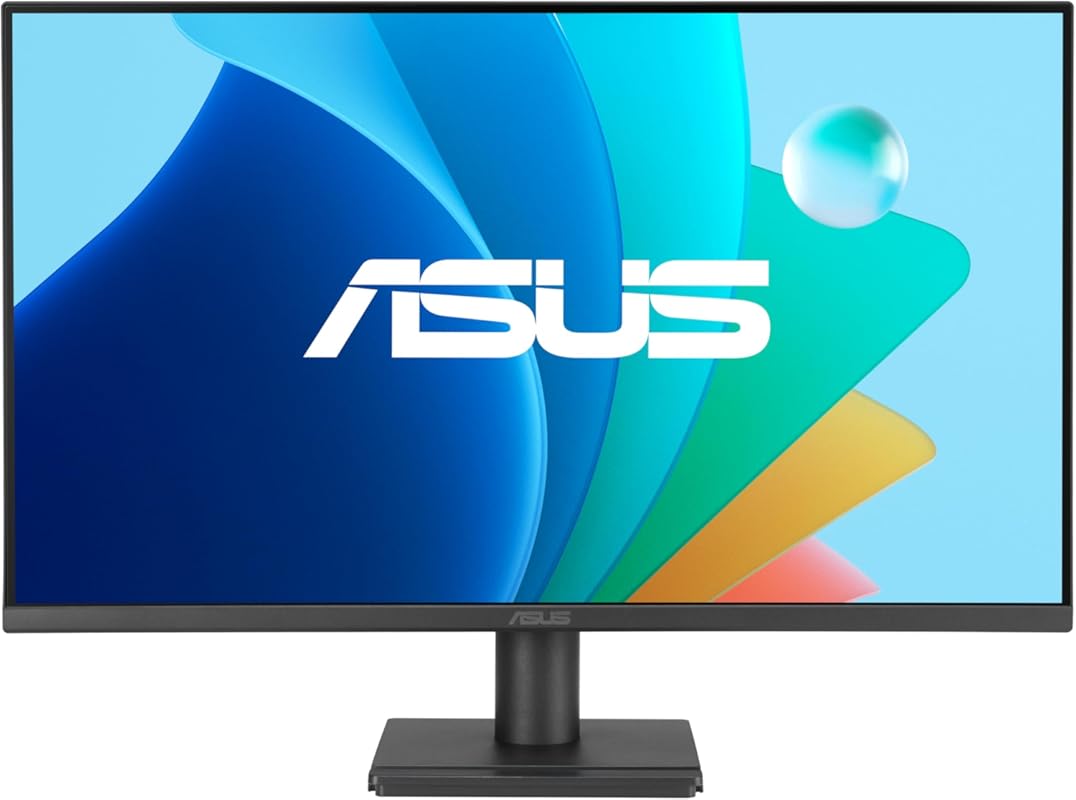
The ASUS VA279HG is a value-packed 27-inch 1080p monitor that prioritizes smooth motion and eye comfort. Its key features are a 120Hz refresh rate and 1ms MPRT response time, supported by Adaptive-Sync (FreeSync compatible), which eliminates screen tearing and makes scrolling through long photo galleries or working with UI animations incredibly smooth. The IPS panel provides good 178-degree viewing angles and covers 99% of the sRGB color space—respectable for casual editing. ASUS’s Eye Care technology (flicker-free backlight and low blue light filter) helps reduce eye strain during long editing sessions. It’s a great all-rounder for budget-conscious users who want a fluid experience.
Key Features That Stand Out
- ✓ Smooth 120Hz Refresh Rate: Buttery smooth motion for scrolling and general use.
- ✓ Adaptive-Sync Support: Compatible with FreeSync for tear-free visuals.
- ✓ Eye Care Technology: Flicker-free and low blue light filters to reduce eye fatigue.
- ✓ Good sRGB Coverage: 99% sRGB is adequate for web-based photo editing and general use.
Why We Recommend It
This monitor is for the editor who values a smooth, comfortable viewing experience as much as color accuracy. The 120Hz panel is a luxury at this price and makes everyday tasks feel more responsive. While it’s not a calibrated professional tool, its 99% sRGB IPS panel is more than capable for hobbyists editing photos for social media or personal projects. It’s a fantastic blend of performance and comfort for a very low cost.
Best For
Budget-conscious hobbyist photographers, users who spend long hours in front of the screen and value eye comfort, and anyone wanting a smooth 120Hz experience for general computing and light editing.
Pros and Cons
Pros:
- Very smooth 120Hz refresh rate and 1ms response for fluid motion.
- Adaptive-Sync (FreeSync) support for tear-free gaming and scrolling.
- Effective Eye Care features (flicker-free, low blue light).
- Excellent price for a 27-inch IPS monitor with these features.
Cons:
- 1080p resolution on a 27-inch screen is not very sharp (low pixel density).
- No factory calibration; color accuracy is average, not pro-level.
- Limited to sRGB; no Adobe RGB or DCI-P3 coverage.
- Stand is basic and only offers tilt adjustment.
Customer Reviews
Customer Review: “Very nice picture, easy set up. Wish they had instructions on the control. Took me a while to find the the little ‘joystick’ on the back.”
Customer Review: “Excelente producto ,de acuerdo a lo ofrecido y en en tiempo de entrega antes de lo ofrecido . Muy recomendado.”
10. HP Series 3 327se Monitor
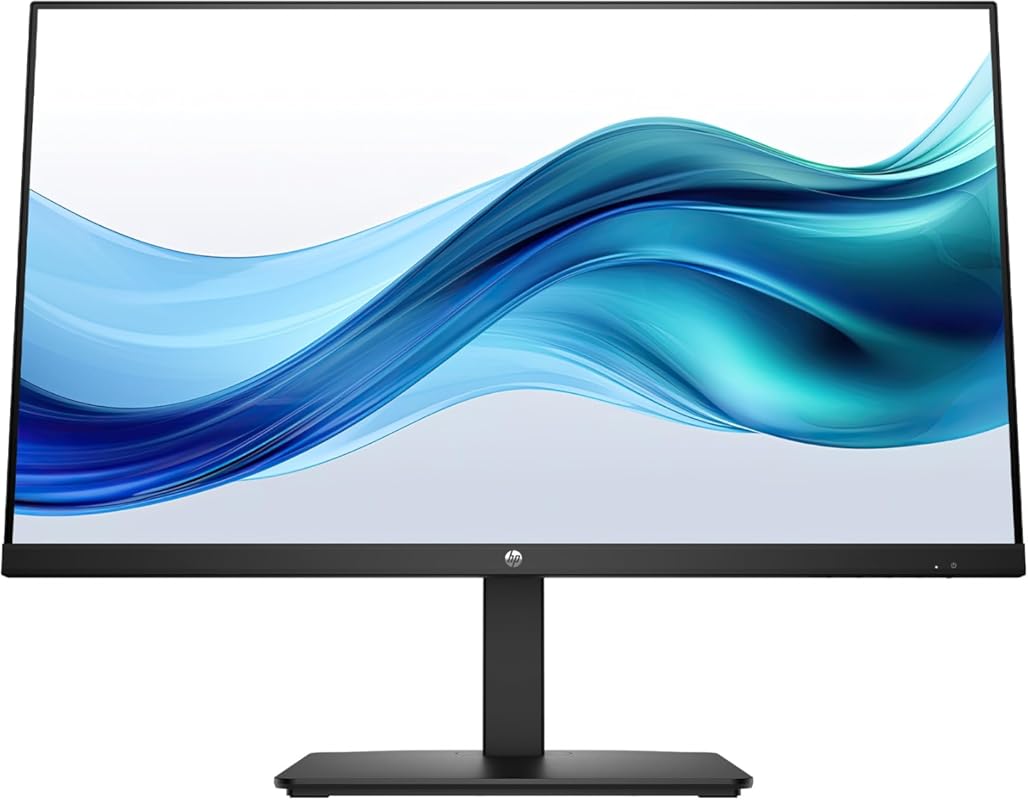
The HP Series 3 327se is a no-nonsense, entry-level 27-inch 1080p monitor that focuses on delivering a clean, reliable viewing experience at an extremely competitive price. It uses an IPS panel for consistent colors and wide viewing angles, boasts a 100Hz refresh rate for smoother motion than a standard 60Hz panel, and includes HP’s Eye Ease technology (Eyesafe Certified) to filter out blue light. The contrast ratio is a stated 1300:1, which is good for an IPS panel. It’s a straightforward workhorse with a sturdy base, making it a solid choice for general computing, office work, and casual photo editing where budget is the primary constraint.
Key Features That Stand Out
- ✓ Excellent Value: Very low price for a 27-inch IPS monitor from a major brand.
- ✓ Smoother 100Hz Refresh Rate: A step up from 60Hz for more fluid visuals.
- ✓ Eye Ease (Eyesafe Certified):strong> Reduces blue light emission for more comfortable long-term viewing.
- ✓ Sturdy Build: Reliable construction with a stable stand.
Why We Recommend It
When the budget is extremely tight, the HP Series 3 is one of the safest bets you can make. It comes from a reputable brand, uses an IPS panel (avoiding the poor colors of TN panels), and includes thoughtful touches like the higher refresh rate and blue light filter. You won’t get professional color accuracy or high resolution, but for checking photos on a budget, basic edits, or as a secondary display, it’s a hard-to-beat package.
Best For
First-time monitor buyers, students, or anyone on a very tight budget who needs a large, decent-quality screen for everyday use and light photo viewing.
Pros and Cons
Pros:
- Extremely affordable price for a 27-inch IPS monitor from a major brand (HP).
- 100Hz refresh rate provides smoother motion than standard 60Hz panels.
- Eyesafe certified blue light filter for reduced eye strain.
- Simple, reliable design with a sturdy base.
Cons:
- 1080p resolution on 27 inches results in low pixel density and less sharpness.
- No claims or features for color accuracy; it’s a standard consumer panel.
- Stand only tilts; no height, swivel, or pivot adjustment.
- Color gamut is standard sRGB at best, with no wide gamut support.
Customer Reviews
Customer Review: “I bought this monitor to replace an older HP monitor that was finally getting a little flaky. Electronically, the image quality has improved compared to the 2020 vintage monitor. I was satisfied before, but this is notably brighter with better whites and contrast. What really amazed me is the more robust construction of the stand, including both height and angle adjustments. And it was a lot less money than the last similar monitor I bought in 2020. I don’t use the internal speakers, but that’s a plus as well. They’re adequate for voice, but good external speakers are still a big plus. All in all, this represents a very nice quality product at a great price.”
Customer Review: “Super easy to assemble. Absolutely perfect graphics on screen for day to day work or faint. Looks bigger in person. It’s more on the normal size as far of thickness. There is no height adjustment. You can game off of this monitor as well.”
Complete Buying Guide for Best Monitors for Editing Photos
Essential Factors We Consider
When choosing a monitor for photo editing, color accuracy is king. Look for monitors with a Delta E (ΔE) value of less than 2, which indicates colors are extremely close to the ideal standard. Factory calibration and Calman or Pantone verification are huge pluses. Next, consider the color gamut. sRGB is the baseline for web and general use. For professional print work, you’ll want Adobe RGB coverage. For video or cinematic looks, look for DCI-P3. Resolution matters: 4K (3840×2160) offers incredible detail, while WQHD (2560×1440) is a sweet spot for 27-inch monitors. Always choose an IPS panel for the best viewing angles and color consistency. Finally, connectivity like USB-C with Power Delivery can simplify your laptop setup, and an ergonomic stand is crucial for comfortable all-day editing.
Budget Planning
Your budget directly dictates your options. Under $300: You can find excellent 27-inch WQHD IPS monitors like the ASUS ProArt PA278QV or budget 4K options. These offer great sRGB accuracy. $300-$600: This range gets you into 4K monitors with wider gamuts (DCI-P3) and better build quality, like the LG 27US500-W or ASUS PA279CRV (on sale). Over $600: You’re looking at professional-grade 4K/5K displays with near-perfect Adobe RGB coverage, hardware calibration, and premium features. Remember to factor in potential costs for a hardware calibrator if your monitor doesn’t come factory-calibrated.
Final Thoughts
Investing in a good photo editing monitor is one of the most impactful upgrades you can make to your creative workflow. It eliminates guesswork, ensures your final prints or digital exports look exactly as intended, and reduces eye strain. You don’t necessarily need to spend a fortune; the ASUS ProArt PA278QV proves that exceptional color accuracy can be affordable. Assess your primary workflow (sRGB vs. Adobe RGB, print vs. web), your desk space, and your budget. Our top picks cover a wide spectrum, but the “best” monitor is ultimately the one that fits your specific needs and helps you see your work in its true, beautiful light.
Frequently Asked Questions
Q: Do I really need a factory-calibrated monitor for photo editing?
A: For serious, color-critical work (like print or client work), yes. Factory calibration with a verified Delta E < 2 ensures the colors you see are accurate right out of the box. For hobbyists editing for social media, a monitor with good sRGB coverage and a manual calibration tool (or even good out-of-box settings) can be sufficient.
Q: Is 4K resolution necessary for photo editing?
Q: What’s the difference between sRGB, Adobe RGB, and DCI-P3?
A: sRGB is the standard for web and most consumer devices. Adobe RGB has a wider gamut, especially in greens and cyans, making it ideal for high-end print work. DCI-P3 is used in digital cinema and offers more saturated reds and greens than sRGB. Choose based on your final output. For general web use, sRGB is fine. For gallery prints, Adobe RGB is key. For video or a more vibrant look, DCI-P3 is great.
Q: Why is USB-C with Power Delivery so important?
A: A USB-C port that delivers power (e.g., 65W or 90W) allows you to connect your laptop and charge it with a single cable. This eliminates the need for a separate, bulky laptop charger, creating a much cleaner and more convenient desk setup. It’s a game-changer for MacBook and ultrabook users.
Q: What’s the best monitor size for photo editing?
A: 27 inches is the current sweet spot for most photographers. It’s large enough to show ample detail and accommodate multiple windows, but not so large that you have to move your head to see the edges. 24-25 inches is great for smaller desks or as a secondary monitor. 32-inch 4K monitors are excellent but require more space and a higher budget.
Ultimately, the right monitor will become your most trusted tool, translating your creative vision into reality with precision. From the unbeatable value and accuracy of the ASUS ProArt PA278QV to the stunning detail of the LG 27US500-W Ultrafine and the budget-friendly CRUA, there’s a perfect match for every workflow and wallet. Don’t let a subpar display hold your photography back—invest in your craft and see the difference a great monitor makes. Check the prices and availability for your top choice on Amazon today!