Bluetooth Side by Side Speakers
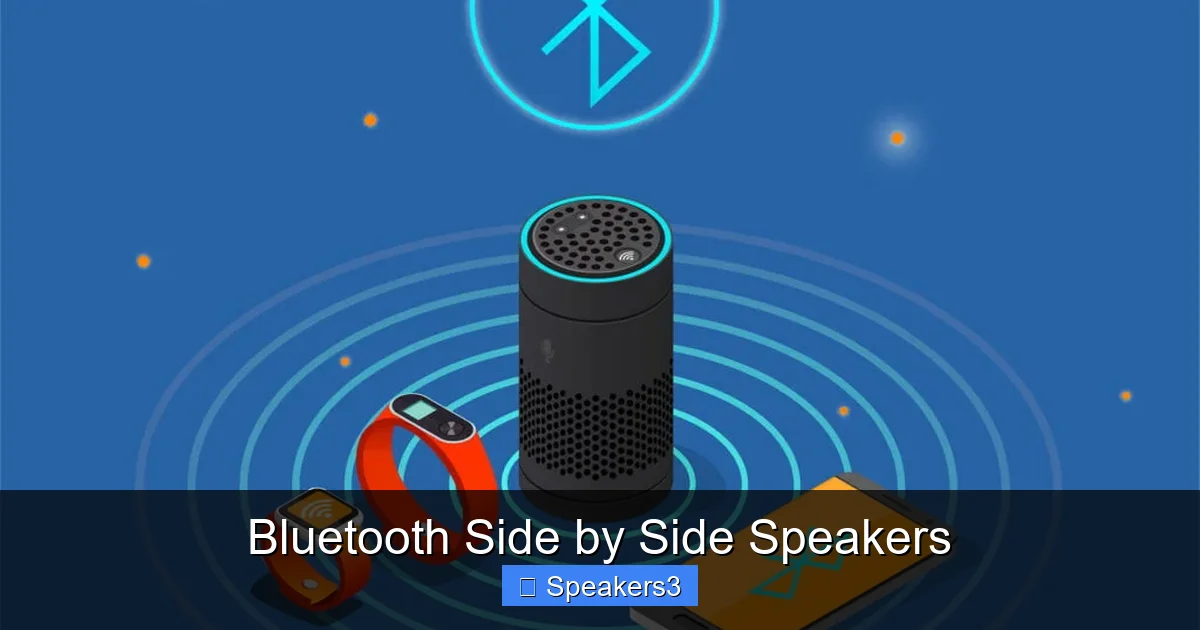
Bluetooth side by side speakers bring wireless convenience and stereo depth without a mess of cords. From setup basics to choosing the perfect pair, this guide gives you everything you need to enjoy seamless, high‑quality audio at home.
Key Takeaways
- True stereo sound: Placing two Bluetooth speakers side by side creates a wider soundstage than a single unit.
- Easy pairing: Most models use Bluetooth 5.0 or newer, offering instant connections and stable range.
- Placement matters: Height, distance from walls, and listening position dramatically affect performance.
- Power options vary: Choose between battery‑powered, plug‑in, or hybrid models based on your lifestyle.
- Feature set: Look for built‑in EQ, voice assistants, and multi‑room support for added flexibility.
- Budget vs. premium: You can get great sound without breaking the bank, but high‑end units deliver richer detail.
- Compatibility: Most speakers work with phones, tablets, laptops, and even TVs, making them a versatile audio solution.
📑 Table of Contents
- What Are Bluetooth Side by Side Speakers?
- How Bluetooth Side by Side Speakers Work
- Choosing the Right Pair for Your Space
- Setup Guide: From Box to Stereo Bliss
- Top Features to Look For in 2024
- Budget vs. Premium: What’s Worth the Extra Dollars?
- Real‑World Examples and Recommendations
- Maintenance and Troubleshooting Tips
- Future Trends: What’s Next for Bluetooth Side by Side Speakers?
- Conclusion
What Are Bluetooth Side by Side Speakers?
Bluetooth side by side speakers are simply two independent Bluetooth‑enabled speakers that you place next to each other to create a stereo pair. Each speaker handles either the left or right audio channel, just like traditional bookshelf speakers, but they connect wirelessly to your source device. This setup gives you a wider soundstage, better imaging, and the freedom to move the speakers without dealing with long speaker wires.
Why “Side by Side” Matters
When you position two speakers side by side, your ears receive distinct left‑right cues. The brain interprets these cues as space, making music feel larger and more immersive. A single Bluetooth speaker can sound great, but it can’t replicate the separation that two speakers provide.
Typical Use Cases
- Living‑room entertainment centers
- Home office desks for conference calls and music
- Small apartments where floor‑standing speakers are impractical
- Outdoor patios (battery‑powered models)
How Bluetooth Side by Side Speakers Work
Even though the term sounds high‑tech, the underlying technology is straightforward. Each speaker has its own Bluetooth receiver. When you enable “stereo pair” mode, the speakers communicate with each other via Bluetooth or a proprietary link (often called “party mode” or “dual‑audio”). One speaker becomes the “master” and streams the audio from your phone, tablet, or computer. The master then forwards the opposite channel to the “slave” speaker.
Visual guide about Bluetooth Side by Side Speakers
Image source: cdn.dribbble.com
Bluetooth Versions and Range
Most modern models use Bluetooth 5.0 or 5.1, which offers a range of up to 30 feet (10 meters) in open space and lower latency for video playback. Older Bluetooth 4.2 units still work, but you may notice a slight delay when watching movies.
Power Sources
There are three main power configurations:
- Battery‑powered: Ideal for portable use. Expect 8‑12 hours of playback on a full charge.
- AC‑plugged: Guarantees unlimited runtime and often delivers higher wattage.
- Hybrid: Battery plus optional AC adapter for flexibility.
Choosing the Right Pair for Your Space
Not every Bluetooth side by side speaker will fit every room. Consider the following factors before you click “Add to Cart.”
Visual guide about Bluetooth Side by Side Speakers
Image source: m.media-amazon.com
Room Size and Speaker Size
For a small bedroom, 2‑3 inch drivers with a total output of 20‑30 watts per speaker are sufficient. In a larger living room, look for 4‑5 inch drivers and at least 40‑50 watts per side to fill the space without distortion.
Sound Quality Indicators
- Frequency response: Aim for a range that extends at least to 20 kHz for crisp highs.
- THD (Total Harmonic Distortion): Lower than 1 % is acceptable; premium models often sit below 0.5 %.
- Driver material: Kevlar, aluminum, or woven fiber cones usually produce cleaner mids.
Connectivity Extras
Some Bluetooth side by side speakers also feature aux inputs, USB‑C charging, or even Wi‑Fi for AirPlay/Google Cast. If you plan to stream from a smart TV, a model with an optical or HDMI ARC port can be a game‑changer.
Setup Guide: From Box to Stereo Bliss
Getting your Bluetooth side by side speakers up and running takes just a few minutes. Follow this step‑by‑step plan for a hassle‑free experience.
Visual guide about Bluetooth Side by Side Speakers
Image source: arshon.com
Step 1: Unbox and Charge
Remove both speakers from the packaging, check that the power cords (if any) are intact, and place them on a stable surface. If they’re battery‑powered, connect them to the charger and let them reach at least 80 % before first use.
Step 2: Activate Stereo Pair Mode
Most brands have a dedicated button labeled “Stereo,” “Pair,” or “Link.” Press it on the first speaker; a LED will flash, indicating it’s ready to pair. Then press the same button on the second speaker. When the LEDs become solid, the pair is linked.
Step 3: Connect to Your Source Device
Open the Bluetooth settings on your phone, tablet, or computer. Look for the speaker name followed by “(L)” or “(R)” – this is the master speaker. Tap to connect. Once paired, the master will automatically send the opposite channel to the slave.
Step 4: Position for Optimal Sound
Place the speakers about 6‑8 feet apart, with the tweeters at ear level when you’re seated. Angle them slightly inward (toeing‑in) for a focused sweet spot. Keep at least a foot of space from the rear wall to avoid bass boom.
Step 5: Fine‑Tune EQ and Settings
Many Bluetooth side by side speakers come with a companion app. Use it to adjust bass, mids, and treble, or enable preset modes like “Jazz” or “Rock.” If you prefer a more neutral sound, set the EQ to flat and let the room’s acoustics shape the tone.
Top Features to Look For in 2024
Manufacturers are adding smart capabilities to Bluetooth side by side speakers. Here are the must‑have features that differentiate a good pair from a great one.
Multi‑Room Support
If you already own a Bluetooth speaker ecosystem (e.g., Sonos, JBL, or Bose), choose a pair that integrates with the same protocol. This lets you expand to a whole‑home audio system without buying a new hub.
Voice Assistant Integration
Built‑in Alexa, Google Assistant, or Siri can turn your speakers into smart hubs. You can ask for weather updates, control smart lights, or play music hands‑free.
Water‑Resistance
For outdoor patios or poolside use, look for an IPX4 or higher rating. This protects the drivers and electronics from splashes.
Battery Life and Fast Charging
Modern units often support USB‑C fast charging, giving you 6 hours of playback in just 30 minutes. If you plan to use them for parties, a longer battery life (10‑12 hours) is a plus.
Connectivity Beyond Bluetooth
Some speakers include an auxiliary 3.5 mm jack, RCA inputs, or even HDMI ARC. This flexibility ensures you can connect a TV, gaming console, or turntable without relying on Bluetooth.
Budget vs. Premium: What’s Worth the Extra Dollars?
Price tags for Bluetooth side by side speakers range from $50 to $500. Here’s how to decide where to spend.
Entry‑Level ($50‑$120)
- Good for dorm rooms or small apartments.
- Usually 2‑inch drivers, modest bass.
- Basic Bluetooth 4.2, no app support.
Mid‑Range ($120‑$250)
- Improved driver size (3‑4 inches) and clearer mids.
- Bluetooth 5.0 with stable range.
- Companion app with EQ presets.
- Often water‑resistant (IPX4).
Premium ($250‑$500+)
- High‑end drivers (5 inches or larger) and refined cabinets.
- Low THD, wide frequency response (20 Hz‑20 kHz+).
- Integrated voice assistants, multi‑room, Wi‑Fi streaming.
- Robust build quality, premium finishes.
For most listeners, a mid‑range pair delivers a balanced mix of sound quality and features without overspending.
Real‑World Examples and Recommendations
Below are three popular Bluetooth side by side speaker combos that have received strong user feedback in 2024.
1. JBL Flip 6 Duo Pack
Two 4.5‑inch drivers with 30 watts per speaker, Bluetooth 5.1, IPX7 waterproof rating, and a 12‑hour battery. Ideal for indoor and outdoor use. Pairing is seamless via the JBL Connect + app.
2. Sonos Roam + Roam SL Stereo Pair
While Sonos markets them as individual portable speakers, you can create a stereo pair for a compact home setup. They support both Bluetooth and Wi‑Fi, allowing you to switch to Sonos multi‑room when you’re at home.
3. Bose SoundLink Revolve II (2‑Pack)
Features a 360° omnidirectional design, Bluetooth 5.0, and a sleek cylindrical shape. The battery lasts up to 17 hours, and the Bose Music app offers fine‑tuned EQ.
Need more technical insight? Check out our guide on 2 8 Ohm speakers in series to understand wiring concepts that also apply when you link Bluetooth speakers with a wired auxiliary.
Maintenance and Troubleshooting Tips
Even the best Bluetooth side by side speakers need occasional care.
Cleaning and Care
- Wipe the exterior with a dry microfiber cloth.
- Avoid spraying liquids directly; use a damp cloth for stubborn spots.
- For waterproof models, rinse gently with a hose after beach outings.
Common Issues and Fixes
- Pairing fails: Reset both speakers (usually a 10‑second hold on the power button) and try again.
- Audio lag: Ensure both speakers are using Bluetooth 5.0 or newer; older devices may cause latency.
- Crackling sound: Interference from Wi‑Fi routers or other 2.4 GHz devices can cause this. Move the speakers away from routers or switch to the 5 GHz band on your source device. Learn more about why speakers crackle in our article Why Do My Speakers Crackle.
Future Trends: What’s Next for Bluetooth Side by Side Speakers?
The market is evolving quickly. Here are two trends to watch.
AI‑Driven Sound Optimization
Some brands are embedding AI algorithms that analyze room acoustics in real time and adjust EQ automatically. This means you’ll get optimal sound without manual tweaking.
Hybrid Bluetooth‑Wi‑Fi Models
Future speakers will likely combine Bluetooth for quick pairing and Wi‑Fi for high‑resolution streaming (e.g., lossless audio). This hybrid approach gives you the best of both worlds.
Conclusion
Bluetooth side by side speakers are a versatile, affordable way to upgrade your listening experience. By choosing the right size, power source, and feature set, you can enjoy true stereo sound without the clutter of wires. Whether you’re streaming music from your phone, watching movies on a TV, or hosting an outdoor gathering, a well‑chosen pair will deliver clear, immersive audio that fits your lifestyle. Remember to place the speakers properly, keep them updated, and enjoy the freedom that wireless technology brings.
Frequently Asked Questions
Can I use Bluetooth side by side speakers with a TV?
Yes. Most modern models support Bluetooth audio from TVs, but for the best sync you may want a speaker with low latency or use an optical/HDMI ARC connection if available.
Do I need a special app to pair the speakers?
Many brands offer an optional app for advanced EQ and firmware updates, but basic pairing works directly through your device’s Bluetooth settings.
How far apart should the speakers be placed?
For optimal stereo imaging, position them 6‑8 feet apart and aim the tweeters toward the listening spot. Adjust distance based on room size.
Is Bluetooth 5.0 necessary?
Bluetooth 5.0 provides a longer range and lower latency, which improves video playback and reduces dropouts, making it the preferred choice.
Can I connect more than two speakers together?
Some manufacturers allow multi‑speaker chaining (party mode) to create larger sound systems, but true stereo separation works best with a pair.
What should I do if the speakers keep disconnecting?
Ensure they are within range, remove obstacles, and check for firmware updates. Restarting both the speakers and the source device often resolves connectivity glitches.