Boost Efficiency with Powerful Crm Solutions

Powerful CRM solutions are the central nervous system for modern businesses, transforming scattered customer data into a unified, actionable strategy. By automating routine tasks, sales teams can focus on closing deals, while marketing delivers personalized campaigns that resonate. This seamless integration across departments breaks down silos, providing a 360-degree view of the customer journey that drives loyalty and revenue growth. Ultimately, implementing the right CRM is a strategic investment that pays dividends in operational efficiency and customer satisfaction.
Key Takeaways
- Centralized Data Hub: A CRM acts as a single source of truth for all customer interactions, eliminating data fragmentation across emails, spreadsheets, and individual memories.
- Automation of Repetitive Tasks: CRMs automate follow-ups, data entry, and scheduling, freeing up significant time for your team to engage in high-value, strategic work.
- Visual Sales Pipeline Management: Gain crystal-clear visibility into every deal’s stage, forecast revenue accurately, and identify bottlenecks before they stall your sales momentum.
- Data-Driven Customer Insights: Transform raw data into actionable intelligence on customer behavior, preferences, and lifetime value, enabling truly personalized engagement.
- Scalability and Growth Enablement: A robust CRM grows with your business, providing the structured processes and insights needed to scale operations without chaos.
- Enhanced Cross-Team Collaboration: Break down silos between sales, marketing, and support, ensuring everyone works from the same playbook towards shared customer-centric goals.
- Measurable ROI and Efficiency: Track performance metrics, campaign success, and team productivity directly within the platform, clearly demonstrating the tool’s return on investment.
📑 Table of Contents
- Introduction: The Efficiency Revolution Starts with Your Customer Data
- What Exactly is a Modern CRM Solution?
- Core Features That Drive Efficiency: A Deep Dive
- Choosing the Right CRM for Your Business: A Practical Framework
- Implementation Roadmap: From Purchase to Productivity
- Measuring Success: The Metrics That Matter
- Conclusion: Your Efficiency Journey Starts Now
Introduction: The Efficiency Revolution Starts with Your Customer Data
Think about your average workday. How much time is spent hunting down a client’s last email? Copying contact details from one app to another? Manually updating a spreadsheet after a sales call? This context-switching is the silent killer of productivity. What if you could reclaim that time? What if every employee, from a new hire to your top salesperson, had instant access to the complete history of every customer relationship?
This is the promise of powerful CRM (Customer Relationship Management) solutions. They are no longer just digital address books or sales tracking tools. In 2024 and beyond, a modern CRM is the operational backbone of an efficient, agile, and customer-obsessed business. It’s the platform that connects marketing efforts to sales conversations and support tickets into a seamless narrative. This article is your definitive guide to understanding how leveraging the right CRM solution can systematically eliminate friction, automate the mundane, and empower your team to do their best work, ultimately boosting your bottom line.
What Exactly is a Modern CRM Solution?
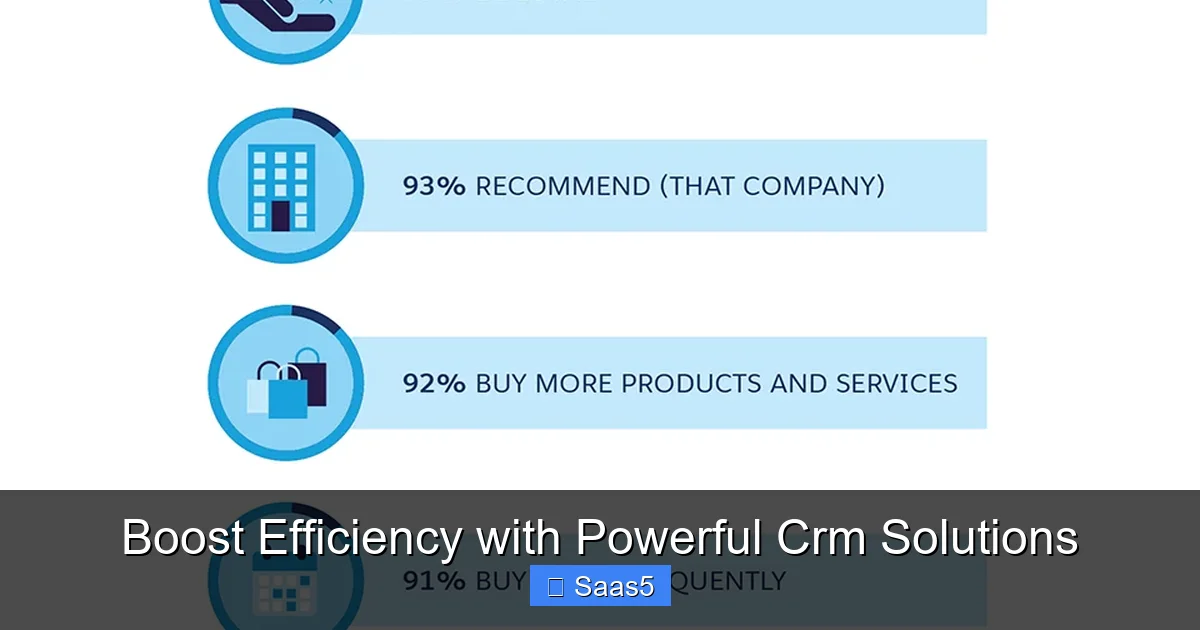
At its core, a CRM solution is software designed to manage all your company’s relationships and interactions with current and potential customers. But that simple definition barely scratches the surface. The “powerful” in powerful CRM solutions refers to its evolution into a comprehensive business engine.
Visual guide about Boost Efficiency with Powerful Crm Solutions
Image source: salesforce.com
More Than Just a Contact Database
Gone are the days of a simple list of names and phone numbers. A modern CRM is a dynamic repository. It stores every touchpoint: emails, call logs, meeting notes, purchase history, support tickets, website activity, and even social media interactions. This creates a living profile for each contact, company, and lead. When your salesperson calls a prospect, they see the entire journey—which whitepaper they downloaded, what webinar they attended, and the last issue they had with support. This context is pure gold for building rapport and closing deals.
The Automation Powerhouse
Perhaps the single biggest efficiency gain comes from automation. Powerful CRM solutions allow you to set up “if-this-then-that” rules that run in the background. Examples are endless: automatically assign new leads to the right sales rep based on territory, send a personalized follow-up email after a meeting is logged, trigger an internal alert if a high-value customer hasn’t made a purchase in 90 days, or create a support ticket from a specific form submission. This ensures no action falls through the cracks and processes are followed consistently without manual intervention.
The Integration Hub
No business runs on a single piece of software. Your CRM’s true power is unlocked when it connects with your other tools—your email marketing platform (like Mailchimp), your accounting software (like QuickBooks), your e-commerce store (like Shopify), your communication tools (like Slack), and your project management apps. This integration creates a unified workflow. A sale in your CRM can automatically generate an invoice in QuickBooks and notify the fulfillment team in Slack. This eliminates double-data entry and creates a truly connected business ecosystem.
Core Features That Drive Efficiency: A Deep Dive
Not all CRMs are created equal. The solutions that deliver transformative efficiency are packed with specific, powerful features. Let’s break down the must-haves.

Visual guide about Boost Efficiency with Powerful Crm Solutions
Image source: genicsolutions.com
1. Unified Contact & Company Management
This is the foundation. Look for a CRM that doesn’t just store contacts but intelligently links them to their parent company, identifies relationships between contacts (e.g., “influencer,” “decision-maker,” “user”), and deduplicates records automatically. Features like custom fields allow you to track industry-specific data. The goal is a complete, uncluttered picture of your entire customer universe in one place.
2. Visual Pipeline & Deal Management
A Kanban-style board (like Trello) or a customizable funnel view for your sales pipeline is non-negotiable for sales efficiency. It allows managers and reps to see every deal, its stage, value, and probability at a glance. You can drag and drop deals between stages, set up mandatory fields for moving a deal (e.g., “must have a proposal attached”), and see weighted revenue forecasts. This visual tool turns abstract sales numbers into an actionable workflow.
3. Marketing Automation & Lead Scoring
Efficiency isn’t just for sales. Marketing automation within a CRM allows you to nurture leads at scale. Build automated email sequences based on user behavior (e.g., “visited pricing page 3 times”). Lead scoring automatically assigns points based on demographics and engagement (e.g., +10 for downloading a case study, +50 for attending a demo). This prioritizes your sales team’s efforts on the hottest leads, so they’re not cold-calling unqualified prospects.
4. Robust Reporting & Dashboards
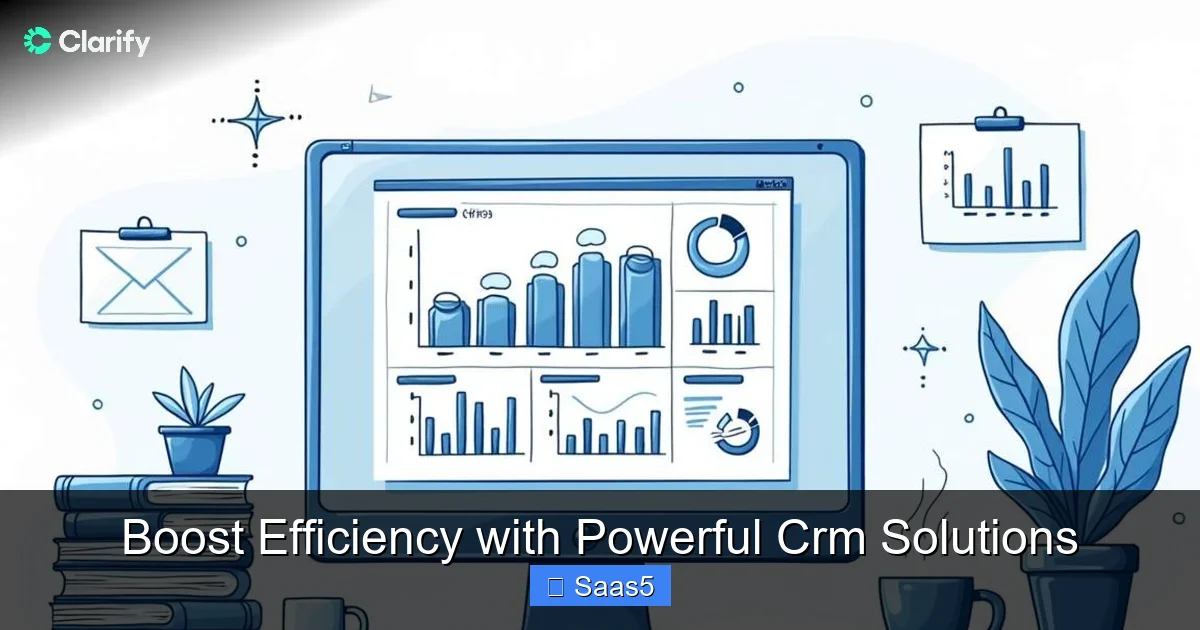
You can’t manage what you don’t measure. Powerful CRM solutions come with pre-built and custom report builders. Track key performance indicators (KPIs) like sales activity (calls made, emails sent), conversion rates by stage, average deal size, customer lifetime value (LTV), and campaign ROI. Executive dashboards give leadership a real-time pulse on the business, while individual dashboards help reps focus on their daily priorities. This data-driven approach replaces guesswork with insight.
5. Customer Service & Support Tools
Efficiency extends post-sale. Integrated helpdesk or ticketing systems within the CRM ensure support agents have full context on the customer’s history and purchases. Features like canned responses, SLA tracking, and knowledge base integration speed up resolution times. Furthermore, linking support tickets to the customer’s record allows you to identify product issues or opportunities for upsell based on service interactions.
Choosing the Right CRM for Your Business: A Practical Framework
The market is flooded with options—from Salesforce behemoths to nimble startups like HubSpot, Zoho, and Pipedrive. Choosing wrong is costly. Here’s a framework to find your fit.
Visual guide about Boost Efficiency with Powerful Crm Solutions
Image source: clarify.ai
Start with Your Core “Why”
Before looking at features, define your primary pain point. Is it sales visibility (your team has no idea where deals stand)? Is it marketing lead handoff (leads get lost between departments)? Is it customer support chaos (no history of issues)? Your main goal will point you to a CRM strength. A sales-heavy team might prioritize pipeline tools, while a service-focused business needs robust ticketing.
Evaluate by Team Size and Industry
Consider your scale. A small business or startup often values simplicity, all-in-one suites (marketing + sales + service), and a low price point. HubSpot’s free/ starter tiers excel here. A mid-market company with dedicated teams needs more granular permissions, advanced automation, and deeper integrations. Enterprises require extensive customization, security, and global support, pointing toward Salesforce or Microsoft Dynamics. Also, check for industry-specific templates or workflows (e.g., real estate, healthcare, non-profit).
The Critical Importance of Integration Capabilities
Ask this question: “Does it talk to my existing essential tools?” Check the CRM’s app marketplace or native integrations. Can it connect to your email (Gmail/Outlook), calendar, accounting software, and e-commerce platform? A CRM that sits in isolation will create more work, not less. Look for platforms with Zapier or Make.com integration as a safety net for connecting to hundreds of other apps.
Usability and Adoption: The Make-or-Break Factor
The most powerful CRM is useless if your team refuses to use it. During trials, assess the user interface (UI). Is it intuitive? How many clicks does it take to log a call or create a contact? Request a demo and have your actual end-users (a sales rep, a marketer) try it. A clunky system will be bypassed for spreadsheets, defeating the entire purpose. Prioritize adoption potential over a long feature list nobody will use.
Implementation Roadmap: From Purchase to Productivity
Buying the software is step one. Successful implementation is where efficiency is truly built. Rushed implementation leads to failed adoption.
Phase 1: Planning and Data Hygiene (Weeks 1-2)
Do not simply import your messy, outdated spreadsheet. This is the hardest but most crucial step. Clean your existing data: deduplicate contacts, standardize formats (phone numbers, addresses), and decide what data is essential. Define your core processes: What are the exact stages of your sales pipeline? What fields are mandatory? Who owns which process? Document this “playbook” before configuring your CRM.
Phase 2: Configuration and Customization (Weeks 2-4)
Build your CRM to match your documented playbook. Set up pipelines, create custom fields, design automation workflows, and establish user roles and permissions. Start simple. You can always add complexity later. The goal is to have a functional system for your core use case live quickly. Involve key stakeholders from sales, marketing, and service in this phase to ensure buy-in.
Phase 3: Training and Onboarding (Ongoing)
Training is not a one-time event. Develop role-specific training. A sales rep needs to know how to log activities and update deals. A manager needs to know how to read dashboards and run reports. Use a mix of live sessions, video tutorials (many CRMs have great libraries), and quick-reference guides. Appoint “CRM champions” in each department to be first-line support. Celebrate early wins publicly to encourage adoption.
Phase 4: Iteration and Optimization (Continuous)
Your first setup is a version 1.0. Schedule regular review meetings (monthly, quarterly) with your team. What’s working? What’s being ignored? Are there new bottlenecks? Use the CRM’s own reporting to see usage metrics. Tweak fields, adjust automation, and refine processes. This continuous improvement cycle is key to long-term efficiency gains.
Measuring Success: The Metrics That Matter
How do you know your CRM investment is paying off? Track both leading and lagging indicators.
Leading Indicators (Activity & Adoption Metrics)
These measure if your team is using the tool correctly. Track: User Adoption Rate (percentage of active users), Data Completeness (are mandatory fields being filled?), Activity Volume (calls logged, emails sent from CRM), and Pipeline Movement (are deals progressing through stages?). If these metrics are green, the lagging indicators will follow.
Lagging Indicators (Business Outcome Metrics)
These tie CRM use directly to business health. Monitor: Sales Cycle Length (has it decreased?), Win Rate (percentage of deals won), Average Deal Size (is it increasing through better cross-selling?), Customer Retention/Churn Rate (is support response faster?), and Customer Lifetime Value (LTV). Compare these metrics before and after CRM implementation (after a reasonable adjustment period, e.g., 6 months). A consistent positive trend across these metrics is the ultimate proof of boosted efficiency and ROI.
Conclusion: Your Efficiency Journey Starts Now
Boosting efficiency with powerful CRM solutions is not about finding a magic bullet. It’s about strategically implementing a system that centralizes your customer intelligence, automates the predictable, and empowers your people. The journey requires thoughtful selection, careful planning, and committed training, but the destination is transformative. You move from reactive, chaotic operations to a proactive, streamlined engine of growth. Your team spends less time on administrative overhead and more time on what truly matters: building meaningful relationships that drive revenue. In an increasingly competitive landscape, operational efficiency powered by a CRM is no longer a luxury—it’s a fundamental necessity for sustainable success. Take the first step: audit your biggest time-wasters, define your single most critical business goal for a CRM, and start your search with clarity and purpose.
Frequently Asked Questions
How much do powerful CRM solutions typically cost?
Costs vary widely based on features, users, and deployment. Many offer tiered subscription models (per user, per month). Entry-level plans for small teams can be free or under $50/user/month, while advanced enterprise solutions can exceed $300/user/month. Always consider total cost, including potential implementation, training, and integration expenses.
Are CRM solutions secure for sensitive customer data?
Reputable CRM providers invest heavily in security, offering features like data encryption (in transit and at rest), two-factor authentication, regular security audits, and compliance with standards like GDPR and SOC 2. However, security is a shared responsibility. Your team must follow best practices like strong passwords and proper user permission management.
Can a CRM integrate with my existing business software?
Yes, integration capability is a key feature of modern CRMs. Most offer a marketplace of pre-built connectors for popular tools (e.g., Slack, QuickBooks, Mailchimp). For custom needs, APIs (Application Programming Interfaces) allow developers to build bespoke connections. Tools like Zapier or Make.com can bridge gaps between apps without coding.
What is the best CRM for a small business or startup?
For small businesses, ease of use, affordability, and an all-in-one suite (combining marketing, sales, and service) are key. HubSpot’s free and starter CRM is exceptionally popular for its user-friendliness and robust free tier. Zoho CRM and Pipedrive are also excellent, cost-effective options focused on sales pipeline management with intuitive interfaces.
How long does CRM implementation usually take?
Timeline depends on complexity. A basic setup for a small team with clean data can be live in 1-2 weeks. A full-scale implementation involving data migration, complex automation, and multiple integrations for a mid-sized company typically takes 1-3 months. Enterprises with extensive customization may take 6 months or more. The planning and data cleaning phases often take longer than the technical configuration.
What is the biggest reason CRM implementations fail?
The number one cause of failure is poor user adoption, usually stemming from a lack of clear internal strategy and inadequate training. If the CRM is seen as a tool for management to spy on employees rather than a tool to make their jobs easier, it will be resisted. Successful implementation requires strong leadership buy-in, involving end-users in the design process, and continuous support and reinforcement.