Does Sdi Have Less Latency Than Hdmi
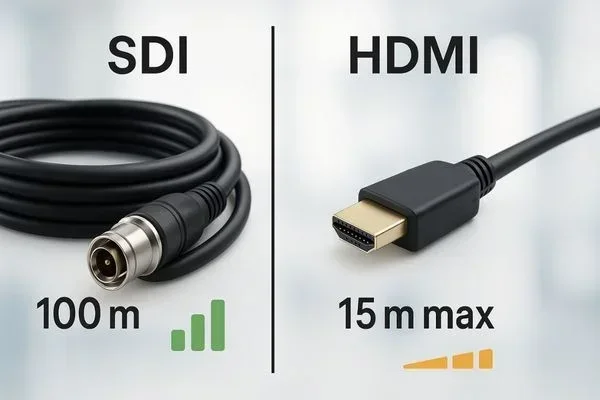
SDI generally offers lower latency than HDMI, making it the preferred choice for professional video workflows. While HDMI is more common in consumer setups, SDI delivers uncompressed signals with minimal delay. Understanding the differences helps you choose the right connection for your needs.
When you are setting up a video system, every millisecond counts. Whether you are running a live broadcast, editing footage, or building a gaming rig, the connection between your devices can make or break your experience. One question keeps coming up in the tech world: does SDI have less latency than HDMI?
The short answer is yes. SDI, which stands for Serial Digital Interface, typically delivers lower latency than HDMI. But the full picture is more nuanced than a simple yes or no. In this guide, we will break down everything you need to know about SDI vs HDMI latency. You will learn how each technology works, where they shine, and which one fits your setup best.
Latency is the delay between when a signal enters a device and when it appears on your screen. Even a few milliseconds of input lag can ruin a live broadcast or throw off a gamer’s timing. That is why professionals in video production and broadcasting take signal delay so seriously. Let us dive deep into the world of video connections and see what sets SDI and HDMI apart.
Key Takeaways
- SDI has less latency: SDI transmits uncompressed video with minimal delay, ideal for professional and broadcast use.
- HDMI is consumer-friendly: HDMI works well for everyday setups but adds processing delay through signal compression.
- Distance matters: SDI can carry signals over much longer distances without quality loss or added latency.
- Use case drives choice: Broadcast, live events, and video production favor SDI; home theaters and gaming favor HDMI.
- Hardware affects latency: Your device’s processing power and cable quality also impact overall signal delay.
- Cost differs: SDI equipment tends to cost more but delivers superior performance for critical applications.
📑 Table of Contents
- What Is SDI and How Does It Work?
- What Is HDMI and How Does It Work?
- SDI vs HDMI: The Latency Comparison
- When to Choose SDI Over HDMI
- When HDMI Is the Better Choice
- How to Reduce Latency in Your Setup
- Expert Insights on SDI and HDMI Latency
- Common Mistakes People Make When Choosing Between SDI and HDMI
- Conclusion
What Is SDI and How Does It Work?
SDI stands for Serial Digital Interface. It is a professional video standard used in broadcasting, live events, and film production. SDI transmits uncompressed video signals over coaxial cables. This means the video data travels from point A to point B without being compressed or processed along the way.
The History of SDI
SDI was developed by the Society of Motion Picture and Television Engineers (SMPTE). It has been a backbone of the broadcast industry for decades. Over the years, SDI has evolved through several versions. Each version brought higher resolutions and faster data rates. Today, SDI supports 4K and even 8K video, all with minimal signal processing time.
Why Professionals Choose SDI
Broadcast engineers and video professionals trust SDI for a few key reasons. First, SDI offers real-time video transmission with almost no added delay. Second, it is incredibly reliable over long cable runs. You can run SDI cables for hundreds of feet without signal degradation. Third, SDI carries both audio and video on a single cable, simplifying complex setups.
When you are working on a live broadcast or a video production set, you cannot afford any lag. SDI gives you a latency-free connection that keeps everything in sync. That is why major television networks and film studios rely on SDI every day.
What Is HDMI and How Does It Work?
HDMI stands for High-Definition Multimedia Interface. It is the most common video connection in consumer electronics. You will find HDMI ports on TVs, laptops, gaming consoles, and projectors. HDMI transmits both audio and video through a single cable, making it incredibly convenient.
The Evolution of HDMI
HDMI has come a long way since its introduction in 2003. Today, HDMI 2.1 supports 4K at 120Hz and even 8K resolution. The latest version also features Enhanced Audio Return Channel (eARC) and Variable Refresh Rate (VRR). These advancements make HDMI a strong choice for home entertainment and gaming.
Where HDMI Falls Short
Despite its popularity, HDMI has some limitations when it comes to latency. HDMI devices often process the signal before displaying it. This processing adds a small but noticeable delay. For casual viewing, this delay is barely noticeable. But for professional use, even a few milliseconds can be a problem.
HDMI also uses signal compression in some cases. Compression reduces file size but introduces additional processing steps. These steps add to the overall display latency. If you are wondering whether does overclocking RAM increase FPS, the answer is yes, but that is a different type of performance boost than what we are discussing here with video signal paths.
SDI vs HDMI: The Latency Comparison
Now let us get to the heart of the matter. How does SDI latency compare to HDMI latency in real-world scenarios? The answer depends on several factors, but SDI generally wins when it comes to speed.
Measuring Latency: What the Numbers Say
In professional testing, SDI typically adds less than 1 millisecond of latency. HDMI, on the other hand, can add anywhere from 1 to 30 milliseconds depending on the device. That might sound like a small difference, but in a live broadcast or competitive gaming session, those milliseconds matter a lot.
Here is a quick comparison of the two technologies:
- SDI latency: Less than 1 ms in most cases
- HDMI latency: 1 to 30 ms depending on the device and settings
- Signal type: SDI is uncompressed; HDMI may use compression
- Processing delay: SDI has minimal processing; HDMI adds processing steps
The difference becomes even more obvious when you are comparing long distance transmission. SDI cables can run up to 300 feet or more without adding latency. HDMI cables start to lose signal quality beyond about 50 feet, and longer runs often require signal boosters that add delay.
Real-World Scenarios
Let us look at a few practical examples. In a live sports broadcast, the camera feeds travel through SDI cables to the production switcher. Any delay in this chain would cause audio and video to go out of sync. SDI keeps everything perfectly aligned. In a home theater setup, HDMI works great because the slight delay is not noticeable during a movie or show.
For gamers, the choice depends on your setup. If you are building a professional streaming rig, you might want to consider SDI for the lowest possible delay. If you are gaming casually, HDMI with its convenience and wide device support is perfectly fine. Sometimes the best choice also depends on whether does SSD improve CPU performance or how well your system handles data throughput overall.
When to Choose SDI Over HDMI
SDI is not for everyone, but it is the clear winner in specific situations. Here are the scenarios where you should choose SDI over HDMI.
Live Broadcasting
If you are running a live broadcast, SDI is the industry standard. TV stations, live event producers, and streaming setups all use SDI for its zero-latency signal transmission. The last thing you want during a live show is for your video feed to lag behind the audio.
Professional Video Production
Film and video production crews work with multiple cameras and monitors. SDI allows them to connect all these devices seamlessly. The uncompressed video signal ensures that what the camera sees is exactly what appears on the monitor. This precision is critical in a production environment.
Long Cable Runs
SDI cables can carry signals over much longer distances than HDMI. If you are setting up a large venue or a multi-room production facility, SDI gives you the reach you need without sacrificing quality or adding delay. This makes SDI ideal for stadiums, concert halls, and large conference centers.
High-Reliability Environments
In environments where downtime is not an option, SDI shines. Its robust signal and minimal processing make it incredibly reliable. Broadcast facilities, control rooms, and military applications all depend on SDI for consistent, latency-free performance.
When HDMI Is the Better Choice
SDI is not always the right answer. HDMI has its own strengths that make it the better choice in many situations.
Home Entertainment
For watching movies, streaming shows, or playing console games at home, HDMI is the go-to option. The slight latency it adds is imperceptible to most people. Plus, HDMI supports a wide range of devices and features like ARC and CEC that make home setups more convenient.
Consumer Gaming
Most gaming setups use HDMI because it is built into every major console and PC monitor. Modern HDMI cables support high refresh rates and resolutions that are more than enough for casual and even competitive gaming. The latency difference between SDI and HDMI is often negligible for home gaming.
Budget-Friendly Setups
SDI equipment costs significantly more than HDMI gear. If you are on a tight budget, HDMI offers excellent value. You can buy HDMI cables and devices at very affordable prices. For most everyday uses, the performance gap between SDI and HDMI is simply not worth the extra cost.
Simplicity and Compatibility
HDMI is everywhere. Your laptop, TV, soundbar, and game console likely all have HDMI ports. This universal compatibility makes HDMI the easiest choice for most users. You do not need special adapters or converters. Just plug in and go.
How to Reduce Latency in Your Setup
Whether you choose SDI or HDMI, there are steps you can take to minimize latency in your system. Here are some practical tips.
Use High-Quality Cables
Cheap cables can introduce signal interference and add latency. Invest in well-made cables that meet the latest standards. For SDI, use cables rated for the resolution you need. For HDMI, look for Premium High Speed HDMI cables.
Enable Game Mode or Low-Latency Mode
If you are using HDMI, check your TV or monitor settings. Most modern displays have a Game Mode or Low-Latency Mode that reduces processing delay. This simple change can cut HDMI latency significantly.
Keep Your Devices Updated
Firmware updates often include performance improvements that can reduce latency. Keep your cables, switches, and display devices updated to the latest firmware versions.
Minimize Signal Processing
Every device in your signal chain adds some processing time. Use the fewest number of devices possible. If you can connect your source directly to your display, do so. This eliminates unnecessary delays from switches and splitters.
Consider Your Power Setup
Believe it or not, your power setup can affect latency too. Unstable power can cause devices to process signals less efficiently. Make sure your equipment is plugged into stable power sources. If you are curious about power consumption, you might also wonder how much power does a laptop use when plugged in, because power management settings can affect overall system performance.
Expert Insights on SDI and HDMI Latency
Industry professionals have strong opinions about SDI and HDMI. Most broadcast engineers will tell you that SDI is the only acceptable choice for live production. The reliability and near-zero latency are simply unmatched by HDMI.
However, HDMI advocates point out that for most consumer applications, the latency difference is imperceptible. Modern HDMI 2.1 devices have made tremendous strides in reducing delay. Some high-end HDMI monitors now boast latency under 5 milliseconds, which is fast enough for most purposes.
The key takeaway is that both technologies have their place. SDI dominates the professional world where every millisecond counts. HDMI rules the consumer world where convenience and compatibility matter most. The best choice always depends on your specific needs and budget.
If you are curious about how other hardware components affect performance, you might also want to read about does GPU fans always spin or does overclocking reduce CPU lifespan. Understanding how your entire system works together helps you make better decisions about your setup.
Common Mistakes People Make When Choosing Between SDI and HDMI
Avoid these common pitfalls when deciding between SDI and HDMI for your setup.
- Assuming HDMI is always slower: Modern HDMI can be very fast. The latency difference is small in many consumer scenarios.
- Ignoring cable quality: A cheap cable of any type can degrade your signal and add unwanted delay.
- Overlooking device compatibility: Not all devices support SDI. Make sure your equipment can handle the connection you choose.
- Forgetting about signal converters: If you need to convert between SDI and HDMI, the converter itself can add latency.
- Choosing based on price alone: The cheapest option is not always the best for your specific use case.
By avoiding these mistakes, you can set up a system that delivers the performance and reliability you need. Take the time to evaluate your requirements before making a decision.
Conclusion
So, does SDI have less latency than HDMI? Yes, it does. SDI delivers uncompressed video with minimal delay, making it the gold standard for professional video work. HDMI is more convenient and affordable for everyday use, but it adds more processing delay to the signal chain.
Your choice between SDI and HDMI should come down to your specific needs. If you work in broadcasting, live events, or professional video production, SDI is the clear winner. If you are building a home theater or casual gaming setup, HDMI will serve you just fine.
Understanding SDI vs HDMI latency empowers you to make informed decisions about your video setup. Whether you are a seasoned professional or a curious enthusiast, knowing the strengths and weaknesses of each technology helps you get the best results. Choose the connection that fits your workflow, and you will enjoy a smoother, more responsive viewing experience.
Frequently Asked Questions
Is SDI completely free of latency?
No connection is 100% free of latency, but SDI adds less than 1 millisecond of delay. This is so small that it is virtually imperceptible in any application. For all practical purposes, SDI offers a latency-free experience.
Can I use HDMI for professional video production?
Yes, you can. Some professional setups do use HDMI, especially for shorter cable runs and smaller productions. However, SDI remains the industry standard for high-end broadcast and live event work due to its superior reliability and lower latency.
Does HDMI 2.1 reduce latency compared to older versions?
Yes, HDMI 2.1 includes features like Variable Refresh Rate and Auto Low Latency Mode that significantly reduce delay. If you are using HDMI 2.1 devices, you will notice a meaningful improvement in response time compared to older HDMI versions.
How far can SDI cables run without signal loss?
Standard SDI cables can run up to 300 feet without significant signal loss. With active repeaters or fiber optic SDI cables, you can extend that distance even further. This makes SDI ideal for large venues and long cable runs.
Does the type of SDI cable matter for latency?
Yes, it does. Different SDI cable types support different data rates. Using a cable rated for your resolution ensures optimal performance. A cable that is too slow for your signal can introduce issues, though it typically does not add latency directly.
Which is better for gaming, SDI or HDMI?
For most gamers, HDMI is the better choice. It is more widely supported, more affordable, and the latency difference is negligible for home gaming. Professional esports setups or streaming rigs might benefit from SDI, but for casual and even competitive gaming, HDMI works great.