The Advantages Of Using A Computer Over A Manual Typewriter
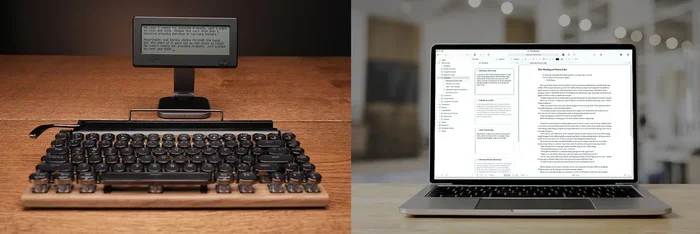
Using a computer offers huge benefits over a manual typewriter. Computers let you edit, save, and format documents with ease. They boost your productivity, improve accuracy, and make typing faster and more enjoyable.
There was a time when every letter, essay, and novel was typed on a manual typewriter. The sound of the keys clacking, the smell of ink, and the satisfying thud of the carriage return were familiar sounds in offices and homes everywhere. But those days are long gone. Today, the advantages of using a computer over a manual typewriter are clear to anyone who sits down at a keyboard.
A computer changes everything about how you write, edit, and share your work. Whether you are a student, a professional, or someone who just wants to jot down ideas, a computer gives you tools that a typewriter simply cannot match. Let us dive into why computers have completely replaced typewriters in almost every setting.
Key Takeaways
- Speed and Efficiency: Computers let you type much faster than any manual typewriter ever could.
- Easy Editing: You can fix mistakes instantly without retyping entire pages.
- Data Storage: Computers save your work digitally, so you never lose a document.
- Modern Features: Spell check, formatting tools, and internet access make computers far superior.
- Cost and Eco-Friendly: Computers reduce paper waste and long-term costs compared to typewriters.
- Portability and Power: Modern laptops pack huge processing power, including What Is The Ram Of A Laptop, into a lightweight device.
📑 Table of Contents
Speed and Efficiency: Computer vs Typewriter
One of the biggest advantages of using a computer over a manual typewriter is speed. A skilled typist can hit around 50 to 70 words per minute on a typewriter. But on a computer, with practice and the right tools, you can easily reach 80, 100, or even 120 words per minute.
Computers also let you type without the physical resistance of a typewriter key. Modern keyboards are designed for comfort and speed. You do not have to press hard or wait for the carriage to swing back. This means less fatigue and more output in less time.
Typing Without Limits
With a manual typewriter, you are limited by the physical ribbon of ink and the number of sheets of paper you have loaded. A computer has no such limits. You can type for hours, and your text just keeps going. The only limit is your imagination and your storage space.
Also, computers help you type more accurately. Features like auto-correct and word prediction reduce errors as you go. On a typewriter, every typo stays on the page forever unless you use correction fluid. That is messy, frustrating, and wastes time.
Editing Made Simple
Imagine writing a five-page report on a typewriter and then realizing you got the third paragraph completely wrong. What do you do? You start over. Or you scribble corrections, cross things out, and hope it looks neat enough to read.
With a computer, editing is as simple as hitting a few keys. You can delete a sentence, move a paragraph, or rewrite a whole section in seconds. The advantages of using a computer over a manual typewriter really shine when it comes to revision and refinement.
Undo, Rewrite, and Perfect
The undo function alone saves hours of work. You can make changes, see how they look, and undo them if needed. Typewriters give you one shot. Computers give you unlimited chances to get things right.
Here are some editing tasks that are easy on a computer but nearly impossible on a typewriter:
- Moving text: Copy and paste entire paragraphs to new locations.
- Inserting new text: Add sentences in the middle of a document without rewriting everything after it.
- Deleting mistakes: Remove errors instantly without leaving a trace.
- Formatting changes: Adjust fonts, spacing, and layout with just a few clicks.
- Spell checking: Catch typos and grammar mistakes automatically before you even finish typing.
These tools make the writing process smoother and less stressful. You focus on your ideas instead of worrying about mistakes on the page.
Storage and Organization
A typewriter produces one physical copy of your work. If that paper gets lost, damaged, or smudged, your work is gone forever. A computer solves this problem completely.
With a computer, you can save your documents in multiple locations. You can store them on your hard drive, in the cloud, or on an external backup device. Your files are safe, searchable, and easy to organize into folders.
Never Lose Your Work Again
Computers also make it easy to find old documents. You can search for a specific word or phrase across hundreds of files in seconds. Try doing that with a stack of typed papers! The time savings alone are enormous.
When you think about the hardware behind all this, it helps to understand how your device works. For example, your computer’s random access memory plays a big role in how fast and smoothly everything runs. If you want to learn more about what goes on inside your machine, you can read about How To Check The Ram Of A Laptop to see how much memory your device has.
Modern Features That Typewriters Cannot Match
A manual typewriter does one thing: it types letters onto paper. A computer does so much more. The advantages of using a computer over a manual typewriter go far beyond just writing text.
Connectivity and Sharing
Computers connect to the internet. This means you can research topics instantly, send documents to anyone in the world, and collaborate with others in real time. A typewriter user had to mail physical copies or hand-deliver them. Today, an email can deliver a finished document in seconds.
Multimedia Integration
You can add images, tables, charts, and links to a computer document. You can also embed videos and audio. A typewriter is limited to text and the occasional hand-drawn illustration. Computers make your documents richer and more engaging.
Accessibility Features
Modern computers offer tools that help people with different needs. Screen readers, text-to-speech, and adjustable font sizes make writing accessible to everyone. Typewriters offer none of these options.
Productivity Boosters
Computers come with built-in tools that make you more productive. Word processors like Microsoft Word or Google Docs offer templates, styles, and formatting options that help you create professional-looking documents quickly.
You can also use spreadsheets, presentation software, and note-taking apps alongside your writing tools. Everything lives on one device. You do not need a separate calculator, a filing cabinet, or a stack of notebooks.
Templates and Automation
Need to write a letter in a specific format? There is a template for that. Need to create a report with headers, a table of contents, and page numbers? Your word processor handles it all automatically. On a typewriter, you would have to measure margins, count lines, and type everything by hand.
Automation also saves time. You can set up automatic saving, so you never lose your work even if the power goes out. You can create macros to repeat common tasks with a single keystroke. These small efficiencies add up to hours saved over weeks and months.
If you are wondering how much memory your device needs to handle all these tasks smoothly, check out this guide on What Amount Of Ram Is Good On A Laptop to make sure your system keeps up with your workflow.
Environmental and Cost Benefits
Using a computer is better for the environment than using a typewriter. Typewriters require ink ribbons, correction fluid, and large amounts of paper. Computers reduce paper waste dramatically. You can read documents on screen, share files digitally, and print only when absolutely necessary.
Over time, a computer also saves money. You do not need to buy replacement ribbons, correction tapes, or special paper. One computer can last for many years with proper care and upgrades. Compare that to the ongoing costs of maintaining a typewriter.
Less Waste, More Savings
Think about how many sheets of paper a typewriter user goes through in a month. Drafts, corrections, and multiple copies all add up. A computer lets you work digitally until your final version. This means fewer printed pages and less waste heading to the landfill.
And here is another thought: your computer has much more processing power than you might realize. Even a basic laptop has enough memory and storage to handle thousands of documents, photos, and videos. A typewriter could only hold one page at a time. The difference in capability is staggering.
To get the most out of your computer, you want to make sure it has enough RAM to run everything smoothly. If you are curious about how much memory you really need, this article on Is 8Gb Of Ram Enough For A Laptop breaks it down in simple terms.
The Nostalgia Factor: Why Typewriters Still Matter
Let us give credit where it is due. Manual typewriters hold a special place in history. They were revolutionary tools that helped shape modern communication. Many writers still love the feel and sound of a typewriter. There is something satisfying about the mechanical process of typing on one.
Typewriters also teach discipline. Because you cannot easily fix mistakes, you learn to think before you type. Every word matters more when you know it will be permanent on the page. This can be a valuable skill for writers who want to be more intentional with their language.
But nostalgia does not change the facts. For everyday writing tasks, for productivity, for accuracy, and for convenience, a computer wins every single time. The advantages of using a computer over a manual typewriter are simply too significant to ignore.
When a Typewriter Still Makes Sense
There are a few situations where a typewriter might still be useful. Some writers use typewriters to avoid distractions from the internet and notifications. Others enjoy typewriters as creative tools or collectible items. And in areas without reliable electricity or internet, a typewriter can still function.
However, these are niche cases. For the vast majority of people, a computer is the better choice for writing, editing, and sharing documents.
Conclusion
The advantages of using a computer over a manual typewriter are clear and compelling. Computers are faster, smarter, and more versatile. They make editing simple, storage effortless, and sharing instant. They offer tools and features that no typewriter could ever dream of.
From productivity boosters to environmental benefits, computers have transformed the way we write and work. Whether you are a student writing an essay, a professional drafting a report, or a creative working on your next novel, a computer gives you the power to do more, better, and faster.
So the next time you sit down at your keyboard, remember that you are using a tool that has evolved far beyond what a typewriter could ever offer. Embrace the technology, enjoy the process, and let your computer help you bring your ideas to life.
Frequently Asked Questions
Is it still worth learning to type on a manual typewriter?
Learning on a typewriter can teach you discipline and patience. It forces you to think before you type because mistakes are hard to fix. However, for everyday use, a computer is far more practical and efficient.
Can a computer really type faster than a typewriter?
Yes, absolutely. Computers let you type faster because the keys require less force, and features like auto-correct and word prediction speed up the process. Most people type significantly faster on a computer than on a manual typewriter.
Are there any downsides to using a computer instead of a typewriter?
The main downside is the potential for distractions. Computers give you access to the internet, social media, and games, which can pull your focus. Also, computers depend on electricity and can crash, while typewriters work without any power source.
How does a computer help with document organization?
A computer lets you save, name, and folder your documents digitally. You can search for specific words across all your files instantly. You can also back up your work to the cloud so it is safe even if your device is lost or damaged.
What makes computers better for editing than typewriters?
Computers let you delete, move, and rewrite text instantly. You can undo mistakes, track changes, and compare different versions of a document. Typewriters offer no way to edit without retyping the entire page or using messy correction fluid.
Do computers save money compared to typewriters in the long run?
Yes. Computers eliminate the need to buy ink ribbons, correction fluid, and special paper. One computer can last many years and handle countless documents. The ongoing costs of maintaining a typewriter add up much faster.
=== CONCLUSION ===
The advantages of using a computer over a manual typewriter touch every part of the writing process. From speed and editing to storage and modern features, computers have completely transformed how we create and share written work. Embracing this technology means working smarter, not harder.