What Is Flash Ic
A Flash IC is an integrated circuit that stores data permanently, even without power. It is a core component in USB drives, SSDs, smartphones, and many other electronic devices. This guide explains how Flash IC technology works, the different types available, and why it is essential in modern computing and storage.
A Flash IC is one of the most important electronic components in the world today. You probably use devices that contain Flash IC technology every single day without even realizing it. From the phone in your pocket to the laptop on your desk, Flash IC chips make modern life possible.
Flash IC stands for Flash Integrated Circuit. It is a type of semiconductor device that can store data even when the power is turned off. This unique ability sets it apart from other memory types and makes it incredibly valuable in electronics. In this guide, we will explore everything you need to know about Flash IC technology.
Whether you are a tech enthusiast, a student, or someone who just wants to understand how their devices work, this article has you covered. We will break down the science, the types, the uses, and the practical tips in simple, easy-to-understand language. By the end, you will have a solid understanding of Flash IC technology and why it matters so much.
Key Takeaways
- Flash IC stores data without power: Unlike regular memory, a Flash IC retains your information even when the device is turned off.
- NOR and NAND are the two main types: Each type has unique strengths for different applications and storage needs.
- Flash ICs are everywhere: You will find them in USB drives, SSDs, smartphones, cameras, and microcontrollers.
- Flash memory is non-volatile: This means it keeps your data safe without needing a constant power supply.
- Flash IC differs from RAM: RAM loses data when power is off, but Flash IC preserves it permanently.
- Choosing the right Flash IC matters: Consider storage capacity, speed, and compatibility for the best results.
📑 Table of Contents
What Is a Flash IC?
A Flash IC is a memory chip that uses non-volatile storage to hold data. The term “non-volatile” means the data stays put even when you remove the power source. This is different from volatile memory, which loses everything when the power goes off. A Flash IC combines the storage capability of traditional read-only memory with the ability to be erased and rewritten many times.
The basic building block of a Flash IC is the memory cell. Each cell stores a small amount of electrical charge. When the charge is present, it represents a data value. When the charge is removed, the cell is erased. This simple concept powers everything from tiny USB drives to large enterprise storage systems.
The history of Flash IC technology dates back to the early 1980s. A Japanese engineer named Fujio Masuoka invented it while working at Toshiba. The name “Flash” was suggested by a colleague because the erase operation reminded them of the flash of a camera. Since then, Flash IC technology has evolved dramatically and become a cornerstone of modern electronics.
Why Flash IC Matters in Modern Devices
Flash IC chips are found in nearly every electronic device you can think of. They store your photos, your apps, your operating system, and your personal files. Without Flash IC technology, devices would need constant power to retain data, which would make them impractical for everyday use.
Here are some reasons why Flash IC technology is so important:
- Data retention: Flash IC keeps your data safe for years without power.
- Durability: A good Flash IC can withstand millions of write and erase cycles.
- Compact size: Flash IC chips are tiny, making them perfect for smartphones and wearables.
- Cost effective: Flash IC storage is affordable and scales well for mass production.
- Fast read speeds: Reading data from a Flash IC is quick and efficient.
How Does Flash IC Technology Work?
Understanding how a Flash IC works does not require a degree in engineering. The basic principle is straightforward. Each memory cell in a Flash IC contains a floating gate transistor. This special transistor can trap electrical charges and hold them for a very long time.
When you write data to a Flash IC, voltage is applied to push electrons into the floating gate. These trapped electrons change the threshold voltage of the transistor, which represents a stored bit of data. To erase the data, a higher voltage is applied in the opposite direction, pushing the electrons back out.
How Data Is Stored in a Flash IC
Data in a Flash IC is stored in binary form. Each memory cell represents either a 0 or a 1. A group of cells forms a byte, and billions of bytes make up the storage capacity you see on your devices. The density of these cells determines how much data a Flash IC can hold.
The process of writing data is called programming. The process of removing data is called erasure. Reading data involves checking the threshold voltage of each cell to determine whether it holds a 0 or a 1. These operations happen very quickly, which is why Flash IC-based devices feel so responsive.
The Role of Voltage in Flash IC Operations
Voltage is the driving force behind all Flash IC operations. Different voltage levels are used for reading, writing, and erasing. Modern Flash IC chips use sophisticated voltage control circuits to manage these operations efficiently and reliably.
One key advantage of Flash IC technology is that it does not need mechanical parts. Unlike a traditional hard drive, there are no spinning disks or moving read/write heads. This makes Flash IC chips more reliable and less prone to physical damage. It is also why they are so well suited for portable devices.
Types of Flash IC
Not all Flash IC chips are the same. There are several distinct types, each with its own characteristics and best use cases. Understanding these types helps you make informed decisions about storage and memory for your projects.
NOR Flash
NOR Flash is one of the oldest and most reliable forms of Flash IC technology. It connects memory cells in a way that allows random access, meaning you can read any byte directly without reading the ones before it. This makes NOR Flash ideal for storing code that needs to run quickly, such as firmware and boot instructions.
NOR Flash offers fast read speeds and high reliability. However, it has a larger cell size, which limits storage capacity. It is also more expensive per megabyte compared to other Flash IC types. You will often find NOR Flash in embedded systems, automotive electronics, and medical devices.
NAND Flash
NAND Flash is the most common type of Flash IC used in consumer electronics. It stores data in a dense, serial arrangement, which allows for much higher storage capacities at lower costs. NAND Flash is what powers your USB drives, memory cards, and solid-state drives.
The trade-off with NAND Flash is that it does not support random access as efficiently as NOR Flash. Data must be read and written in blocks. However, for large storage needs, NAND Flash is far more practical and cost effective. Most of the Flash IC chips you encounter in everyday devices are NAND type.
EEPROM and Flash Memory
EEPROM, which stands for Electrically Erasable Programmable Read-Only Memory, is closely related to Flash IC technology. Both use floating gate transistors to store data. The main difference is in how they are erased. EEPROM can erase individual bytes, while Flash IC erases data in larger blocks. This makes Flash IC faster for bulk operations but less flexible for small updates.
In practice, many people use the terms Flash memory and EEPROM interchangeably, though they are technically different. Both are non-volatile and both serve critical roles in electronic devices. Understanding the distinction helps when selecting the right component for a project.
Common Uses of Flash IC
Flash IC technology is incredibly versatile. It appears in a wide range of devices and applications, from simple consumer gadgets to complex industrial systems. Let us explore some of the most common uses.
USB Drives and External Storage
Your USB flash drive is one of the simplest examples of Flash IC in action. Inside that small plastic casing is a Flash IC chip that stores your files. When you plug it into a computer, the device reads the data stored in the Flash IC and displays it on your screen.
USB drives are portable, affordable, and reliable. They are a great example of how Flash IC technology has made data storage accessible to everyone. Whether you are backing up documents or transferring files between computers, a Flash IC-based USB drive gets the job done.
Solid-State Drives
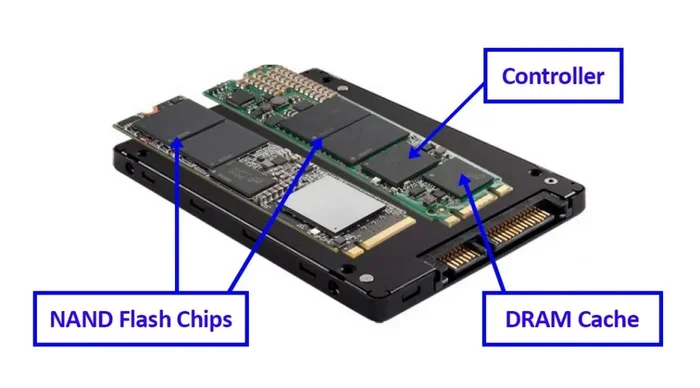
Solid-state drives, or SSDs, represent a major advancement in storage technology. Unlike traditional hard drives, SSDs use Flash IC chips to store data with no moving parts. This makes them faster, quieter, and more durable.
If you want to learn more about the largest storage options available, check out our guide on the biggest NVMe SSD. NVMe SSDs are a type of Flash IC-based storage that offers blazing fast speeds for demanding applications.
SSDs have become the standard for modern laptops and desktops. They boot up quickly, load applications faster, and handle large files with ease. The Flash IC chips inside an SSD are what make all of this possible.
Smartphones and Tablets
Every smartphone and tablet relies on Flash IC technology for its storage needs. Your photos, videos, apps, and operating system all live on a Flash IC chip inside the device. The compact size and low power consumption of Flash IC make it perfect for mobile devices.
Manufacturers carefully select Flash IC chips based on storage capacity, speed, and cost. A high-end smartphone might use advanced NAND Flash IC chips with very small cell sizes to pack more storage into a tiny space.
Microcontrollers and Embedded Systems
Microcontrollers are small computers that control specific functions in devices. They are found in everything from washing machines to car engine control units. Flash IC chips are essential in microcontrollers because they store the firmware that tells the device how to operate.
Firmware is a type of software that is permanently written to a Flash IC. It provides the low-level instructions that hardware needs to function. Without Flash IC, microcontrollers would not be able to retain their programming when powered off.
Flash IC vs. Other Memory Types
To truly understand Flash IC, it helps to compare it with other memory technologies. This section breaks down the key differences between Flash IC and other common types of memory.
Flash IC vs. RAM
RAM, or Random Access Memory, is the working memory your computer uses while it is running. Unlike Flash IC, RAM is volatile, which means it loses all its data when the power is turned off. RAM is also much faster than Flash IC for both reading and writing.
Think of it this way: RAM is like your desk, where you keep the documents you are actively working on. Flash IC is like a filing cabinet, where you store documents for long-term safekeeping. Both are essential, but they serve very different purposes.
If you are curious about how RAM fits into a laptop setup, here is what you should know about good RAM for a laptop: it provides the fast, temporary workspace your processor needs to run applications smoothly.
Flash IC vs. Traditional ROM
Traditional ROM, or Read-Only Memory, was designed to store data that never changes. It was used for firmware and basic input/output systems in early computers. Flash IC improved upon ROM by allowing data to be erased and rewritten many times.
This rewritable capability is the key advantage of Flash IC over traditional ROM. It gives engineers the flexibility to update firmware and store changing data without replacing the chip. That is why Flash IC has largely replaced traditional ROM in modern devices.
Speed and Durability Comparison
When comparing Flash IC with other memory types, speed and durability are important factors. Flash IC offers excellent read speeds but slower write speeds compared to RAM. However, it far surpasses traditional hard drives in both speed and durability due to its lack of moving parts.
| Feature | Flash IC | RAM | Traditional Hard Drive |
|---|---|---|---|
| Volatile | No | Yes | No |
| Read Speed | Fast | Very Fast | Slow |
| Write Speed | Moderate | Very Fast | Slow |
| Moving Parts | No | No | Yes |
| Data Retention Without Power | Yes | No | Yes |
| Write/Erase Endurance | Millions of cycles | Unlimited (powered) | Limited (mechanical wear) |
How to Choose the Right Flash IC
Selecting the right Flash IC for your project or device depends on several factors. Understanding these factors helps you make the best choice for your specific needs.
Consider Your Storage Needs
Start by asking how much storage you need. Flash IC chips come in a wide range of capacities, from a few megabytes to several terabytes. For simple firmware storage, a small Flash IC is sufficient. For mass data storage, you will need a higher capacity NAND Flash IC.
Think about what kind of data you are storing. Photos and videos require more space than text documents. Applications and operating systems need fast read speeds. Matching the Flash IC type to your storage needs ensures the best performance.
Check Compatibility
Not all Flash IC chips are compatible with every device or system. Before purchasing a Flash IC, check the specifications of your device or motherboard. Look for the supported Flash IC interface, voltage requirements, and form factor.
If you are working with a laptop, understanding the RAM and memory setup on a laptop can help you choose compatible storage components that work seamlessly with your system.
Think About Longevity and Endurance
Every Flash IC has a limited number of write and erase cycles. This is known as endurance. NOR Flash typically offers higher endurance for code storage, while NAND Flash is optimized for high-density data storage with slightly lower endurance per cell.
For applications that require frequent writing, such as logging or caching, choose a Flash IC with higher endurance ratings. For read-heavy applications like firmware storage, most Flash IC types will perform well over a long lifespan.
Flash IC technology continues to evolve rapidly. New advancements in 3D NAND and stacked memory cells are pushing storage capacities higher while reducing costs. Understanding the basics of Flash IC positions you to make smart decisions as technology advances.
The role of Flash IC in the world of electronics cannot be overstated. It is the silent workhorse behind nearly every digital device we use. From storing your favorite photos to running complex industrial systems, Flash IC chips do the heavy lifting behind the scenes.
As we move toward an increasingly connected and data-driven world, the importance of reliable, efficient storage technology will only grow. Flash IC technology is at the heart of this evolution, enabling smaller, faster, and more capable devices with every new generation.
Now that you understand the basics of Flash IC, you can appreciate the technology that powers your everyday devices. Whether you are building a project, upgrading your storage, or simply curious about how things work, Flash IC is a topic worth exploring further.
Frequently Asked Questions
What is a Flash IC used for?
A Flash IC is used to store data permanently in electronic devices. You will find it in USB drives, SSDs, smartphones, cameras, and microcontrollers. It keeps your files, apps, and firmware safe even when the device is turned off.
Is Flash IC the same as RAM?
No, Flash IC and RAM are very different. RAM is volatile memory that loses data when power is off, while Flash IC is non-volatile and retains data without power. RAM is also much faster but serves a different purpose in a device.
Can a Flash IC be erased and rewritten?
Yes, one of the main advantages of a Flash IC is that it can be erased and rewritten many times. However, each Flash IC has a limited number of write and erase cycles, known as endurance. Modern Flash IC chips can handle millions of cycles.
What is the difference between NOR and NAND Flash IC?
NOR Flash IC offers fast random access and is great for storing code and firmware. NAND Flash IC provides higher storage density and lower cost, making it ideal for mass data storage like USB drives and SSDs.
How long does a Flash IC last?
A Flash IC can last for many years under normal use. Its lifespan depends on the number of write and erase cycles it undergoes. For most consumer applications, a Flash IC will outlast the device it is installed in.
Do all smartphones use Flash IC?
Yes, virtually all smartphones use Flash IC technology for their internal storage. The Flash IC chip stores your operating system, apps, photos, and all other data. It is a key reason smartphones can be so compact and reliable.